



Long hair gives bold color room to move. That is the whole trick.
A tight bob can make a vivid shade look neat. Waist-length hair can make that same shade feel like fabric, ribbon, or a streak of light sliding through a braid. Bold hair color ideas for long hair work best when the color has space to shift from root to mid-length to ends, because that movement is what keeps the result from looking flat.
There’s a catch, though. Long hair also shows everything. Uneven lightening, dry ends, muddy toner, a shadow root that went a little too heavy — all of it shows up more clearly when the hair falls in a long curtain. That is why the smartest bold colors on long hair are not always the loudest ones. Sometimes the strongest choice is a deep blue-black or a cherry cola red that looks rich in daylight and sharp indoors.
The good stuff is coming up in all kinds of forms: single-tone statements, layered color melts, peekaboo panels, split dyes, and shades that read expensive without trying too hard. If long hair is your canvas, the real question is not whether you can wear bold color. It’s which kind of bold fits the way your hair moves.
Why Long Hair Makes Bold Color Look Richer
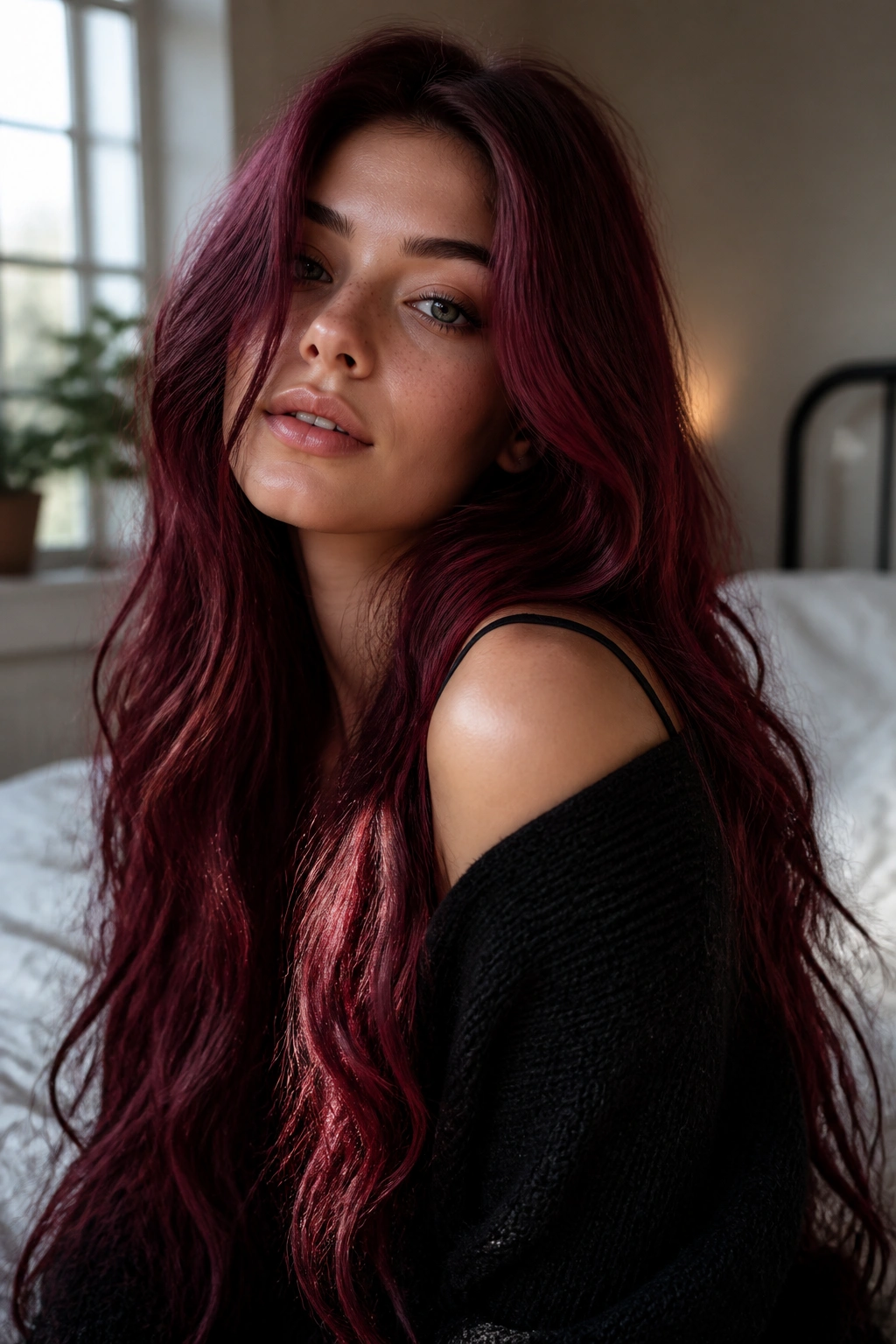
Long hair changes the way color lands. On short hair, a vivid shade can hit all at once. On long hair, it can start near the crown, soften through the mids, and fade at the ends in a way that feels intentional if the placement is done well.
That matters because movement is half the effect. A braid, a twist, a half-up knot, even a loose ponytail can reveal hidden panels and layered tones that would never show on a blunt cut. When the colorist has four or five extra inches to work with, they can build depth instead of just laying one flat shade on top of another.
The best long-hair colors also respect gravity. Heavy pigments like blue-black, plum, or deep cherry can look almost liquid on long lengths, especially when the cut has layers. Lighter shades — silver, rose gold, teal, violet — need a little more planning because the ends can get dry and porous. That is where a gloss or toner matters more than people expect.
Long hair punishes lazy placement. It rewards clean sections, smart saturation, and a shade choice that makes sense from root to tip.
How to Choose a Shade That Won’t Fight Your Routine
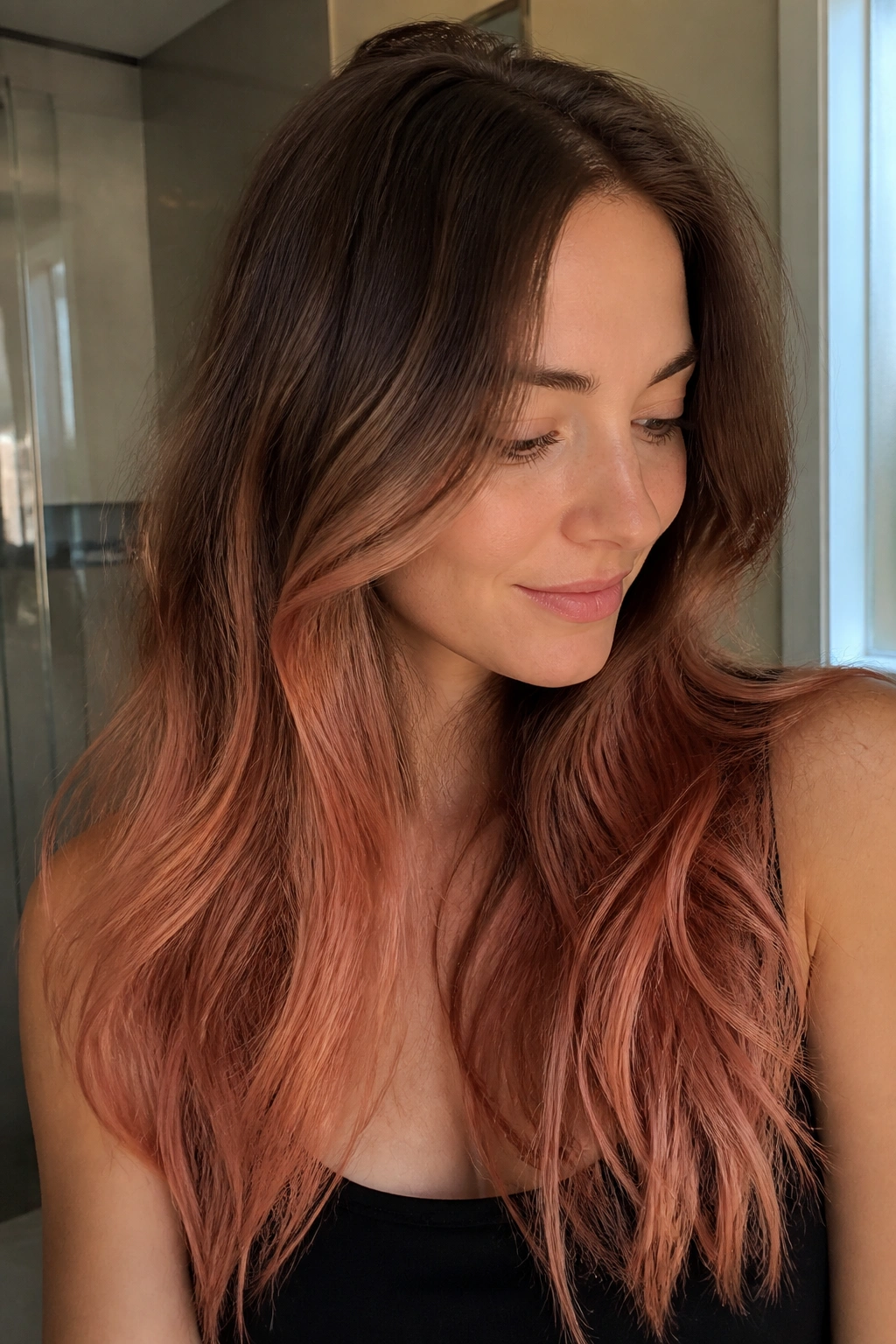
Not every bold color wants the same kind of upkeep, and that’s where a lot of bad hair decisions start. A person who washes every day and heat-styles their hair two or three times a week probably should not sign up for a pastel rainbow with six different tones. A person who can stretch washes and likes protective styles has far more room to play.
Your base color changes the whole conversation. Dark brunettes can wear cherry, plum, blue-black, oil-slick tones, or jewel-like greens without a full bleach session. Medium blondes can move into copper, rose gold, denim blue, or violet with less effort. Very dark hair needs prelightening for true neon shades, and that means a bigger commitment to moisture, bond care, and tone maintenance.
Face-framing pieces also matter more on long hair than people think. A color that feels too bold across the entire head might feel perfect as a money piece, an underlayer, or just the last six inches. That’s not playing it safe. It’s being smart.
If you love the look of color but hate root touch-ups, choose a shade with a soft fade path. If you want the biggest visual hit, go for saturated reds, electric violets, or split-color panels. Long hair can hold all of that. It just needs a plan.
1. Fire-Engine Red
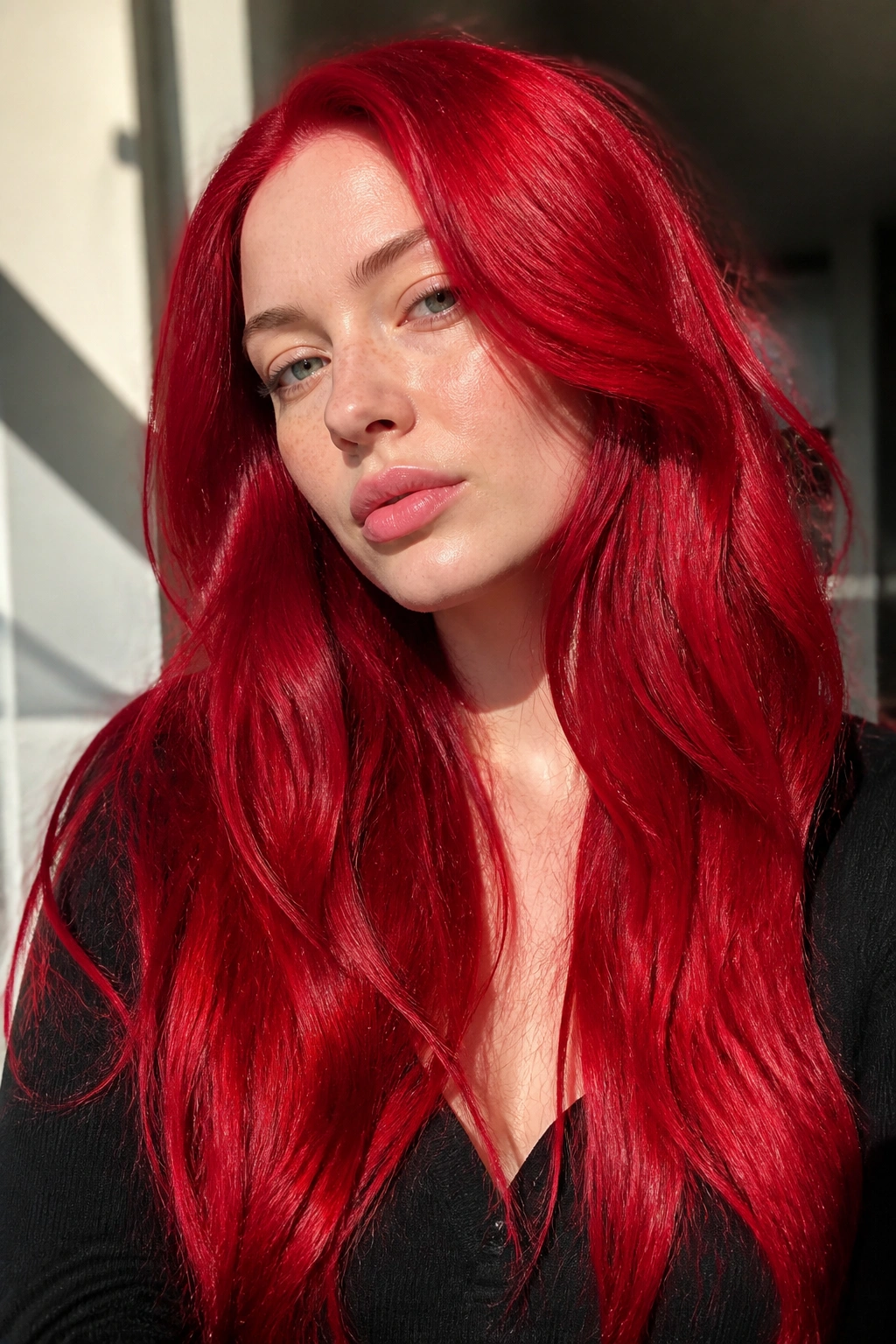
Fire-engine red on long hair is not shy, and that is the point. The color has enough intensity to read from across a room, but on long lengths it also gets a second job: it moves. Every wave, braid, and flip gives the shade a slightly different look, from scarlet silk to deep tomato gloss.
Why It Works
Red is one of the few bold shades that can look glamorous instead of costume-like when the saturation is even. On long hair, that evenness matters. The color should run cleanly through the mids and ends, not stop suddenly at one harsh line near the shoulder.
This shade looks especially good on layered cuts, because the layers catch light at different points. A blunt one-length cut can still wear it, but it feels louder and more graphic. With long layers, the red starts to look dimensional.
Ask for a single-process vivid red or a permanent red over prelightened hair if you want the brightest version. If your hair is naturally dark, a darker ruby-red formula can be safer and easier to live with. The fade is usually prettier, too.
Best for: warm or neutral undertones, high-contrast makeup, and anyone who likes their hair to do the talking.
Watch for: stained towels, red-toned water in the shower, and fast fade on porous ends. Those ends need conditioner, or the color will lose its depth fast.
2. Copper Melt
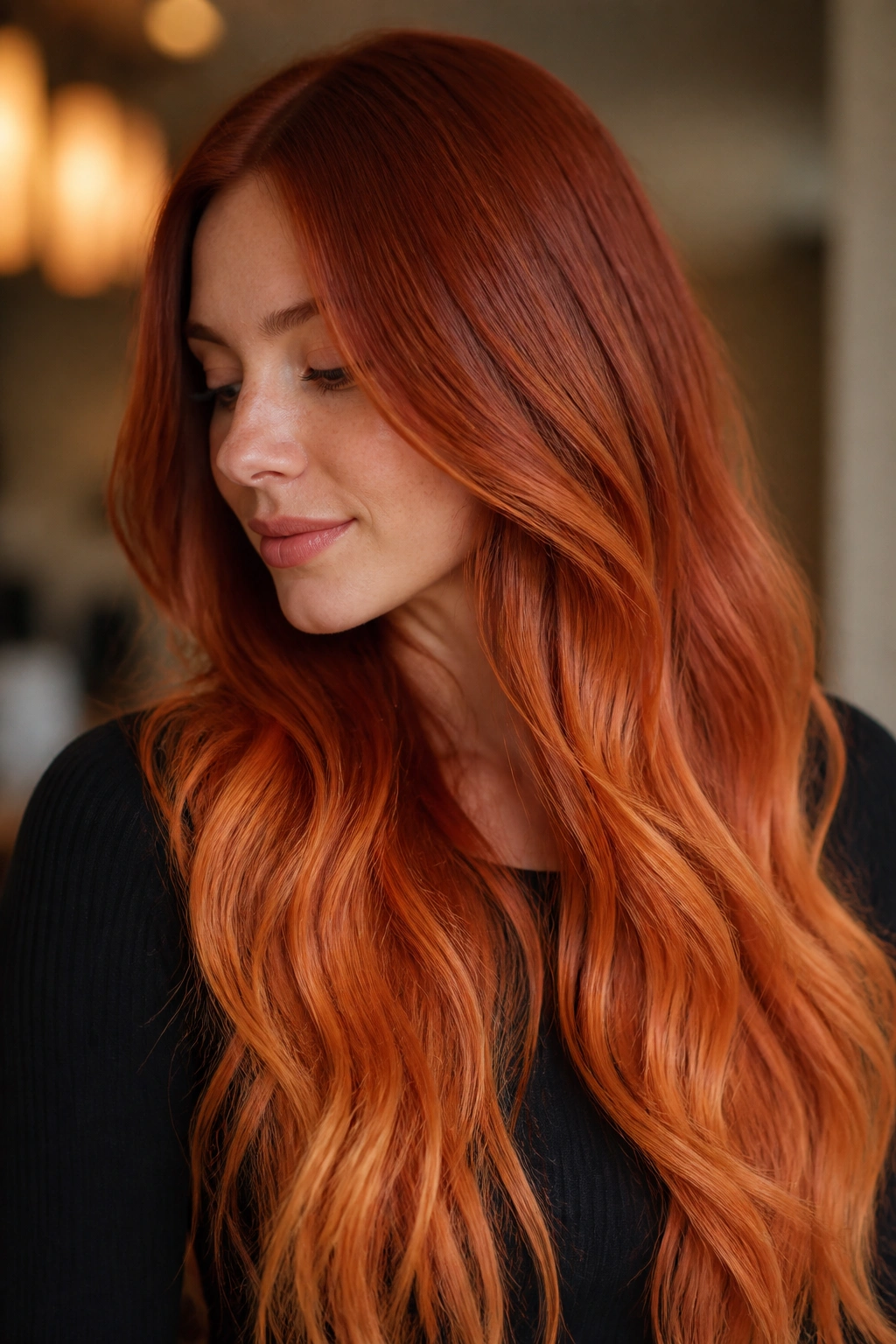
Copper is the color people underestimate until they see it on a long wave and then change their minds. It can be spicy, soft, and glossy all at once. On long hair, a copper melt from deeper cinnamon roots into brighter apricot ends looks alive, not flat.
What Makes It Different
A single copper shade is pretty. A melt is better. The shift from root to tip gives the hair a warm glow that feels expensive without being fussy, and long lengths are exactly where this technique earns its keep.
Copper also has range. You can push it orange for a brighter, bolder effect, or keep it closer to penny, auburn, and ginger if you want something that still turns heads but doesn’t shout. The long shape lets all those tones sit together without looking messy.
The smartest version usually starts with a slightly deeper root area and brighter mids. That way the color does not disappear when the hair is pulled back. It still has shape in a bun, which is more useful than a lot of people realize.
A copper melt works best on hair that already has some warmth in it, whether that’s natural or added through lightening. Cool ash-brown bases can fight it unless the formula is built with enough gold.
3. Blue-Black Gloss
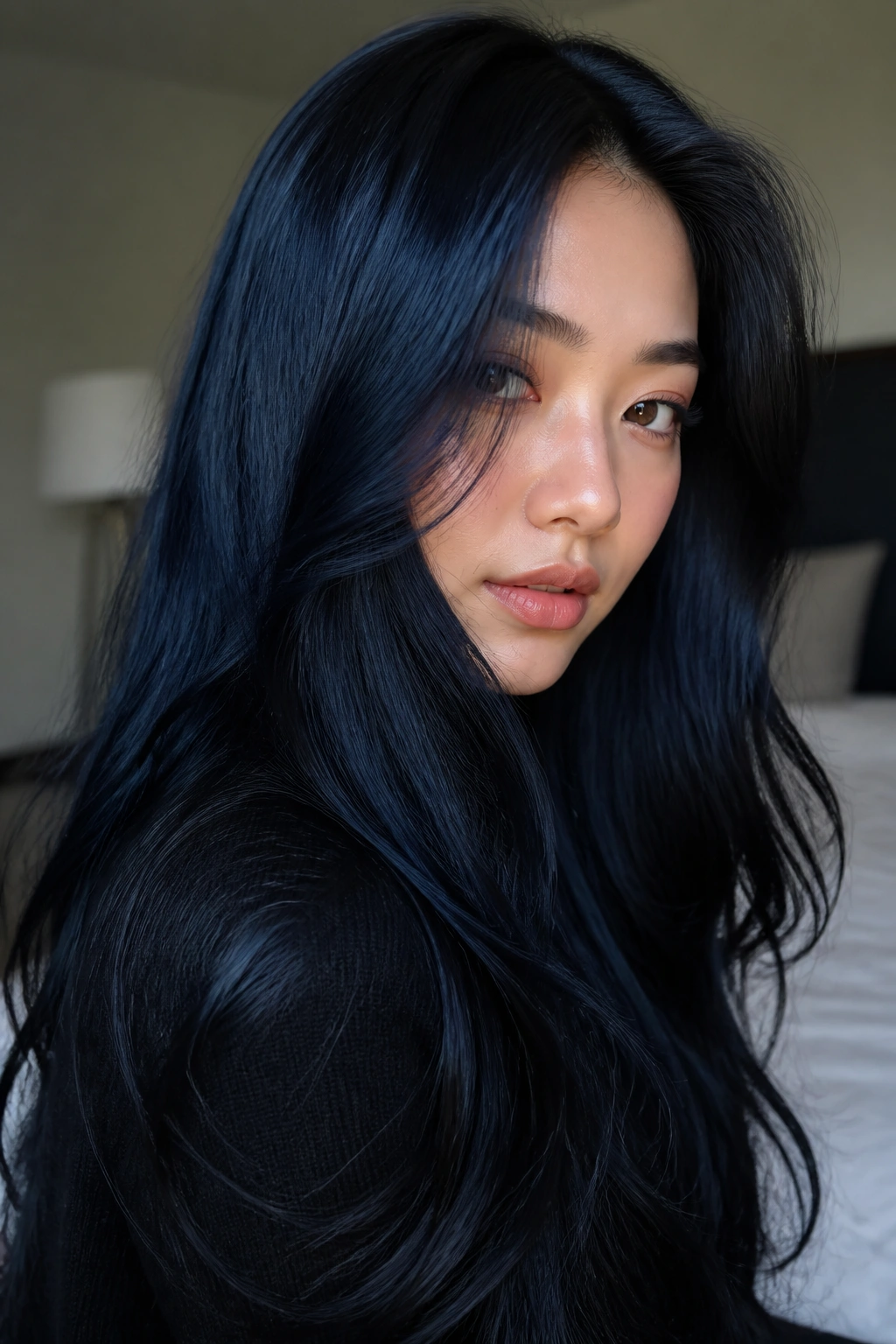
Blue-black is one of those shades that looks calm until the light hits it. Then it gets sharp. On long hair, that sharpness is the appeal — the color can read like polished ink, then flash a hidden blue sheen when the hair moves.
What I like about blue-black is that it gives drama without the maintenance burden of a full bright fashion shade. You still have darkness at the root, but the blue cast keeps the whole look from sinking into plain black. That small difference changes everything.
Why It Lands So Well on Long Lengths
Long hair gives blue-black more surface area, which sounds obvious but matters in practice. The shine has room to travel. If the hair is smooth and cut with soft layers, the color looks almost glassy.
It also suits people who want bold hair color ideas for long hair but don’t want every stranger to notice from thirty feet away. In daylight, it’s moody. Indoors, it’s sleek. In motion, it’s a little bit dangerous.
A demi-permanent gloss or a blue-black permanent dye can both work, depending on the starting level. If the hair is porous, the blue can grab too hard on the ends, so a strand test is worth the time. Skipping that step is how people end up with uneven, swampy tones they did not ask for.
4. Electric Violet Panels
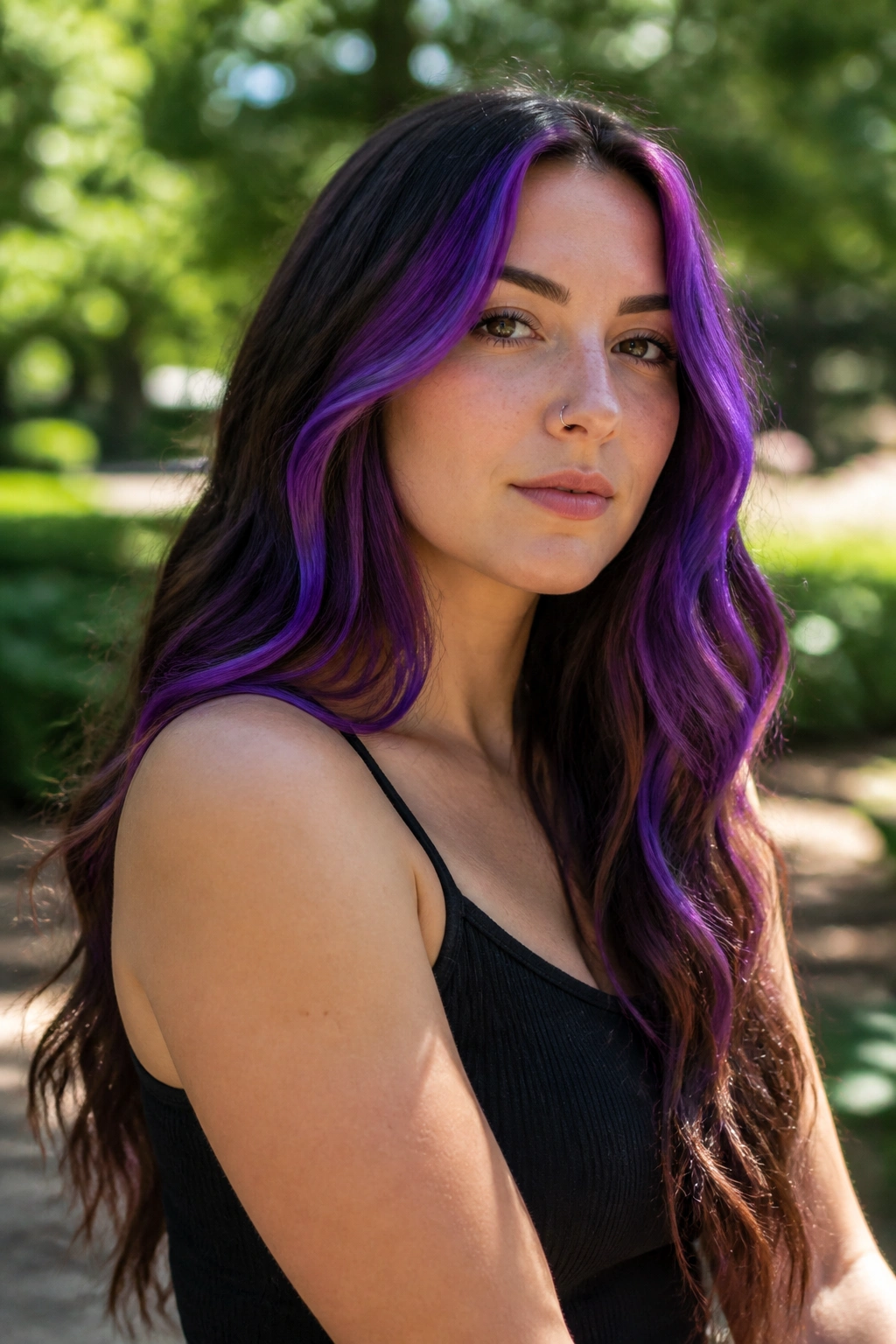
Electric violet is a color that looks almost lit from inside when it’s placed well. On long hair, I prefer it in panels or ribbons rather than all over the head, because the sections keep the shade from becoming a blur.
Picture loose waves with deep brunette underneath and bright violet showing in the top layer. Then the person turns, and there it is again near the ends. That kind of reveal is the reason long hair and bold color get along so well.
Placement Matters Here
- Put the violet around the face and through the outer layer if you want instant visibility.
- Hide some of it beneath the top layer if you like a color that appears in movement.
- Keep the ends slightly lighter if you want the violet to read brighter and less muddy.
The cleanest electric violet usually needs prelightening to a pale yellow or light blonde base. Anything darker tends to dull the shade fast. A purple glaze can help, but it will not turn brown hair into neon purple without a lift first.
My advice: if you’re nervous, ask for violet only through the front and lower back panels. It’s easier to live with, and it grows out in a less brutal way.
5. Emerald Underlayer
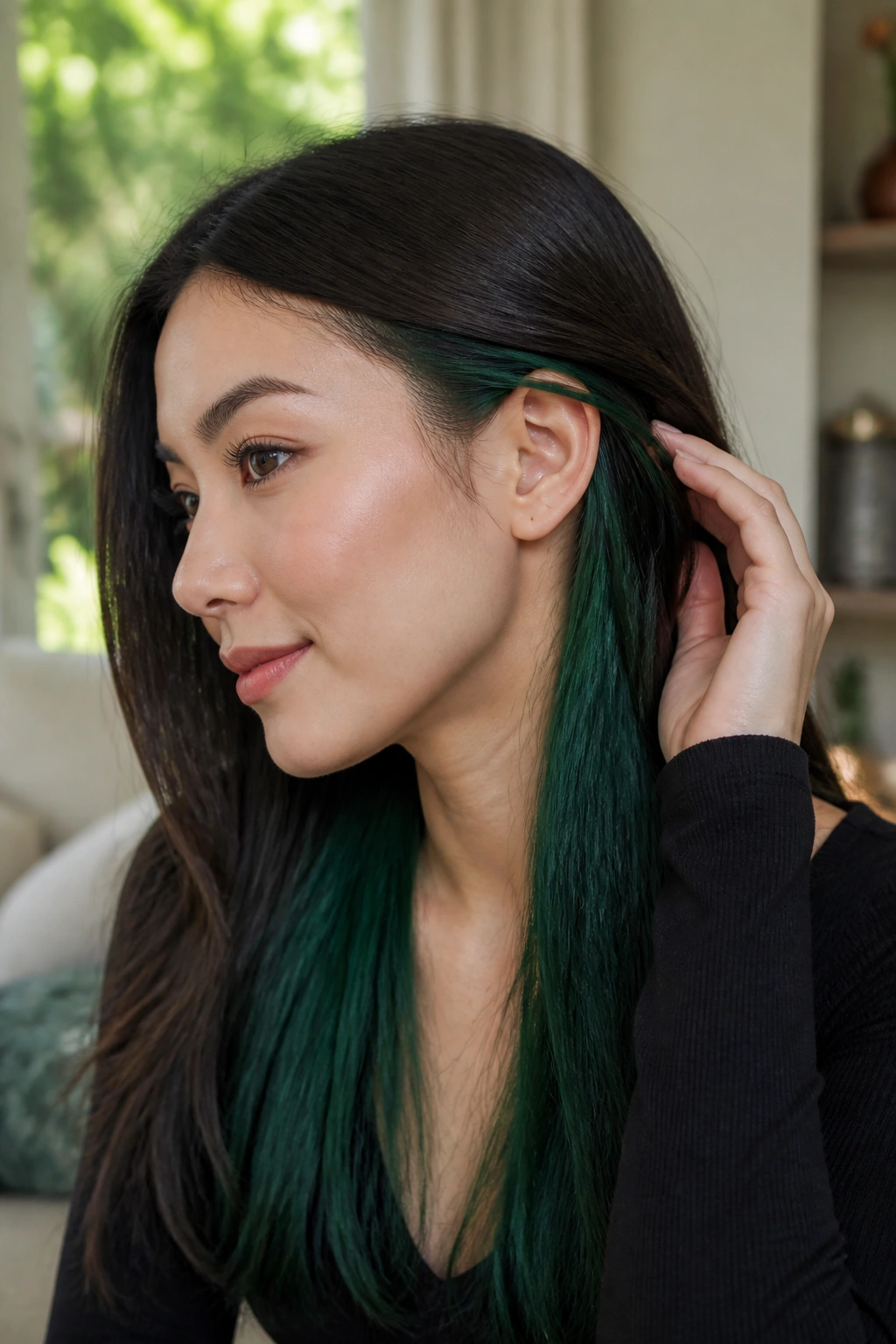
Emerald underlayer color is for people who like a secret. That is the nicest thing about it. You get a deep, jewel-toned green hiding under the top veil of hair, and it comes alive when the hair is tucked behind the ears or pulled into a half-up style.
The top layer can stay brown, black, or even dark blonde. The underlayer does the work underneath. When long hair swings, that hidden green flashes out in a way that feels deliberate, not loud.
This is one of the better choices for someone who works in a conservative setting but still wants a dramatic color story. Up top, it’s easier to ignore. Down below, it has real personality. That contrast is the whole game.
Use a dark emerald if you want something rich and moody. Use a brighter jewel green if you want the shade to read from farther away. Either way, the color tends to look best when the hair has enough shine that the green can sit on top of the light instead of sinking into the strands.
And yes, green fades. Fast, sometimes. A color-safe wash and cool water help, but if your hair is highly porous, expect the tone to shift sooner than red or blue.
6. Sunset Ombré
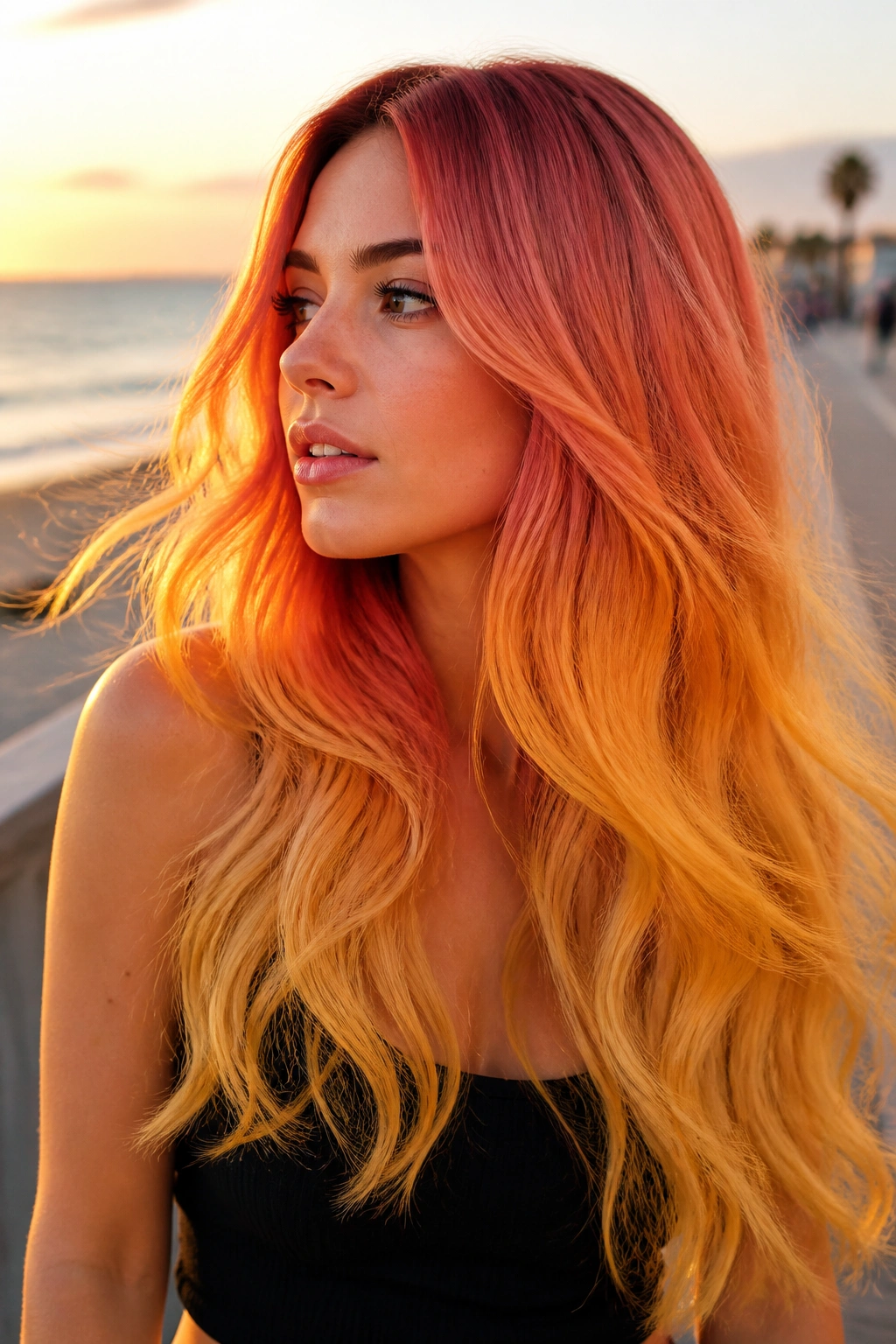
Sunset ombré is what happens when coral, peach, gold, and soft red are blended well enough to look like a long piece of sky at the end of the day. Done badly, it can look like random warm stripes. Done well, it looks like color with breath in it.
Unlike a single flat orange, this kind of ombré lets the ends carry the drama. The roots stay deeper and more wearable, which matters on long hair because the upper half already takes up so much visual space. The bright part belongs lower down, where it can spread out.
The Color Path
A sunset ombré usually moves from a deeper copper or rose root through apricot mids and into gold or peach ends. The trick is keeping the transitions soft enough that each band feels connected. You want a blur, not a stack.
This style is especially good on long waves and curls. The texture breaks up the gradient and makes each tone flicker a little differently. Straight hair can wear it too, but you need a cleaner blend.
Best for: long layered cuts, warm skin tones, and anyone who wants boldness without a hard line. Less ideal for: people who want ultra-low maintenance silver or brunette root grow-out. Warm ombré still needs toner attention.
7. Cherry Cola Brunette
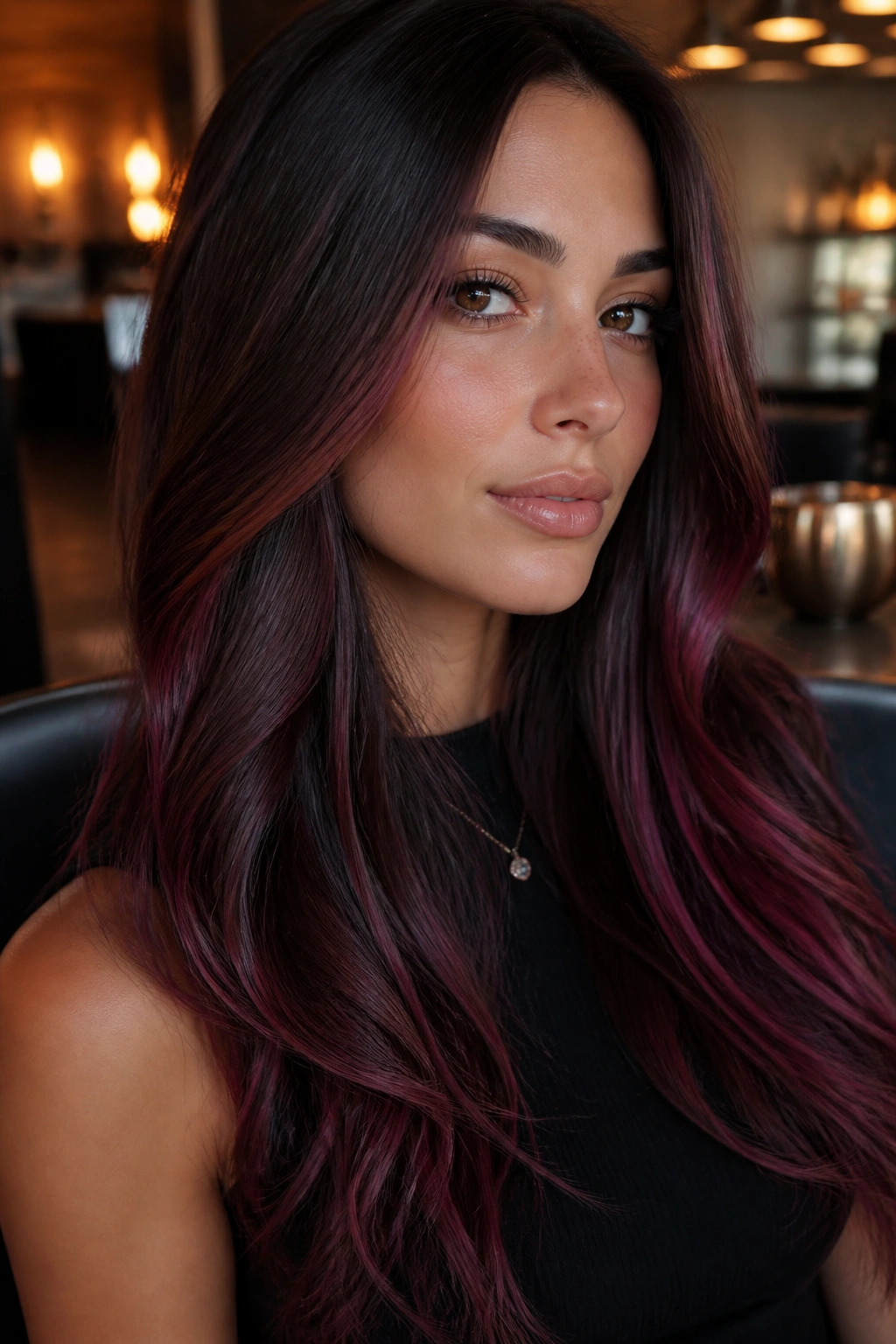
Cherry cola brunette is one of my favorite bold color ideas for long hair because it looks expensive without being obvious. The base stays dark, but there’s this red-violet depth that shows up in sun, lamps, and mirror light.
It is bold, but it does not behave like a neon. That makes it easier to wear for people who are curious about color but not ready to commit to something that screams from the sidewalk. Long hair gives the shade more room to show its layers.
How to Ask for It
Ask for a brunette base with burgundy, plum, or cherry-toned ribbons worked through the mids and ends. A gloss over dark hair can do a lot here. If your hair is already light enough, a semi-permanent red-violet formula can make the color richer.
The best part is the grow-out. Roots blend in naturally, and the shade can fade into a softer wine tone instead of turning muddy right away. That makes it one of the more forgiving bold shades on this list.
It also looks good with curls, braids, and loose twists. The red-violet tones catch on bends in the hair, which is where the whole thing comes alive. Straight hair shows the shine; textured hair shows the depth.
8. Smoky Silver with Charcoal Roots
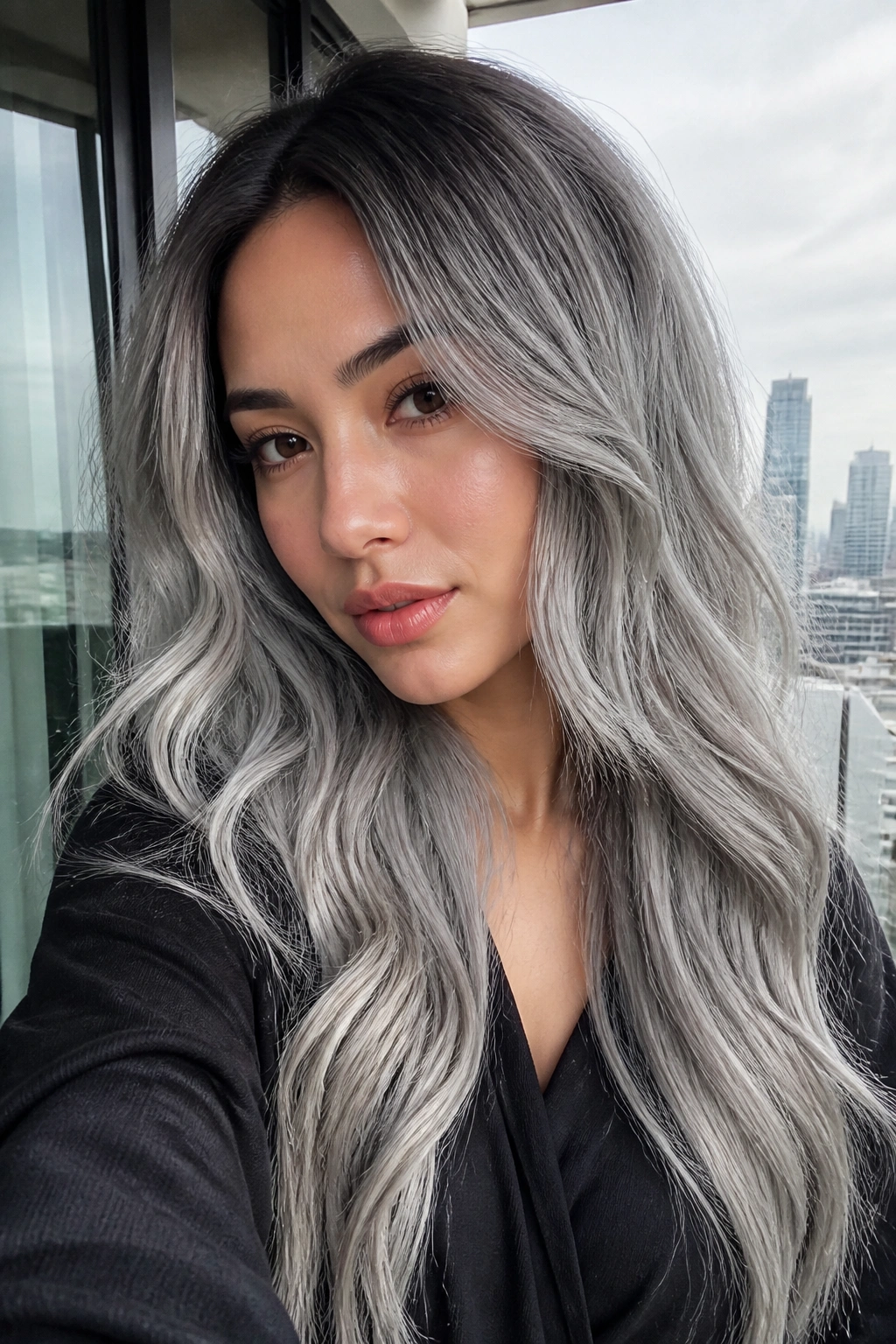
Smoky silver is not granny gray. It’s sharper than that. On long hair, a charcoal root shadow melting into cool silver mids and lighter ends creates a very clean, graphic effect that looks strong even when the hair is worn simply.
The important part is the root shadow. Without it, silver can look disconnected on long lengths, especially if the hair is parted in the same place all the time. A darker root keeps the color grounded and makes regrowth less harsh.
Quick Facts
- Base level: usually needs prelightening to a very pale blonde.
- Tone: cool beige-silver or blue-silver works better than flat white.
- Maintenance: purple or blue shampoo can help, but overusing it turns the hair dull.
- Style payoff: the shade looks excellent in braids, because the different tones braid together like thread.
A smoky silver long hairstyle works best when the ends are healthy. Dry ends look frayed in light shades, and silver is unforgiving that way. If the hair is damaged, a charcoal gloss with only a hint of silver may be smarter than a full platinum route.
9. Teal Money Piece and Ends
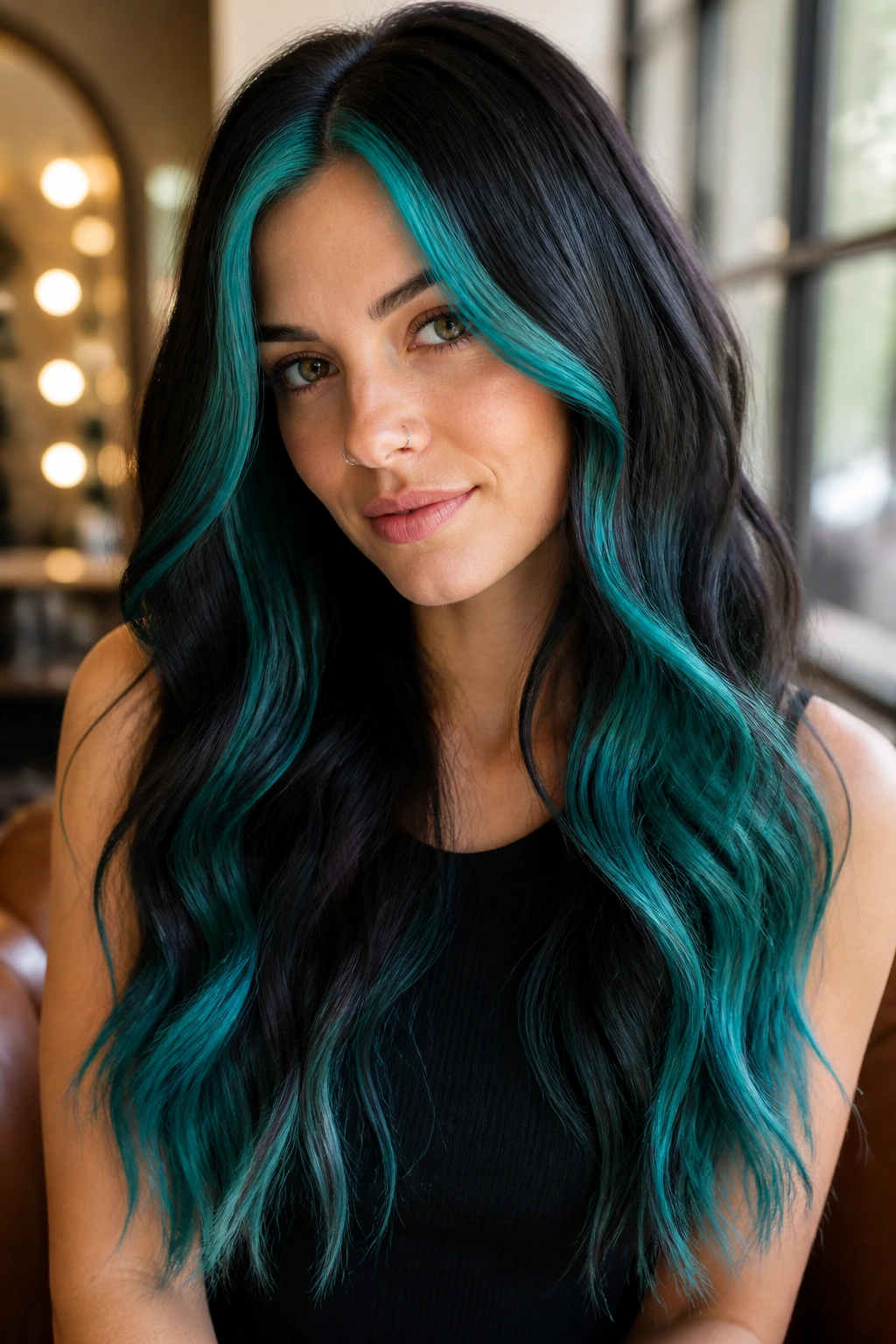
Teal is one of those shades that can look playful or sleek depending on where it lands. On long hair, a bright teal money piece with matching ends gives you both. The front sections frame the face, and the lower lengths carry the color after that.
I like this idea because it works when the hair is down and when it is half up. A front teal streak peeks out around the face, and the ends keep the color from feeling like a tiny detail that got lost. Long hair gives the teal a second life.
Placement Notes
If you want the color to look sharper, keep the money piece narrow and saturated. If you want it softer, blur the teal into a few face-framing layers and let it drift toward the ends. Both versions work.
Teal usually looks best on a prelightened level 8 or 9 base. On darker blonde or light brown hair, it turns sea-green fast, which can be lovely, but it will not read as vivid teal. Know which version you want before the appointment starts.
Tip: teal fades toward blue or green depending on the formula. That’s normal. The goal is not to keep the exact same shade forever; it’s to keep it from turning dead-looking.
10. Neon Peekaboo Panels
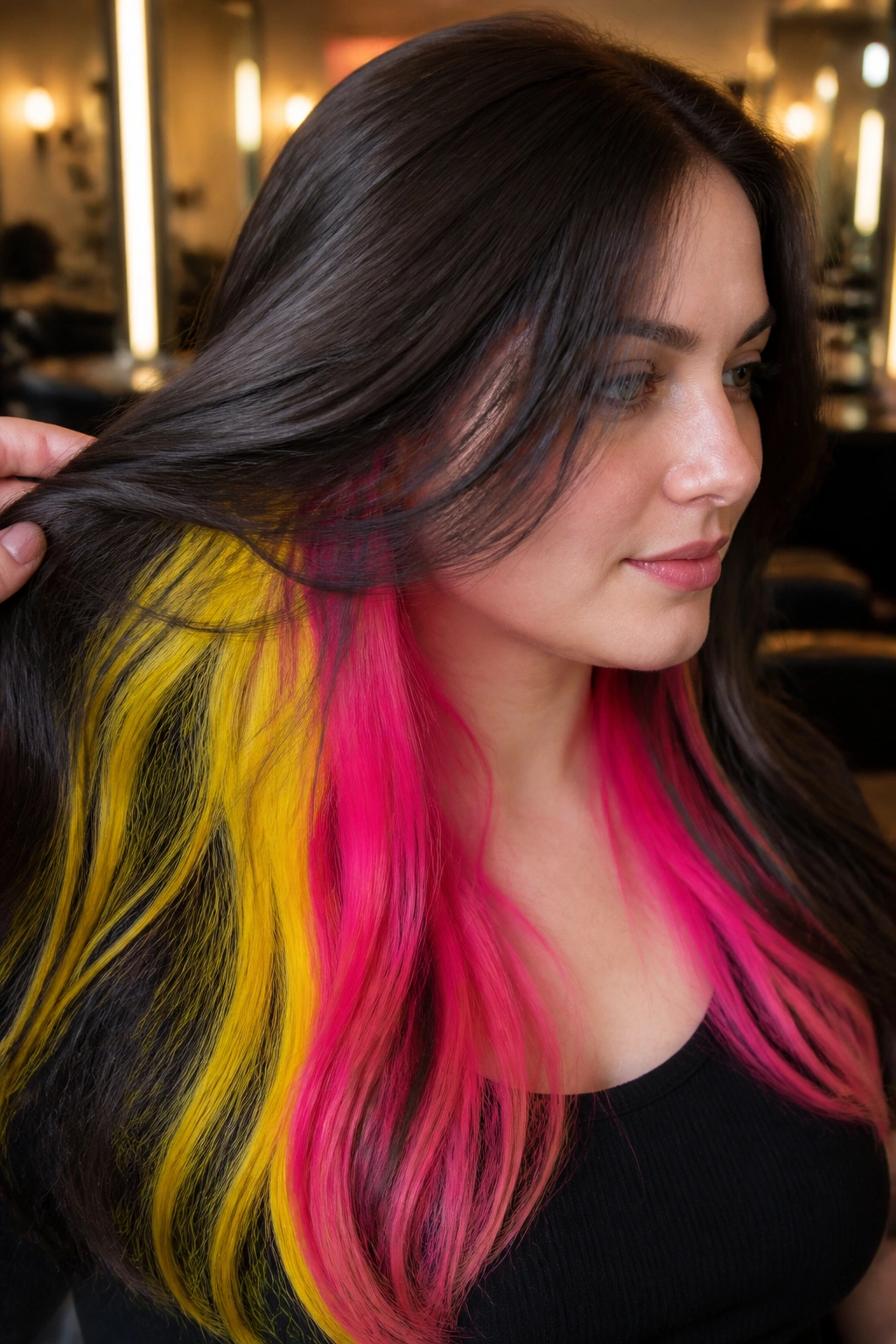
Can neon look wearable on long hair? Yes, if you keep most of it hidden until the hair moves.
That is why peekaboo panels work so well. The top layer stays more subdued, while neon yellow, hot pink, lime, or acid orange sits underneath and flashes out only when the hair is flipped, braided, or pinned back. On long hair, that reveal feels deliberate every single time.
The best part is control. A person who wants bold color but cannot live with full-time brightness can still get a real hit of neon. The placement does the talking. You are not staring at it all day, but it is there when you want it.
For the cleanest result, ask for the panels to be placed below the crown and around the inner mids. That way they show up without fighting the top layer. If the hair is very dark, the neon will need a pale base, and that means the lower sections need extra care. Dry neon looks brittle fast.
This is one of those styles that looks especially fun in braids. The hidden colors weave through the braid in little bursts. Cute? Sure. But also a little wild.
11. Split-Dye Long Hair
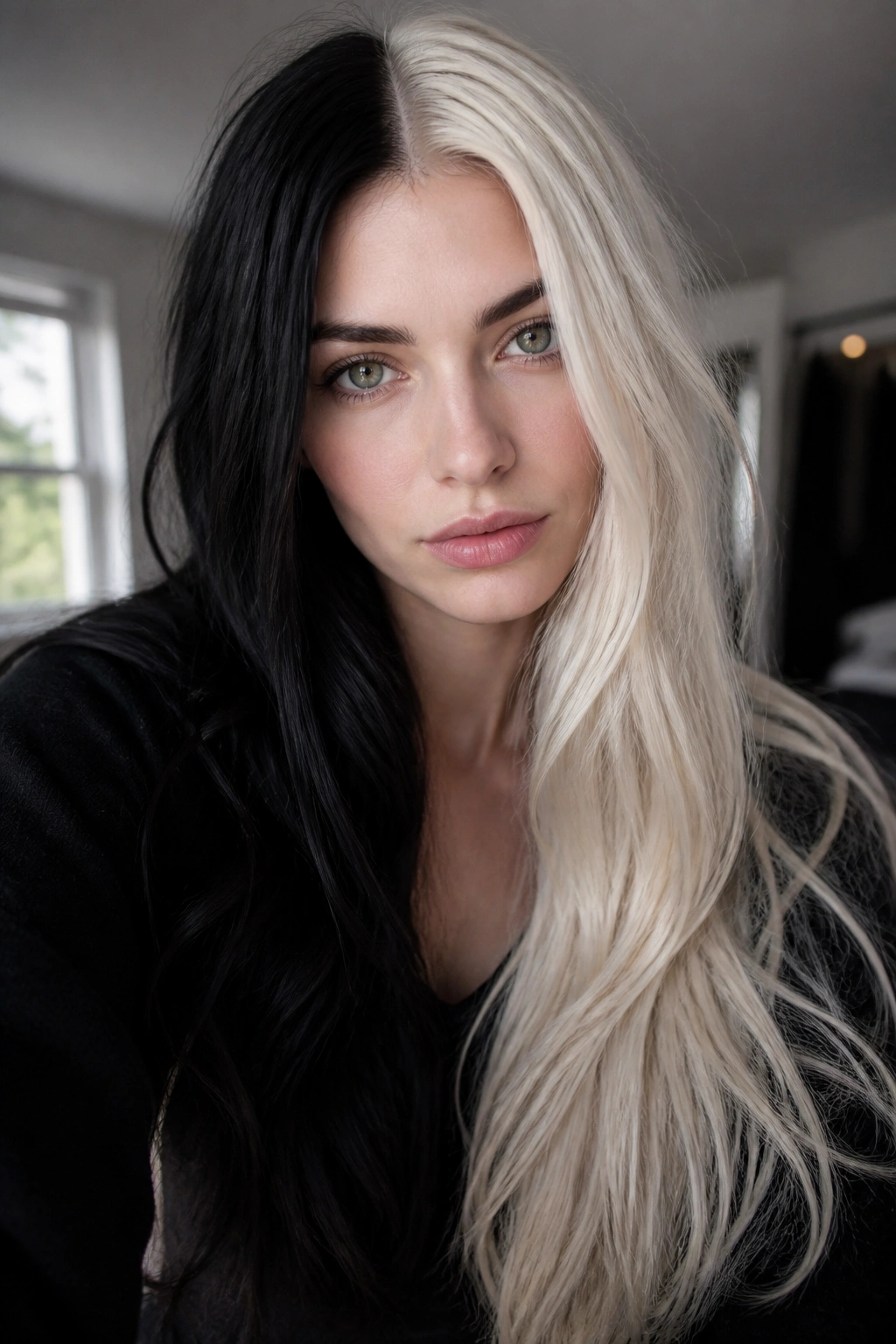
Split dye is bold in a way that refuses to whisper. One half of the head wears one color; the other half wears another. On long hair, the effect is dramatic because the division runs all the way down the length, turning the hair into two moving panels.
This style works best when the hair has a clean center part and enough density to hold both sides separately. Thin hair can do it, but the line is harder to keep crisp. Long, thick hair gives the split a lot more visual weight.
Why It Reads So Cleanly
The contrast can be high or low. Black and platinum is the loudest version. Black and cherry red is easier to wear. Blue and violet can feel almost painterly. What matters is that the two sides are different enough to look like a choice.
Split dye suits people who like symmetry but not sameness. It also gives you two looks in one hairstyle. Sweep the hair over one shoulder and the color balance changes. Tie it into a ponytail and the split becomes a stripe down the back.
I would not call it low-maintenance. The color line needs care, and every touch-up requires discipline. Still, if you want something that looks intentional from every angle, split dye is hard to beat.
12. Rose Gold Champagne
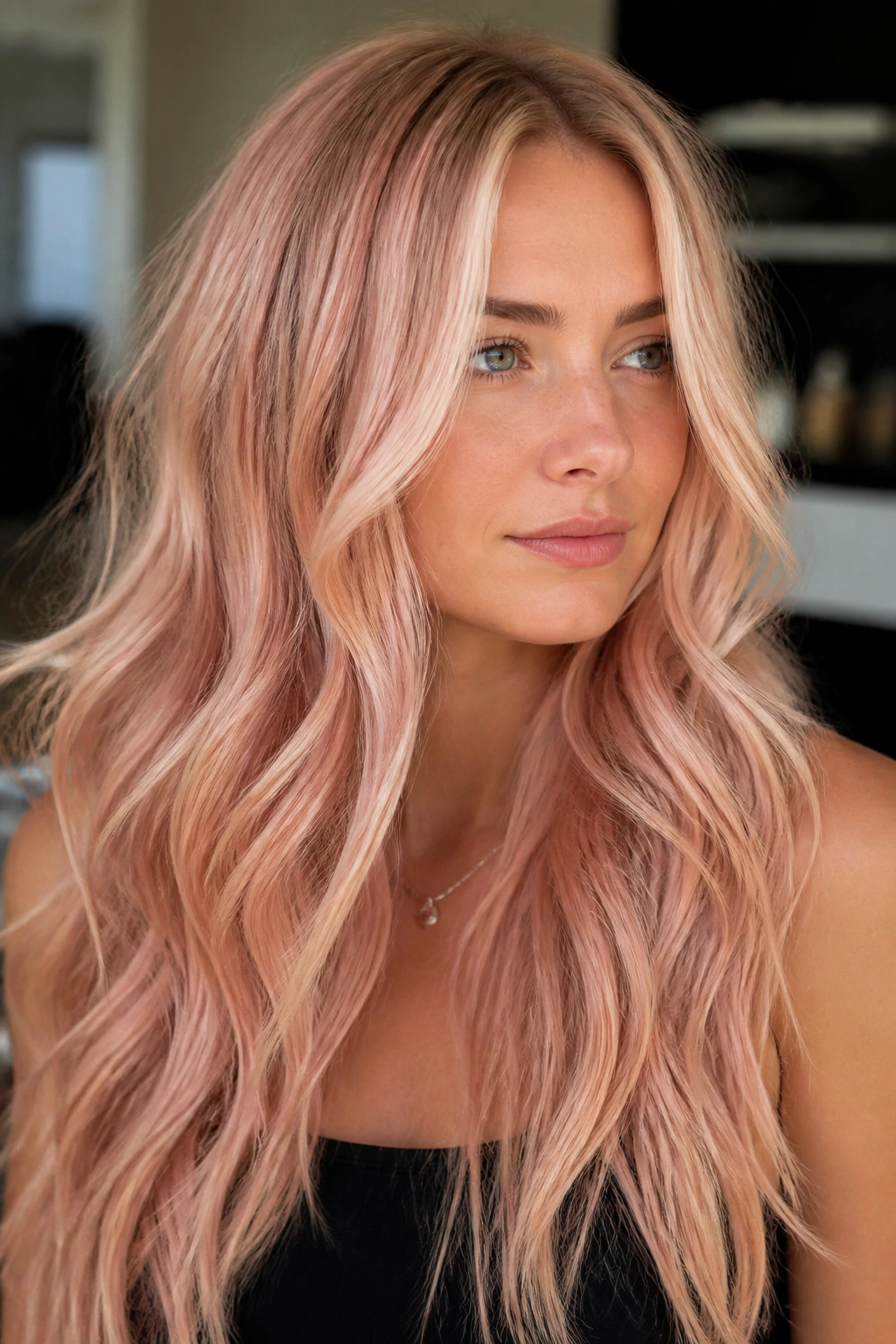
Rose gold is softer than some bold shades, but on long hair it can still read strong because the color moves through so many tones at once. Think blush, gold, peach, and a little copper folded together. Champagne keeps it from going too pink.
This is a good choice if you want a color that feels luminous instead of loud. Long hair gives the shade room to bloom through waves and bends, so the finish can look reflective rather than flat. Straight hair shows the polish; curly hair shows the warmth.
A rose gold champagne tone usually works best on a light blonde base, though a prelightened brunette can wear a deeper version. If the base is too yellow, the color turns brassy fast. Too pale, and it can go washed out. That middle zone is where it sings.
The shade is also forgiving in a way bright neons are not. It fades toward beige-pink instead of collapsing into something ugly. That alone makes it appealing to people who want a color that still looks decent as it softens.
Strong opinion: this is one of the best long-hair shades for someone who wants boldness with a softer face effect. It’s not timid. It’s just more graceful than loud.
13. Plum Ribbon Highlights
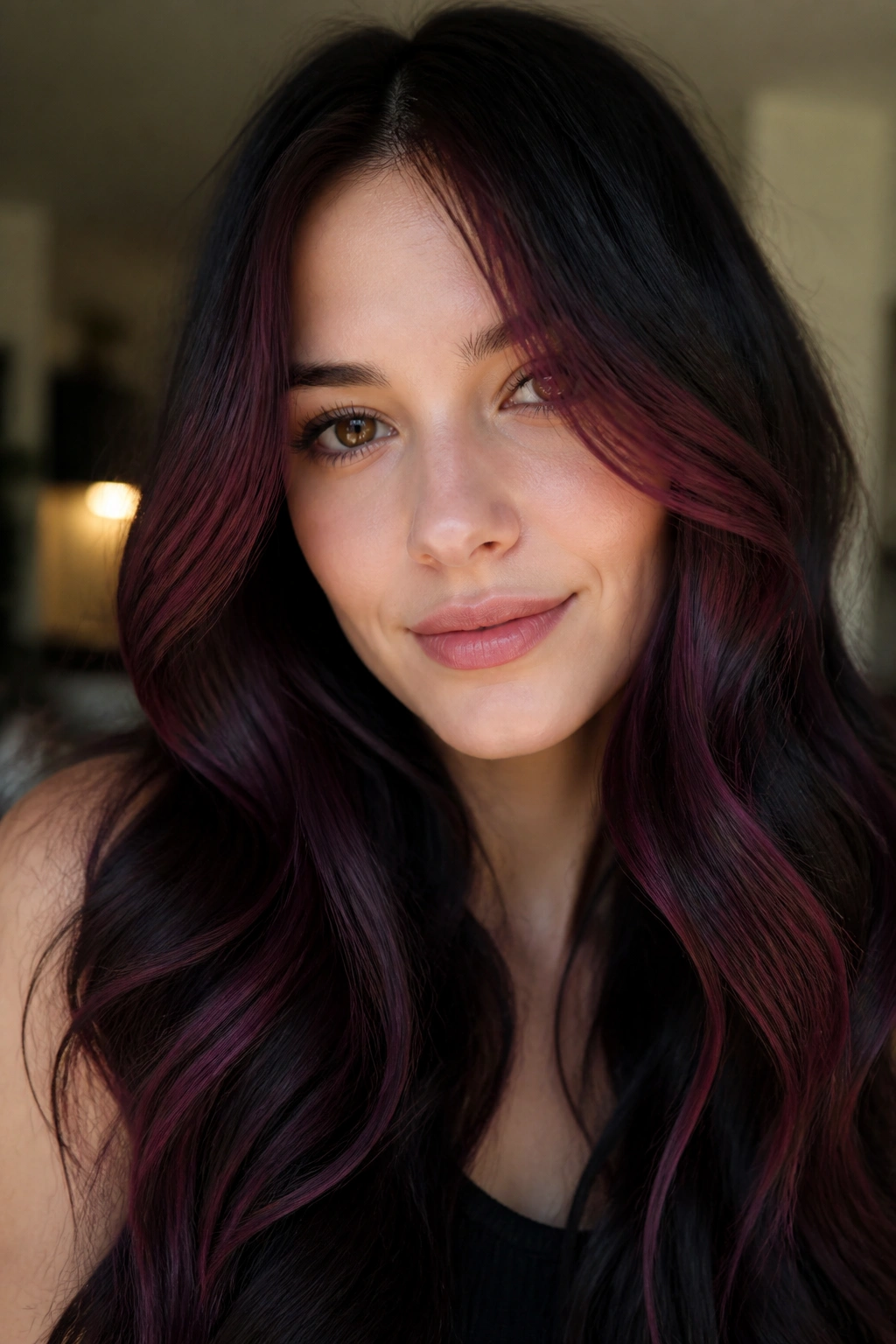
Plum ribbon highlights are proof that bold color does not have to cover the whole head to matter. A brunette base with deep plum ribbons through the lengths can look richer than an all-over color, especially on long hair where the ribbons have space to stretch.
Where to Place Them
- Around the face for the most visible hit.
- Through the top layers if you wear your hair down often.
- Concentrated in the lower mids if you want the color to show in curls and braids.
The plum itself can be dark and wine-like or brighter and more violet. On long waves, the darker version can look almost velvety. The brighter version catches more light and reads a little more playful.
This is a smart option for people who want dimension without a full bleach commitment. The base stays recognizable, and the plum adds depth rather than replacing the whole look. On long hair, that layered effect is the reason it works. A short cut can lose the ribbon feel. Long lengths keep it.
If you like a color that looks different depending on the room, this is a strong pick. In daylight, the plum is obvious. In dimmer settings, it turns moody and deep.
14. Rainbow Gradient Ends
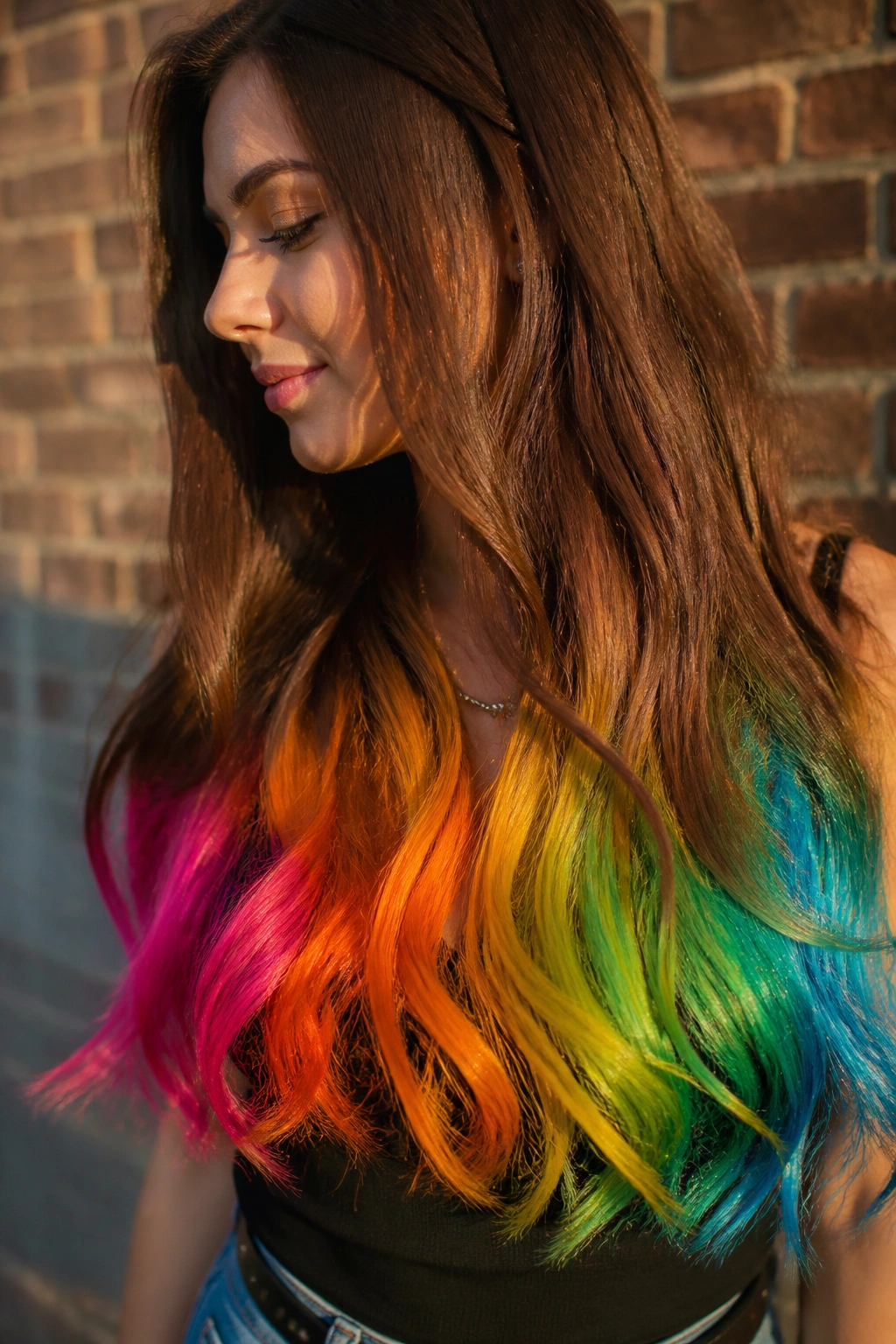
Rainbow ends can go wrong fast if the transitions are rough. They can also look fantastic when the blend is tight and the color stops are controlled. On long hair, the bottom section has enough room for the whole thing to breathe.
The trick is to keep the rainbow at the last six to ten inches rather than flooding the whole head. That keeps the style from feeling childish or chaotic. It also makes growing it out far easier, which is a real perk when the top half is already doing enough visual work.
A gradient that moves from pink to orange to yellow to green to blue can look surprisingly elegant on long waves. The motion of the hair softens the palette. Braids make it even better because each color gets repeated in tiny sections.
One practical note: the lighter the starting base, the cleaner the rainbow will look. Dark hair can support bold ends, but the colors will be deeper and less bright. That may be what you want. It may not.
This is a strong choice for someone who wants fun without needing the entire head to scream. The rainbow shows up most when the hair swings, which keeps the look lively instead of static.
15. Mango Orange
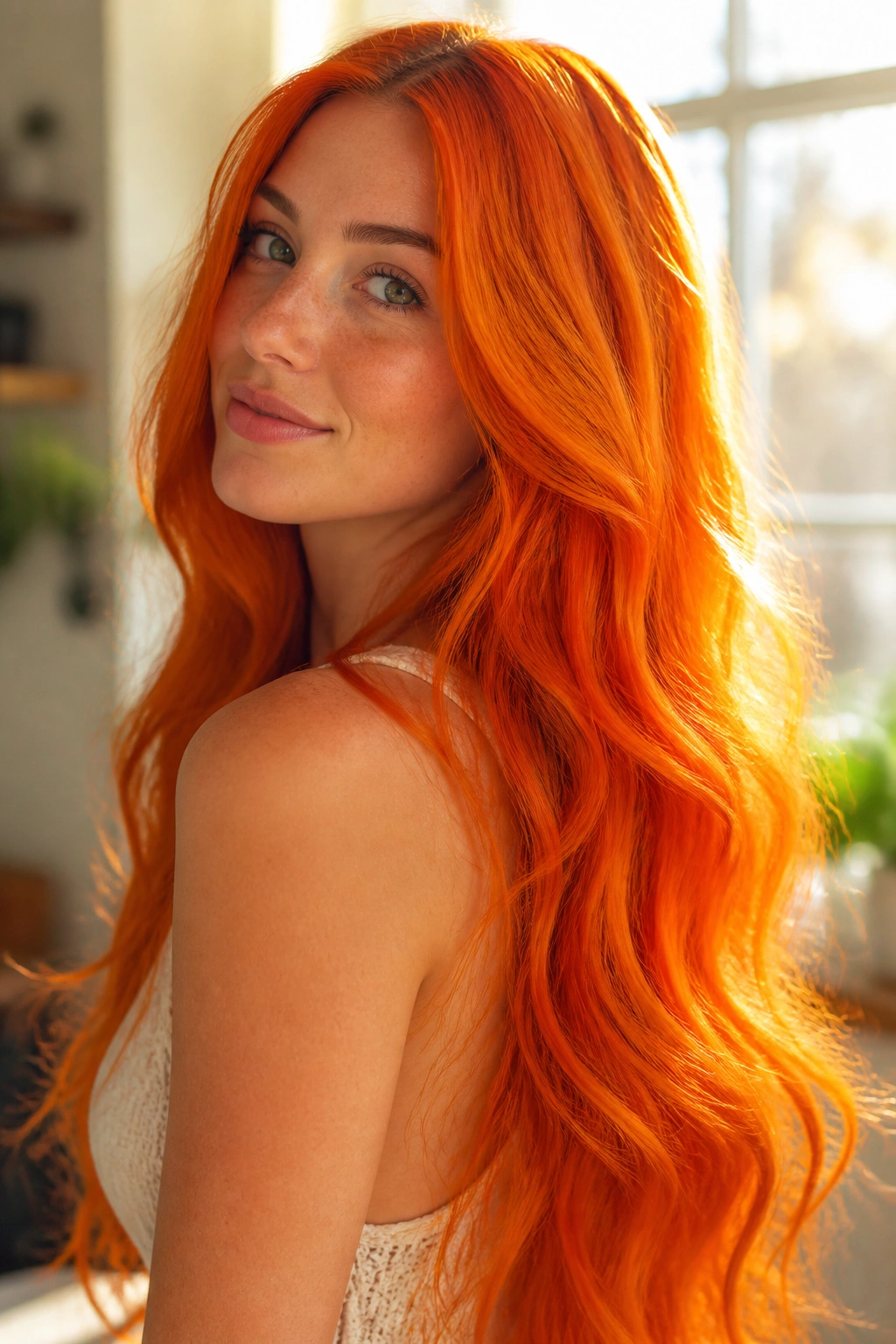
Mango orange has heat to it. Not copper. Not soft apricot. Mango. On long hair, it can look juicy, bold, and a little bit dangerous in the best way, especially if the color is kept bright through the mids and slightly deeper at the root.
Unlike copper, mango orange reads more playful and less earthy. It has a sharper glow. That makes it a better fit for people who want a color that feels unmistakable from a distance.
Who It Suits
- Warm undertones, especially golden or olive skin.
- Hair that can take prelightening without breaking.
- Long cuts with movement, because the shade needs motion to show its depth.
A mango orange shade tends to look best when it is not over-toned. Too much gold and it turns brassy. Too much red and it slips into copper. The sweet spot is clean and fruit-like. A little gloss helps keep it glossy between washes, and that shine matters because matte orange can look flat fast.
I’d put this on long hair that already has some shape. Layers, face-framing pieces, soft bends — those all keep the color from feeling like one giant orange block. It’s bold either way, but shape makes it smarter.
16. Denim Blue Balayage
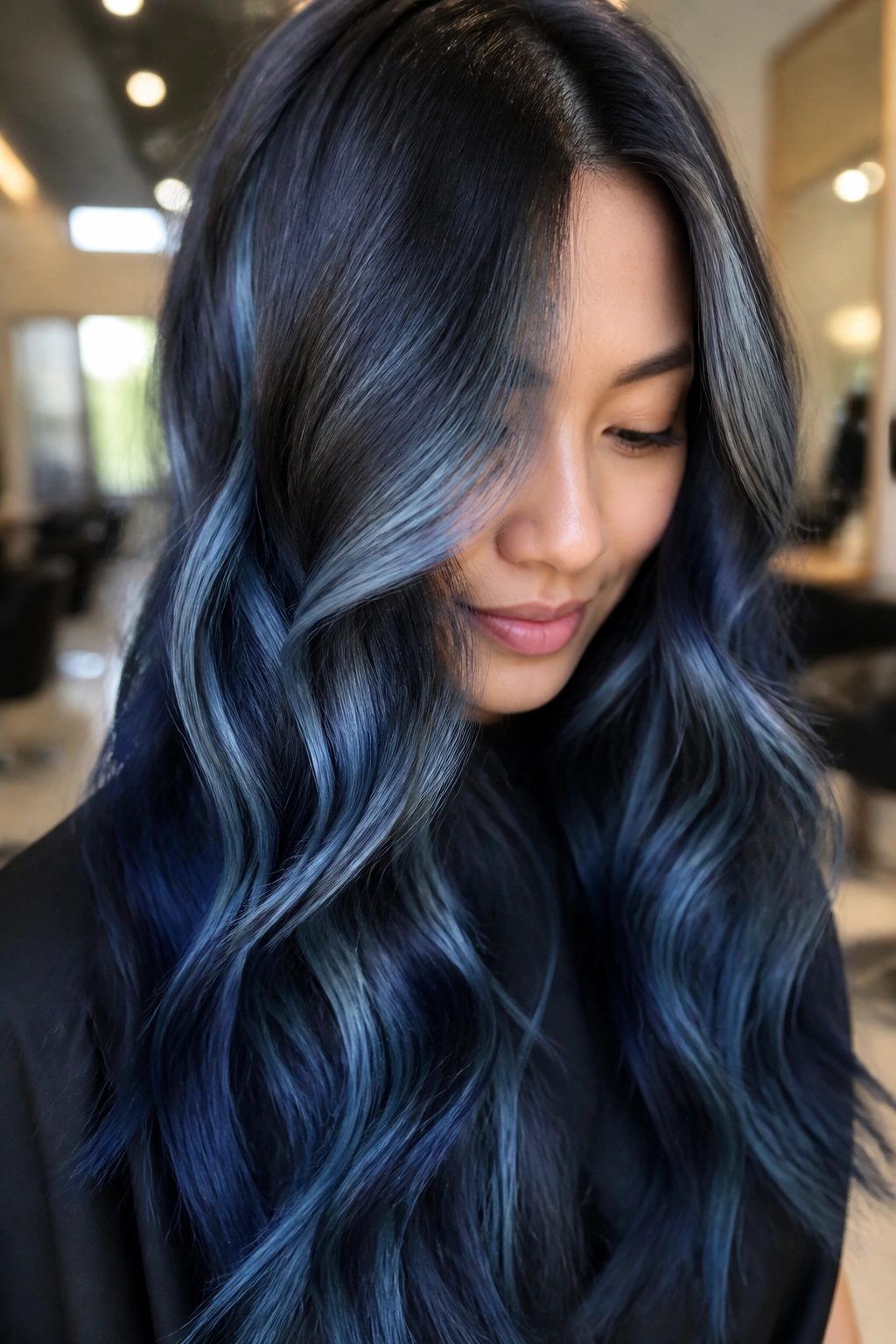
Denim blue is one of the easiest bold blues to wear because it can lean slate, washed-indigo, or cobalt depending on the toner and how much brightness the hair has underneath. On long hair, balayage keeps that range visible from top to bottom.
The appeal here is wearability. A full neon blue can dominate everything. Denim blue sits somewhere between statement and everyday. It still looks strong, especially on long waves, but it doesn’t feel like the hair is wearing you.
Why It Works So Well on Long Lengths
Long balayage has room to blur. That matters. Denim blue is prettier when it shifts across sections rather than sitting as one blocky color. Darker roots can melt into smoky blue mids and a slightly brighter face frame, and the result feels intentionally layered.
This shade also does a good job hiding grow-out. The root area can stay natural or take a soft shadow, which means the blue keeps its shape longer. If the hair is curly or wavy, the blue can look almost like a fabric wash in motion.
Quick note: if you want true denim and not teal, the underlying blonde needs to be lifted cleanly. Yellow in the base will drag the blue green. That is the part people miss, and then they blame the color instead of the lift.
17. Magenta Red-Violet
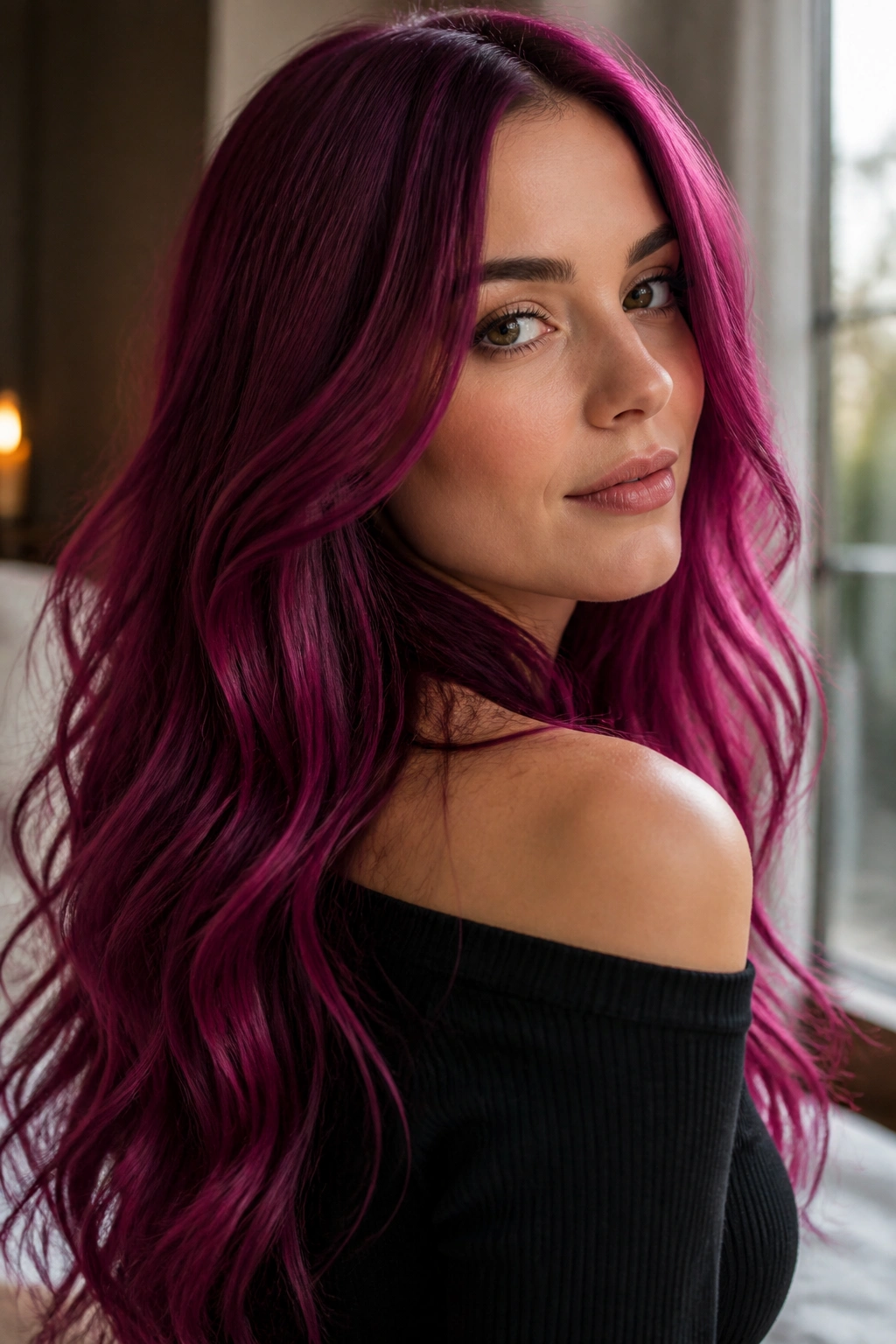
Magenta sits in a sweet spot between pink and red, which is why it looks so rich on long hair. It has more bite than rose and more brightness than plum. On long lengths, that extra saturation makes the hair look almost plush.
The best magenta tones on long hair tend to be slightly red-violet rather than bubblegum. That keeps the shade from looking flat. It also works better with layered cuts because the color catches on bends and waves, so the hair looks active instead of painted on.
I’ve always liked this shade on braids. The plait breaks the magenta into repeated flashes, and the color feels deeper because your eye keeps re-measuring it. Loose curls do the same thing, though in a softer way.
If the base is dark, a red-violet direct dye can still show up well after lightening to a warm blonde. If the base is already blonde, the color may look brighter and slightly more pink. That is not a flaw. It’s a choice.
Magenta fades nicely when the formula is good. It usually softens into rose or berry instead of turning ugly brown. That makes it a friendlier bold color than some people expect.
18. Lime Green Accent Streaks
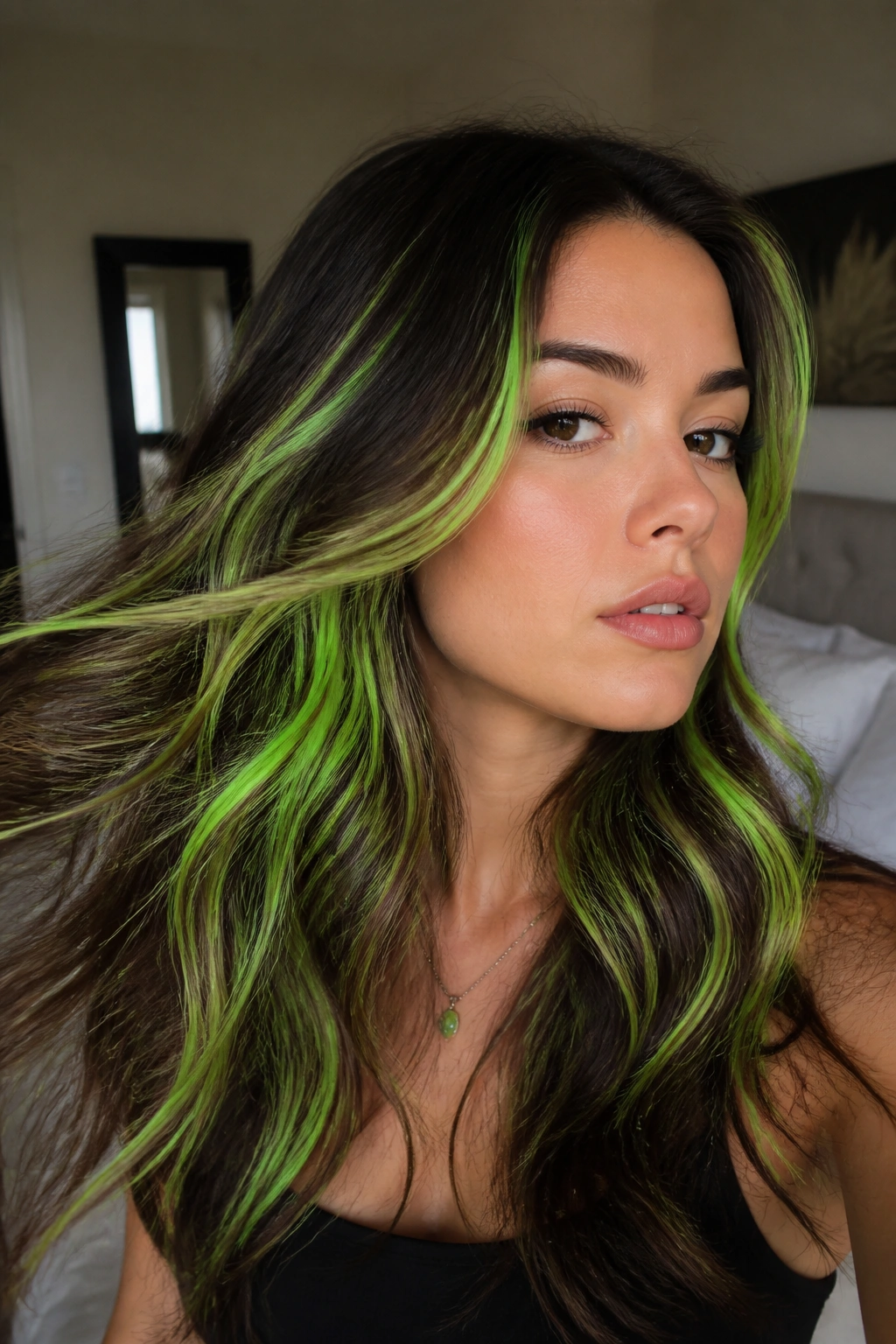
Lime green is not for everyone. Good. It should not be. What makes it compelling on long hair is how little of it you need to make the whole style feel charged.
A few narrow streaks through the front, a hidden strip under the top layer, or a cluster at the ends can be enough. Because long hair has so much surface area, even a small amount of lime can shift the whole mood. You do not need a full-head commitment.
Where to Place the Streaks
Use lime near the face if you want it to hit hard. Use it under layers if you want it to flash only when the hair moves. Put it at the tips if you want the color to read playful instead of aggressive.
Lime is easiest to wear when the rest of the hair is darker and calmer. Black, smoky brown, or deep olive all give the green a better stage. On very light hair, lime can feel cartoonish unless it is blended with chartreuse or yellow-green. That may be the point. Or not.
My honest take: lime works best when it’s treated like an accent, not a blanket. A little goes a long way, and long hair gives you enough room to use that to your advantage.
19. Platinum with Icy Color Blocking
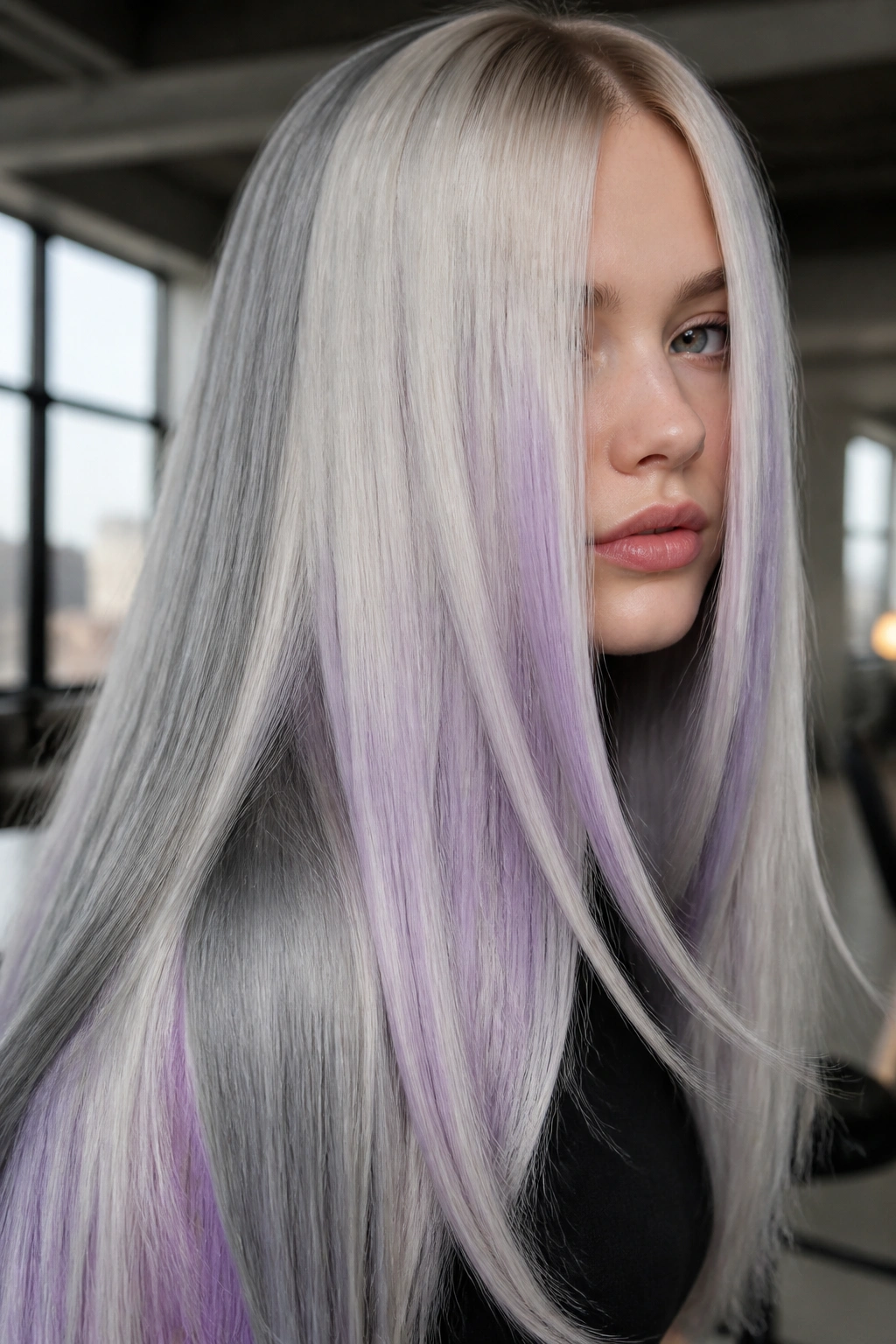
Platinum on its own can be stunning, but on long hair it becomes much more interesting when it’s broken up with icy color blocking. Think platinum blond base with silver panels, pale lavender sections, or blue-white face framing. The result is cool, graphic, and sharp.
This style does not beg for attention. It gets it anyway. The clean contrast between blocks makes the hair look architectural, which is a nice change from softer melts and blends.
Best Placements
- A bold face frame in silver or ice blue.
- Hidden panels under the top layer for movement.
- Chunky ends if you want the color to show in curls and braids.
This one needs a careful colorist. Platinum is already demanding, and once you start blocking in icy tones, every section needs to be lifted evenly or the whole thing can look patchy. Long hair makes that more obvious because the lines keep traveling down the length.
It suits people who like a crisp finish. If you want softness, skip it. If you want hair that looks sharp in a sleek ponytail and even sharper when loose, this is a strong pick.
20. Mulberry Cranberry Dimension
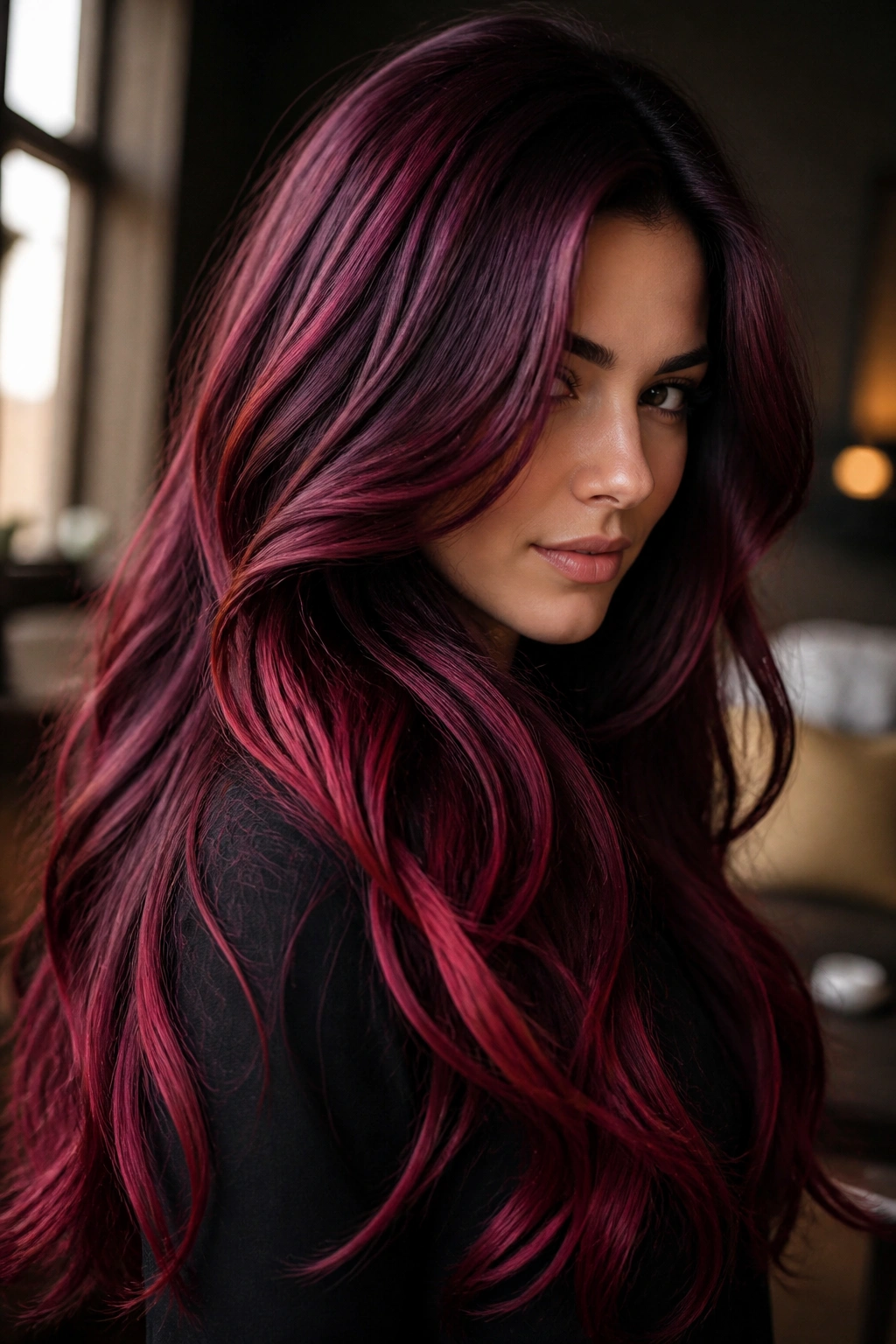
Mulberry cranberry is one of the smartest bold choices for long hair because it feels rich instead of flashy. The mix of deep berry, red, and plum gives the hair depth that changes from one angle to the next.
That depth matters on long lengths. A flat red can get repetitive from root to tip. Mulberry cranberry keeps the eye moving. In shadow, it looks darker and moodier. In light, the red comes forward. That push and pull is the whole reason people keep coming back to berry tones.
Why It Feels So Good on Long Hair
Long hair gives this shade more room to layer. A darker root shadow near the scalp, a saturated berry through the mids, and a brighter cranberry glow at the ends can look polished without being stiff. The color almost behaves like woven thread.
It also works on more base colors than people expect. Dark brunettes can wear a deeper version with minimal lightening. Medium blondes can go brighter and get more red out of it. Either way, the tone is flattering because it sits between warm and cool.
If you want one bold shade that still feels grown-up, this is the one I’d point to first. It’s vivid enough to count, but not so loud that it steals all the attention from your face.
Final Thoughts
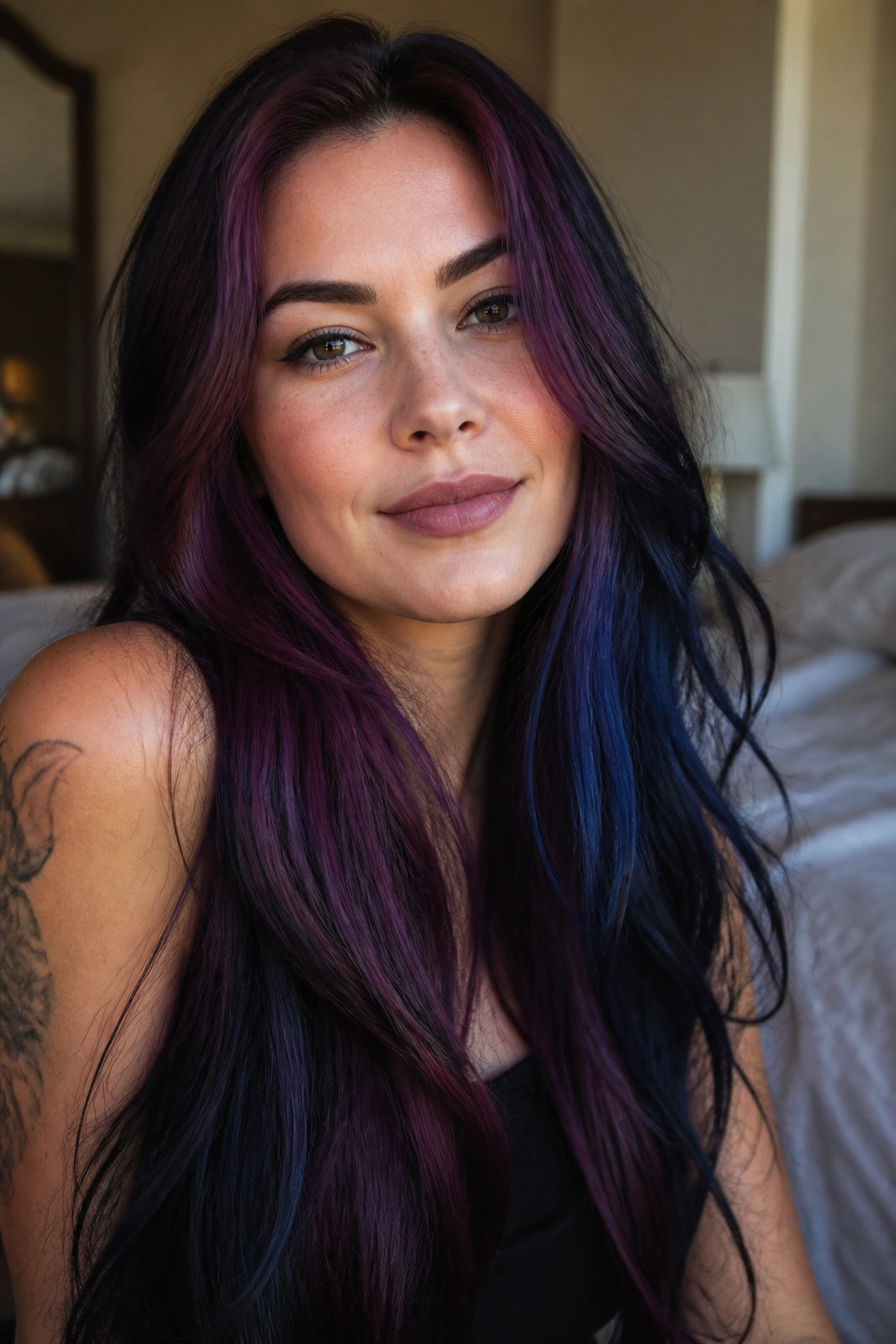
Long hair and bold color are a good match when the placement makes sense. That is the part people miss when they go straight to the shade chart. The color has to live somewhere on the head, and on long lengths that “somewhere” can be a root shadow, a ribbon, an underlayer, or just the last few inches. Those choices change everything.
The strongest options here are the ones that match your maintenance tolerance. Fire-engine red and platinum blocking make a statement fast, but they ask for more care. Cherry cola, blue-black, plum, and mulberry give you drama with a softer grow-out. That’s usually the smarter move if you wear your hair long and like it to look good in a braid, a knot, and a loose wave.
Bring photos to a colorist, yes, but bring the right kind. Show both down-hair shots and tied-back shots. Long hair behaves differently in each one, and the best bold color is the one that still looks interesting when you catch it in a mirror on the way out the door.
