



Soft wave hairstyles for medium hair have a very specific kind of charm: they move when you do, but they do not collapse into frizz or feel overdone by lunch. That’s why they keep showing up on shoulder-length cuts, collarbone lobs, and those in-between lengths that can be tricky to style if you want softness without limpness.
The sweet spot is the length itself. Medium hair is long enough to hold a bend, but short enough that the wave pattern still looks crisp and intentional instead of dragging down into old, tired curls. Give it a 1-inch iron, a flat iron bend, or even a good overnight braid, and it takes shape fast. Give it too much product, though, and the whole thing can turn sticky and heavy. That part matters.
I’ve always thought the best wave looks on medium hair are the ones that still let the cut breathe. You want movement around the jaw, cheekbone, and collarbone; you do not want a helmet. A few small changes — where you part it, which direction you curl, whether you brush it out — make a bigger difference than most people expect.
Some waves look polished enough for dinner. Some work better on day-two hair. Some are made for fine hair that needs lift, and some are kinder to thicker hair that tends to puff up. The right one is less about “can you wear it?” and more about what kind of shape you want around your face and neck.
1. Center-Part Soft Waves for Medium Hair
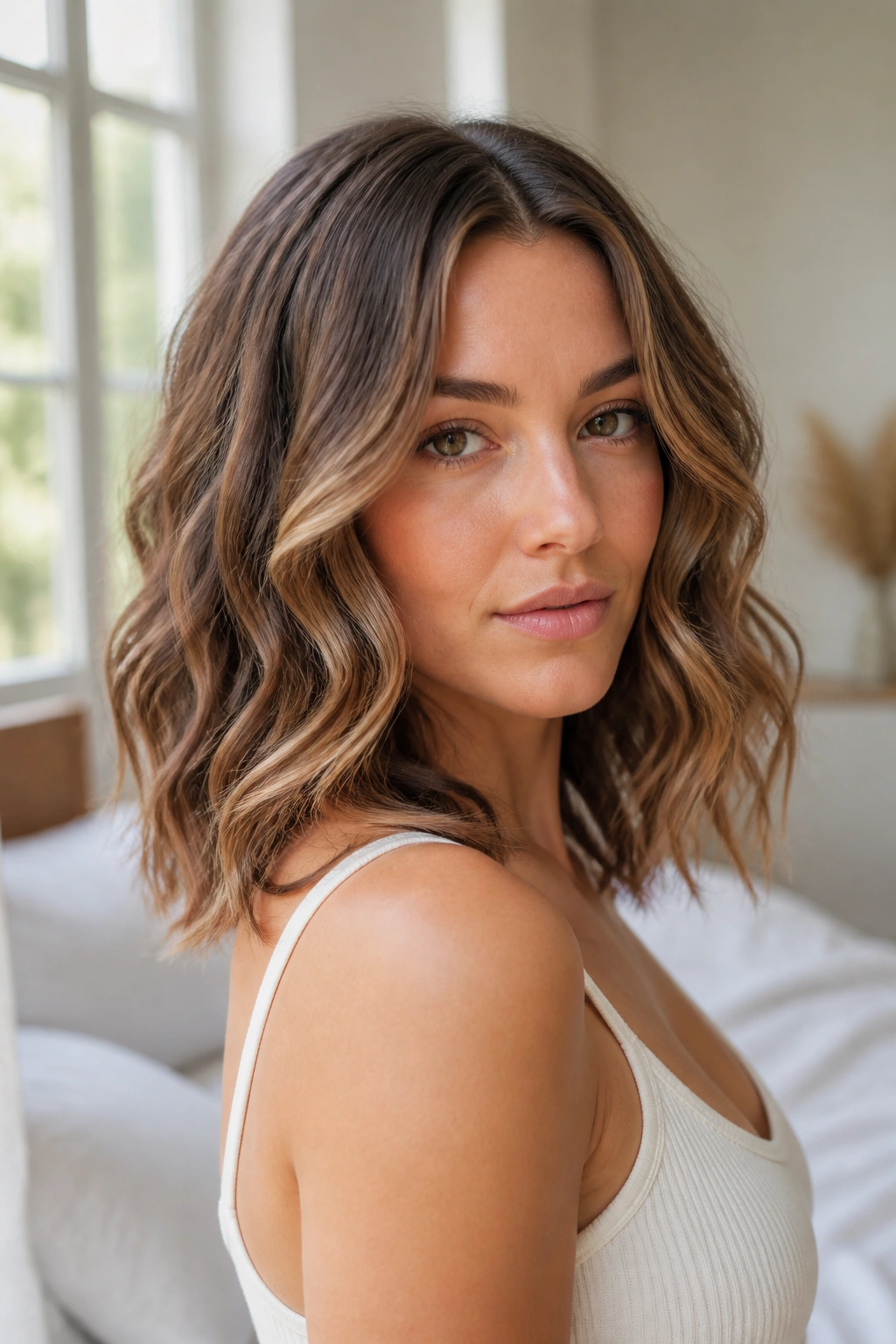
A clean center part gives soft wave hairstyles for medium hair a calm, balanced frame that feels modern without trying too hard. It’s the first style I think of when someone wants movement but still wants the cut to look neat and controlled.
Keep the waves loose and even, with most of the bend starting below the cheekbones. That keeps the top from looking too busy. On medium-length hair, this is one of the easiest ways to make a blunt lob feel softer without losing the line of the cut.
Why It Works
The center part creates symmetry, and symmetry makes the wave pattern feel deliberate. If your hair is naturally a little flat at the crown, a tiny bit of root lift spray or mousse at the part helps the whole shape stand up better.
Use a 1-inch curling iron or a flat iron bend, and take sections about 1 to 1.5 inches wide. Curl away from your face on both sides, then brush through once with a paddle brush or wide-tooth comb. That softens the spiral into a loose wave instead of a ringlet.
- Best for round, oval, and heart-shaped faces
- Looks especially good on blunt ends
- Works well with gloss sprays or light shine mist
- Easy to wear from office hours to dinner
Tiny detail, big payoff: keep the front pieces slightly softer than the rest. It stops the center part from feeling severe.
2. Deep Side-Part Soft Waves
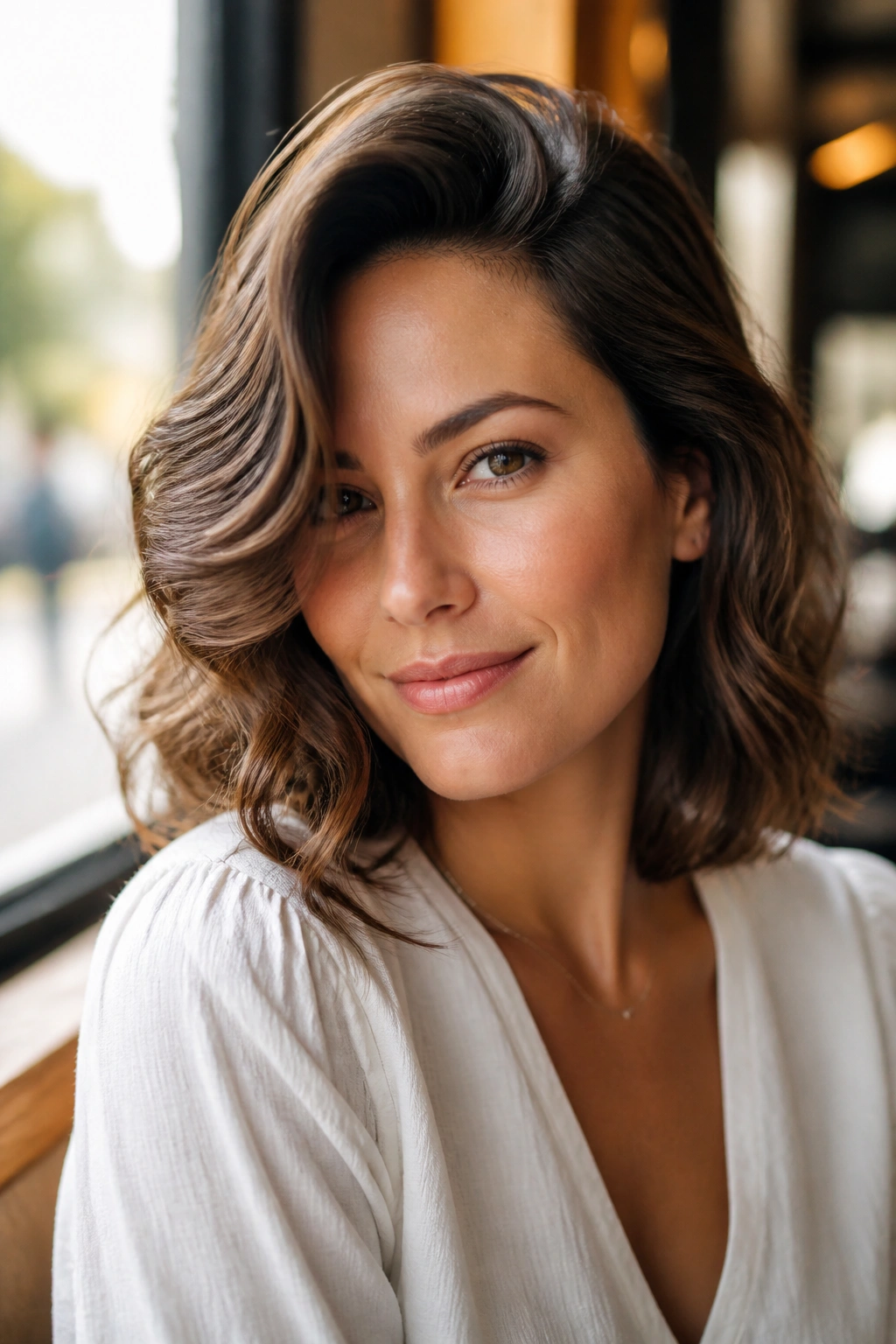
A deep side part changes the whole mood in one move. Suddenly the same medium haircut has more sweep, more lift, and a little bit of drama — without needing a dramatic curl pattern.
I like this version on days when straight hair feels flat and the usual middle part feels boring. One side falls forward with a soft curve, and the other side opens up the face. It gives medium hair a bit of old-Hollywood shape, but not the stiff kind.
The trick is to curl the hair away from the part line for the first two front sections. That keeps the wave from collapsing into the face. If your hair is fine, clip the heavier side up for five minutes after styling so it cools in place. Cooling matters more than people think.
This style also plays nicely with layered cuts. The side part lets shorter pieces fall in a way that looks natural instead of awkward, which is not always easy with shoulder-length hair. If you want the look to hold longer, mist the mid-lengths and ends with flexible-hold spray, then leave the roots mostly free.
3. Face-Framing Soft Waves
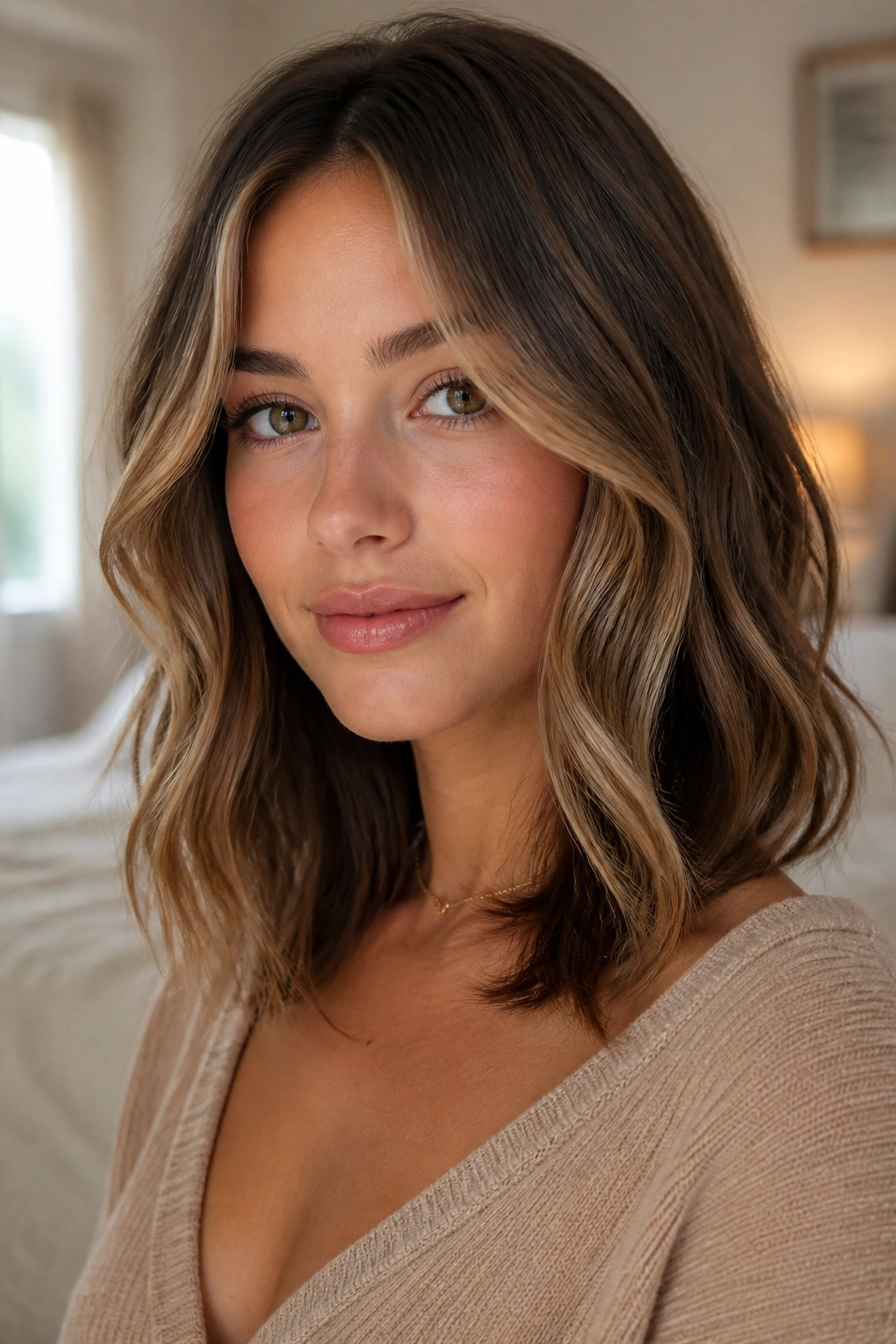
Do the front pieces first. Seriously.
Face-framing soft waves are all about the first 2 inches on either side of your part, and that’s why they can make medium hair look freshly cut even when the rest of the style stays simple. The front bend softens the jawline, nudges attention to the eyes, and gives a flat cut a little shape right where people notice it most.
How to Style It
Start with a heat protectant and a light blow-dry if your hair tends to puff up. Then take the front section on each side and wrap it around a 0.75-inch to 1-inch barrel, depending on how soft or defined you want the bend. Hold each piece for about 6 to 8 seconds, release, and pin it flat against the head while it cools.
Use a larger barrel on the rest of the hair so the front pieces stay a touch more defined than the back. That contrast looks intentional. Brush the ends lightly, but leave the face-framing bends visible.
When It Helps Most
- Great for straight hair that falls flat around the cheekbones
- Handy when you want wave without styling the entire head
- Useful for bangs growing out into curtain pieces
- Nice with tucked-behind-the-ear styling
The front sections do more visual work than people admit. If those two pieces sit well, the rest of the hair can stay loose and easy.
4. Clipped-Back Soft Waves
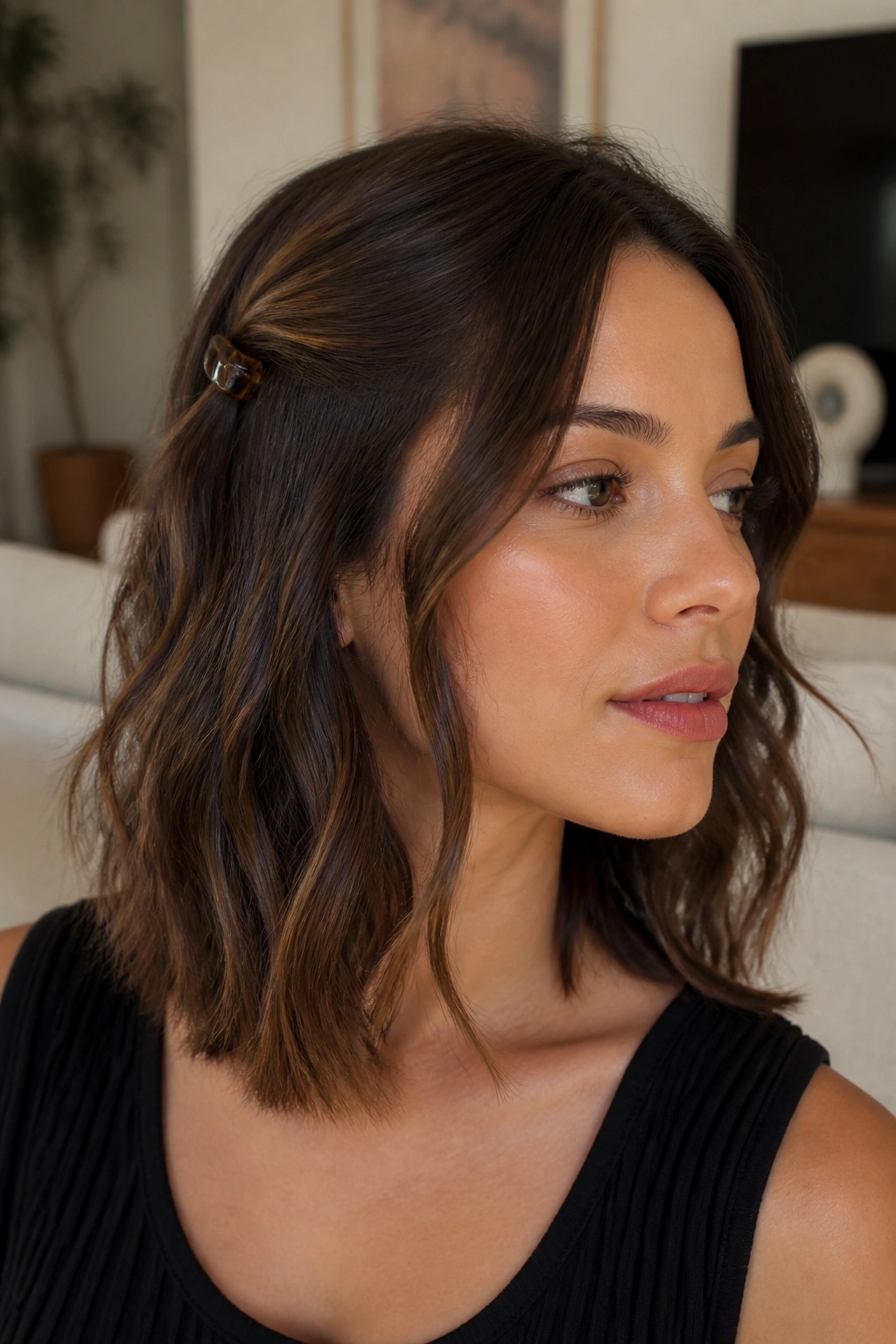
A tiny clip can change the whole thing. When you pin back one side of medium hair, the wave pattern suddenly feels cleaner, and the face gets a little opening without losing softness through the lengths.
This is the style I reach for when hair looks good everywhere except the front. Maybe the ends are cooperating, maybe the crown needs a break, maybe you just want to keep hair out of your eyes. A single barrette, pearl clip, or two crossed bobby pins can solve it in ten seconds.
The best version keeps the wave loose underneath the clip. Don’t flatten the hair before you pin it. Let the texture stay airy, then secure a 2-inch section just above the temple. If the clip is too large, it starts to dominate the style, and that defeats the point.
- Use one decorative clip for a polished finish
- Use two small pins for a quiet, everyday look
- Leave the lower waves brushed out
- Add a spritz of texturizing spray only at the ends
The style works especially well on medium hair that’s one or two days past wash day. The texture gives the clip grip, which means less slipping and less fiddling.
5. Blunt Lob Waves
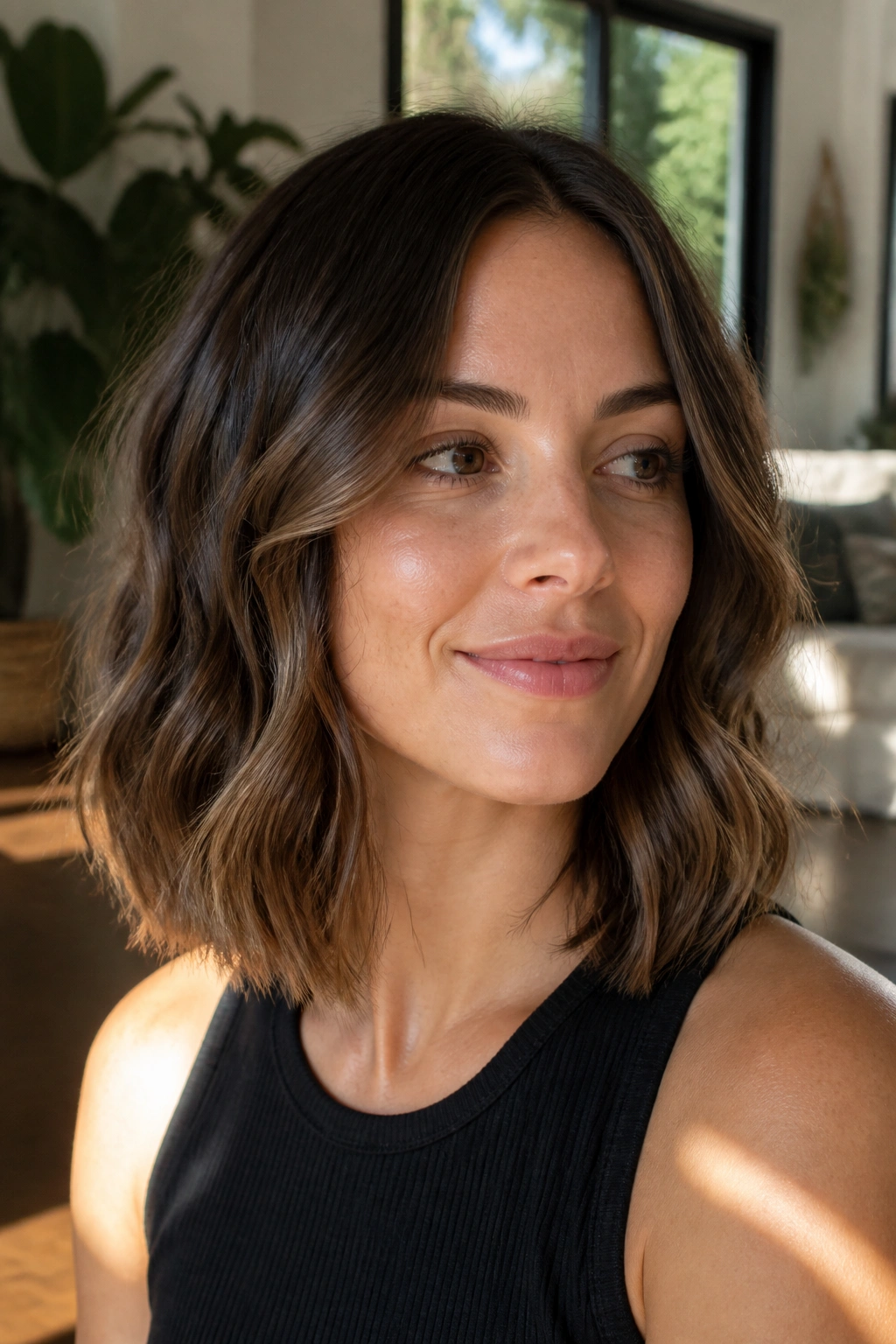
A blunt lob with soft waves is one of those cuts that looks more expensive when the wave is loose rather than curled. The straight edge at the bottom gives structure, and the waves bring in movement so the cut does not feel boxy.
I’m a fan of this one because it keeps medium hair honest. The line stays clear. The texture does the rest. If your hair is thick, the blunt edge prevents the ends from looking wispy. If your hair is fine, the wave pattern gives the cut a little body without needing layers everywhere.
Use a flat iron or 1-inch iron and create a gentle bend from mid-length to the ends, leaving the last inch or so a bit straighter. That little unfinished edge is what keeps the style looking modern. Brush it out once, then stop. More brushing can make the whole thing collapse.
The blunt lob wave is one of the few styles that can look neat and relaxed at the same time. It’s not fussy. It doesn’t need perfect symmetry. And on medium hair, that kind of restraint is often the smartest move.
6. Layered Mid-Length Waves
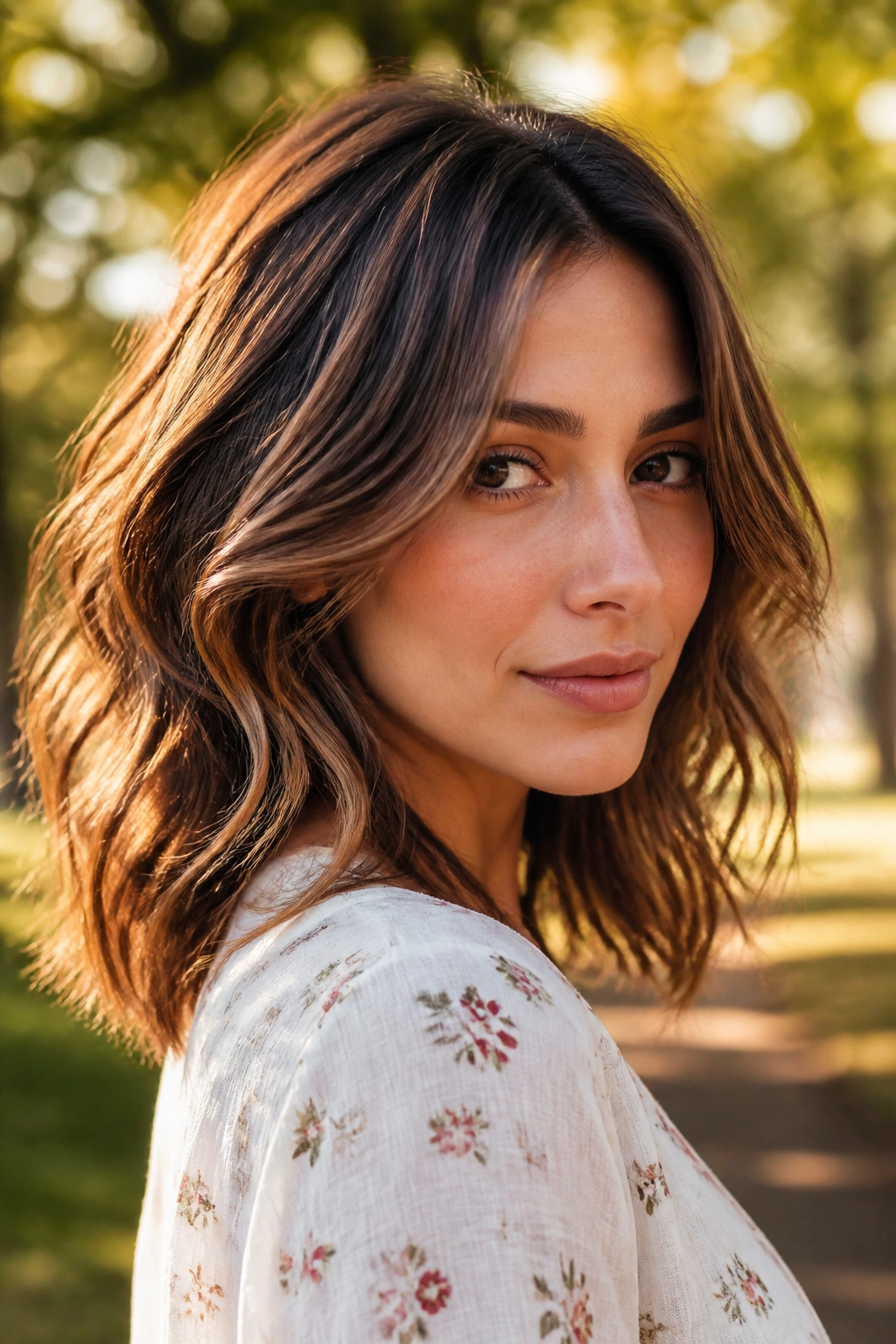
Layers and soft waves are a better pair than most people realize. The layers give the wave someplace to fall, and the wave keeps the layers from looking choppy or overcut.
Here’s the difference from a blunt lob: layered medium hair moves more. It has more swing around the shoulders and more lift through the mid-lengths. That can be a gift if your hair is heavy, because the style will not drag flat by midday. It can also be a problem if you overcurl it. Then everything balloons.
Use a medium-hold mousse at the roots before blow-drying, especially if your layers are fine. When styling, alternate the curl direction every section — away from the face, then toward it, then away again. That broken pattern stops the layers from stacking into one thick wave shape.
This style suits medium hair that wants body more than polish. It also makes color work pop in a very practical way, because layered waves show off dimension without needing dramatic styling. Not loud. Just alive.
7. Curtain-Bang Soft Waves for Medium Hair
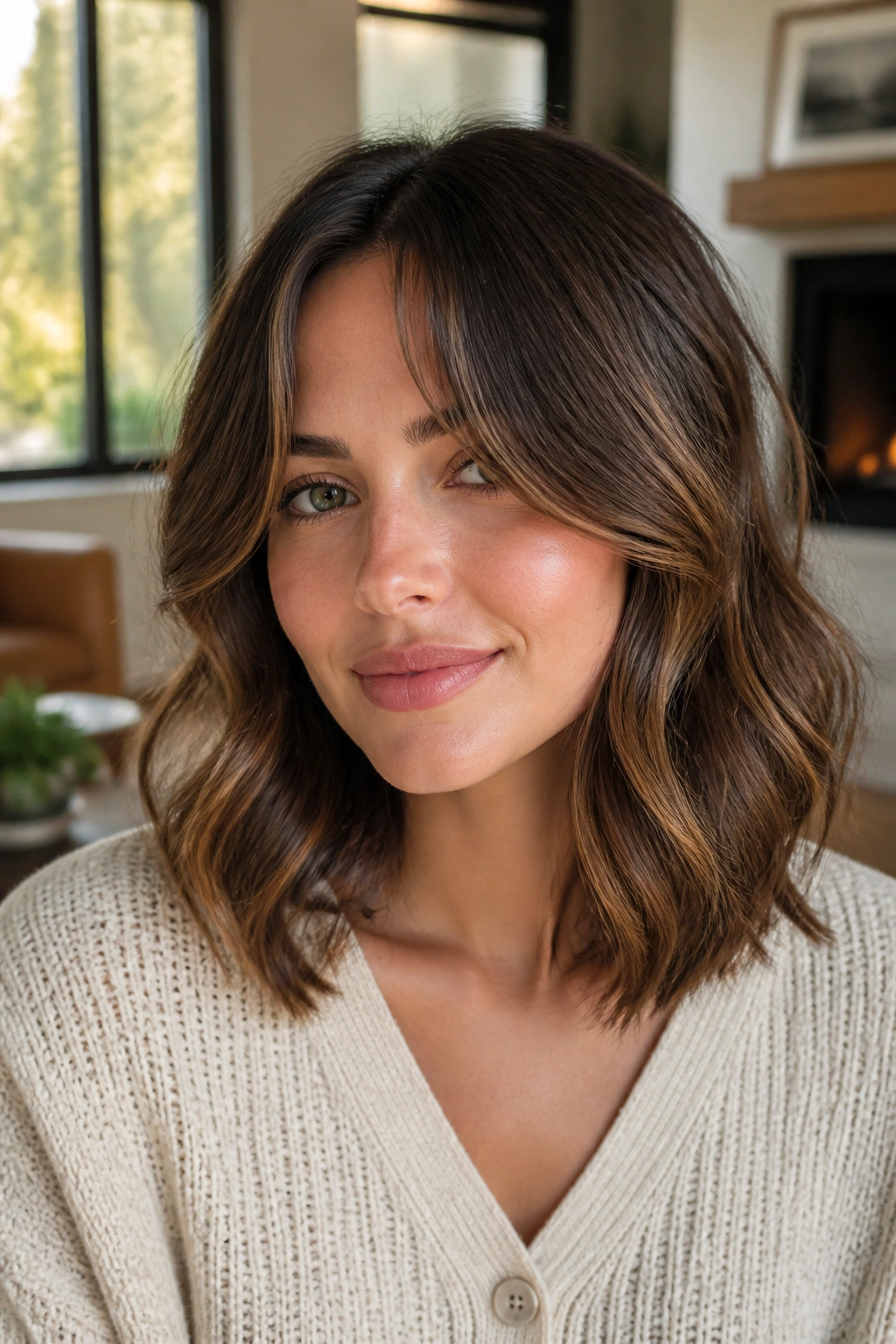
Curtain bangs change the whole face frame. They pull attention upward, soften the forehead, and make soft wave hairstyles for medium hair feel a little more styled even when the rest of the length stays easy.
The Shape to Aim For
Curtain bangs should curve away from the center part, not cling to the forehead. Blow-dry them with a round brush or a medium-sized Velcro roller for a few minutes while they cool. That small step keeps the fringe from sticking flat to the skin.
For the mid-lengths, use a loose wave with a 1.25-inch iron or a flat iron bend. The front bangs should be a little more curved than the rest of the hair, but not tighter. If they’re too curly, the balance gets weird fast.
What Makes It Work
- Softens a broad forehead
- Breaks up a blunt medium-length cut
- Looks better with a little root lift
- Needs less effort than full fringe styling
A lot of people overdo the bangs and understyle the lengths. Don’t do that. The whole look works because the fringe and the wave pattern share the same relaxed energy.
8. Air-Dried Soft Waves
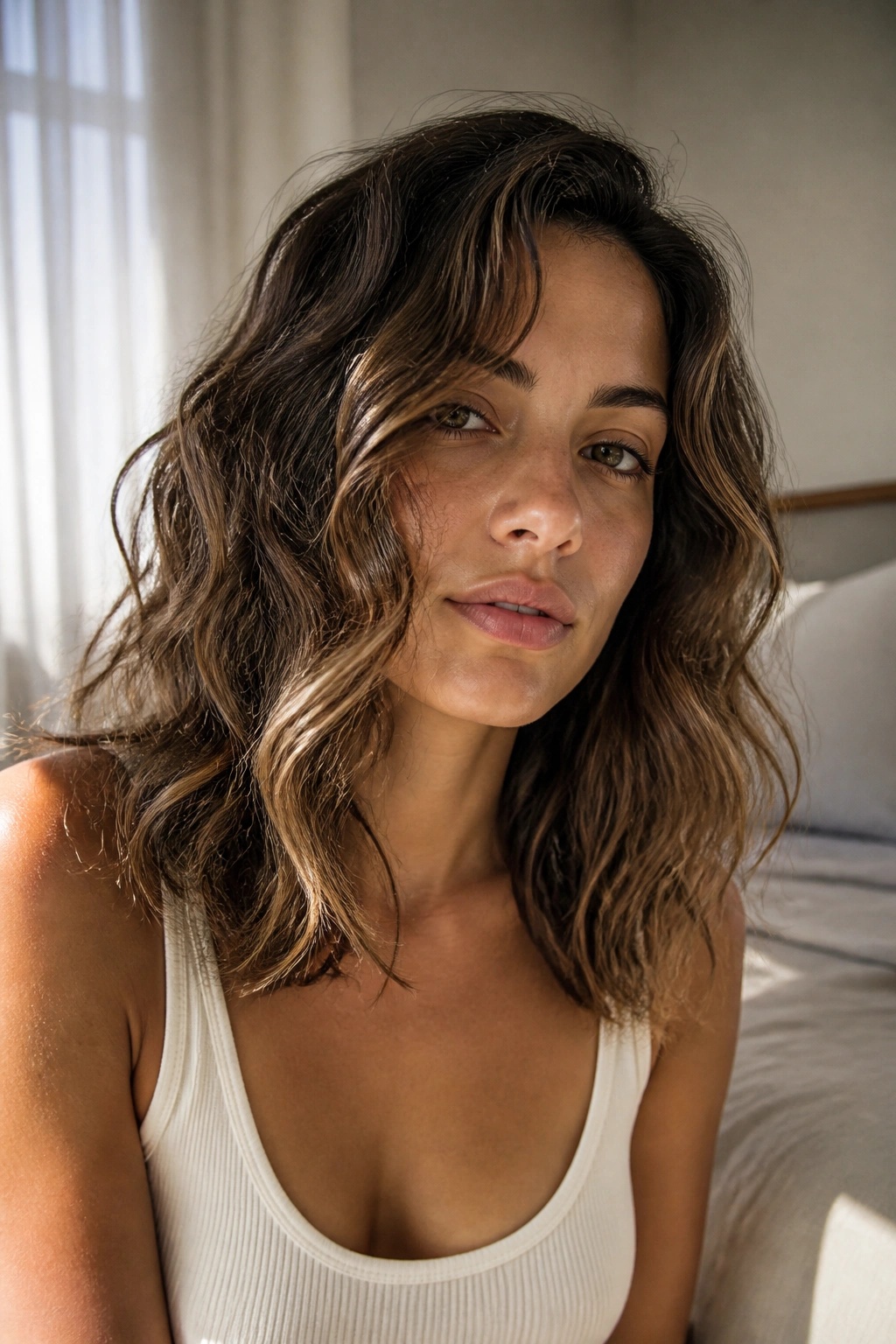
Air-dried waves are the lazy-cool version of medium hair styling, and I mean that as a compliment. If your hair already has some bend, this style enhances it instead of fighting it.
Use a leave-in conditioner, then a pea-sized amount of curl cream or light gel on damp hair. Scrunch from the ends up toward the scalp, then either braid two loose sections or twist the sides behind your ears while it dries. A microfiber towel helps. So does keeping your hands out of it.
- Best for naturally wavy or slightly textured hair
- Works with humidity better than a brushed-out curl
- Needs less heat, which is kinder to the ends
- Benefits from a diffuser only if the roots stay flat
The mistake here is using too much product. Medium hair can handle some weight, but not a thick layer of cream. If the strands feel slippery and clumped, you’ve gone too far.
Air-dried waves are at their best when they look like your own hair, only better behaved.
9. Polished S-Waves
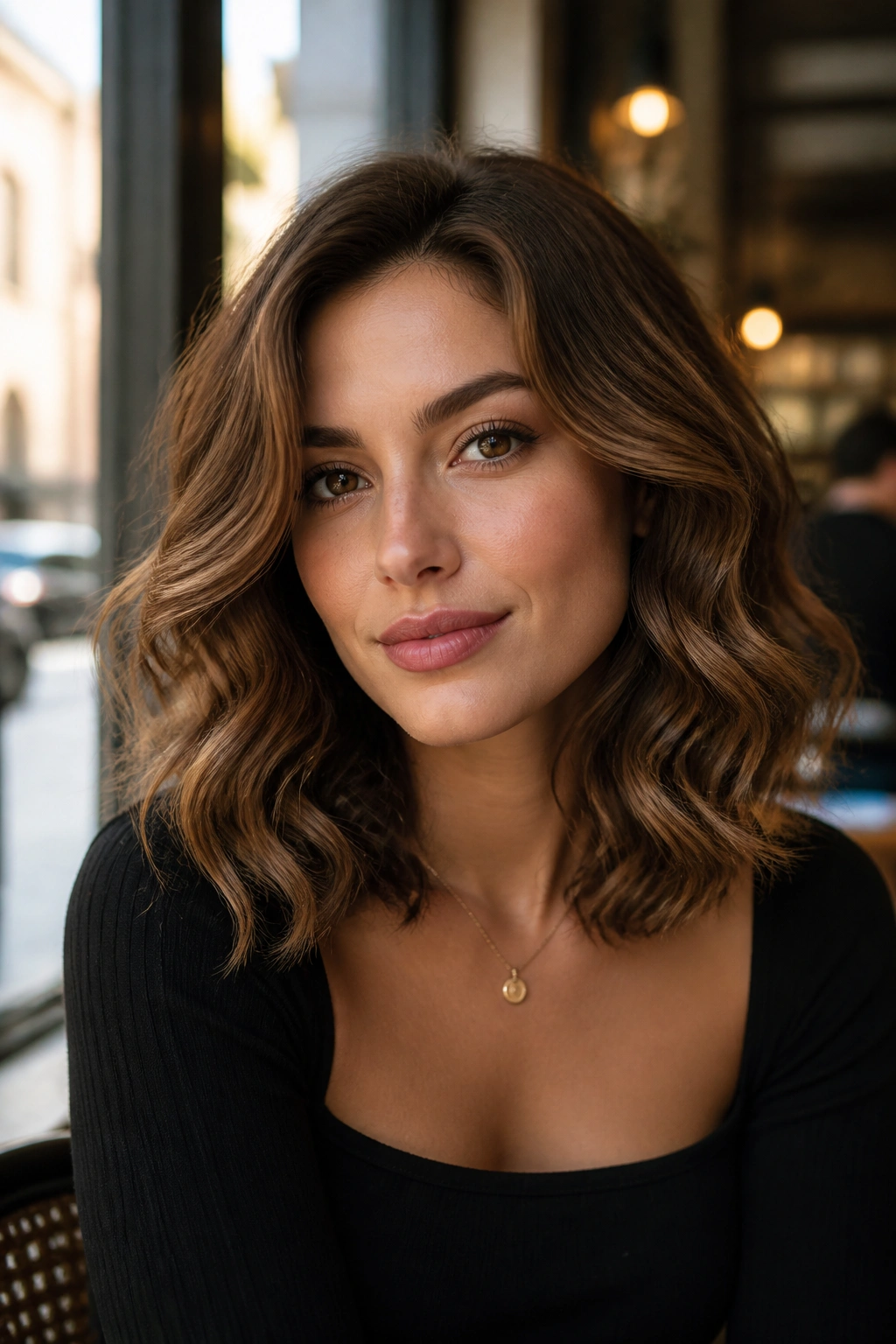
Polished S-waves are the sleek cousin in the family. The curve is softer and more deliberate, with an “S” shape that sits close to the head instead of exploding outward.
This style looks sharp on medium hair because the length is long enough to show the pattern but short enough to keep the shape compact. It’s a smart choice when you want something more finished than beach waves, but not as structured as a classic curl set.
Use a flat iron and create a bend by twisting the wrist in alternating directions as you slide down each section. Smaller sections work better here — around 1 inch wide. After styling, let the waves cool completely before touching them. Then use a light serum on the ends only. Too much on the roots and the style goes slick in a bad way.
Polished S-waves pair well with a side part, a tucked ear, or a clean neckline. They have a little red-carpet energy, but they still feel manageable on shoulder-length hair. The shape does the talking.
10. Tousled Beach Waves
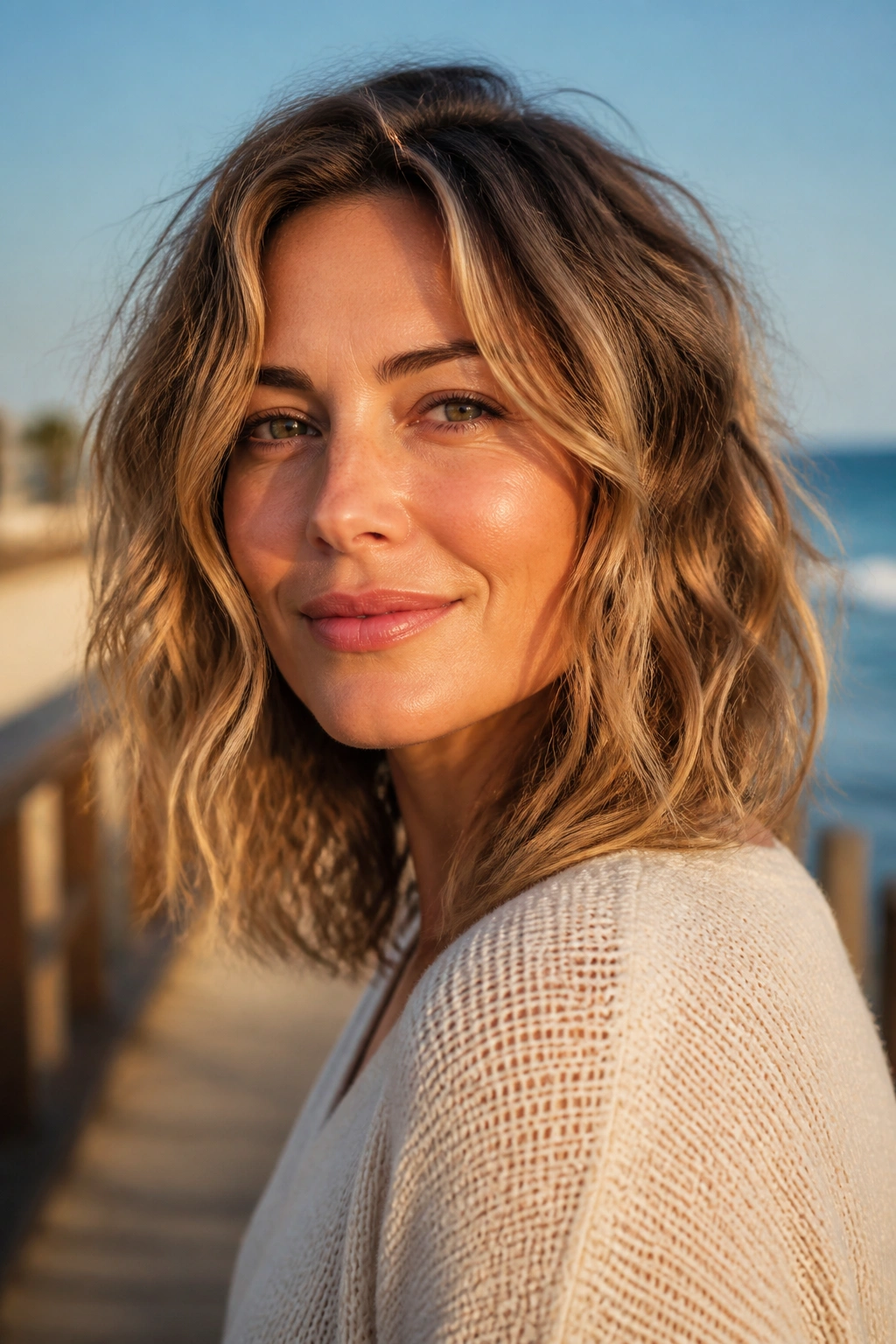
Why do beach waves keep surviving every trend cycle? Because they’re easy to wear and forgiving on medium hair that never seems to hold one perfect curl anyway.
The best beach wave is not crunchy and not shiny in a fake way. It should look loose, slightly broken up, and full of movement around the shoulders. A 1.25-inch iron gives you that softer bend faster than a smaller barrel, especially on collarbone-length hair.
Start with heat protectant and a mist of texturizing spray on dry hair. Curl random 1.5-inch sections, leaving the ends out on a few pieces so the finish doesn’t look too round. Then rake through with your fingers and pinch a little more product into the ends if they need roughing up.
How to Keep Them Soft
- Use less hairspray than you think
- Leave 10 to 15 percent of the ends straighter
- Alternate curl directions to avoid a uniform pattern
- Stop before the hair looks piecey and stiff
Beach waves on medium hair work because they keep the cut casual. They’re the style you wear when you want your hair to look like it had a good day without making a big speech about it.
11. Half-Up Soft Waves
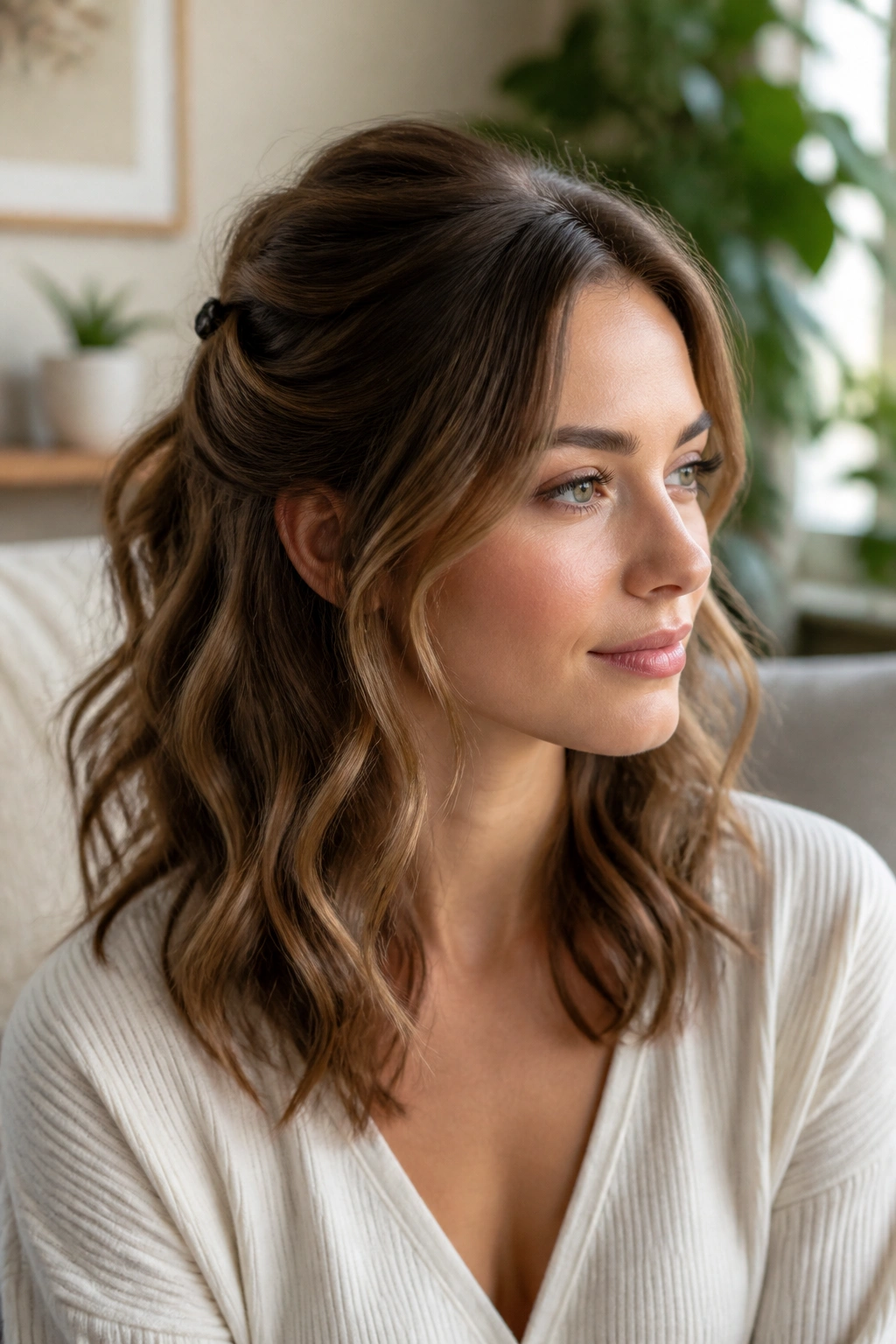
A half-up style can be a life saver when the roots are flat but the ends still have something going on. On medium hair, it gives a little lift at the crown and keeps the wave pattern visible below the clip or tie.
I like the half-up version when the front pieces want to fall into my face. Pull back just the top third of the hair, secure it with a small elastic or clip, then gently loosen the crown with your fingers. The key is not to yank the top too tight. You want lift, not a snatched look that fights the softness below.
The lower waves can be loose and brushed out, or slightly more defined. Either works, though I prefer the looser version with a small curl through the ends. It keeps the whole style from feeling too school-photo neat.
This is one of the few styles that moves easily from casual to dressed up. Swap the elastic for a barrette, and the same shape looks a lot more finished. Small change. Big difference.
12. Low Ponytail Waves
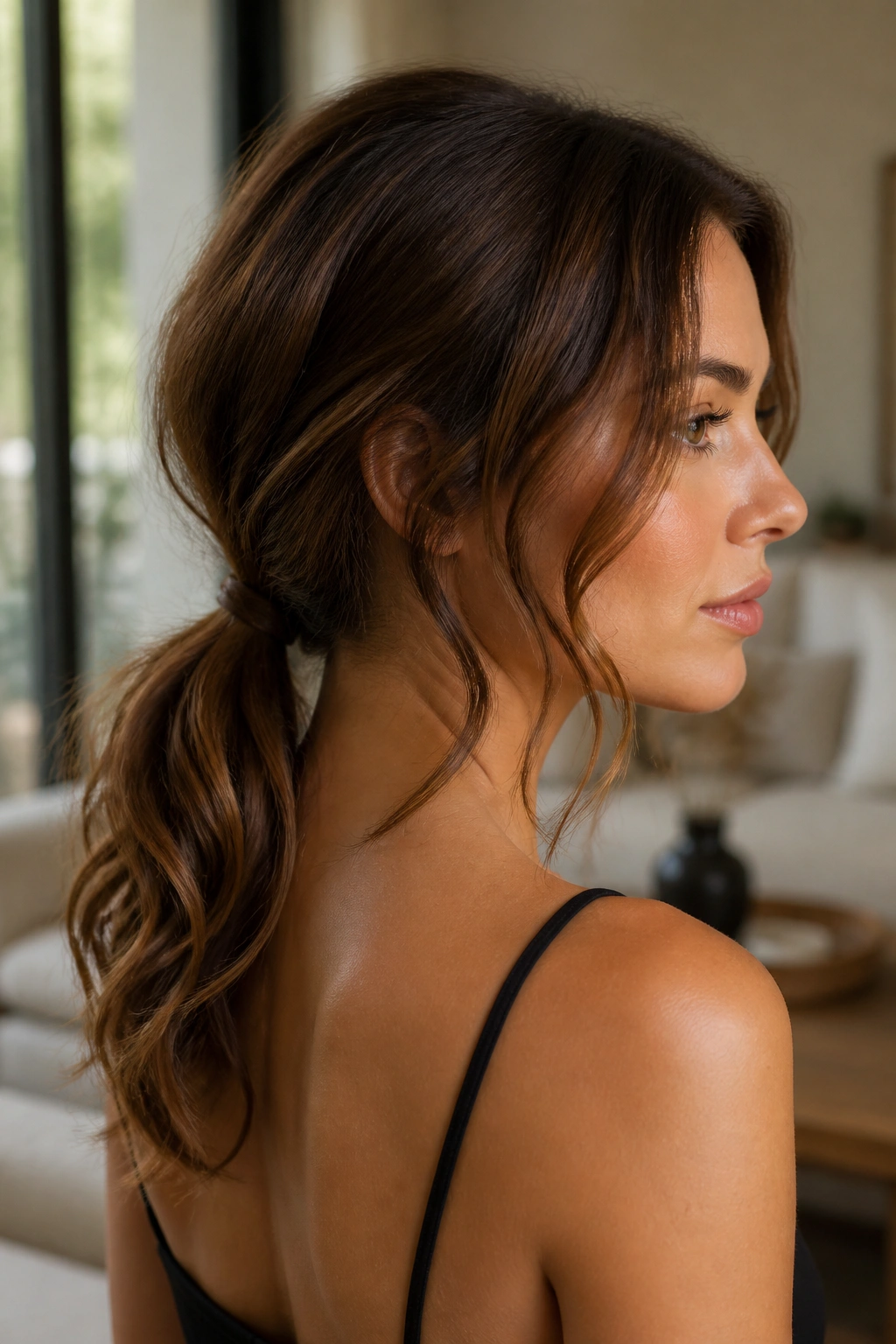
A low ponytail with soft waves is underrated because people think ponytails are only about convenience. They’re not. On medium hair, a low ponytail can show off wave texture in a way that feels clean, especially when you want the neck and shoulders to stay open.
The trick is to wave the hair first, then gather it loosely at the nape. If you pull too tight, the whole style loses the softness that makes it worth wearing. Leave a few face-framing pieces out, or pull one thin section around the elastic to hide it.
This style works better than a high pony on medium hair because the length doesn’t get stretched awkwardly. The waves still have room to sit naturally through the ponytail, so the shape looks intentional instead of squeezed.
A soft low pony is also one of the easiest styles to refresh. A quick pass with a curling wand on the front pieces, a dab of serum on the ends, and you’re done. It’s the sort of style that makes practicality look planned.
13. Deep Side-Swept Waves
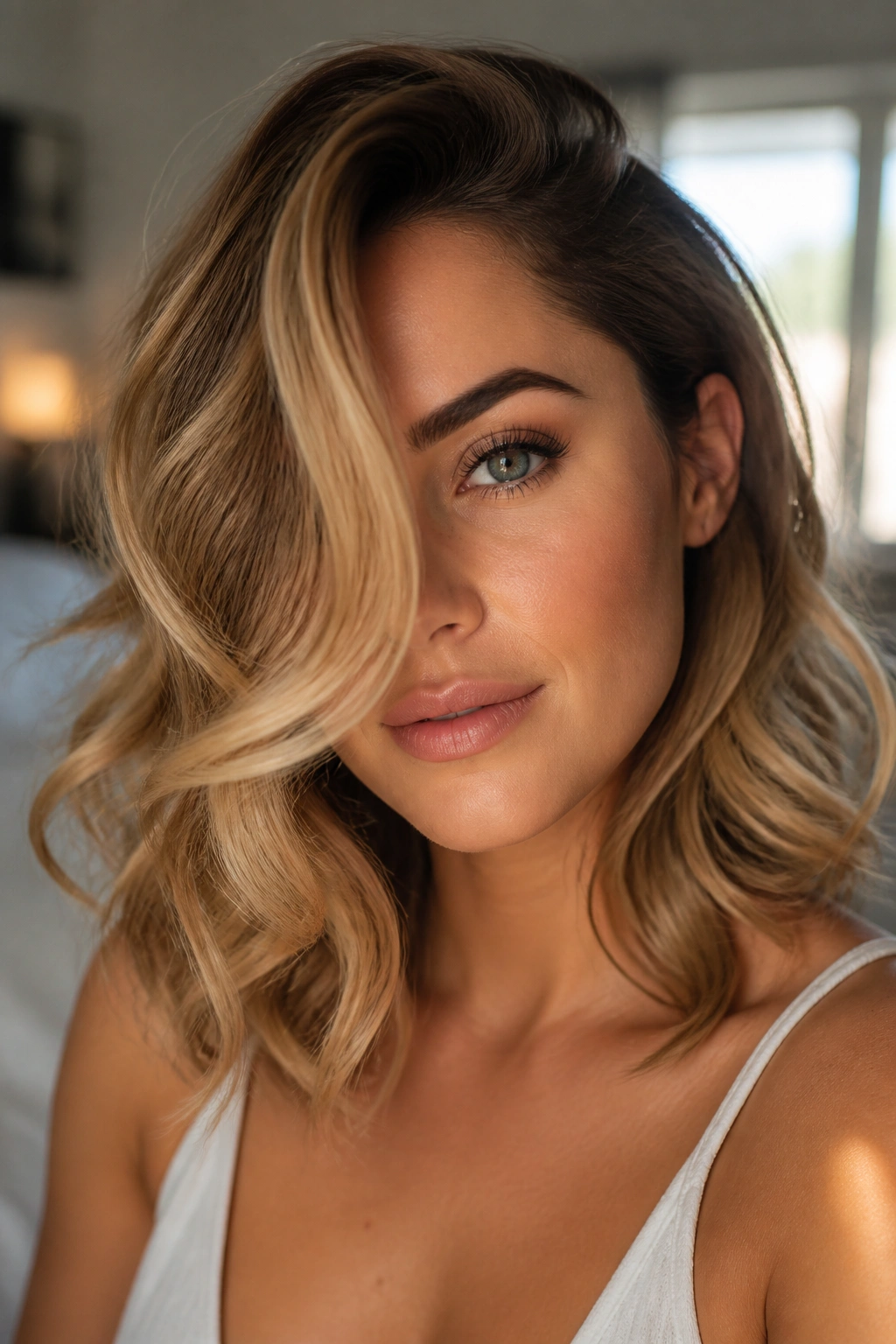
A deep side-swept wave has a bit of old glamour in it, but the medium length keeps it from feeling too formal. The hair sweeps across one side of the face and falls into a looser pattern on the other, which gives the whole style a strong line.
The move that matters most is the part. Shift it far enough that the heavier side has real volume, then curl the larger front section away from the face. That creates the sweep. If the front piece is curled toward the face, the whole thing can cave in and lose its shape.
Use a brush to soften the wave only after it has cooled. Not before. If you brush too early, the front falls flat and the style starts to look like it’s halfway undone. A little clip on the heavy side can help train the hair while it settles.
This is a good choice when you want your medium hair to look dressed up without using pins everywhere. One big sweep does more work than six small fixes.
14. Vintage Finger Waves on Medium Hair
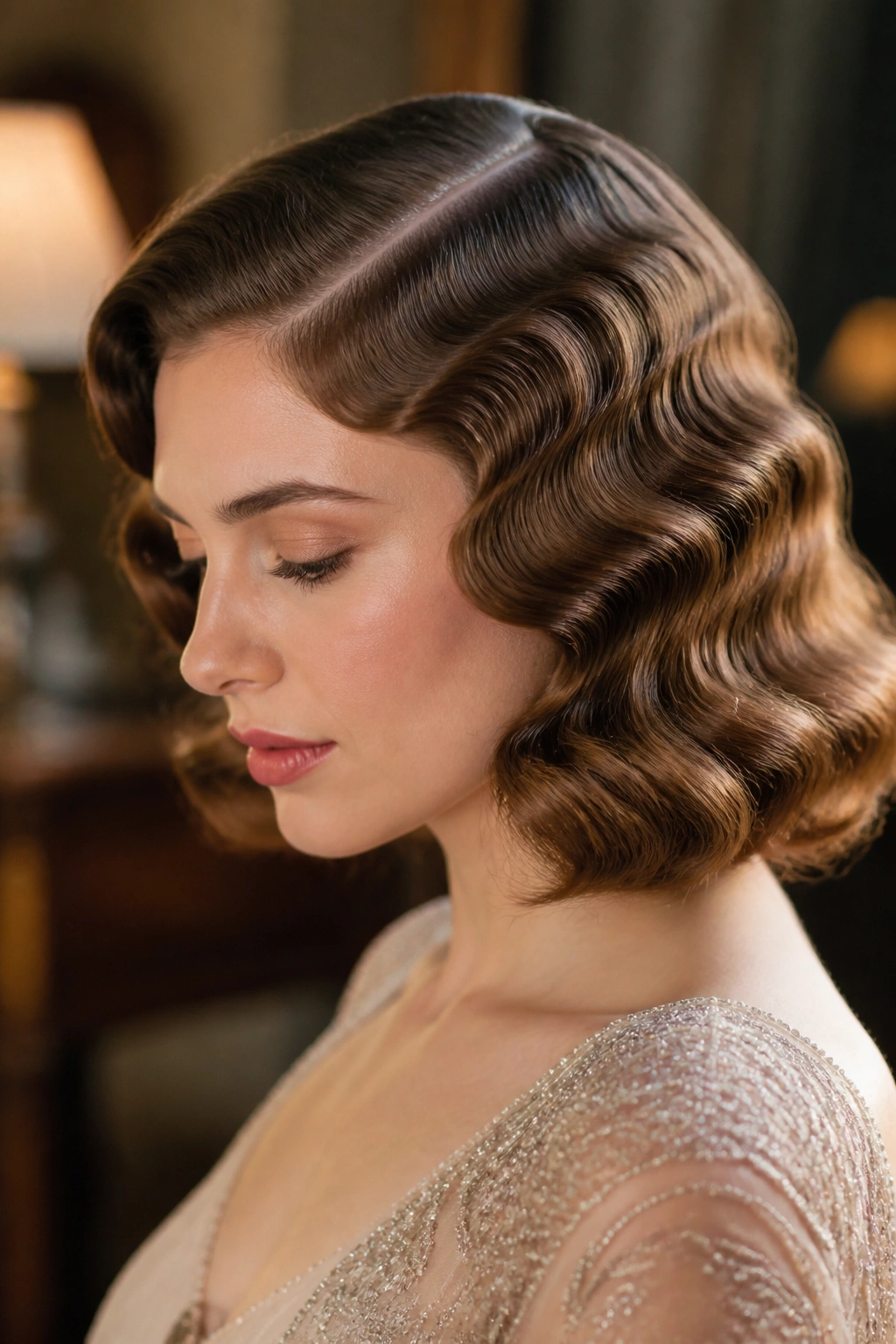
Finger waves on medium hair have a more sculpted feel than the looser styles above, but they still belong in the soft-wave family if you keep the finish gentle. They’re the cleanest way to make shoulder-length hair look tailored.
Why They Stand Out
The pattern sits close to the head and bends in smooth ridges, which means the wave reflects shape rather than volume. That makes it especially useful for shorter medium lengths that can sometimes puff out when curled traditionally. A side part helps. So does a shine serum used sparingly.
You do not need a full pin-curl set to get the mood right. A flat iron and a comb can create the wave direction, then a few clips can hold the ridge while it cools. If you’ve got fine hair, a light molding cream gives the style more grip. Thick hair needs less product and more patience.
Best Places to Wear It
- Evening events
- Dressy dinners
- Photo-heavy days
- Any time you want the hairline to look neat
Finger waves can feel a little formal, yes. That’s the point. On medium hair, they give you structure without swallowing the whole head.
15. Braided-Overnight Soft Waves
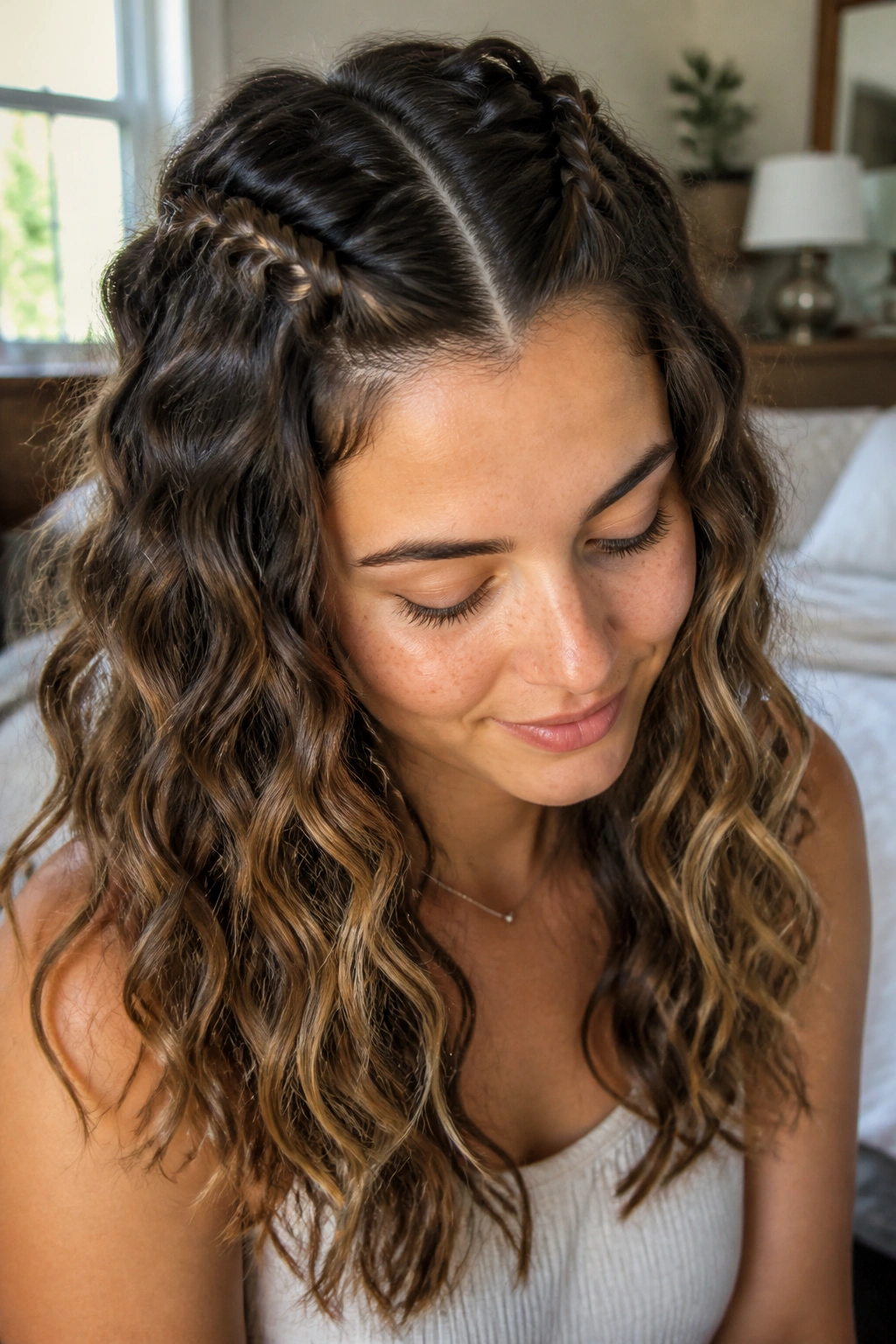
Braided waves are one of those styles people dismiss until they need something that works without heat. On medium hair, they create a softer, looser bend that feels a little rustic and a little polished at the same time.
Braid damp hair into two or four loose braids before bed, depending on how much wave you want. Two braids give a broader bend. Four braids make a tighter pattern. Use a silk scrunchie or a soft elastic at the ends so you don’t leave a hard dent at the bottom.
When you wake up, undo the braids only after the hair is completely dry. If it’s even slightly damp in the middle, the wave collapses faster. Shake it out with your fingers, then mist the lengths with a light spray and stop there. Too much combing turns the style frizzy.
This is one of the few methods that gives medium hair shape while you’re doing nothing at all. I respect that. The hair does the work while you sleep.
16. Shaggy Textured Waves
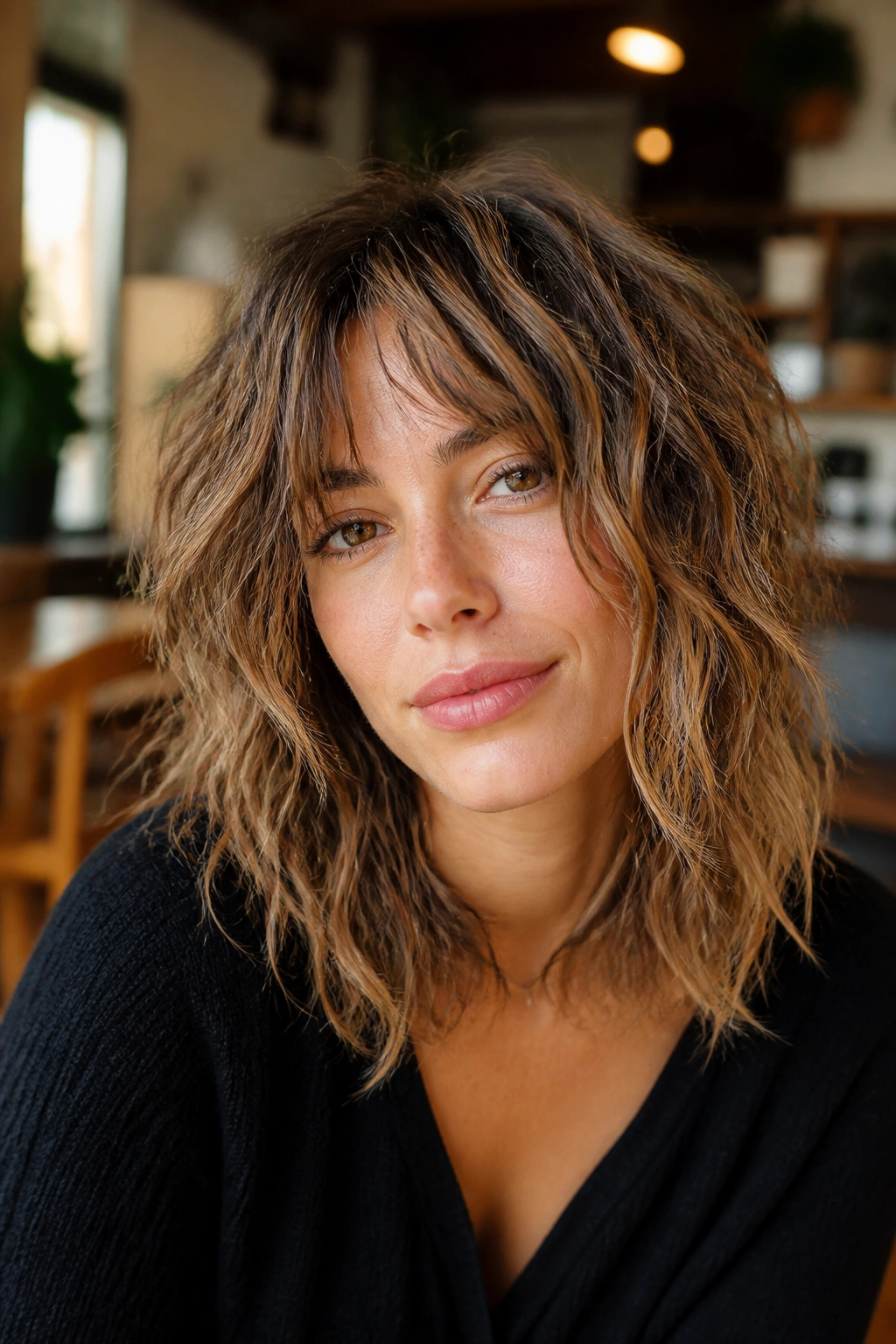
Shaggy waves are for medium hair that looks better with a little edge. Not messy. Edgy. There’s a difference.
If your cut already has layers, this style wakes them up fast. The waves are more broken, more uneven, and a little more piecey than the center-part versions. That unevenness is what makes the shape interesting. It also helps hair that tends to fall flat at the sides.
What to Use
- Sea salt spray on damp hair
- A diffuser on low heat
- A small amount of matte cream on the ends
- Fingers, not a brush
The best shaggy wave looks like it was bent, brushed, and lightly roughened — in that order. Curl a few sections, skip a few, and let some ends stay straighter than others. That mix keeps the style from turning into one big uniform pattern.
This one is especially good if your medium hair has choppy layers or a grown-out fringe. The texture hides the awkward parts and turns them into part of the look. Handy. Very handy.
17. Glossy Blowout Waves
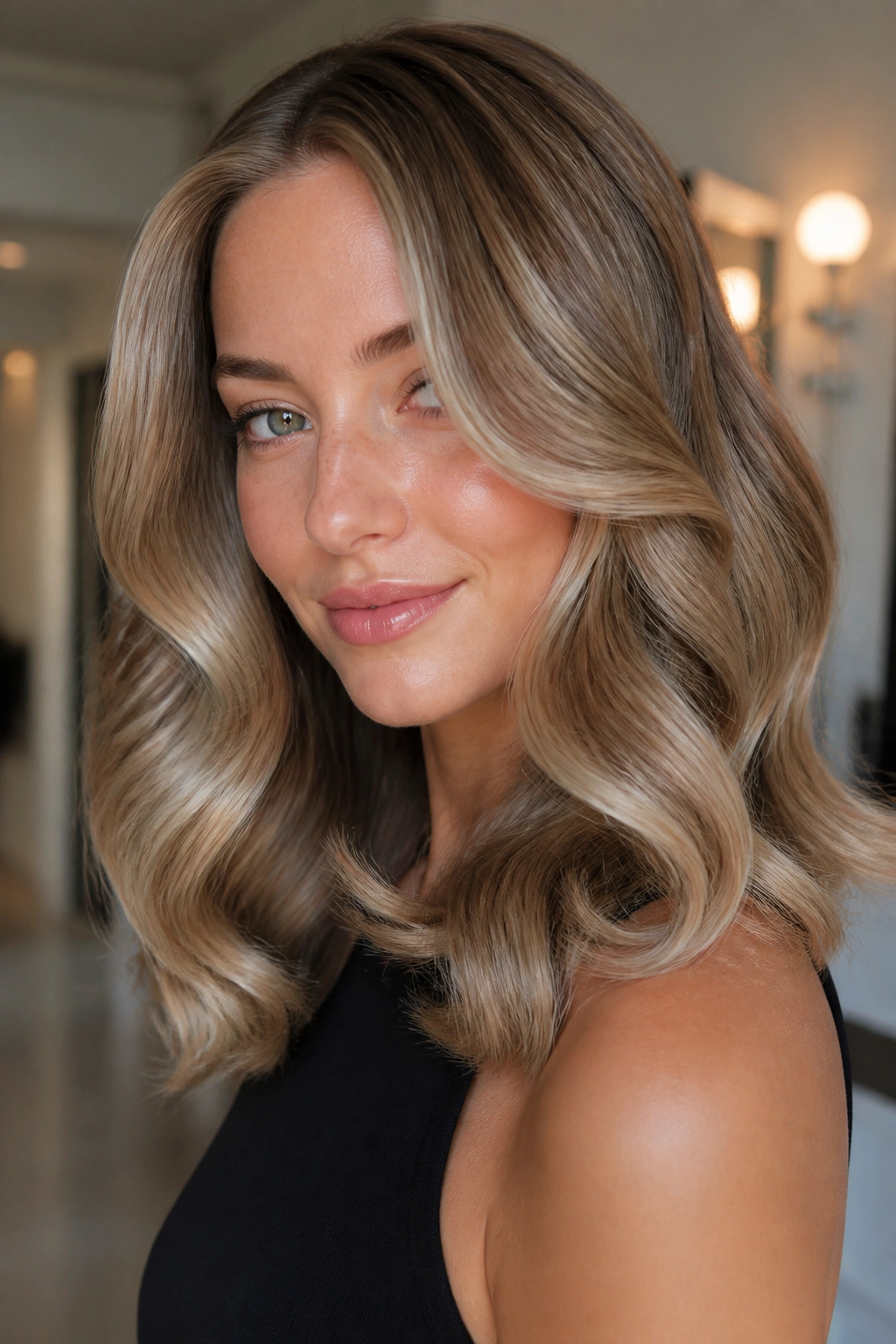
Glossy blowout waves sit somewhere between a salon blowout and a soft curl set. They’re smoother than beach waves, looser than polished S-waves, and especially nice on medium hair that needs shine more than texture.
The shape starts with a round-brush blow-dry or a blowout brush, then gets a gentle bend added at the ends with a curling iron. That two-step finish is what gives the style its smooth base. If you skip the blow-dry and go straight to curling, the hair can look puffy or uneven.
Use a heat protectant that leaves a little slip, then finish with a drop of lightweight serum in the palms. Work it through the lower half only. The roots should stay clean. That contrast is part of what makes the style look expensive without being fussy.
A glossy wave works beautifully on medium hair that’s cut to skim the collarbone. The movement shows, but the hair still keeps its line. It’s one of the few styles that can look polished in daylight and still hold up when the room lighting gets harsher.
18. Soft Waves with a Tucked Finish
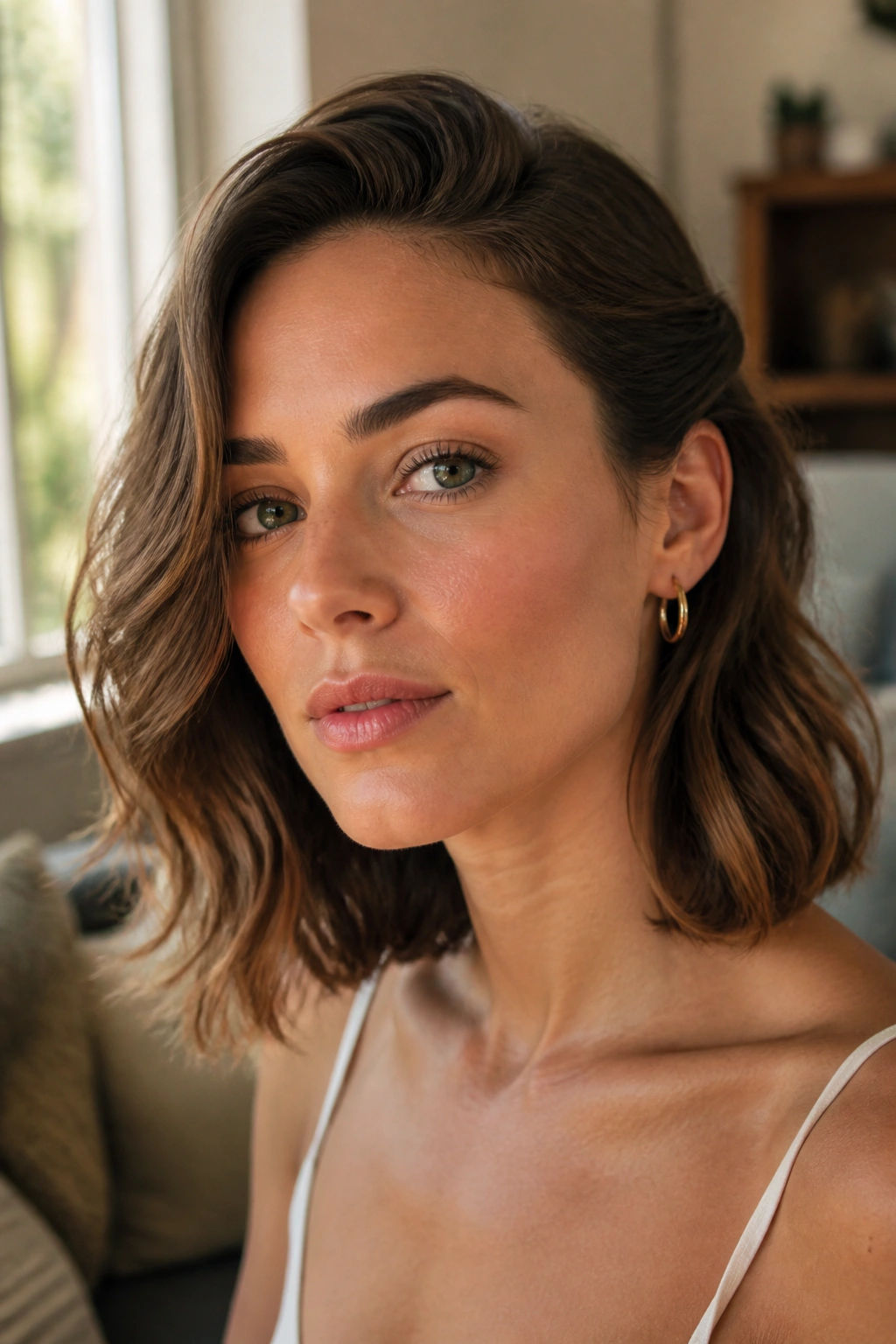
Tucking one side behind the ear changes the whole read of soft waves on medium hair. The exposed side feels clean and open, while the other side keeps enough movement to stop the look from feeling severe.
This finish is one of my favorites because it needs almost nothing extra. Style the waves as usual, then tuck one side loosely behind the ear and secure it with a hidden pin if your hair tends to slip. A little detail earring helps, but the haircut does most of the work. The neck stays visible. The wave pattern stays soft. Done.
If your hair is layered, the tucked side may need a touch of smoothing cream on the top layer so shorter pieces do not pop out in awkward directions. If your hair is blunt, the tuck gives the edges a cleaner line. Either way, it’s a small change that makes medium hair look more deliberate than a fully loose style.
This is the style I’d keep if I had to choose only one. It works on day one, day two, and probably day three if you’re willing to revive the ends with a curling iron for five minutes. Simple. Useful. Hard to argue with.
