



A curl pattern hairstyle works best when it follows the bend of your hair instead of fighting it. Get that part right, and a wash-and-go can look soft and full by lunch; get it wrong, and the same hair can puff up, droop, or collapse under its own weight. The difference is not magic. It’s shape, moisture, and how much your strands actually want to hold.
That’s why curl pattern hairstyles have to be chosen with a little more care than a straight-hair cut-and-go routine. A 2B wave, a 3A curl, and a 4C coil can all be gorgeous, but they don’t behave the same way once water, product, and gravity get involved. Porosity changes drying time. Density changes how much bulk a style needs. Shrinkage changes the whole silhouette. Tiny details. Huge payoff.
And honestly, that’s the fun part. The right style doesn’t hide your texture; it makes the texture look intentional, even when the styling itself is almost absurdly simple. A side part can change the whole mood. A puff can make tight coils look regal instead of crowded. A few twists, a clip, or a scarf can be the difference between “I threw this together” and “that shape is doing exactly what it should.”
1. The Wash-and-Go with Soft Definition

A good wash-and-go is the style people keep trying to improve, then quietly return to because it works. On loose waves and springy curls, it lets your natural pattern do the heavy lifting. On tighter curls, it can look rich and full, with each clump sitting beside the next like it knows its job.
Why It Works So Well
The trick is not “use more product.” It’s apply product while the hair is still damp enough to hold curl grouping. A lightweight leave-in, then a gel or mousse, gives shape without loading the strands down. If you rake aggressively, you break up clumps and invite frizz. If you scrunch gently and leave the hair alone, the curl pattern stays cleaner and often dries with more definition.
A diffuser can help, but low heat matters. High heat cooks the outside of the curl before the inside finishes drying, which is how you end up with a crunchy top and a soft underlayer. Not ideal.
Quick Styling Notes
- Best for 2B through 3C curl patterns
- Works best on hair that dries with some natural shape
- Use a gel cast if you want definition that lasts through the day
- Scrunch out the crunch only after the hair is fully dry
Pro tip: If your roots puff first and your ends look fine, clip the roots at the crown while drying. Small change. Big difference.
2. The Pineapple Puff for Day-Two Curls
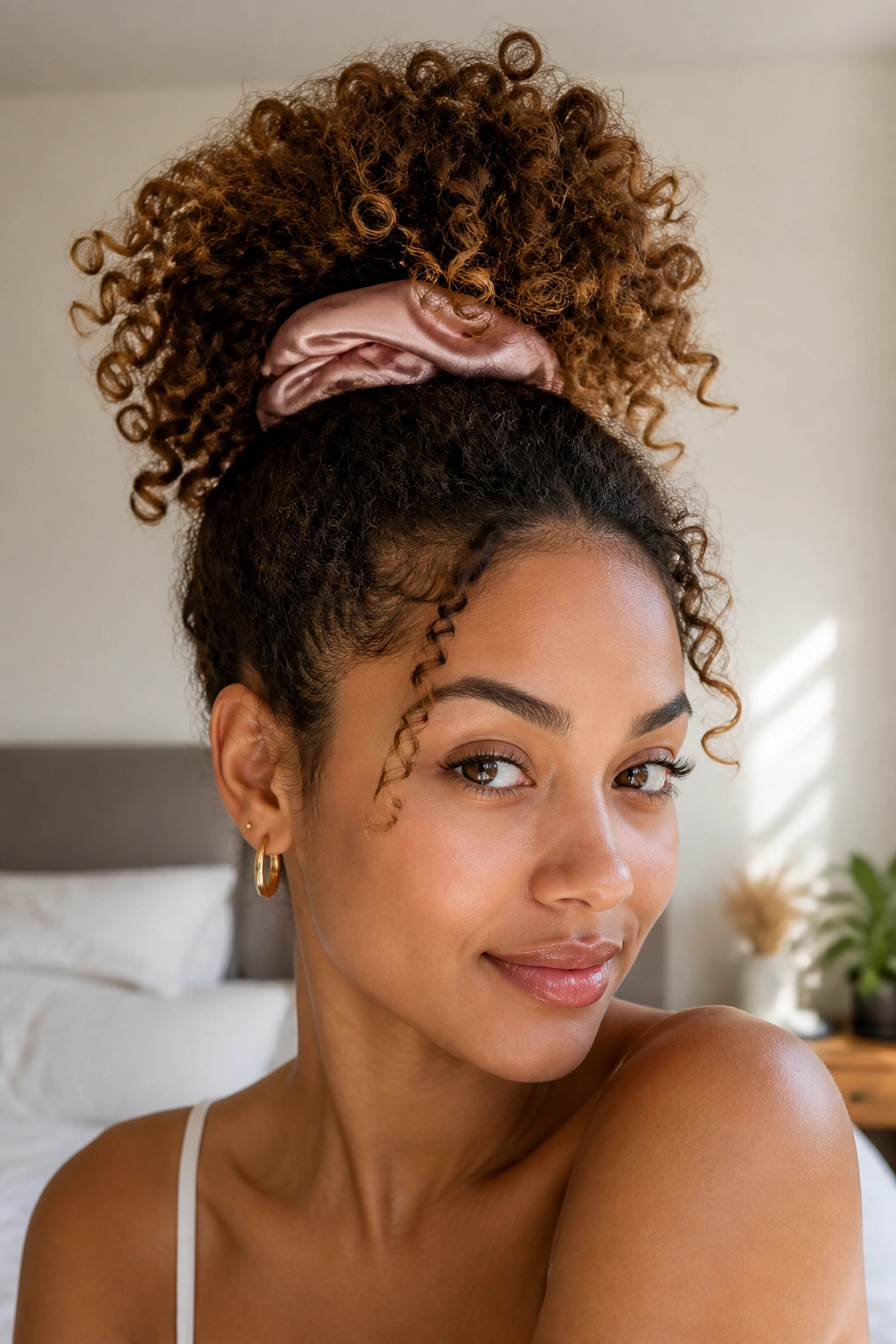
This is the style for hair that still has good curl memory but needs its dignity restored after sleep. The pineapple puff lifts the hair high on the head with a soft scrunchie, keeps the curl bundle loose, and leaves the edges free enough that the shape still feels relaxed.
It’s especially good for 3A to 4C hair that gets flattened overnight. You’re not trying to make the curls perfect. You’re trying to keep them from being crushed.
A pineapple puff works because the hair is gathered where the bend of the neck will not scrape it flat. That matters more than people think. Friction is the enemy. Satin pillowcases help, sure, but the pineapple does the real work.
A few face-framing curls left out can keep it from looking too severe. And if your hair is very dense, use a wide satin scrunchie rather than a tight elastic. Tight elastics leave a groove and can make the top look misshapen by midday.
3. The Side-Part Twist-Out
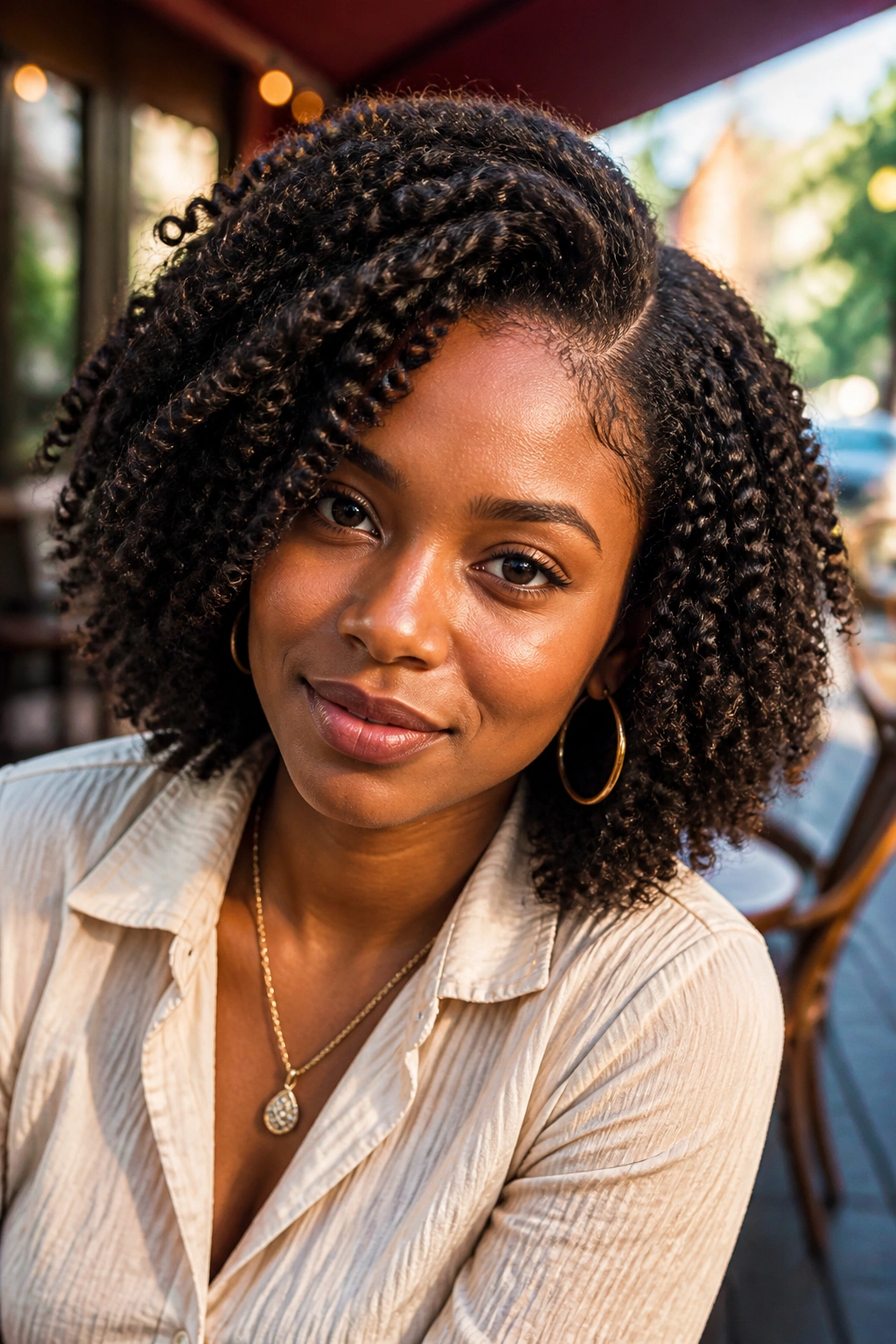
A twist-out has a little drama to it, and I mean that in the best way. The curls fall with more stretch than a wash-and-go, but they still keep a soft, touchable edge. Add a deep side part and the whole style suddenly looks sharper, like it was planned instead of improvised.
What Makes It Different
Twist-outs usually give more separation than braid-outs, which means the final shape reads a little smoother and a little rounder. On medium-density 3B to 4A hair, that can be a sweet spot. You get definition at the ends and fullness through the body without the style turning into a halo of fluff.
Use two-strand twists on damp hair, not soaking wet hair. Wet hair takes forever to dry and can make the twist set look stretched in the wrong way. A cream with a little hold, then a light sealant if your hair drinks moisture fast, usually does the job.
What To Watch For
- Twist sections should stay roughly the same size if you want even curl shape
- Unravel only when the hair is fully dry
- Separate each twist once or twice, not six times
- A rat-tail comb gives a cleaner side part than fingers do
The side part changes the geometry. That’s the part most people miss. It gives the style a face frame before the curls even start moving.
4. The Braid-Out Bob
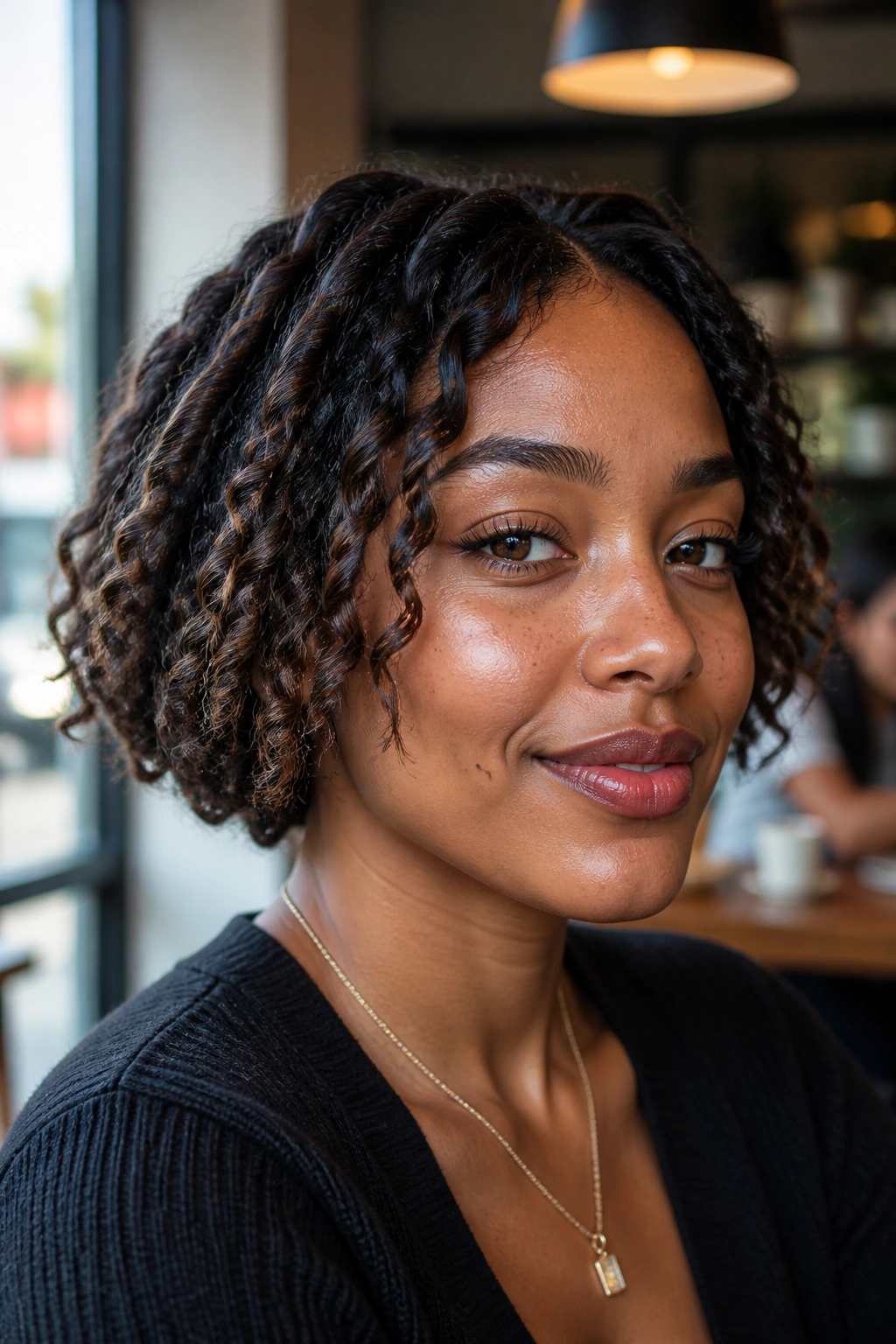
A braid-out gives a different finish from a twist-out. More wave. A little more stretch. A little less spring. That makes it a strong choice for shorter curls, especially if you want a bob that looks textured instead of boxy.
On 2C to 3B hair, a braid-out bob can create a soft, rope-like pattern that hangs neatly around the jawline. On tighter textures, it adds length without ironing out the personality. The result feels tidy but not stiff.
Use smaller braids if you want more definition, larger ones if you want volume and movement. The tradeoff is simple: smaller braids take longer to dry, larger braids show off the bend more loosely. Neither is wrong. Pick the one that matches your hair’s density and the finish you want.
And yes, the ends matter. If you braid too far down with no product at the tips, the ends can fray and look fuzzy first. A little extra cream at the last inch helps.
5. The Curly Shag
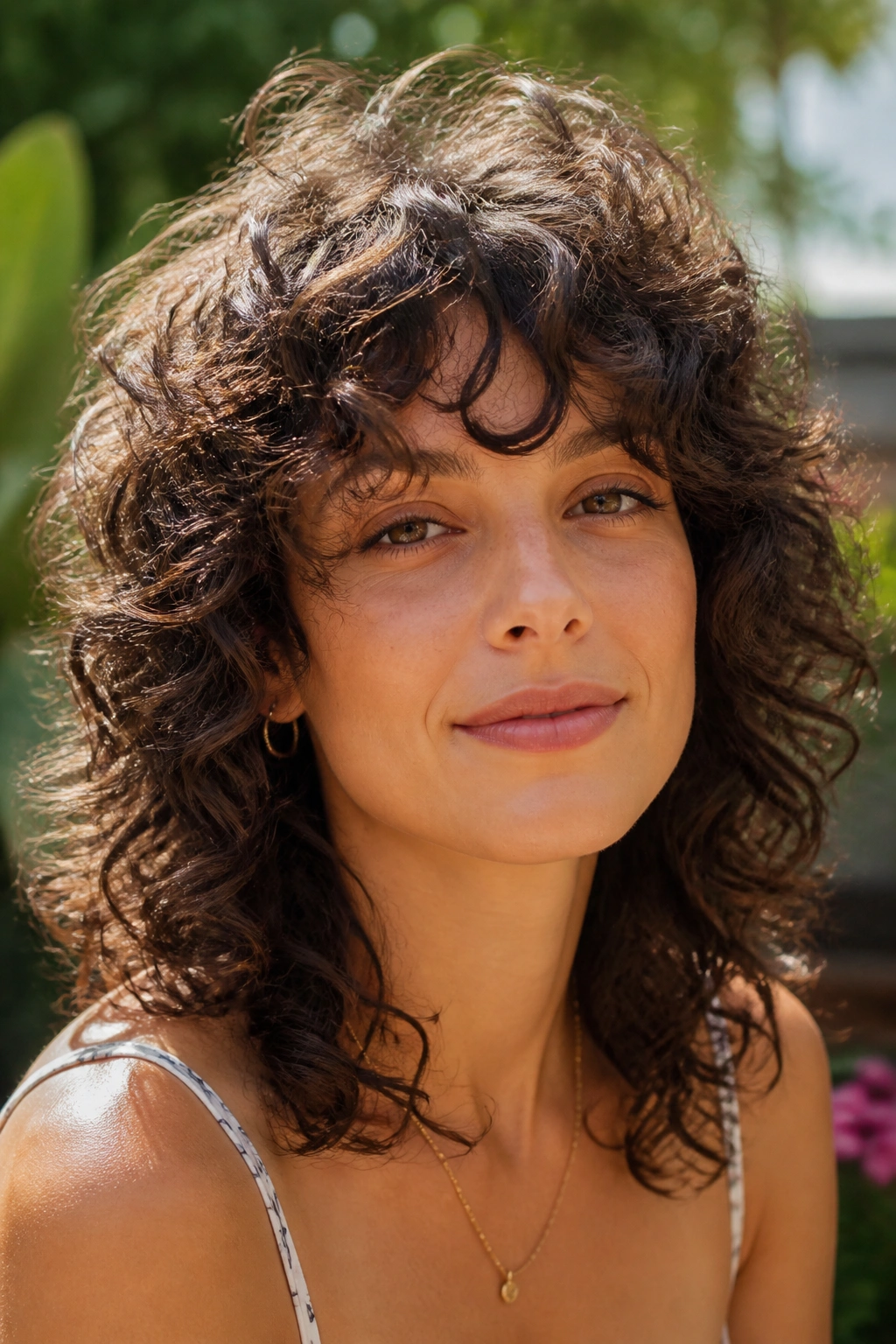
A curly shag is one of those cuts that looks a bit wild on the rack and then turns out to be one of the smartest things you can do with curl pattern hairstyles. The layers break up weight, which means the crown doesn’t get dragged flat and the ends don’t hang like wet rope.
This cut works because curls need room. Tight, heavy ends can make the top look smaller and the bottom look muddy. A shag fixes that by letting each layer sit where it wants to sit. On 3A to 3C curls, the movement can be beautiful. On 2C waves, it gives shape and grit. On 4A coils, a softer shag can keep the silhouette lively instead of triangular.
What to Ask For
- Longer layers near the crown for lift
- Face-framing pieces that start around the cheekbone or jaw
- A dry cut if your stylist knows curls well
- A fringe only if you’re ready to style it often
The dry-cut part matters. Wet curls lie. They shrink, then shrink again, and the shape you thought you had can vanish. A good shag should still look good on day three, not only when you leave the salon.
6. The Half-Up Crown Twist
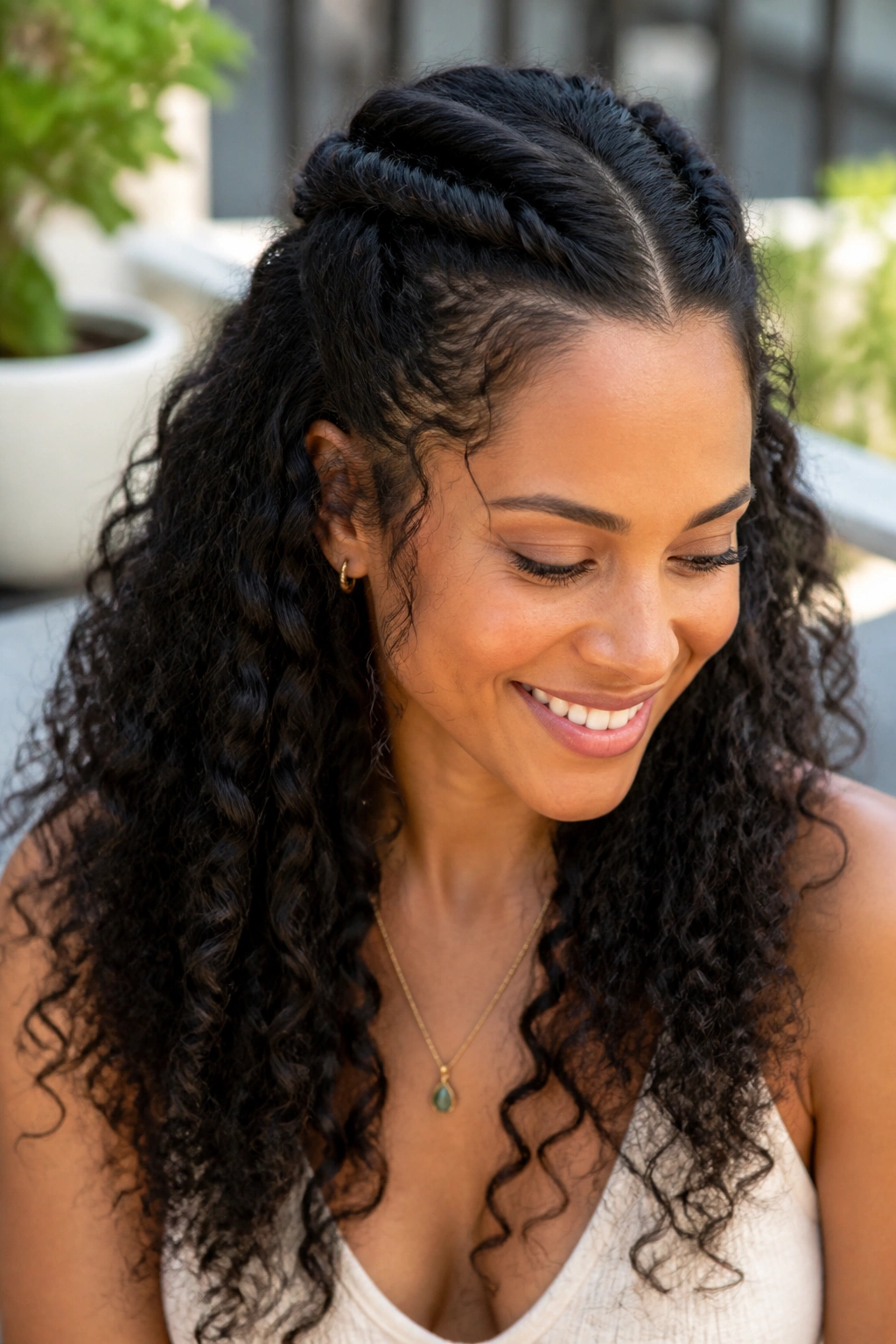
Some styles solve a real-life problem: you want your hair down, but you also do not want it in your face every eight seconds. The half-up crown twist handles that without making the back feel unfinished.
It starts with two sections taken from the temples or the front corners, then twisted back and pinned together near the crown. The rest stays loose. It looks polished, but not formal. That’s the sweet spot.
This style is especially kind to medium and long curls because it gives the front some structure while leaving the length to show off. If your hair is high-density, you may want to make the twists a little wider so they don’t disappear into the rest of the hair.
A few loose tendrils around the cheeks can soften the look. Or skip them if you want a cleaner line. Either way works. The whole point is that the top feels controlled while the rest still moves.
7. The Sleek High Puff
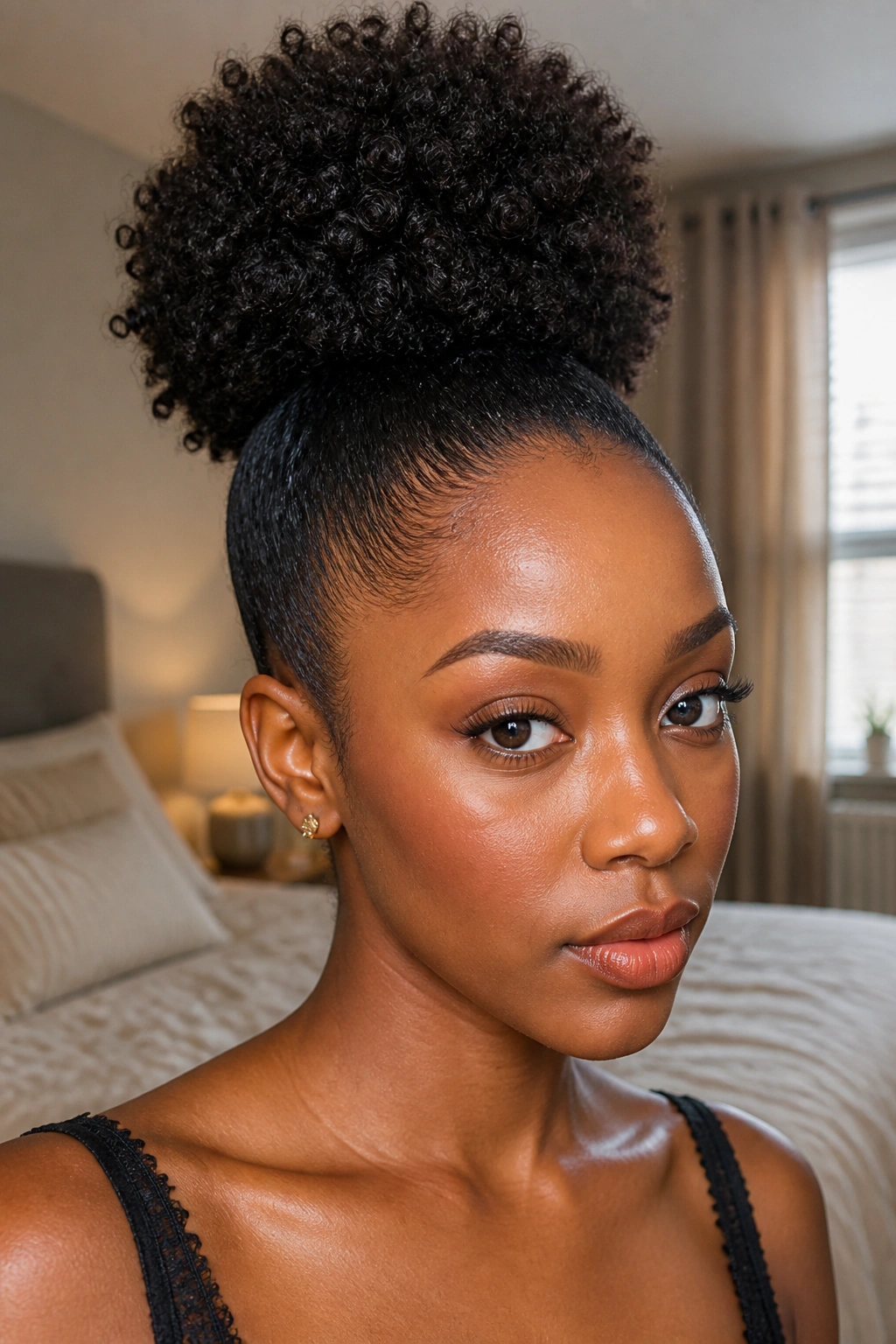
A high puff is one of the few styles that can look sharp, simple, and slightly glamorous all at once. It lifts the hair up and out, lets the texture stay visible, and gives the face a clear frame. On 4B and 4C hair, it can look especially strong because the shape is bold without needing extra fuss.
What Makes It Different
Unlike a bun, the puff keeps the coil texture on display. Unlike a loose afro, it pulls the volume upward, which can make the face look more open. It’s a small change with a noticeable effect.
Start with moisturized hair, then smooth the sides with a brush or your hands and gel. Don’t flood the roots with product. You want control, not a shell. A silk scarf wrapped around the edges for 10 to 15 minutes can help the front lay flatter before you tie the puff higher.
A few things help this style hold up:
- Use a wide elastic or puff cuff
- Keep the crown slightly loose so the puff has volume
- Fluff the puff after it’s secured, not before
- Avoid heavy creams that make the roots collapse
The high puff is one of those styles that looks easy only after you’ve figured out your hair’s exact sweet spot.
8. The Curly Bob with Face-Framing Layers

Why do some curly bobs look square and others look full of life? Layers. That’s the whole answer, and it’s a bigger answer than people give it credit for.
A curly bob with face-framing layers works because curls need room to stack. When the front pieces are shaped around the cheekbones or jaw, the bob stops looking like a helmet. It becomes movement instead of mass. On 2C to 3C textures, this shape can be especially flattering because it gives bounce without too much bulk.
How To Wear It Well
Ask for a bob that’s cut in relation to your curl pattern, not against it. A bob on straightened curls is one thing. A bob on natural curls is another. The latter usually needs a little extra length built in so it doesn’t shrink too high.
A few practical details matter:
- Keep the front a touch longer if your curls shrink fast
- Use lightweight styling cream to avoid a weighed-down crown
- Diffuse from underneath if you want lift at the roots
- Trim the shape when the curls are dry, not stretched flat
The face-framing pieces are the part that saves the whole thing. They soften the edges and keep the bob from feeling too blunt around the face.
9. The Halo Braid with Loose Length
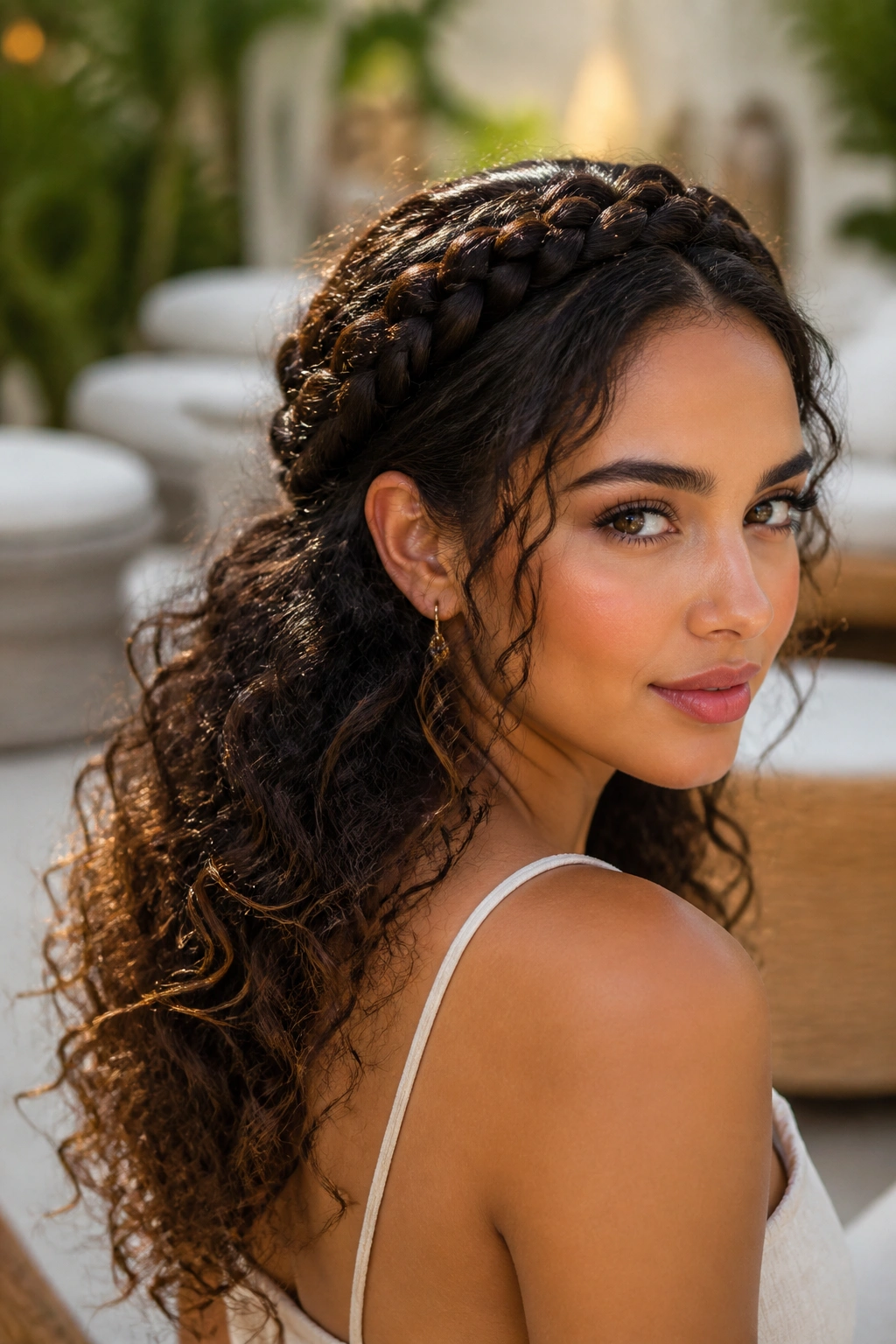
A halo braid looks like effort, but the better version is actually pretty practical. The braid wraps around the head like a crown, while the remaining curls hang loose or gather low at the back. That combination gives you structure up top and movement underneath.
It works well for events, dinners, and any day when you want your hair off your shoulders without flattening the curl pattern. On 3A to 4A hair, the braid usually sits neatly because there’s enough bend for grip. On looser waves, you may need pins every few inches to keep the braid from slipping.
The braid itself does not need to be perfect. Perfect braids often look stiff. A slightly softer braid reads better with curls because it blends into the rest of the texture instead of fighting it.
A small trick: braid a little tighter near the nape and looser near the front. That keeps the crown secure while giving the hairline a softer finish.
10. The Claw-Clip French Twist
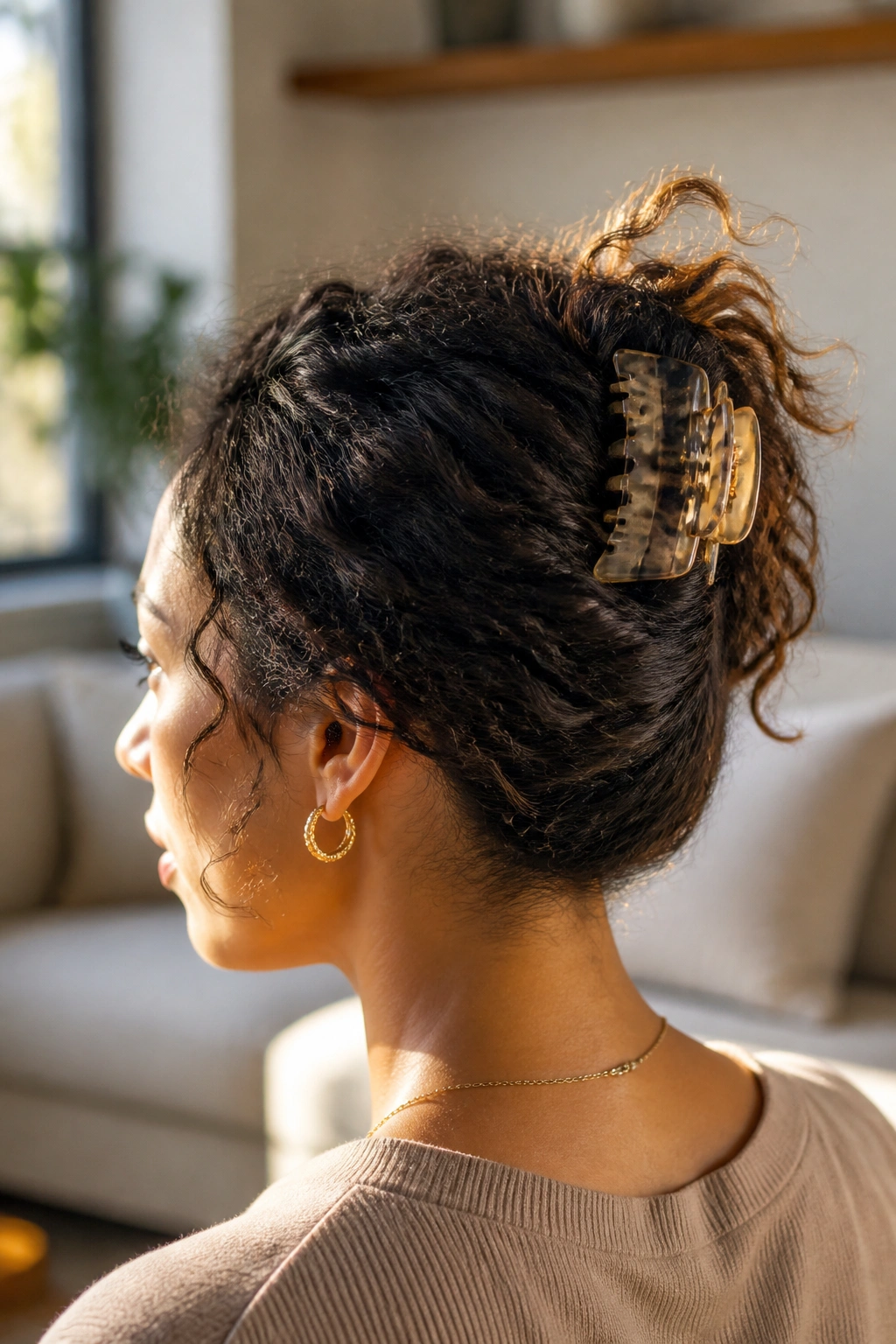
A claw-clip French twist is the kind of style that saves a bad hair day without advertising the fact. The texture stays visible, the length gets tucked up, and the clip does most of the work. If your hair is medium to long and has some natural bend, this one can be a lifesaver.
Unlike a slick bun, this style doesn’t force the hair into submission. That matters. Curly and wavy hair looks better when some of the texture stays alive. A French twist with a big claw clip lets the ends peek out a bit, which gives the whole style movement.
Gather the hair low, twist upward, fold the length in, then clip the twist at the base or near the crown depending on how much hair you have. If the clip feels like it’s barely hanging on, use two bobby pins under it. No shame. That’s the part most people skip, then wonder why the style slips.
This one is best when you want something quick, a little polished, and not too precious.
11. Finger Coils with a Deep Side Part
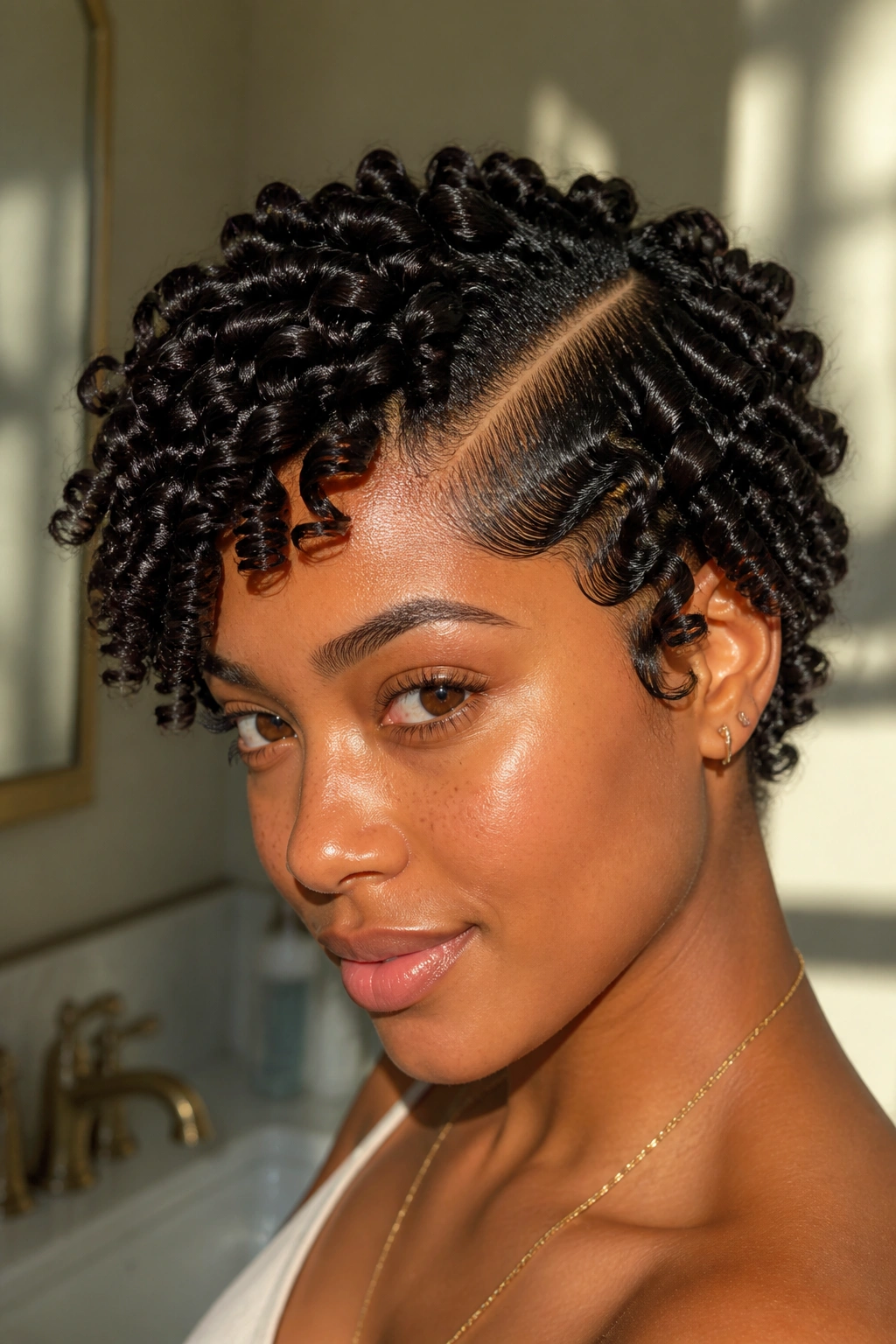
What if you want definition more than volume? Finger coils answer that cleanly. They give each strand a deliberate shape, and a deep side part keeps the finished style from looking too uniform or too rigid.
This is especially good for 3B through 4C hair, though fine 3A curls can borrow the look in smaller sections. The key is patience. Small coils look neat because they are small, and because you let them dry without disturbing them. If you separate too soon, you lose the clean finish and end up with frizz at the roots.
How To Wear It
- Use a gel or cream-gel on very small sections
- Coil each section around your finger in the same direction
- Let the hair dry fully before separating
- Pin the part while styling so it stays clean
Finger coils are not fast. That is the deal. But the payoff is a style that can hold its shape for days if you sleep carefully and avoid over-touching.
The deep side part gives the style some asymmetry, which keeps it from looking too stiff. That little imbalance makes a huge difference.
12. The Space Buns on Wavy Hair
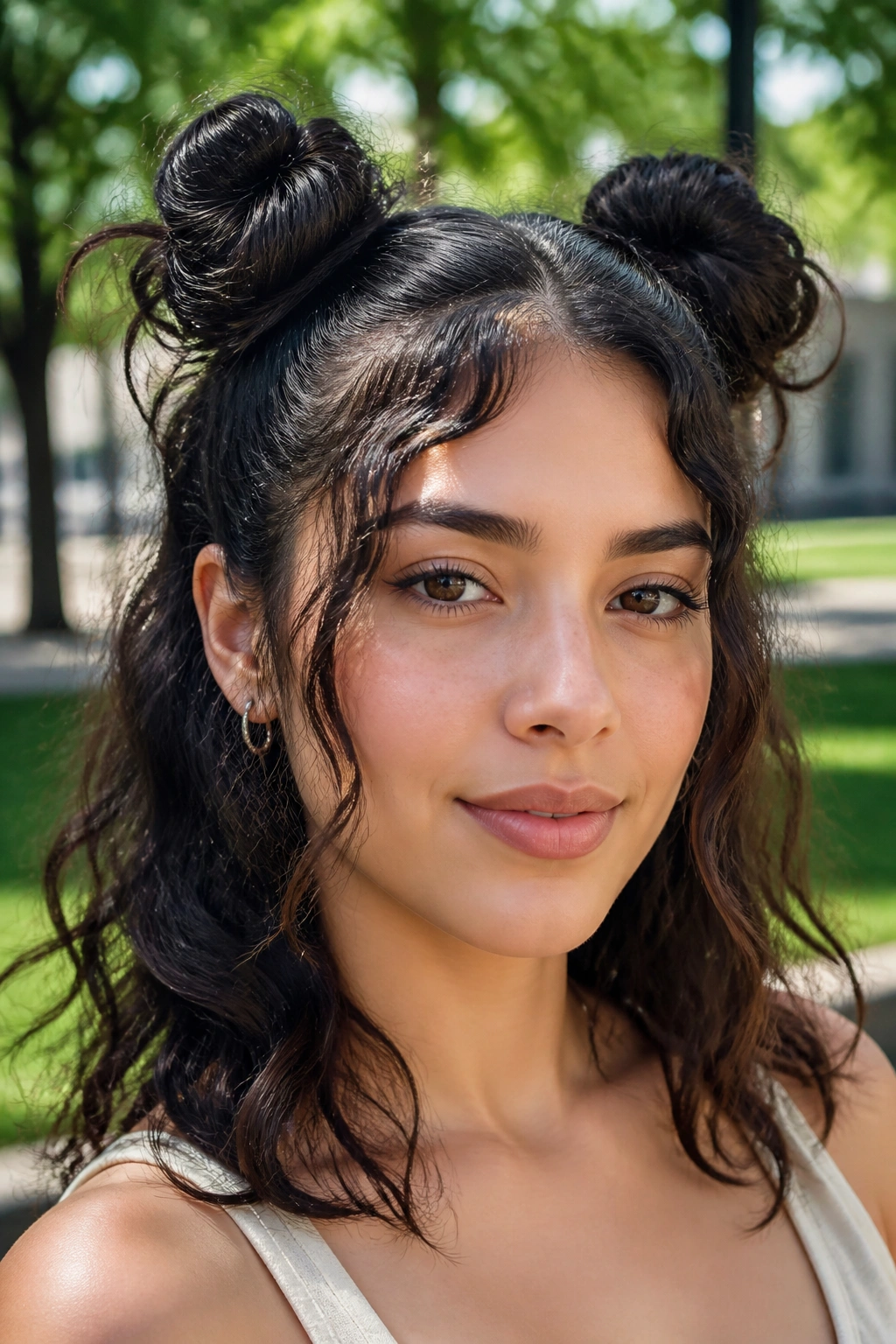
Space buns are playful, but they can also be practical. On wavy or loosely curly hair, they keep the top sections controlled while leaving some texture visible in the rest of the hair. The shape is young-looking without being childish, which is harder to pull off than it sounds.
A lot depends on where you place the buns. High and symmetrical reads sporty. Slightly lower and a little undone reads casual. If the hair is very soft, tease the roots a bit before twisting them into the buns so they do not slide flat by lunchtime.
The best part is that this style works with second-day hair. In fact, second-day hair often behaves better because it has a little grip. Freshly washed waves can be too slippery.
Leave the ends loose if you want a softer look. Tuck them in if you want cleaner circles. Both are fair game. The style only fails when the buns are pulled too tight and the rest of the hair has no shape left at all.
13. The Wet-Look Curly Ponytail
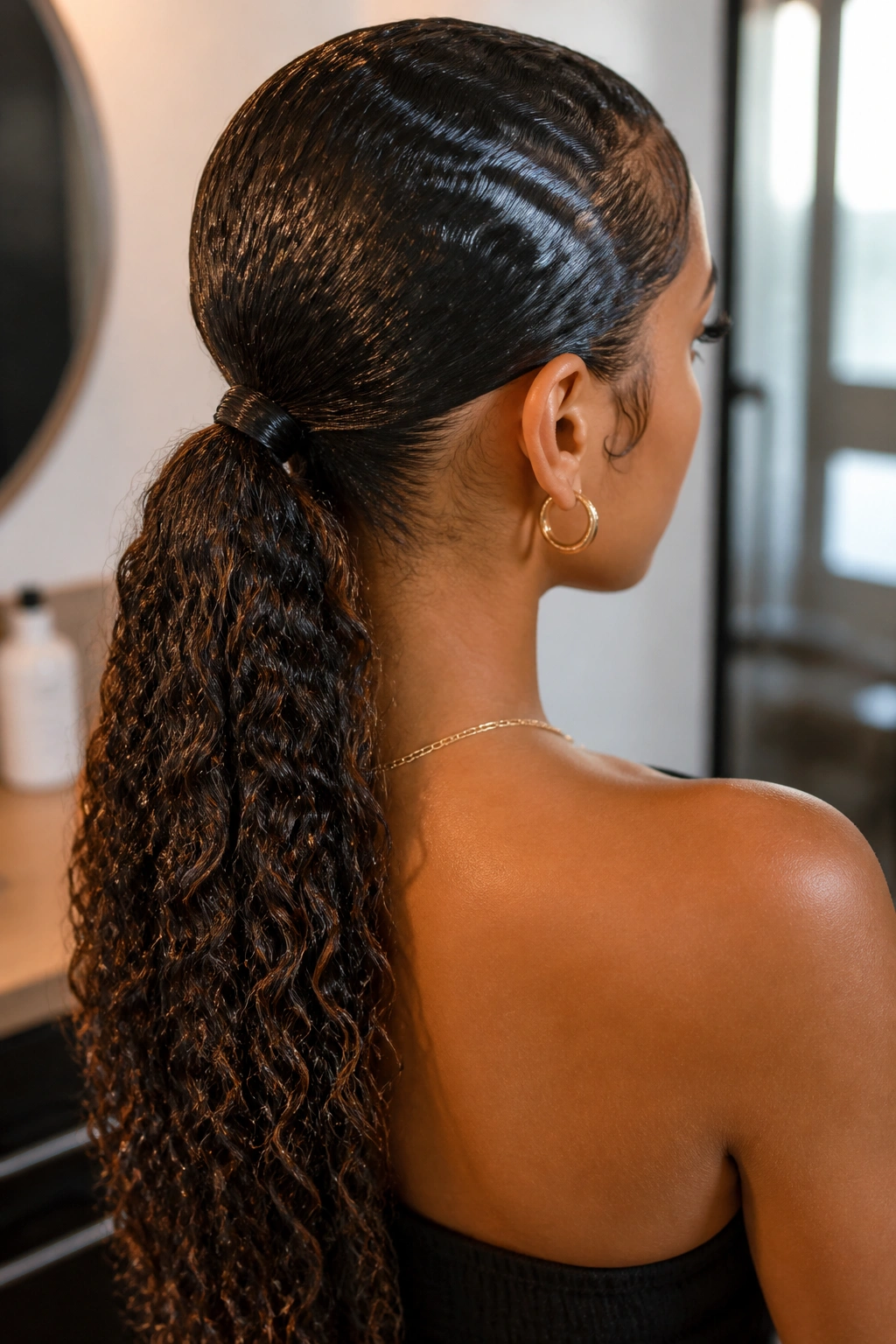
A wet-look ponytail is sleek at the roots and defined through the length, which is a nice balance when you want your curls to look controlled without being flattened. It works particularly well on hair that naturally clumps into spirals or ringlets, because the texture can still show through the ponytail itself.
The trick is to smooth the base with gel and a brush while leaving the ponytail length free to curl. That contrast is the whole point. Flat roots, textured ends. Clean and simple. If you want the style to look richer, wrap a small curl or a thin strip of hair around the elastic.
A Few Details That Matter
- Brush the roots back in one direction for a cleaner line
- Use a small amount of gel at a time so you do not get flakes
- Keep the ponytail slightly off-center if a centered one feels too severe
- Refresh the length with a mist of water and a touch of leave-in
This style can look too tight if the hairline is over-smoothed. A little softness around the edges makes it more wearable.
14. The Tapered Coil Cut
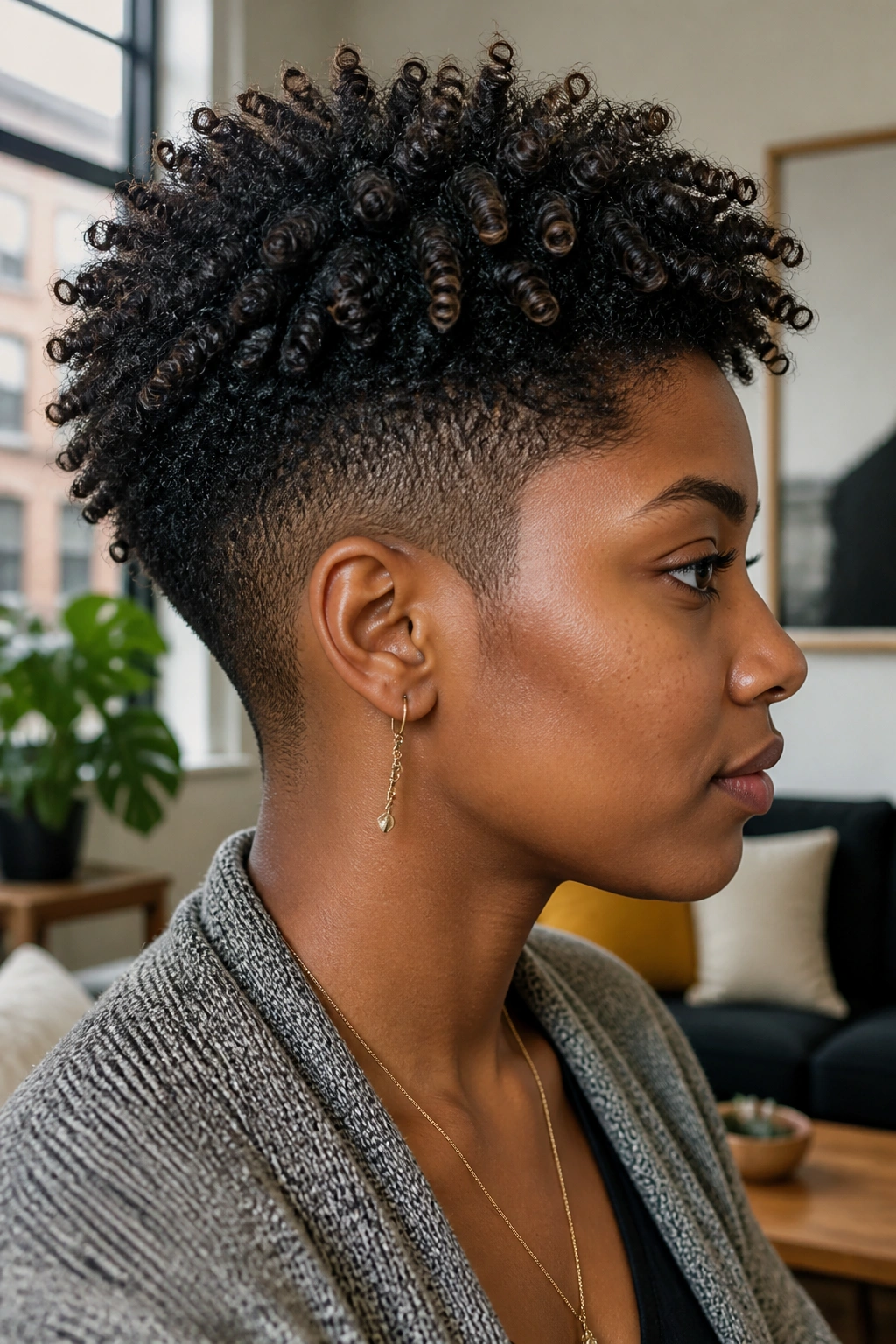
A tapered cut might be the most honest hairstyle on this list. It does not pretend your hair is something else. It works with the coil pattern, lifts the top, and keeps the sides and nape close so the shape feels clean and intentional.
For 4A to 4C hair, a tapered cut can be a relief. Less bulk around the ears. Less weight at the neckline. More room for the top to bloom. If you have dense hair, this shape can make styling much easier because you are not fighting a giant triangle every morning.
Why It Works
The taper gives the eye a clear line to follow. The shape feels sculpted even when the styling is minimal. A little curl cream, a pick at the roots, maybe a twist on the top pieces if you want more direction. That’s often enough.
It also puts the emphasis where many coil patterns look best: the crown and top front. The shorter sides let that texture stand up and be seen. Not hidden. Seen.
A tapered cut does need trims to keep the outline sharp. If the sides grow out unevenly, the shape can lose its snap. Six to eight weeks is a decent rhythm for people who like the silhouette to stay clean.
15. The Scarf-Tied Low Puff
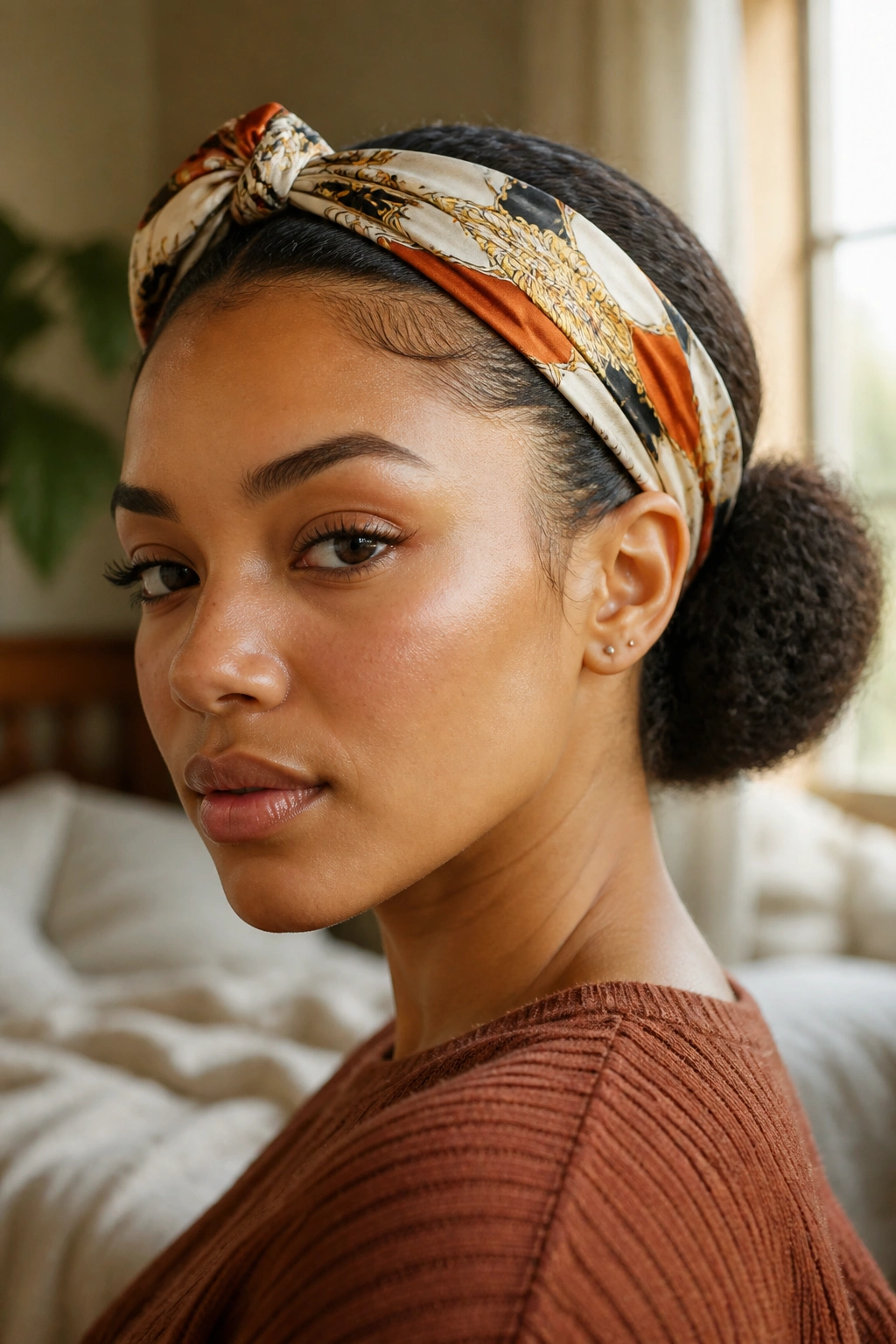
A low puff with a scarf feels softer than a high puff and more relaxed than a formal bun. The puff sits near the nape, while the scarf frames the hairline and adds a little color or contrast. It’s an easy style, but not a lazy one.
The reason it works so well on curly and coily hair is that the low placement keeps the center of gravity down. That makes the puff feel stable. If your hair is thick, the low position also stops it from poking upward and fighting the shape of the scarf.
Use a satin or silk scarf if you want the hairline to stay smooth. A cotton scarf looks cute, but it can dry the edges out faster and create friction where you do not want it. The width matters too. A scarf that is too narrow tends to dig in. Something around 4 to 6 inches wide is easier to shape.
A few curls left loose near the temples can soften the look. Or keep it wrapped cleanly if you want a neater line. Both work.
16. The Flat-Twist Crown with Ends Out

Can a protective style still feel light? Yes, if the twists stay flat and the ends are left to move. A flat-twist crown does exactly that. It pulls the hair back from the front of the head, wraps it in a circular path, and leaves the ends curly or tucked at the back.
This style suits short to medium curls especially well because it keeps the front controlled without demanding a ton of length. On 3C to 4B hair, flat twists tend to grip nicely and stay put longer than you’d expect. On looser waves, they can still work, but you may need extra pins at the turns.
Who Should Try It
- People who want the front out of the face
- Hair that frizzes fast at the hairline
- Short curls that do not fit into long braids or ponytails
- Anyone who wants a style that can hold for a couple of days with a satin scarf at night
The ends-out part keeps the style from feeling too severe. A little movement at the back balances the flatness at the crown. That balance is what gives the style its charm.
17. The Rounded Afro Shape
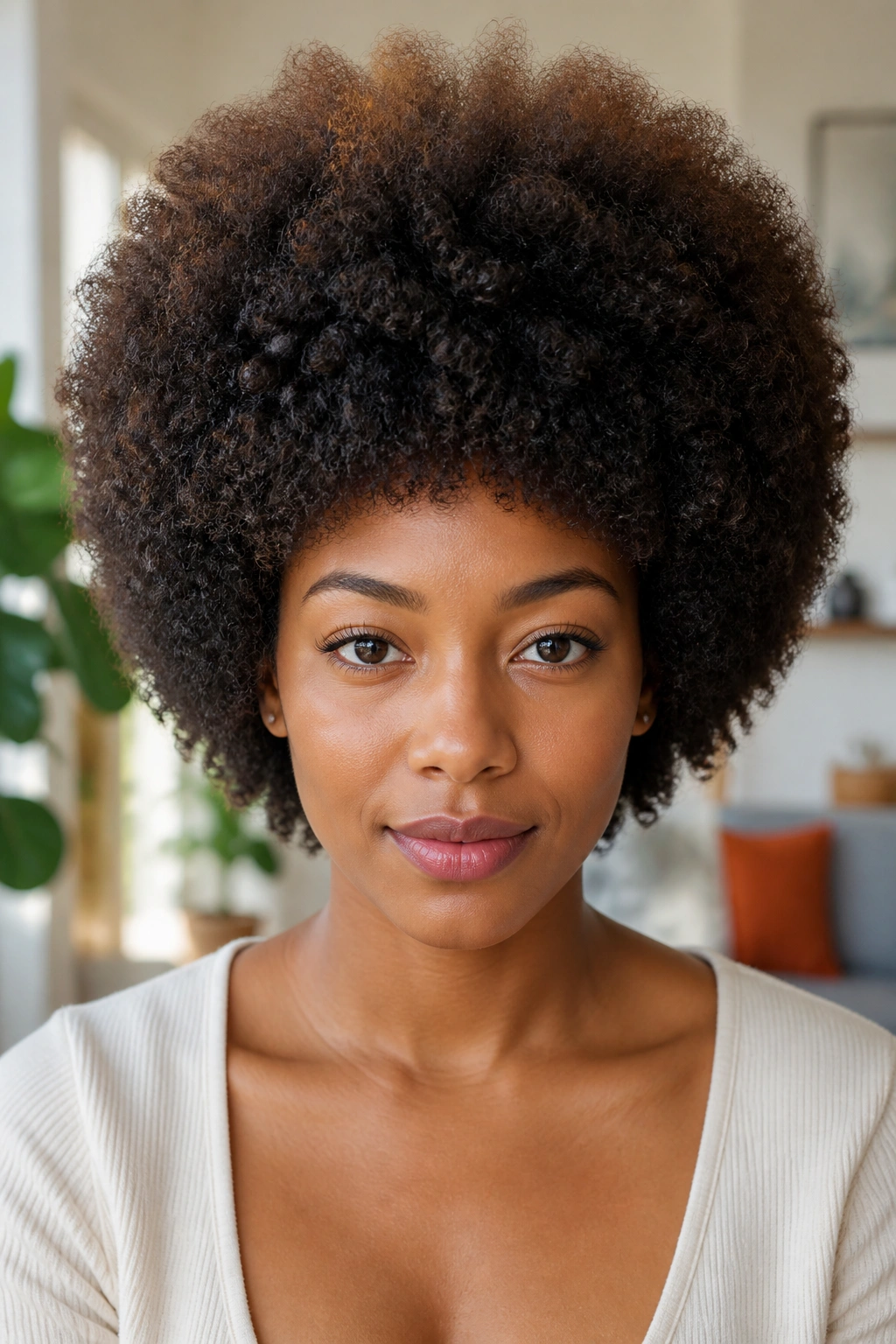
A rounded afro is not the same thing as “big hair.” Big hair can be random. A rounded afro is shaped with intent. It leans into shrinkage, but it still has a clear outline, which is why it can look so strong on 4A to 4C hair.
This style works best when the hair is moisturized enough to separate cleanly, but not so saturated that the shape goes limp. A pick at the roots creates lift. A trim helps the roundness stay even. And a little patience keeps you from over-picking one side and flattening the other.
Shape Notes That Matter
- Pick at the roots only, not through the whole length
- Trim when the hair is dry and in its natural state
- Keep the top slightly fuller than the sides if you want a true rounded silhouette
- Avoid heavy butters that weigh the outline down
The rounded afro can be one of the most beautiful curl pattern hairstyles because it does not hide the pattern at all. It celebrates it. That confidence shows.
18. The Side-Swept Spiral Sweep

A deep side sweep can change a whole head of curls with one move. Pull the part far over, let the bulk of the curls fall to one side, and pin just enough at the temple to keep the front from sliding back. The shape becomes softer, longer, and a little more dramatic without needing a full restyle.
This works especially well on 2C through 3C hair, though coily textures can borrow the idea too. The side sweep creates a visual line that cuts across the face, which helps curls look intentional even when they are loose or frizzy at the ends.
Keep one side flatter and let the other side carry the volume. That contrast is what makes the style sing. If both sides are equally full, the effect gets muddy. If one side is too flat, it looks pinched. The sweet spot sits right in the middle, where the curls can fall over one cheek and still keep their bounce.
A light mist of water and a small amount of cream can help revive the front pieces before pinning. Not much. Too much product and the sweep goes limp. Too little and the front pieces spring away from the part line. Hair has opinions. This style respects them.
One last thing: the side sweep is a good reminder that curl pattern hairstyles do not need to be complicated to be smart. Sometimes a clean part, one pin, and the right amount of volume are enough.
