



Loose bridesmaid updo styles solve a very specific wedding-day problem: they need to look soft in photos and still survive hugs, wind, dancing, and one too many bobby pins sliding out by dessert. A bridesmaid’s hair should support the dress, not fight it, and that usually means some shape at the back, some movement around the face, and enough structure that the style does not collapse the moment someone leans in for a group shot.
The best loose updos do not look stiff. They look arranged. There’s a difference, and it matters more than people think. A tight, shellacked bun can read severe next to a flowing chiffon gown, while a loose knot, a braided chignon, or a softly pinned roll gives the whole bridal party a calmer, more expensive-looking finish. Not fussy. Not flat. Just balanced.
Texture is the real secret. Fine hair usually needs a bit of grit from mousse, dry shampoo, or a root-lifting spray. Thick hair needs internal pinning so the outside looks soft while the inside does the work. Curly hair can be stunning in an updo when it’s guided instead of brushed into submission. Straight hair usually needs a little bend at the ends so the shape doesn’t look too clean or too hard. That’s why the same bridesmaid hairstyle can look different from one person to the next and still feel cohesive.
1. Soft Twisted Low Chignon
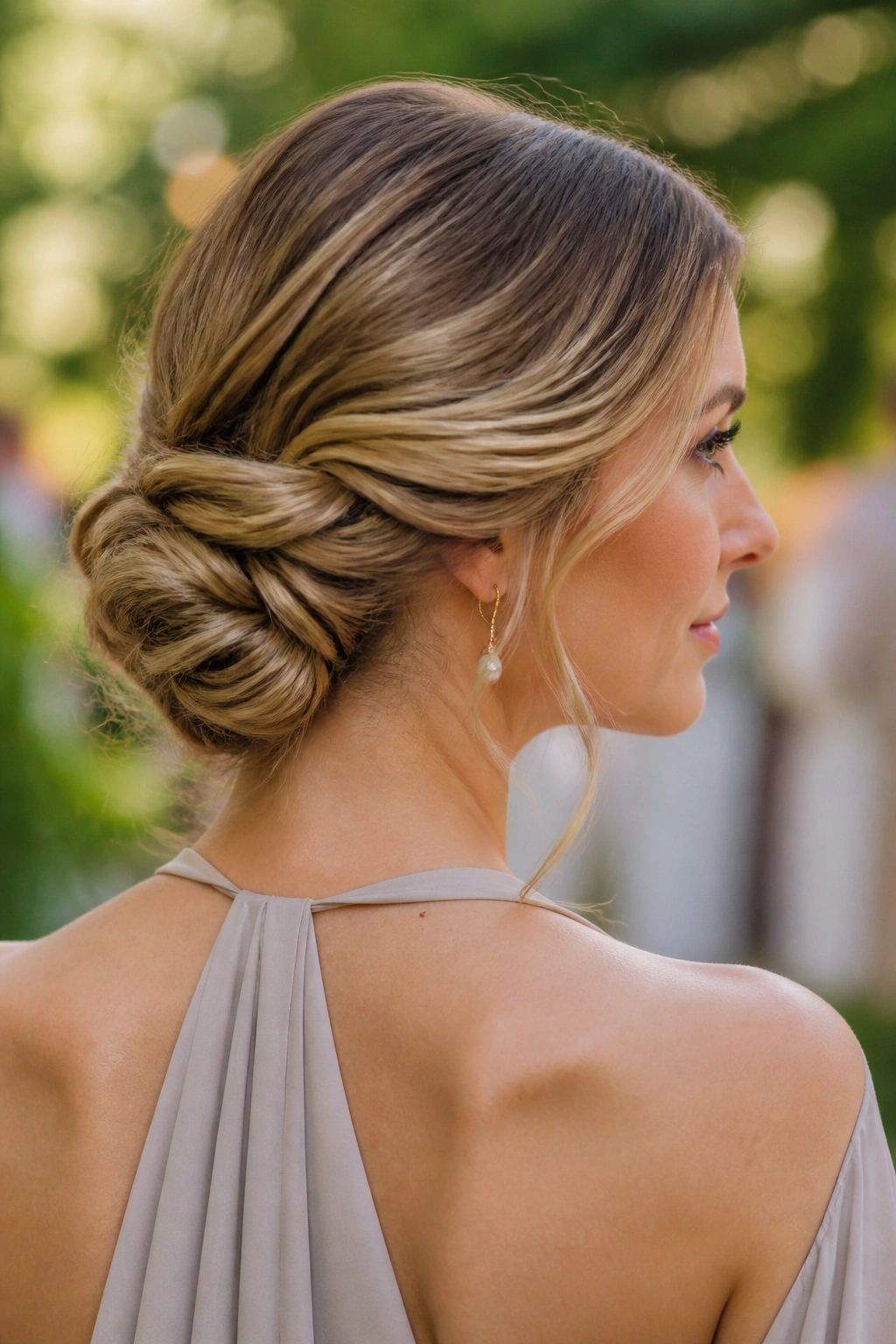
A soft twisted low chignon is the kind of bridesmaid style that looks calm from every angle. It sits low at the nape, keeps the silhouette neat, and still leaves enough softness around the hairline to avoid that overdone, pulled-back feeling. For a wedding party, that matters. Nobody wants to look like they are headed to a banking conference.
Why It Works for Bridesmaid Hair
The twist gives the bun structure without making it heavy. It’s especially useful when the dresses have open backs, square necklines, or delicate straps, because the hair stays out of the way but doesn’t disappear. If the hair is medium to long, this style can be built with two or three twisted sections pinned into a loose coil.
- Best on hair that reaches the collarbone or lower.
- Looks strongest with a soft side part.
- Works well with pearl pins, tiny floral combs, or nothing at all.
- Holds up better when the hair has a little texture before styling.
Pro tip: leave the front sections slightly bendy, not curled into perfect spirals. That one choice keeps the whole style from looking too formal.
2. Braided Low Bun with Face-Framing Pieces
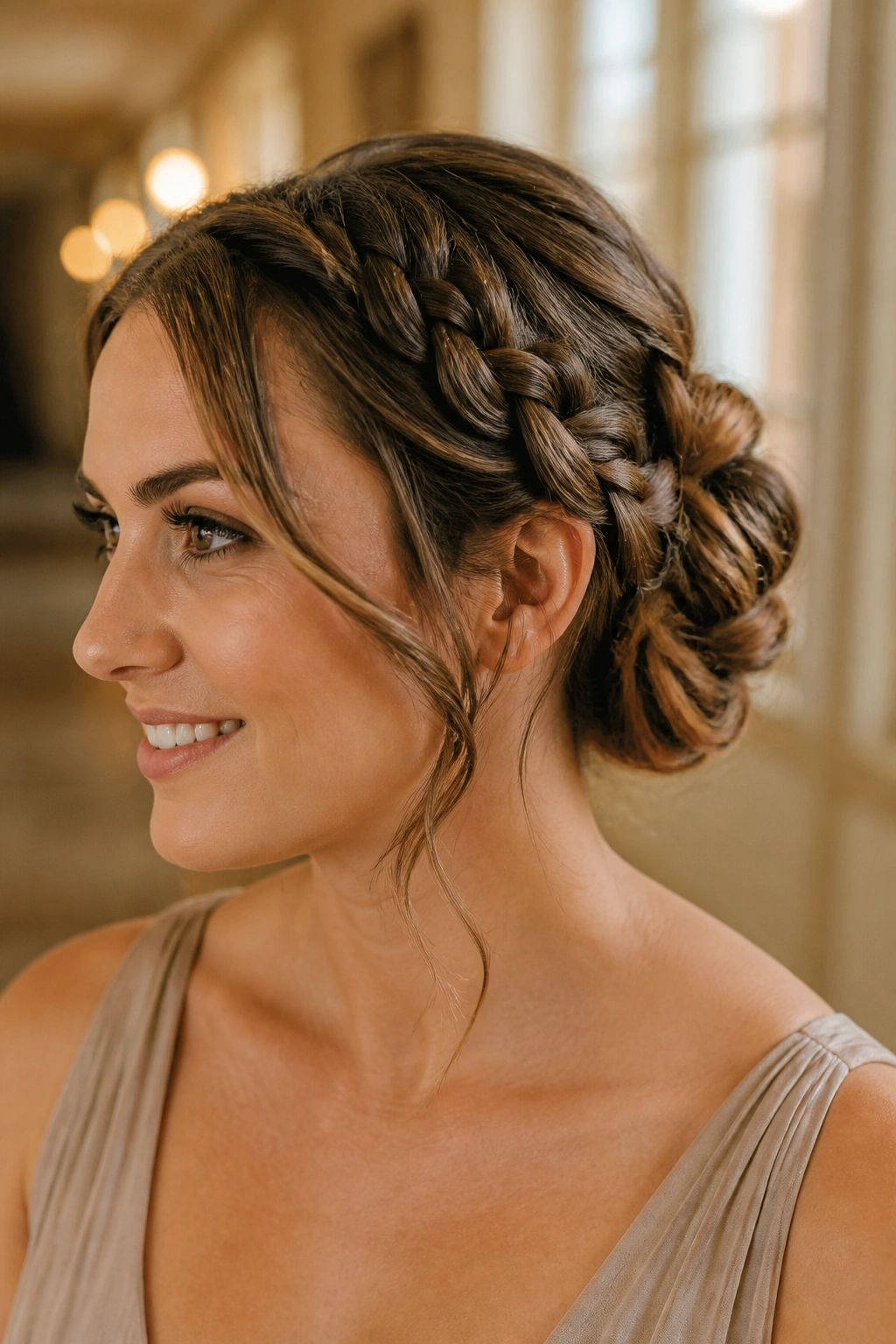
Braids do a lot of heavy lifting in a wedding hairstyle. They add grip, they hide pins, and they make even thin hair look fuller than it really is. A braided low bun is a smart choice when the bridesmaids need a style that can survive a long day and still look neat in group photos.
The braid can run along one side, cross the back, or sit right over the crown before disappearing into the bun. Face-framing pieces matter here. A few soft strands near the cheekbones keep the style from becoming too buttoned-up, especially if the dress has a high neckline or a lot of detail around the collar.
This one is good for hair that tends to slip out of ordinary buns. The braid gives the style a little friction, which means the pins have something to hold onto. If the hair is very smooth, a light texture spray at the roots and through the mids makes a noticeable difference. Not a helmet. Just enough bite.
It also photographs well from the back, which is the angle bridesmaids often forget about until someone shows them the reception pictures later.
3. Textured French Twist
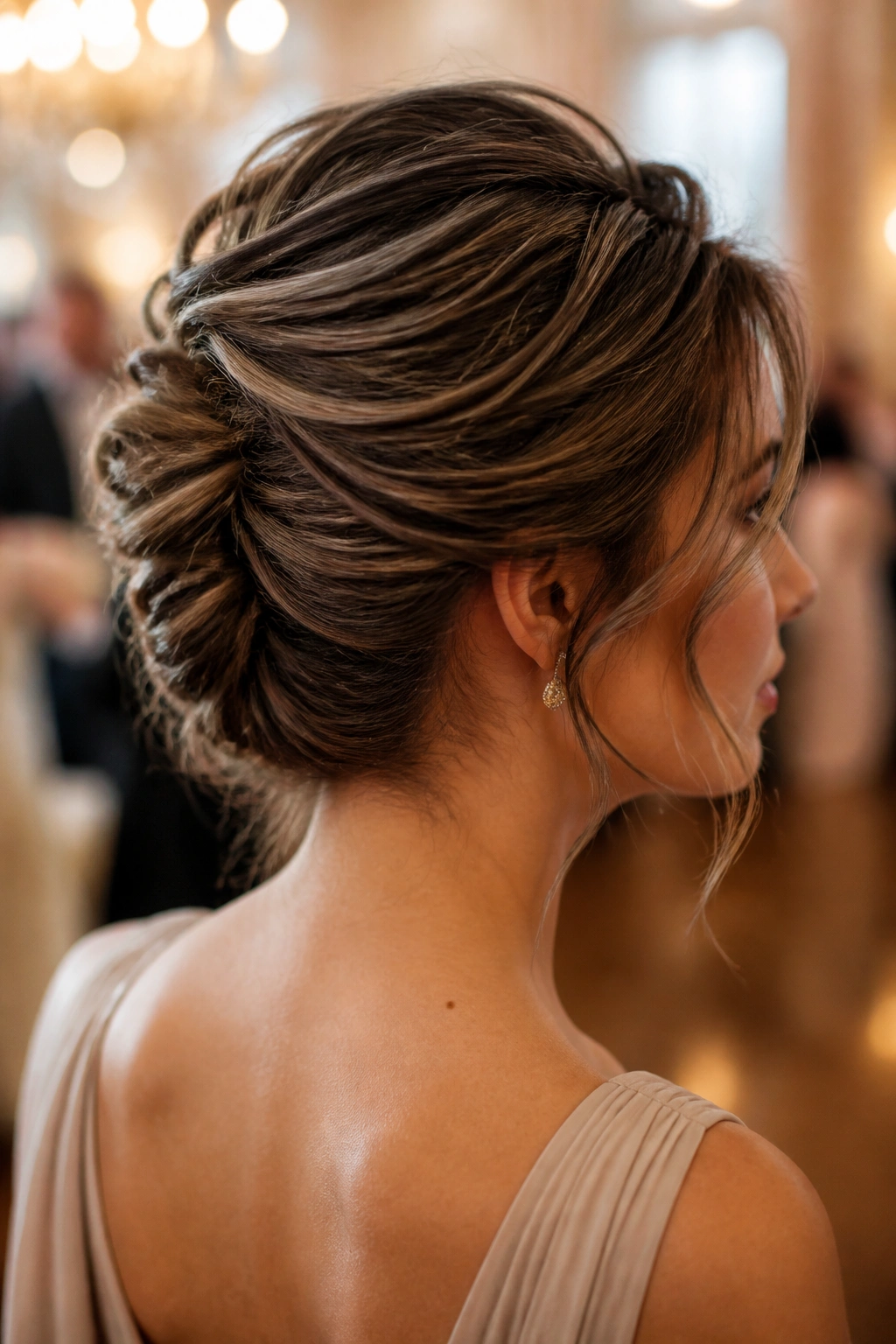
Want something that feels polished without looking severe? A textured French twist sits in that sweet spot. It has the line and lift of a classic formal style, but the loose finish softens the whole shape so it does not read too strict for a bridesmaid lineup.
The Shape That Makes It Work
The trick is keeping the twist narrow at the base and airy at the top. Instead of smoothing every hair into place, section the hair loosely, tease the crown a little, and twist the lengths upward in a soft roll. The surface should look controlled, not shiny-flat. A bit of movement at the crown helps the style breathe.
This style is especially good for dresses with structured necklines. Think bateau, halter, or a high illusion top. The clean vertical line of the twist balances all that fabric. It also works well if the bridal party is wearing matching earrings and the hair needs to stay out of the way.
How to keep it soft
- Curl the ends lightly before pinning.
- Use 3 to 5 long pins placed horizontally inside the roll.
- Pull out only a few face-framing pieces.
- Finish with flexible spray, not a stiff lacquer.
It is formal. Not fussy. That’s the appeal.
4. Side-Swept Knot with Soft Tendrils

A side-swept knot is a gift to anyone who hates a center-back bun but still wants the hair fully up. It shifts the weight to one side, which makes the whole style feel a little more relaxed and a little more flattering around the jawline. The loose tendrils are not an afterthought here; they are the thing that keeps it from looking too rigid.
Picture an outdoor ceremony with a bit of wind, or a reception where the bridesmaids are moving from photos to dinner to dancing. This style holds its shape without feeling frozen. A side knot also leaves room for statement earrings, which is a nice bonus when the dresses are simple and the accessories are doing some of the visual work.
A curling iron around 3/4 inch works well for the front pieces if you want them to bend instead of hang straight. Keep the tendrils soft and narrow. Too many pieces and the style starts to look messy in a bad way. Two or three on each side is usually enough.
Best detail to remember: pin the knot slightly below the ear, not directly behind it. That small shift makes the shape look intentional.
5. Loose Dutch Braid Bun
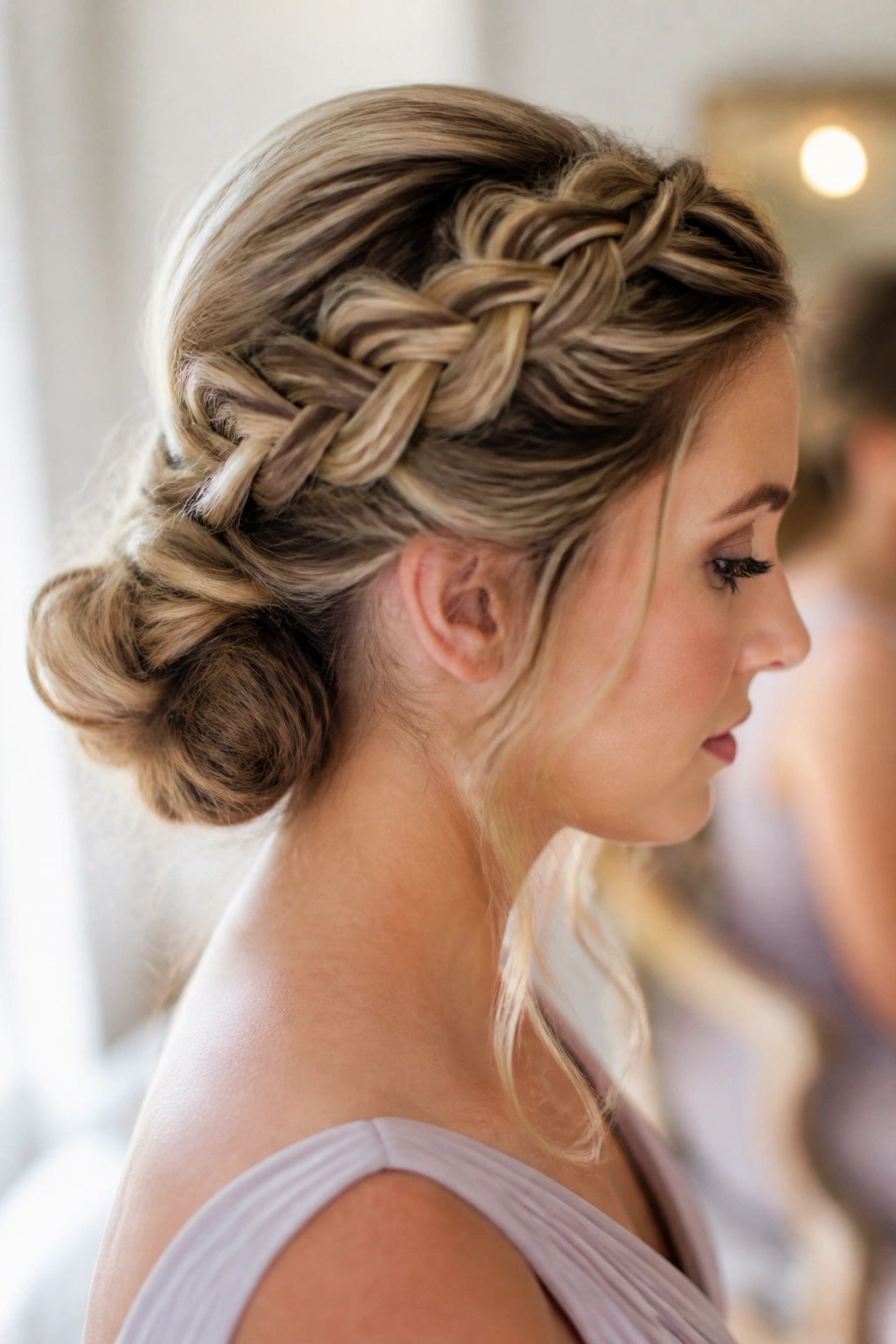
A loose Dutch braid bun is one of my favorite choices for thicker hair, and I say that because it solves a real problem. Thick hair can look gorgeous in an updo, but it can also swallow a style whole if the shape is too small or too smooth. The Dutch braid gives the crown a visible pattern, then the bun gives the weight somewhere to go.
Unlike a braid that disappears into the back, this one stays part of the design. You can pancake the braid gently after it’s secured to make it wider and softer, which helps the whole thing read as a bridesmaid style rather than a school-day plait. The bun itself can be loose and tucked, with a few ends left slightly undone for movement.
This style works especially well with bohemian dresses, lace, or anything with a soft sleeve. It has texture, but it doesn’t feel casual in a sloppy way. If the hair is slippery, a little styling cream through the mids before braiding keeps the strands from escaping halfway through the day.
And yes, it holds flowers nicely. Small sprigs tucked just above the braid can look lovely without taking over.
6. Half-Up Tucked Updo for Medium Hair

Shoulder-length hair can do more than sit flat in the back row. A half-up tucked updo gives medium-length bridesmaid hair shape without demanding extra length that simply isn’t there. It pulls the top half back, then tucks and pins the lower sections into a soft roll or knot, leaving some of the ends free to blend into the rest of the style.
What Makes It Different
A full bun can feel forced on shorter hair. A half-up tucked style works with the actual length you have. That means fewer awkward pins, less bulk at the crown, and a softer result around the neckline. It also lets the curls or waves at the bottom stay visible, which is a good thing if the dress has movement and the bride wants the bridal party to look a little airy.
This one looks especially nice with round necks and square necks because the hair fills space without crowding the top of the dress. It’s also a good pick for bridesmaids who want their hair off the face but do not want a severe updo.
Best way to ask for it
- Keep the top section lifted, not flat.
- Curl the loose ends with a 1-inch iron before tucking.
- Pin the tucked section low so it does not create a bump.
- Let the back fall in a soft curve instead of a hard line.
That last part matters more than people realize. A curve looks romantic. A crease looks accidental.
7. Messy Bun with Wrapped Sections
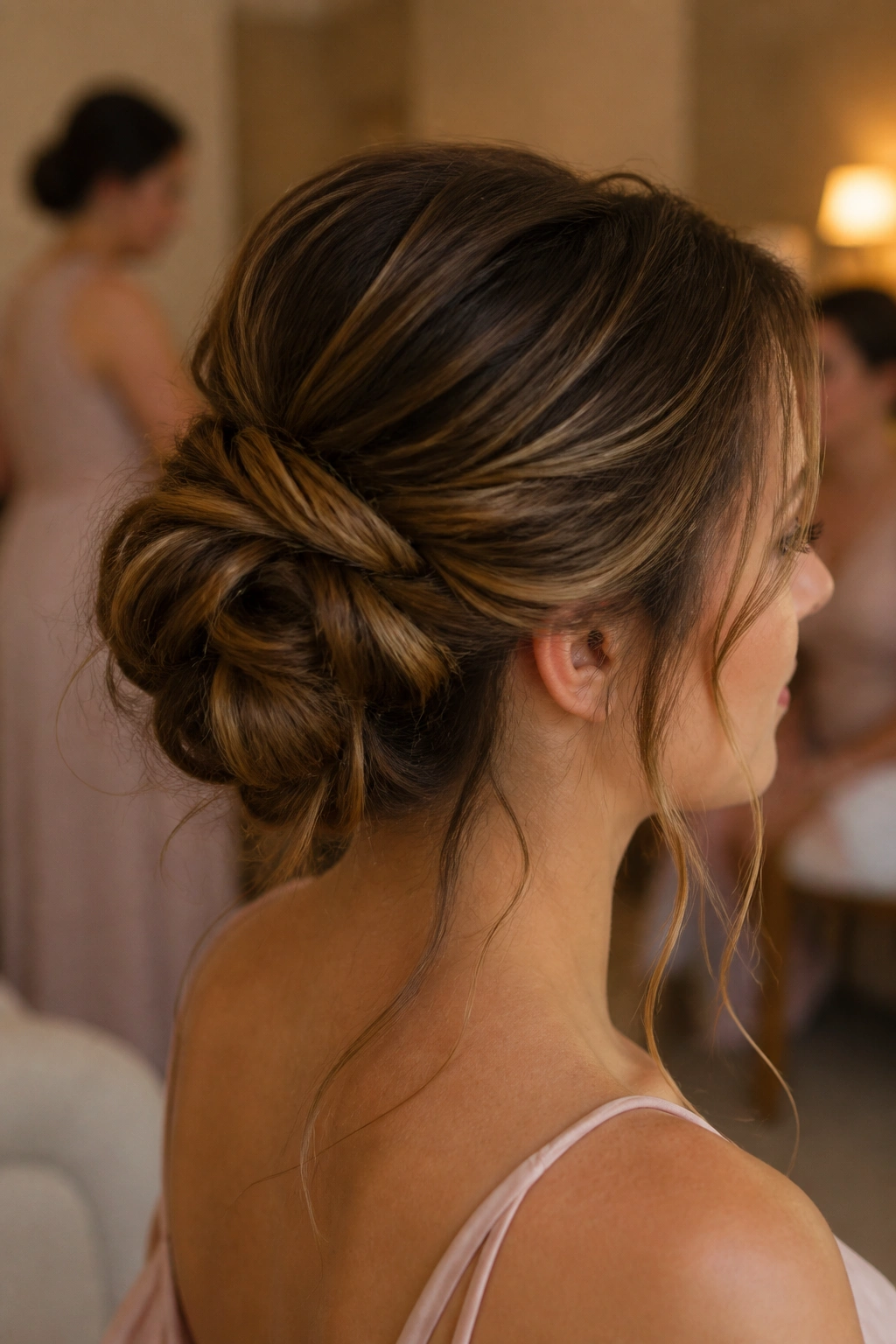
A good messy bun should look touched, not tossed. There’s a difference. If the bun is too loose, it feels unfinished; if it’s too neat, the whole point disappears. Wrapped sections help fix that. They give the bun shape and keep the outside looking deliberate, even when the finish is relaxed.
Start with slightly textured hair. Day-old hair is ideal, but a little dry shampoo at the roots can fake it well enough. Then wrap one or two sections around the base before pinning the rest into a soft knot. The wrapped pieces make the bun look fuller without needing a donut or a foam filler.
Best tools for the shape
- 6 to 10 bobby pins, depending on thickness.
- A medium-hold hairspray.
- Dry shampoo or texture spray.
- A small elastic that matches the hair color.
This style is especially handy for mixed bridal parties because it works on many lengths and densities. It can look boho, polished, or quietly formal depending on how much face-framing you leave out. And if you want to dress it up, a slim gold comb tucked into one side looks better than a giant accessory that takes over the whole back of the head.
8. Crown Braid into a Low Bun
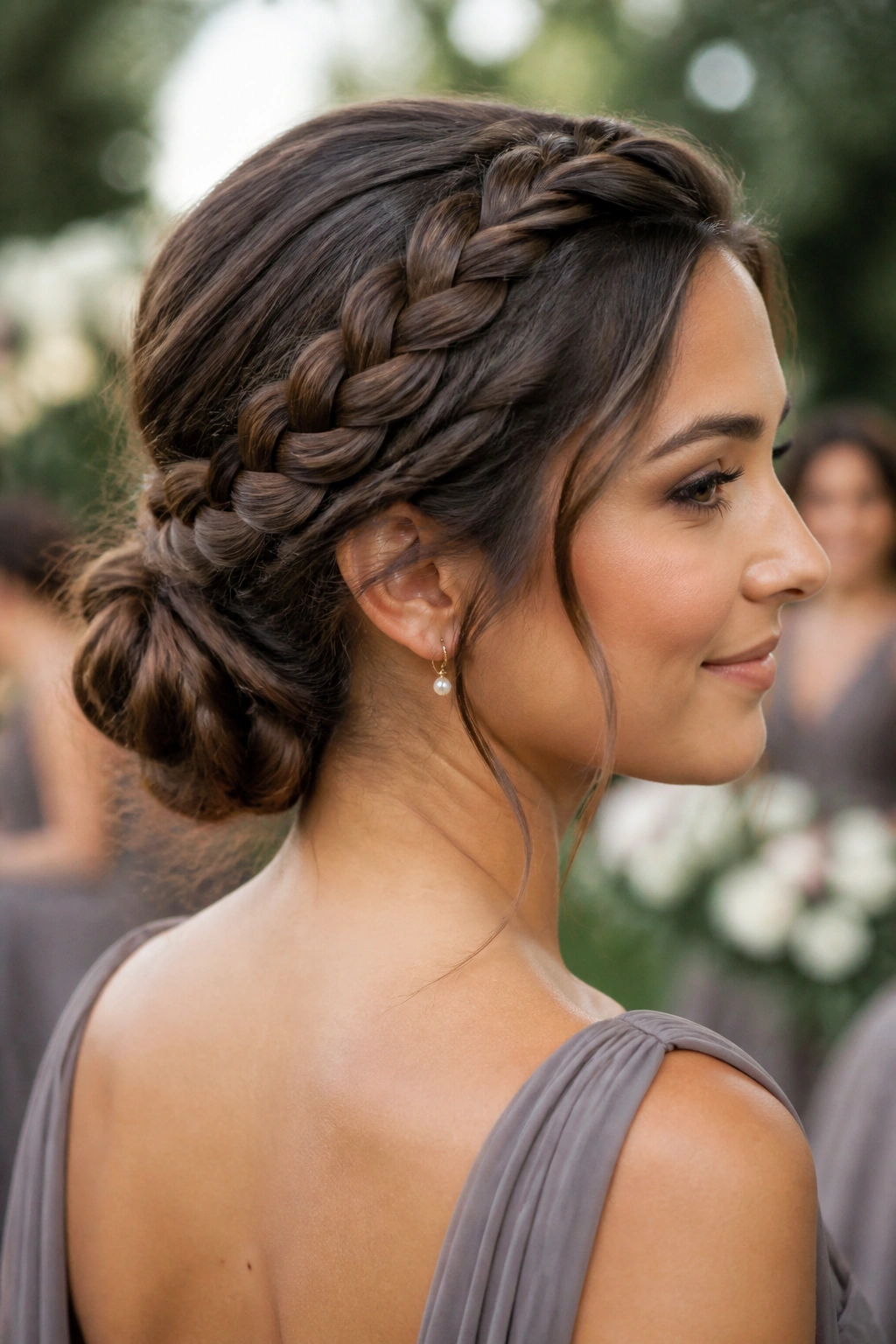
A crown braid buys you staying power. That’s the real reason people love it for weddings. It keeps the front of the hair in place, frames the face, and gives the low bun below it a built-in sense of shape. For bridesmaids, that’s useful because the style looks finished even when the rest of the bridal party’s hair is slightly different in texture or thickness.
The braid can sit close to the hairline or be lifted a little higher for a softer halo effect. Either way, it gives the updo a clear outline from the front, which is helpful in photos. Once the braid reaches the back, the remaining lengths can fold into a loose bun or tucked coil. I prefer the bun low and a little messy so the braid stays the focal point.
This style tends to suit fine hair better than people expect. The braid creates the illusion of volume, and the lower bun does not need much bulk to work. If the hair is layered, pin the shortest pieces into the braid first so they don’t stick out later. A tiny bit of smoothing cream on the ends goes a long way.
It’s a strong choice for outdoor ceremonies, too. Wind has less to grab.
9. Soft Gibson Tuck
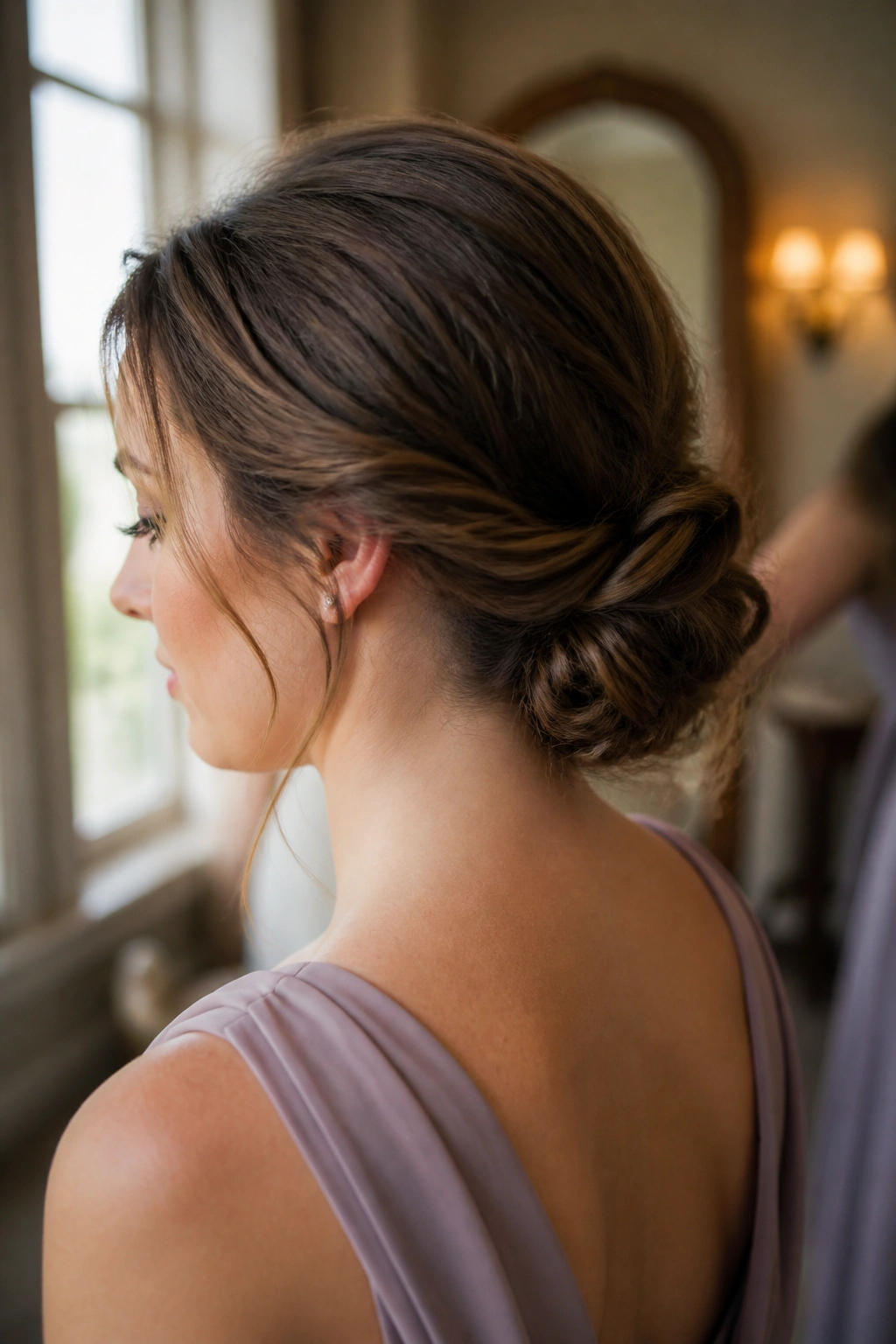
Why do some vintage styles feel stiff while others feel charming? Usually it comes down to how tightly the hair is tucked. A soft Gibson tuck keeps the old-fashioned shape but relaxes the finish enough for a bridesmaid look. It rolls the hair inward at the nape, almost like a soft fold, so the style sits close to the head without looking flat.
The version bridesmaids actually wear
You do not need a perfect, hard-edged roll. That’s the mistake. A modern Gibson tuck should have a little lift at the crown and a few gentle pieces around the face. The hair can be sectioned above the ears and pinned over itself, or wrapped over a small hidden base to create the tuck. Either way, the shape stays low and neat.
This style is especially flattering with satin dresses, square necklines, or pearls. It has a quiet formality that works well when the bridesmaids’ dresses are simple and the bride wants the hair to look coordinated rather than identical. It’s also one of the better options for medium-length hair that’s too short for a full chignon but long enough to fold.
A light mist of flexible spray after pinning helps the roll keep its curve without going crunchy. That matters if the hair has to last through a whole evening and still move when someone laughs.
10. Twisted Halo Updo
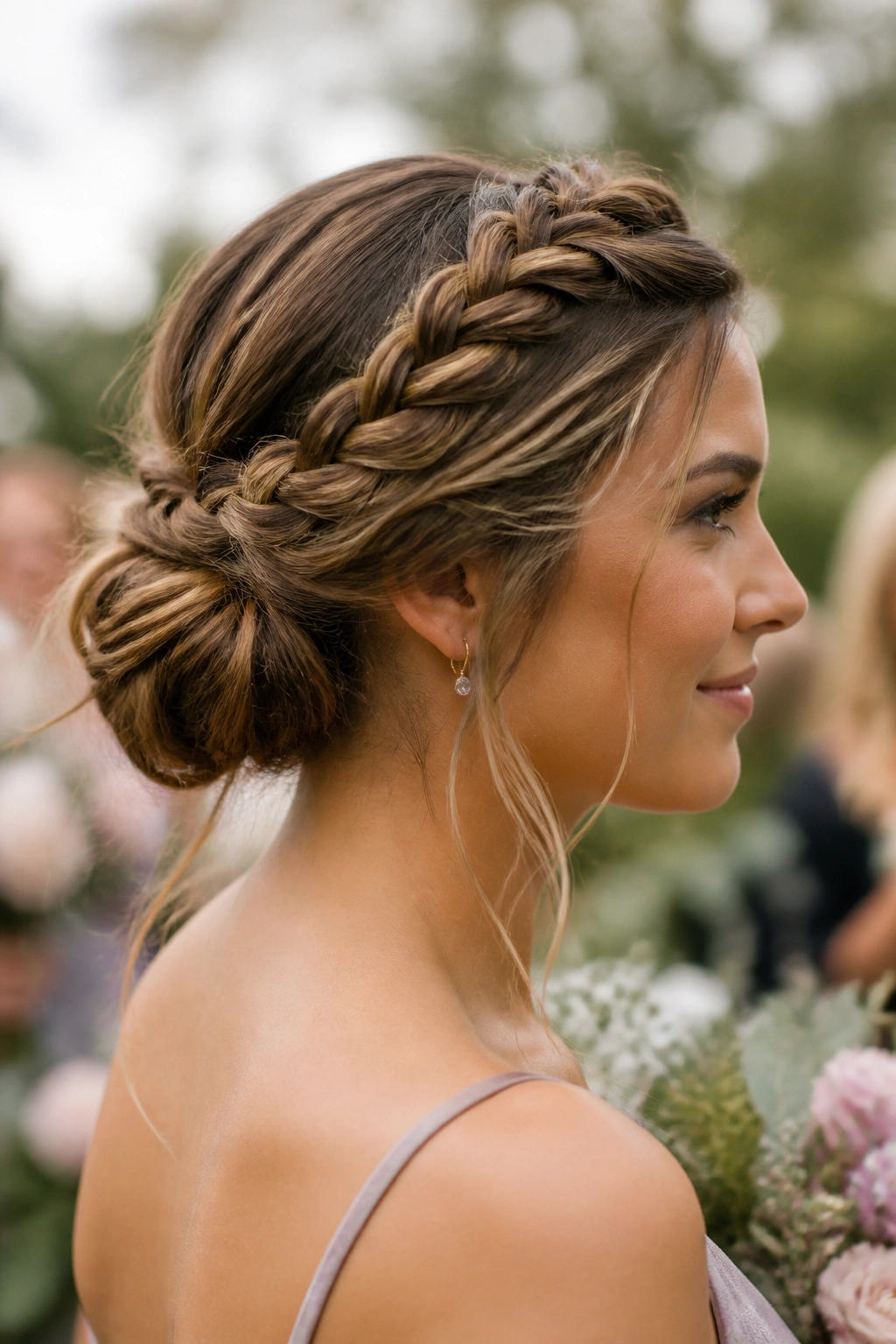
I keep coming back to halo twists for outdoor weddings because they solve two problems at once. The front stays soft, and the back stays secure. A twisted halo updo wraps sections around the head like a soft band, then gathers the remaining lengths into a tucked finish at the back or nape.
The shape feels airy, which is useful when the dress has delicate straps or a lot going on at the bodice. It can also make fine hair look fuller along the crown, since the twists add width without needing a ton of teasing. The finish does not need to be perfect. A slight separation in the twists is fine, even better, because it keeps the style from looking pasted down.
What to watch for
- Keep the twist tension even on both sides.
- Anchor the back with hidden pins before adding the decorative ones.
- Leave the ends tucked, not hanging loose.
- Use small floral pins if the bridal party wants a softer finish.
The halo shape is flattering in profile, which matters in aisle photos. And if you are dealing with humidity, this one has enough structure to stay presentable without turning into a helmet. That alone earns it a place on the list.
11. Curly Pin-Up with Defined Tendrils

Loose does not have to mean undefined. A curly pin-up keeps natural texture visible while still pulling the hair off the neck and shoulders. For bridesmaids with waves or curls, this is often the smartest path because it works with the hair instead of flattening it into submission.
The key is to shape, not brush. Section the curls lightly, pin a few clusters upward, and let defined tendrils stay around the ears or jawline. Those curls give the style movement and keep it from becoming too formal. If the hair is very curly, a curl cream or light gel before drying can help each section hold its shape long enough to pin neatly later.
This style looks especially good with dresses that have interesting necklines or earrings that deserve a little attention. It also photographs well because the shape changes from every angle. From the front, it feels soft. From the side, it has lift. From the back, the pinned curls create a nice, full surface without requiring a giant bun.
A diffuser helps if you need to dry the curls before styling. Don’t rush that step. Wet curls and bobby pins are a bad mix.
12. Rope-Braid Low Bun

If a fishtail braid feels too fussy, a rope braid is the easier cousin. Two sections twisted around each other create a clean spiral that looks more detailed than a basic plait but takes less time and usually holds better in slippery hair. Once the rope braid is formed, it can wrap into a low bun or tuck across the back like a band.
This style works well for thick or coarse hair because the twisted strands show off the texture instead of fighting it. It also suits bridesmaid dresses with rustic, garden, or autumn-inspired details. There’s a little movement in the braid, but it doesn’t drift into undone territory.
One thing I like here is the clean contrast between the braid and the bun. The braid reads as decorative, while the bun keeps the shape grounded. If the hair is especially dense, split the braid slightly after twisting so it looks wider and softer. If it’s finer, keep the twist tighter and let the bun do the visual work.
Best pairing: a simple satin ribbon tucked into the base or a comb with small stones. Anything larger tends to look crowded.
13. Minimal Knot with Polished Ends

Not every bridesmaid updo needs extra decoration. Sometimes the strongest choice is a minimal knot with polished ends, especially when the dresses already carry the visual weight. This is the cleanest style on the list, but it still counts as loose because the knot sits softly and the finish leaves a little movement at the edges.
Where the polish matters most
The crown should look smooth, not flat. The knot should look gathered, not stuffed. And the ends—if any are visible—should be neatly tucked so the back reads as intentional from a distance. That’s what makes the style feel special instead of plain.
This is a smart pick for modern bridal parties, especially when the dresses are streamlined and the jewelry is doing the talking. It also works well on hair that refuses to stay curled for long, because the style does not depend on a lot of texture at the ends. A small amount of shine cream at the hairline can keep flyaways under control without making the whole head look greasy.
A side part gives this style a little more life. A center part makes it cleaner. Either way, the shape is understated enough to let the whole outfit breathe.
14. Boho Pinned Roll with Loose Waves
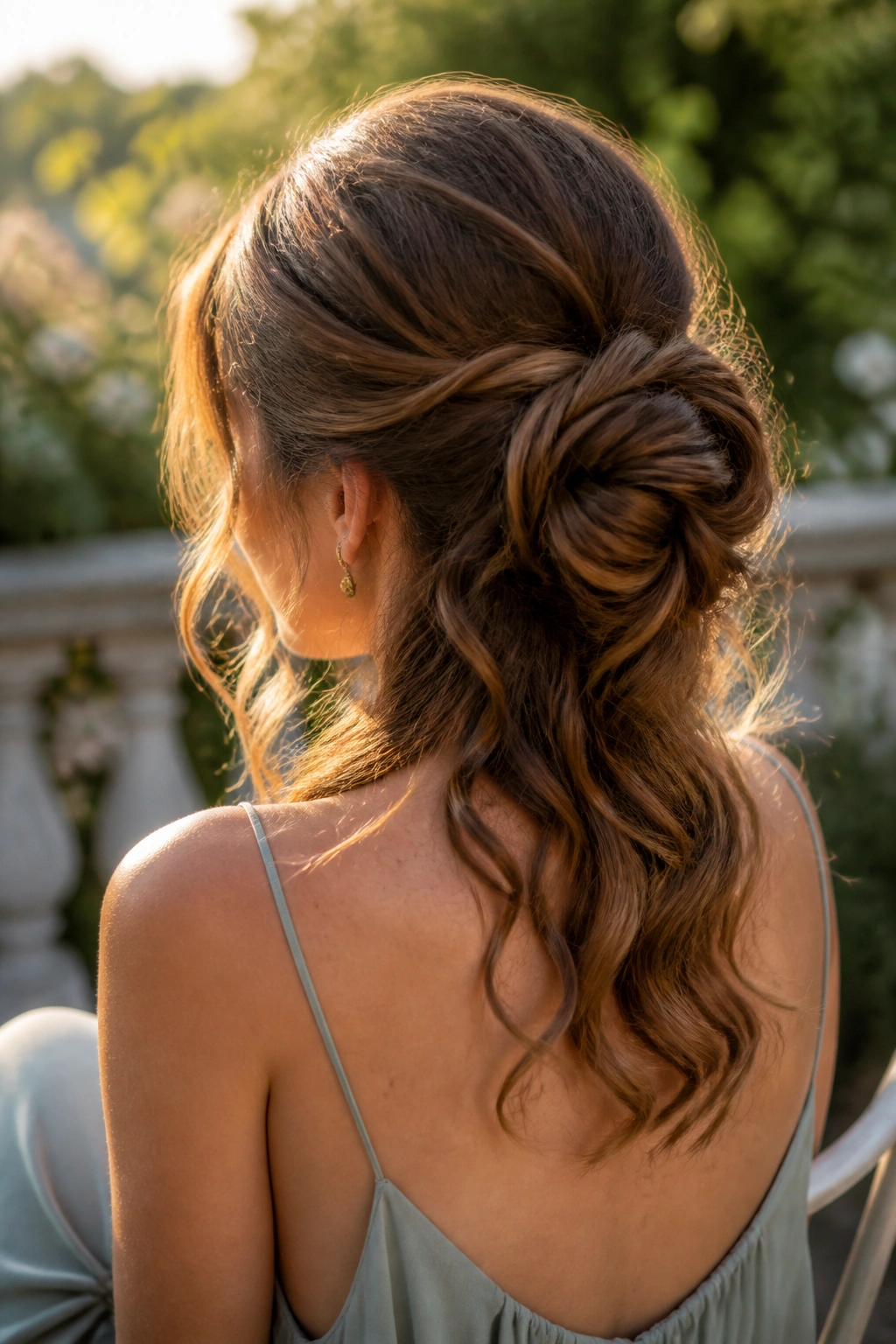
What if the updo is only half the story? A boho pinned roll with loose waves uses the back of the hair as the anchor and lets the rest fall in soft bends around it. That makes it a useful bridesmaid option when the goal is to look relaxed without losing the shape that a formal style gives.
The front can be twisted back on both sides, then pinned into a roll or low fold at the center. The remaining lengths stay wavy and loose, usually brushed just enough to blend the sections together. It’s a little less structured than a full bun, which is exactly why some bridal parties prefer it.
This style works well for medium to long hair and can handle soft layers if the pins are placed carefully. It also suits dresses with lace, chiffon, or flutter sleeves, because the hair has the same kind of movement. If you want to go a little more polished, keep the waves loose and uniform. If you want it softer, alternate the curl direction so the finish feels less patterned.
A floral pin or a slim comb can sit in the roll without overwhelming the style. Keep it small. The hair should still feel like the main event.
15. Low Bun with Braided Accent

For bridal parties with mixed hair lengths, this is the one I’d reach for first. A low bun with a braided accent is adaptable, easy to adjust, and forgiving when everyone’s hair behaves a little differently. The braid might run along one temple, across the crown, or just wrap the base of the bun. That small detail gives the whole style enough interest to feel finished.
The bun itself can be loose and airy, not tight or compact. That leaves room for soft volume at the crown and a few face-framing pieces to keep the style gentle. It also means the same general look can work across different hair textures, which is useful when the bridal party is trying to look coordinated without turning into clones.
If one bridesmaid has fine hair and another has thick hair, the braid helps bridge the gap. Fine hair gets a little visual density. Thick hair gets a place to settle. That is the part people miss when they choose a style only because it looks nice on one head. A good bridesmaid updo has to behave across a range of hair types.
A tiny braid wrapped around the bun base looks elegant without feeling stiff, and it pairs well with almost anything: pearl pins, fresh flowers, even nothing at all. The shape does the talking.
Loose bridesmaid updo styles work best when they look soft first and styled second. That sounds backward, but it’s the truth. The prettiest ones usually have a little bend at the front, a little grip at the base, and one detail that keeps them from looking generic.
If the bridal party wants a more romantic feel, pick the twisted, braided, or pinned styles. If the dresses are sleek and the ceremony is formal, the French twist, Gibson tuck, or minimal knot will feel cleaner. And if the hair types are all over the map, the low bun with a braided accent is hard to beat. It gives the stylist room to adapt without making the whole group look mismatched.
One last thing. Bring a photo of the shape, not a photo of a single person’s exact hair. That tiny difference saves a lot of frustration, because hair texture, density, and length change how a style sits on the head. The shape matters. The details can shift.
