



Thick hair can look fantastic short, but only when the cut respects the amount of hair on your head. Chop it in the wrong place and you get a triangle, a helmet, or that awkward puff that seems to show up the minute you leave the salon. Short hairstyles for thick hair women work best when they remove bulk where hair tends to stack up and keep weight where the shape needs to hold.
That’s the part a lot of people miss. Thick hair is not the problem. Thick hair is the raw material. It gives body, movement, and a shape that can look expensive even with very little styling, but it also needs a cut that knows where to stop. A blunt line can look sharp and clean. Soft layers can stop the sides from ballooning. A little lift at the crown can save you from the flat-top look that thick hair sometimes throws at you after a long day.
Short doesn’t have to mean fussy, either. Some of the easiest cuts are the ones that look intentional when they’re a little messy. Others need a round brush, a blow dryer, and five careful minutes in the morning. Both can work. The trick is choosing the version that matches how you actually live, not the version that looks good in a photo and falls apart by lunch.
1. Textured French Bob for Thick Hair
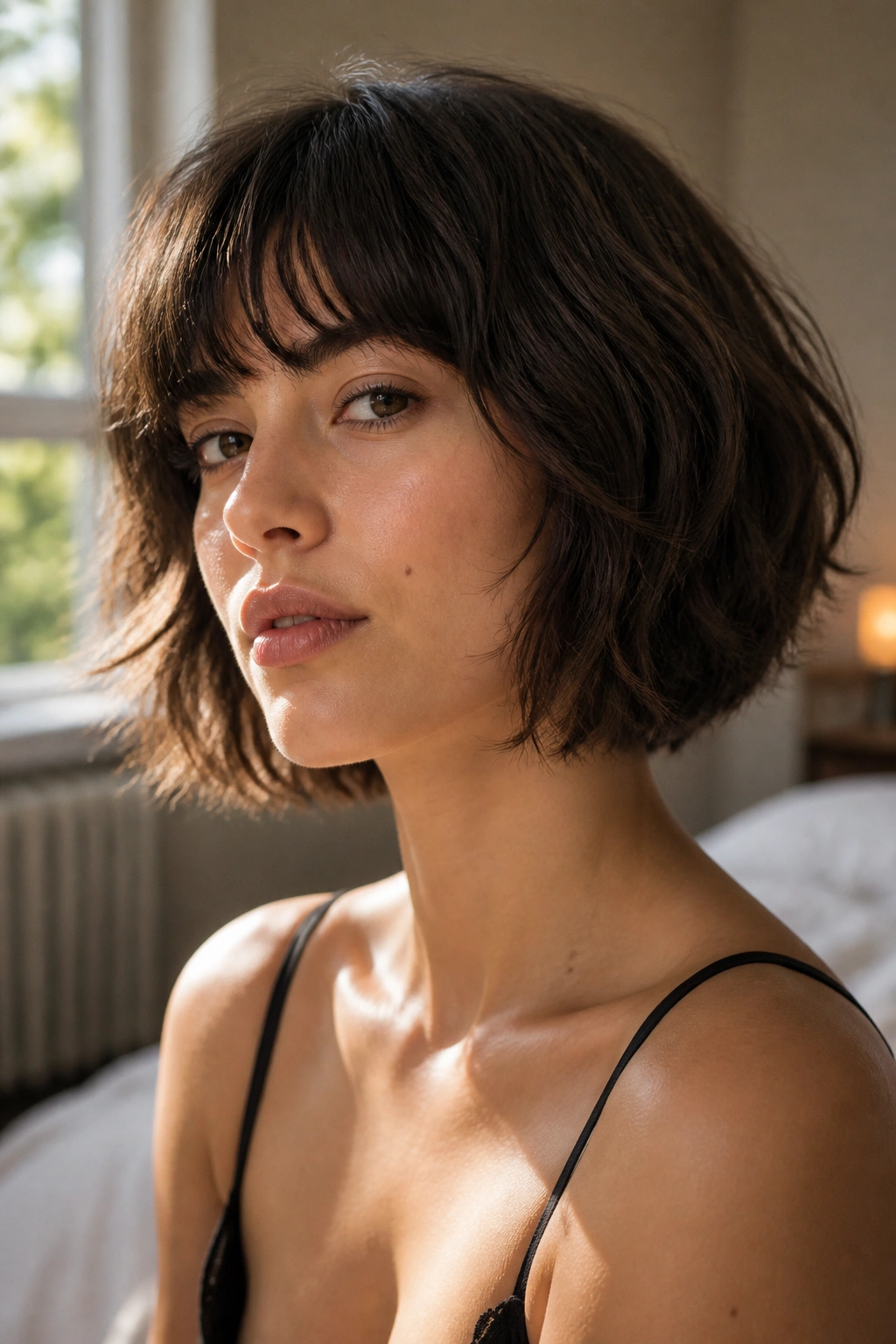
The French bob is a smart choice when you want short hair that still feels soft. It usually sits around the jawline, sometimes a touch below, with ends that are lightly textured instead of chopped into a hard block. Thick hair gives this cut a nice amount of body, so it doesn’t go limp the way finer hair can.
The key is restraint. Ask for soft point-cut ends and a little internal removal of bulk, not heavy thinning through the surface. You want the outline to stay clean while the inside moves. A brow-grazing fringe can make the whole cut feel lighter, but it should be blended enough that it doesn’t sit like a stiff shelf.
Why it works so well on dense hair
- The jaw-length shape stops hair from swelling out around the shoulders.
- A slightly uneven edge keeps the cut from looking boxy.
- A fringe can break up the width across the face.
- It air-dries well if your texture is already a bit wavy.
Best move: tell your stylist you want the shape to sit close to the face, not float away from it.
2. Blunt Chin-Length Bob

A blunt bob sounds simple because it is simple, and that’s exactly why it works. With thick hair, a clean chin-length line can look strong and polished without needing a lot of styling. The density does half the work for you. The hair has enough weight to keep the bob from collapsing.
Why the line matters
The mistake here is over-layering. Thick hair already brings its own volume, so too many layers can make the silhouette fuzzy instead of sharp. A good blunt bob keeps the ends even and lets the weight sit low enough to create a neat frame around the jaw.
This cut is especially good if you like a smoother finish and don’t want the hair to flip around too much. It also grows out in a fairly tidy way, which matters more than people admit. A blunt bob that looks clean at week one and week six is worth more than a complicated cut that needs constant fixing.
If you wear it straight, ask for a crisp perimeter and minimal face-framing. If your hair has wave, keep a little softness at the ends so it doesn’t turn into a triangle by the end of the day.
3. Stacked Bob with a Lifted Nape

A stacked bob is one of those cuts that looks especially good in profile. The back is built a little shorter, with layers stacked to create lift at the crown and a smooth curve toward the nape. On thick hair, that structure matters. It takes some of the heaviness out of the back without making the whole head look over-thinned.
This is a practical cut for women who want shape they can actually see from every angle. It gives the illusion of height at the top and keeps the neckline clean. That clean nape is the whole point.
Be careful with the stacking, though. Too much and the back gets puffy. Too little and you lose the benefit of the cut. You want the profile to curve, not bulge. A good stacked bob should feel neat around the neck and slightly lifted at the crown, like the hair is doing a little bit of architecture for you.
4. Bixie Cut
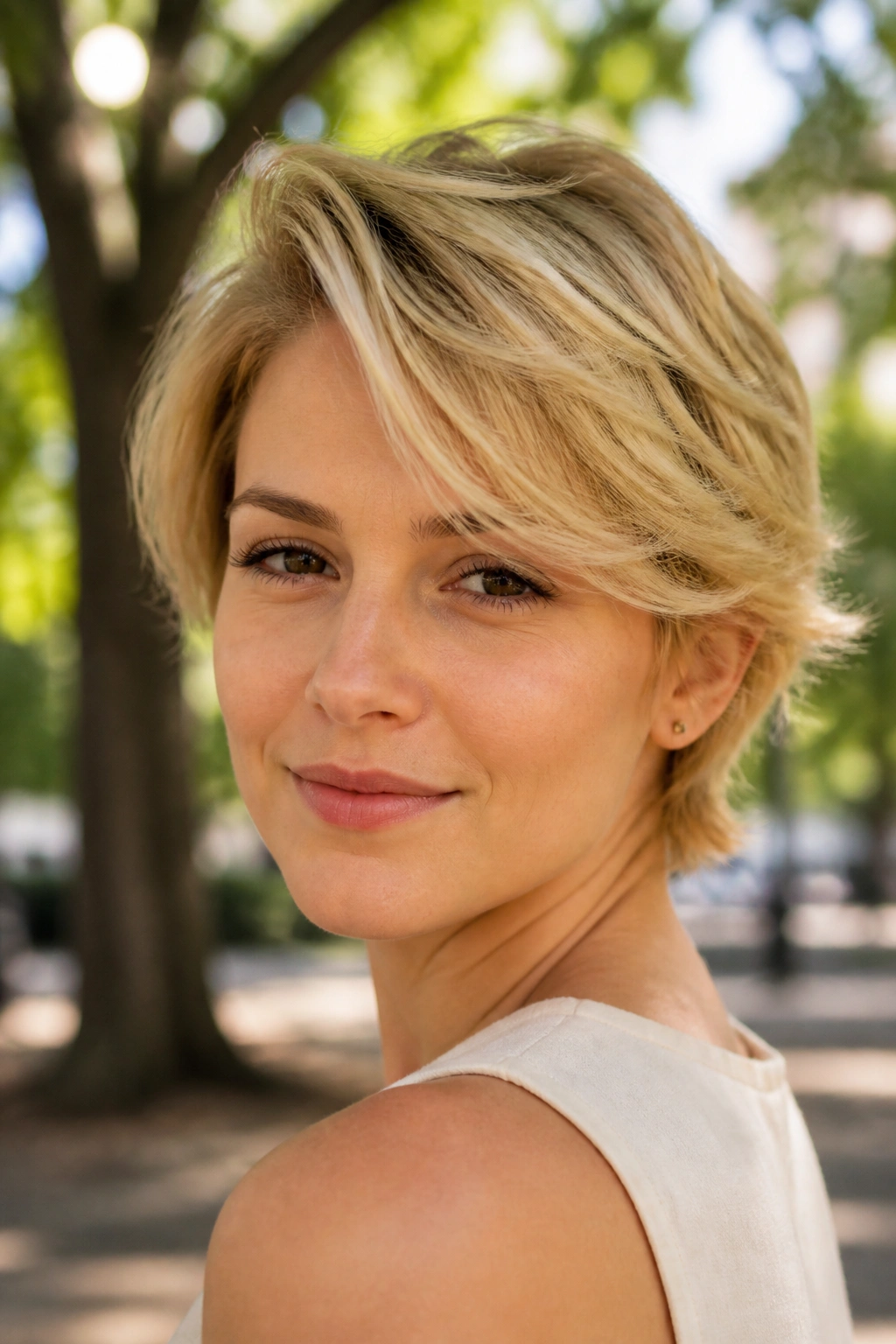
What do you get when a bob and a pixie stop arguing? A bixie. It sits in that in-between space, with enough length to soften the face and enough shortness to lighten thick hair fast. It’s one of the easiest short hairstyles for thick hair women who want movement without going all the way to a classic pixie.
What makes it different
The bixie usually keeps more length at the top and around the ears, while the back is shorter and tidier. That extra top length matters. It gives you room to push the hair forward, part it to the side, or rough it up with a bit of paste. Thick hair loves that kind of flexibility.
It’s also a good rescue cut when your hair feels too heavy in a bob but you’re not ready for a very short crop. The bixie removes enough bulk to feel fresh, yet it still leaves some hair to play with. That balance is the whole appeal.
If you want a cut that can look soft one day and edgy the next, this is a strong pick. It’s not boring. It’s not fussy, either.
5. Layered Pixie Cut
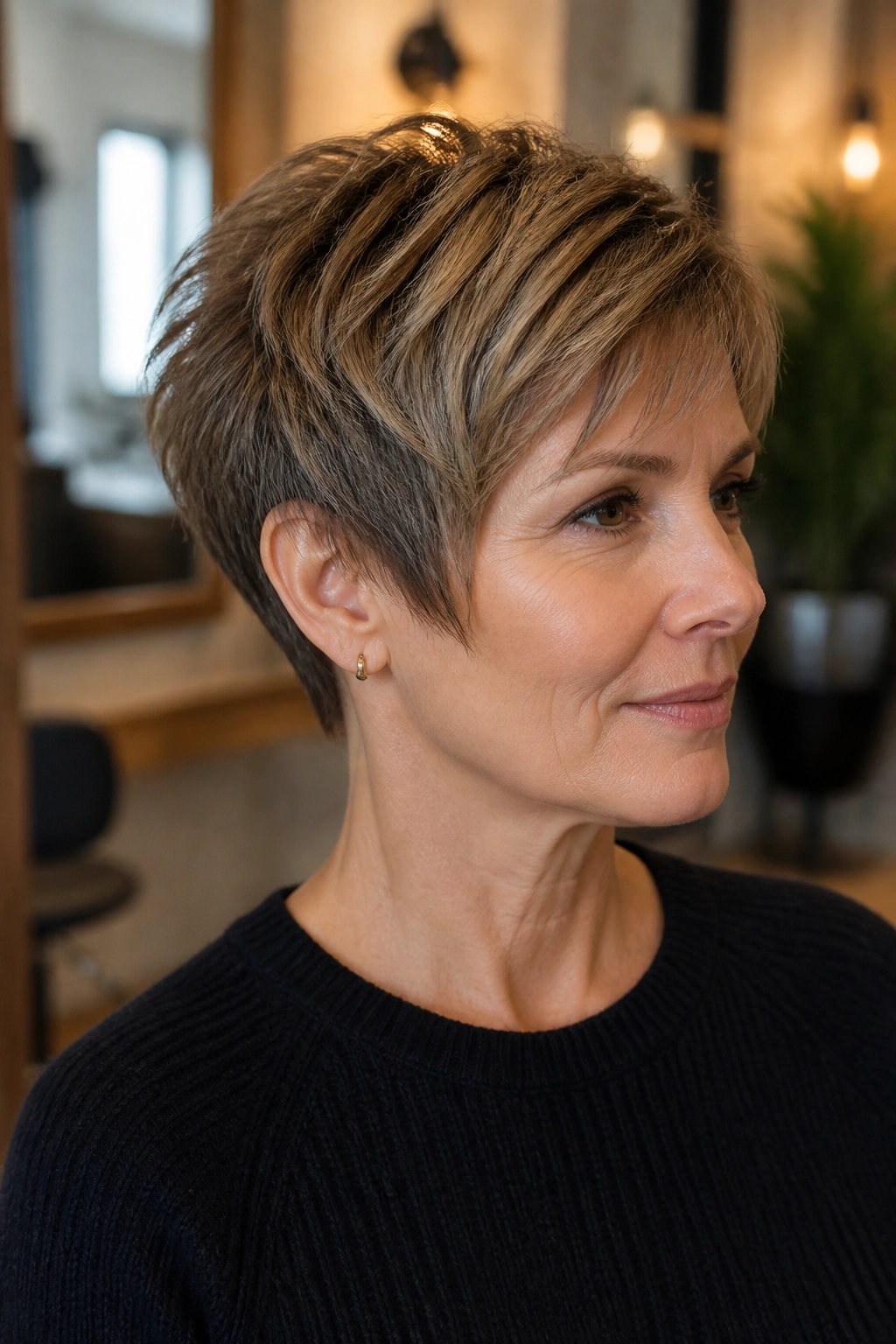
A layered pixie can be a blessing for thick hair because it stops the head from feeling overbuilt. The cut is short, yes, but the layers are what make it useful. They break up the mass, show off texture, and keep the shape from sitting like a solid cap.
Thick hair needs a careful hand here. Ask for piecey layers and a tapered nape, not aggressive thinning all over the place. Thinning shears can be useful in the right spots, but if a stylist attacks the whole head with them, the ends can get frizzy and strange. That look is hard to fix.
How to wear it
Use a small amount of matte paste or light styling cream and work it through damp hair with your fingers. Don’t try to smooth every strand into place. The cut should have a little separation. That separation is what keeps it from looking flat and heavy.
A layered pixie is especially good if your hair has a natural bend. Straight, ultra-stubborn hair can still wear it, but you’ll need a bit more styling. Not much. Just enough to keep the top from sitting like a helmet.
6. Italian Bob

The Italian bob has a rounder, fuller feel than a blunt bob. It usually lands near the jaw or slightly below, with the ends curved softly under so the shape feels plush rather than sharp. Thick hair does this style justice because there’s enough density to hold the rounded outline.
This is one of those cuts that looks elegant without looking stiff. The length around the face tends to feel a bit softer, and the body through the middle gives the hair that rich, hefty look people try to fake with styling tools. Here, the hair already brings the shape.
I like this cut for women who want something polished but not severe. You can blow it out smooth, let it dry with a little bend, or tuck one side behind the ear and call it done. It behaves well. That alone puts it ahead of a lot of more complicated bobs.
7. Angled Bob
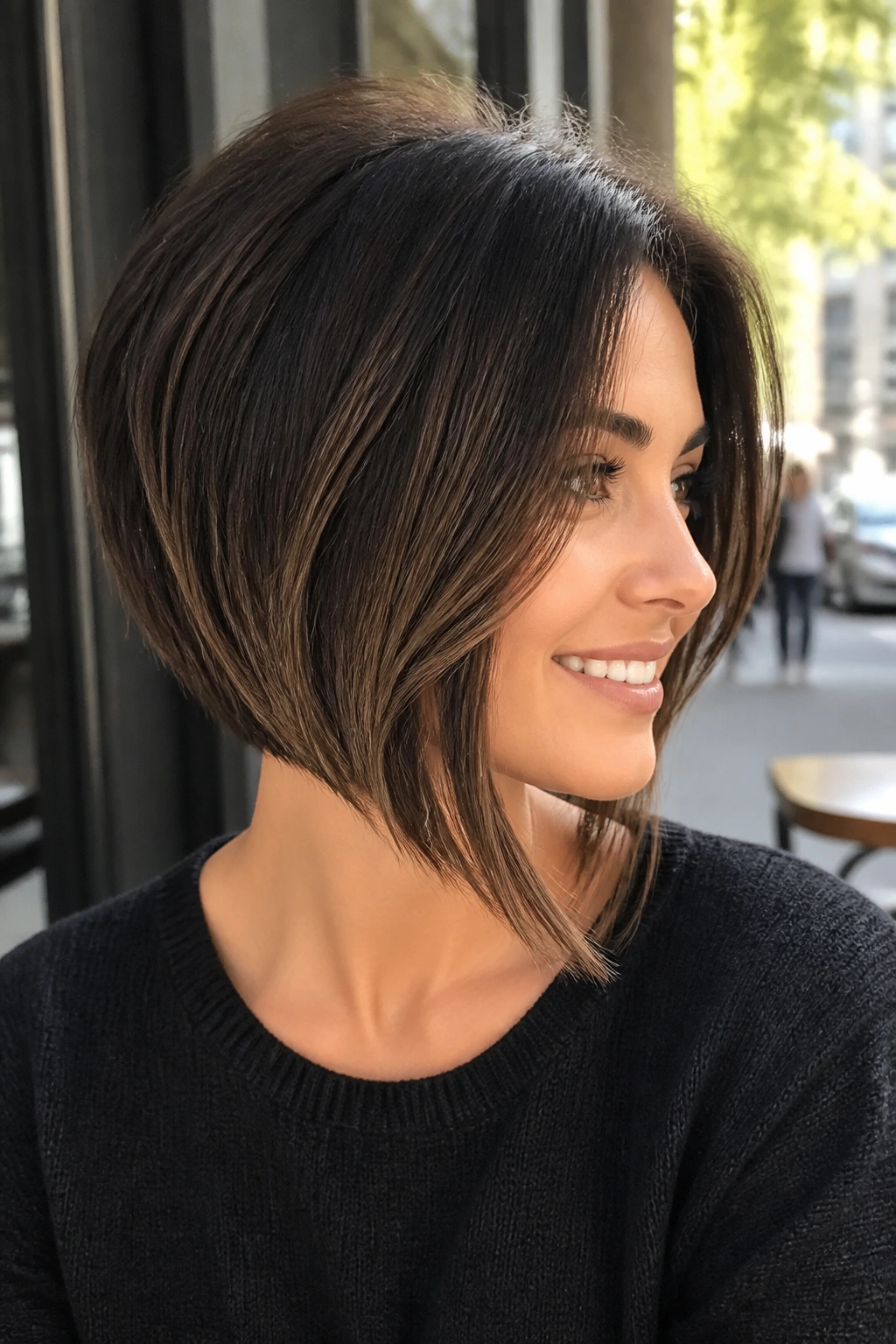
An angled bob gives thick hair a built-in shape. The back is shorter, the front is longer, and the line between them creates a diagonal that keeps the cut from feeling blocky. On dense hair, that angle matters because it shifts weight away from the sides and toward the front, where you can control it better.
Unlike a blunt bob, this one has motion even before you style it. The longer front pieces help slim the face a little, and the shorter back keeps the neckline light. It’s a strong option if your hair tends to puff at the sides or if you want a cut that looks neat from the side without feeling severe from the front.
If you wear glasses, this shape can be especially good. The longer front sits nicely around the frames and keeps the whole look balanced. Small detail. Big payoff.
8. Shaggy Lob
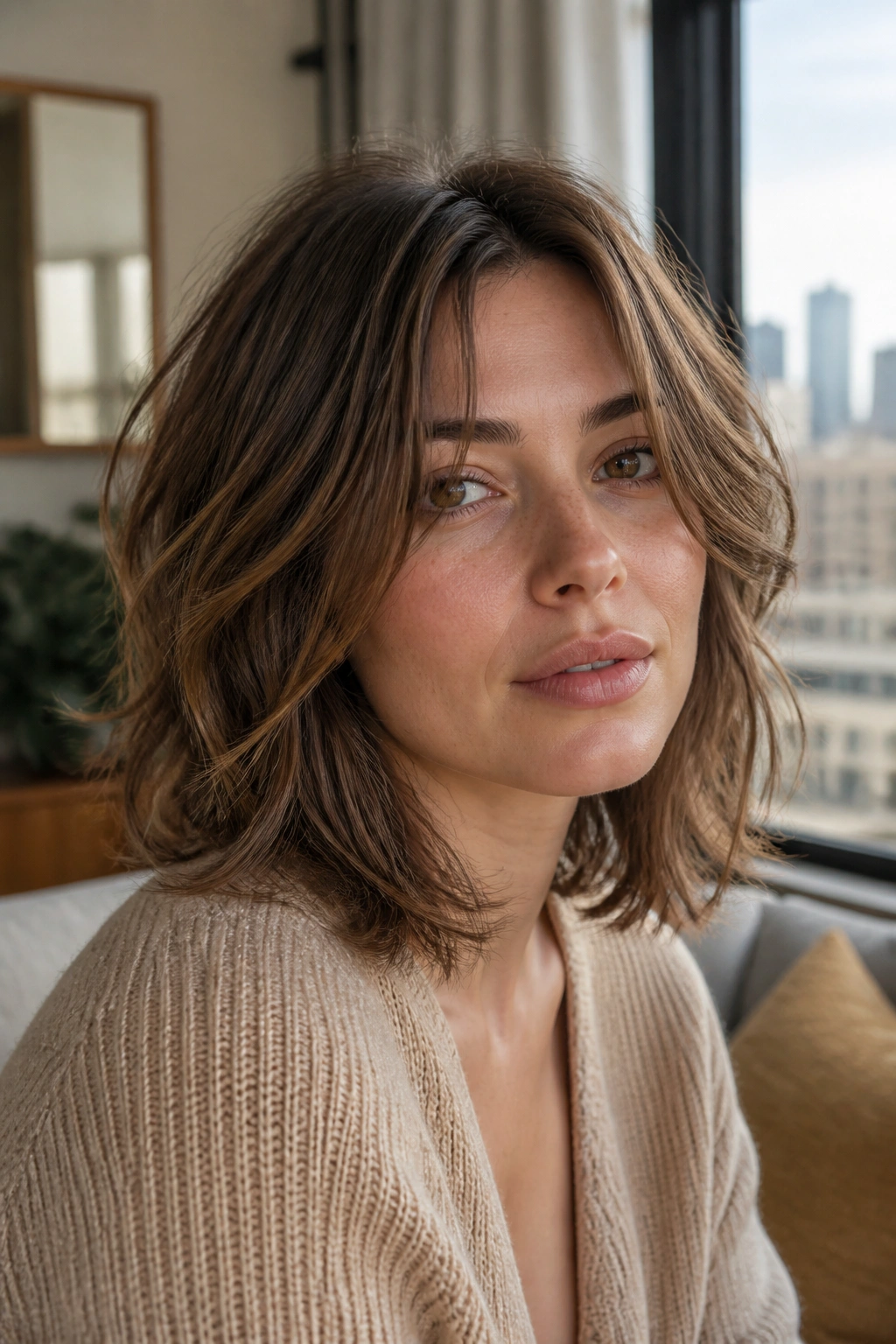
A shaggy lob is the cut I reach for when someone wants short hair but not a hard, exact line. It sits around the shoulders or collarbone, with layers that stop thick hair from piling up into one heavy mass. The result feels loose, a little undone, and easy to live with.
What to ask your stylist
- Keep the layers soft through the sides so the shape doesn’t burst outward.
- Add movement near the ends, not just at the crown.
- Leave enough length to tuck the front pieces behind the ears.
- Avoid too much razor work if your hair frizzes easily.
This cut is especially good for wavy thick hair because the texture does half the work. You can air-dry it with a cream, twist a few damp sections around your fingers, and move on with your day. It also grows out nicely, which is rare enough to mention.
9. Curly Crop
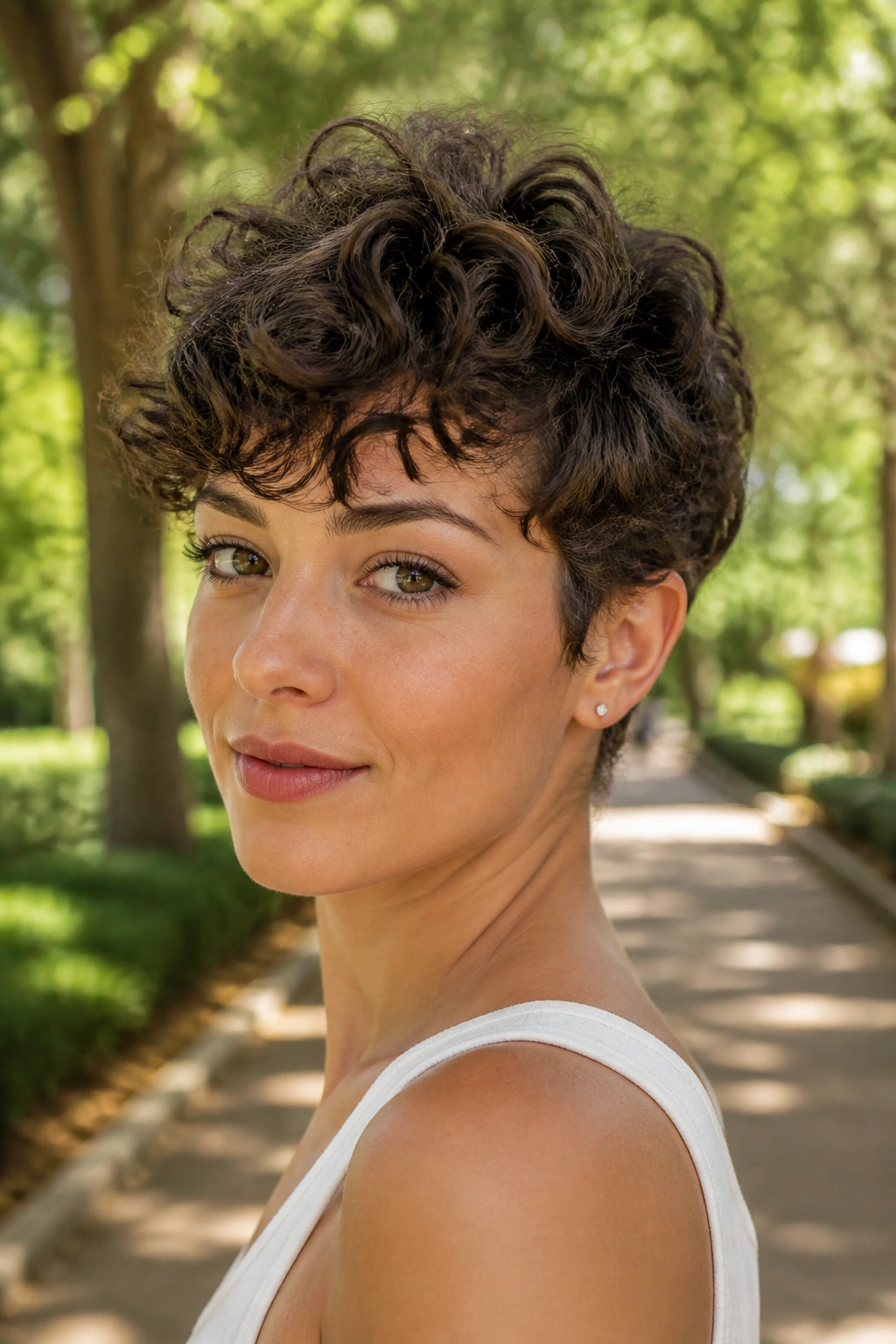
Can thick curls go short without turning into a round puffball? Yes — if the crop is shaped the right way. A curly crop depends on dry cutting, curl-by-curl shaping, and enough length left in the right places so the curls can spring instead of stack.
The best curly crop usually keeps a little more length at the crown and just enough softness around the sides to stop the silhouette from going too wide. Thick curls already have volume. You do not need to manufacture more. You need shape.
What it needs in real life
- A curl cream or light gel on damp hair.
- Gentle scrunching, not rough towel rubbing.
- A diffuser if you want lift without frizz.
- Regular trims so the outline stays rounded.
This is one of those cuts that looks better when it’s lived in. Day one can be nice. Day three, with a little texture, can be even better.
10. Feathered Crop
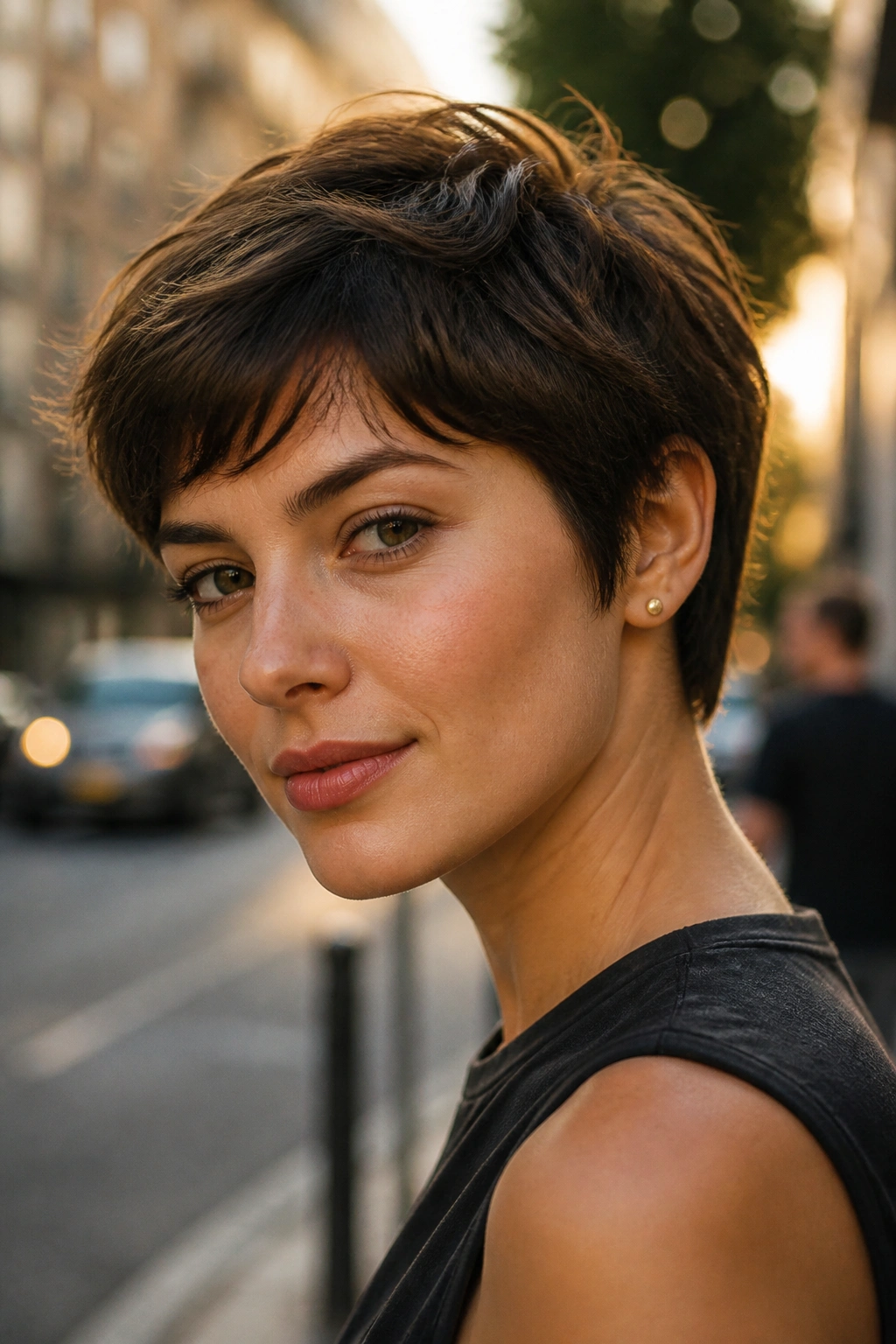
Feathered hair is not old-fashioned when it’s done with a modern hand. On thick hair, a feathered crop can make the whole head feel lighter without sacrificing shape. The layers are cut so they move away from the face and neck instead of sitting in one heavy block.
The result is soft. Not flimsy. Soft. There’s a difference. You still want enough density to make the cut look full, but the feathering keeps the outline from feeling stiff or too round. It’s a good choice if you like a cut that brushes back easily and doesn’t need constant attention.
This style also works nicely around the temples and ears, which can be tricky spots for thick hair. A little feathering there stops the hair from jutting out. If you want a short cut that doesn’t shout, this is a good one to keep in mind.
11. Tapered Undercut Pixie
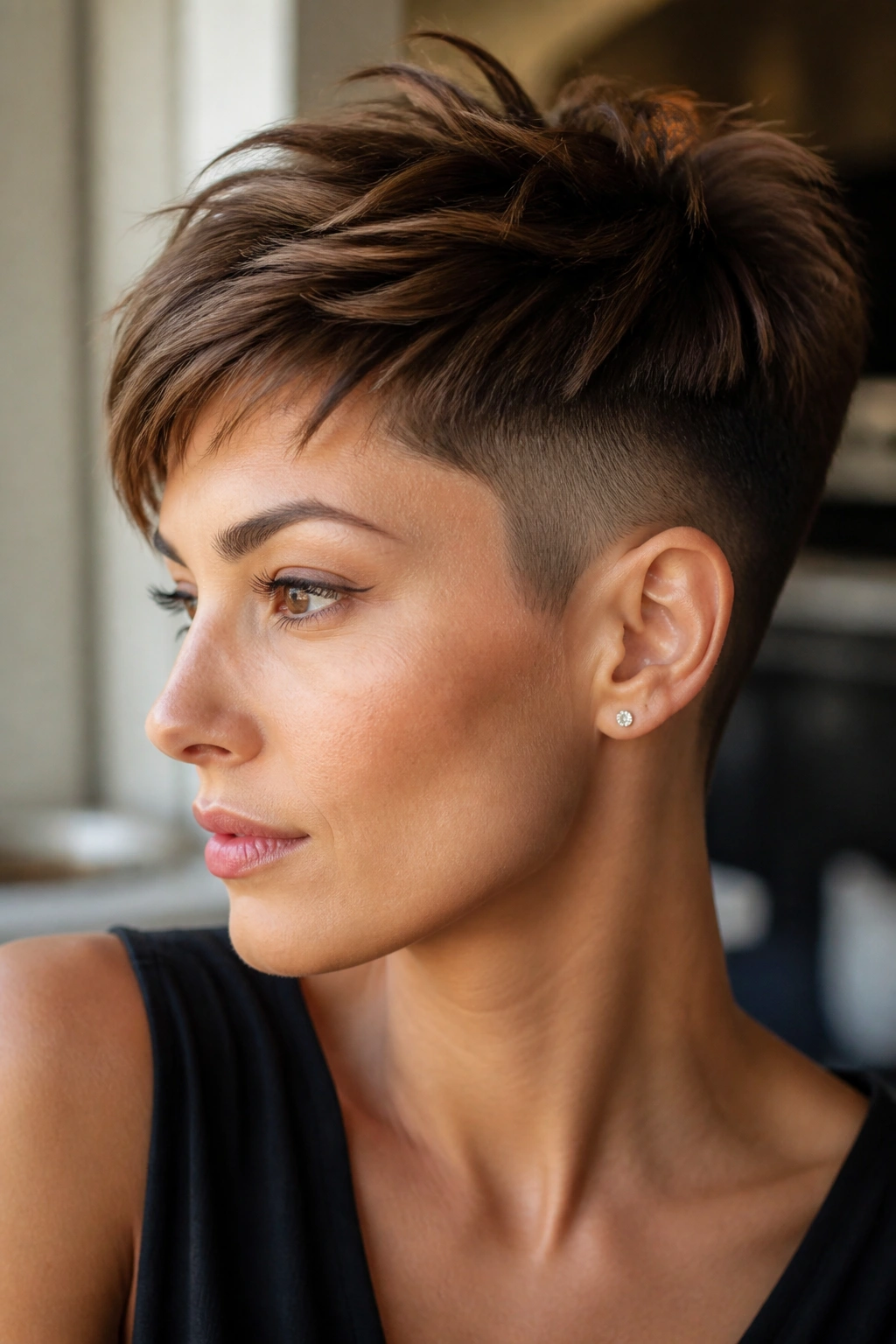
A tapered undercut pixie is the answer when thick hair feels like too much hair. The sides and nape are clipped shorter, sometimes much shorter, and the top stays longer so you still have shape to play with. It’s practical, fast, and honestly a little liberating.
This cut is not subtle. It’s clean around the neck, easy to dry, and much lighter than most people expect. If you’ve ever walked out of the salon feeling like your head lost five pounds, you know the feeling. That is what this cut does.
Good fit, poor fit
- Good fit: thick straight hair, heavy crowns, hot weather, people who like low-fuss styling.
- Poor fit: anyone who wants to tuck hair behind both ears or keep a soft bob shape.
- Maintenance: plan on regular cleanups every few weeks.
The top should still have enough length for movement. Otherwise the cut can look too severe.
12. Collarbone Lob with Internal Layers
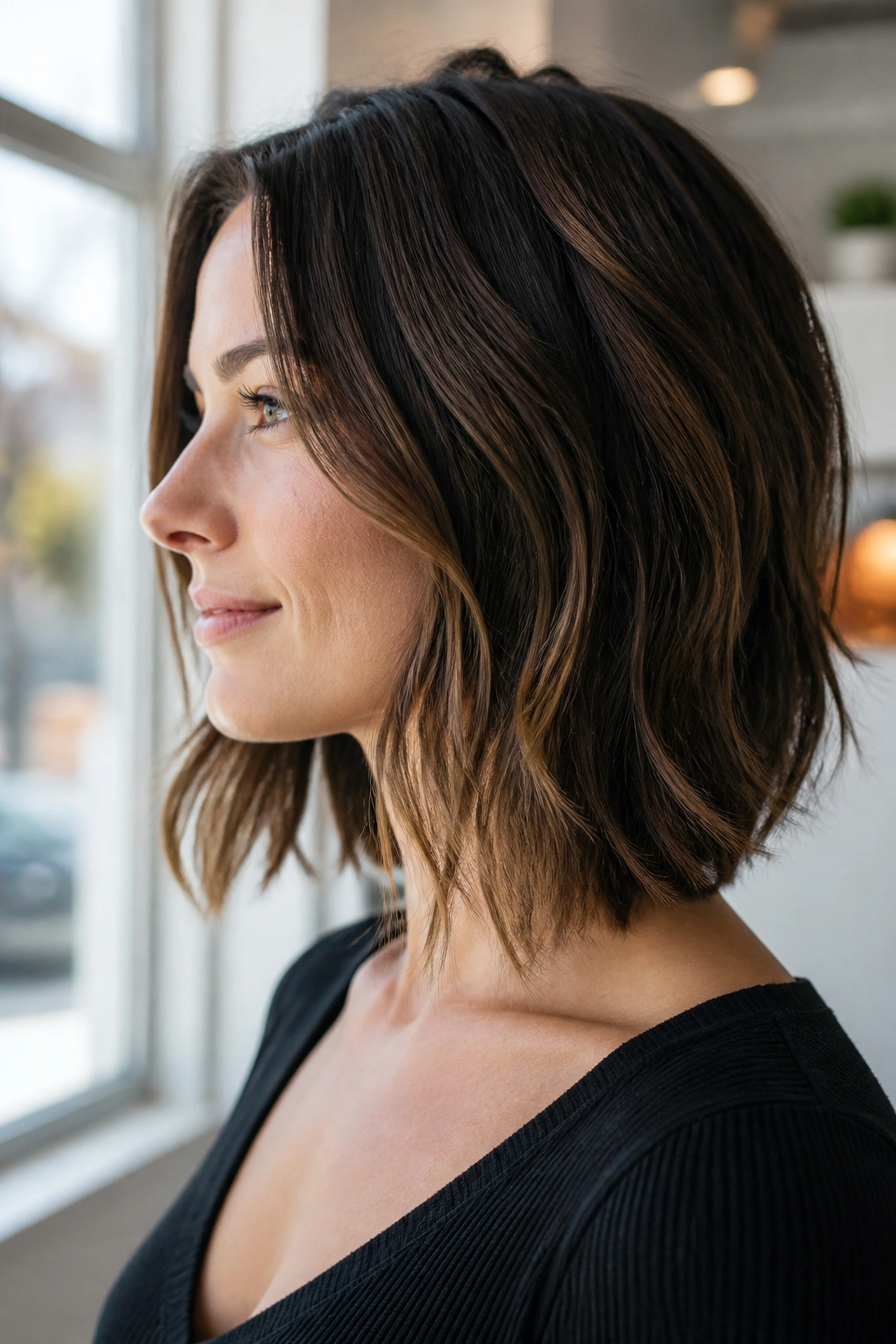
Does short hair have to be very short? Not always. A collarbone lob can count as a shorter style when the goal is to remove weight and simplify your routine, and thick hair often behaves better at this length than at a jaw-skimming bob. The extra inch or two gives the shape room to breathe.
The trick is internal layering. That means taking bulk out from the inside without carving obvious steps into the outside of the cut. From the surface, the hair still looks smooth and full. Underneath, it moves more easily and dries faster.
What makes it a smart middle ground
You can still tie it back. You can still wear it tucked under a coat without everything flaring out. And if you’re nervous about a big chop, this is a gentler way to test shorter hair before going even more cropped.
It’s the sort of cut that feels grown-up without being stiff. Practical. A little polished. Easy to dress up with a strong side part or keep casual with a loose wave.
13. Side-Swept Bob with a Deep Part
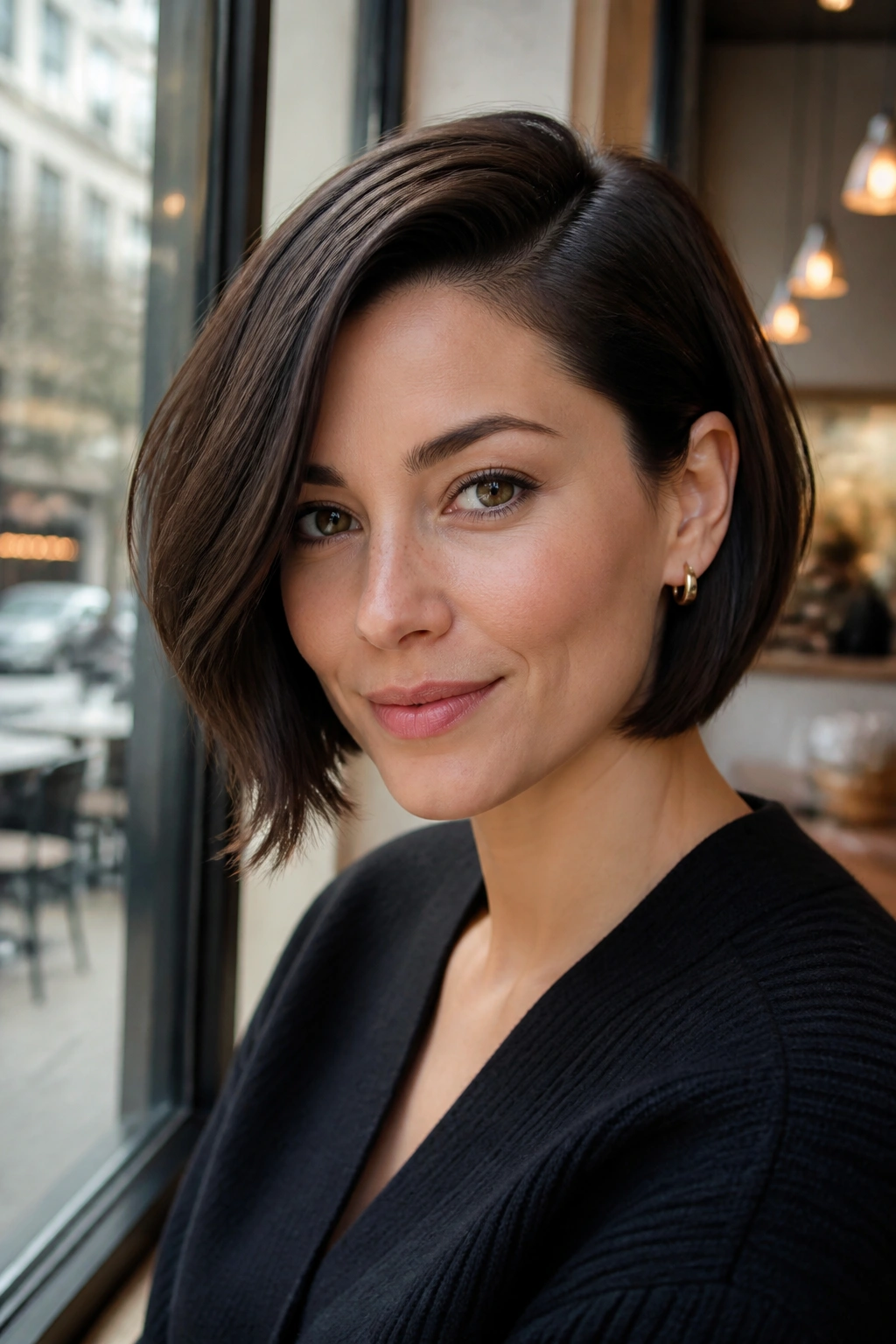
A deep side part can change thick hair almost on its own. Put a bob on top of that and you get a shape that feels lighter, longer on one side, and more flattering around the face. Sometimes the cut is fine and the part is the thing that fixes it.
The reason it works is weight distribution. Thick hair likes to sit where you put it, and a deep part shifts that weight in a way that opens up the face instead of closing it off. It also creates a bit of lift at the roots on the heavier side, which helps if your hair tends to lie flat at the crown.
This style is good for days when you want your hair to look styled without spending twenty minutes on it. Tuck the heavier side behind one ear, leave the longer side near the jaw, and let the angle do its job. Easy. And a little dramatic, which is never a bad thing.
14. Chin-Length Cut with Curtain Bangs
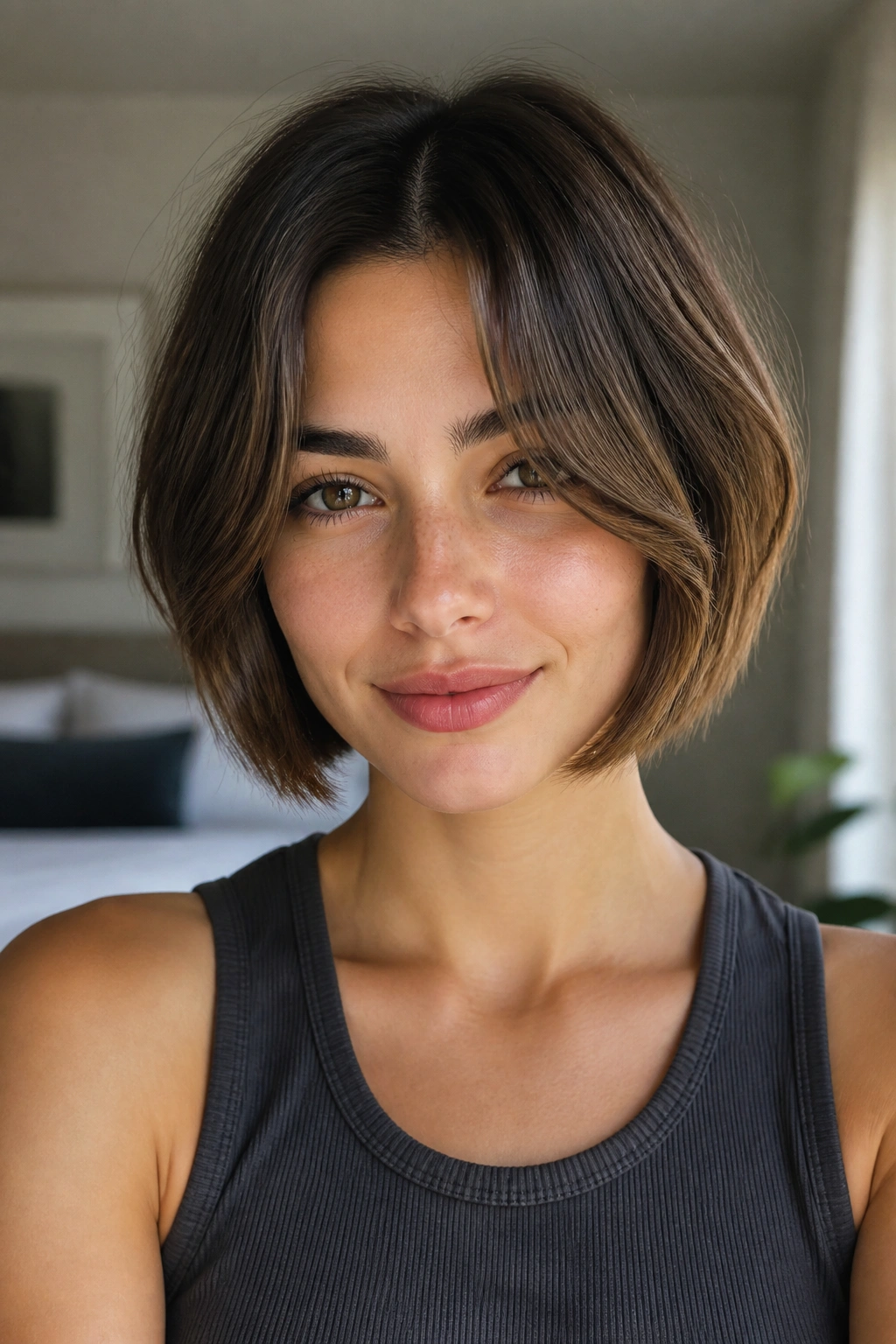
Curtain bangs are one of the nicest ways to soften thick hair without making the whole cut feel frilly. On a chin-length bob, they split the front weight and open up the face in a way that feels relaxed rather than severe. The shape is simple, but the face-framing matters a lot.
Why the fringe matters
Thick hair can make straight-across bangs look heavy fast. Curtain bangs avoid that problem because they part in the middle and taper out toward the cheeks. They’re easier to grow out, too, which is not a small detail if you’ve ever regretted a fringe that needed constant trimming.
This cut looks especially good when the bangs are blended into the rest of the bob instead of sitting on top of it like a separate piece. Ask for softness through the sides and enough length in the front that you can push the bangs back if you get tired of them.
A round brush helps, but you do not need a perfect blowout. A little bend is enough.
15. Graduated Bob with a Clean Nape

A graduated bob is a close cousin of the stacked bob, but the finish tends to feel smoother and more controlled. The back builds up gradually, and the nape stays neat, which gives thick hair a compact shape without making the crown too tall. It’s tidy. That’s the word for it.
This cut works well if you want a sharp silhouette with less drama than an angled bob. The graduation helps the hair tuck inward, and the clean nape keeps the bottom edge from looking bulky when you wear collars or scarves. Small thing, but it matters.
I like this style for hair that wants to spread out rather than fall straight down. It reins in the thickness. It also grows out in a way that still looks like a haircut, not a compromise. That alone earns it a place on this list.
16. Tousled Crop with Micro Bangs
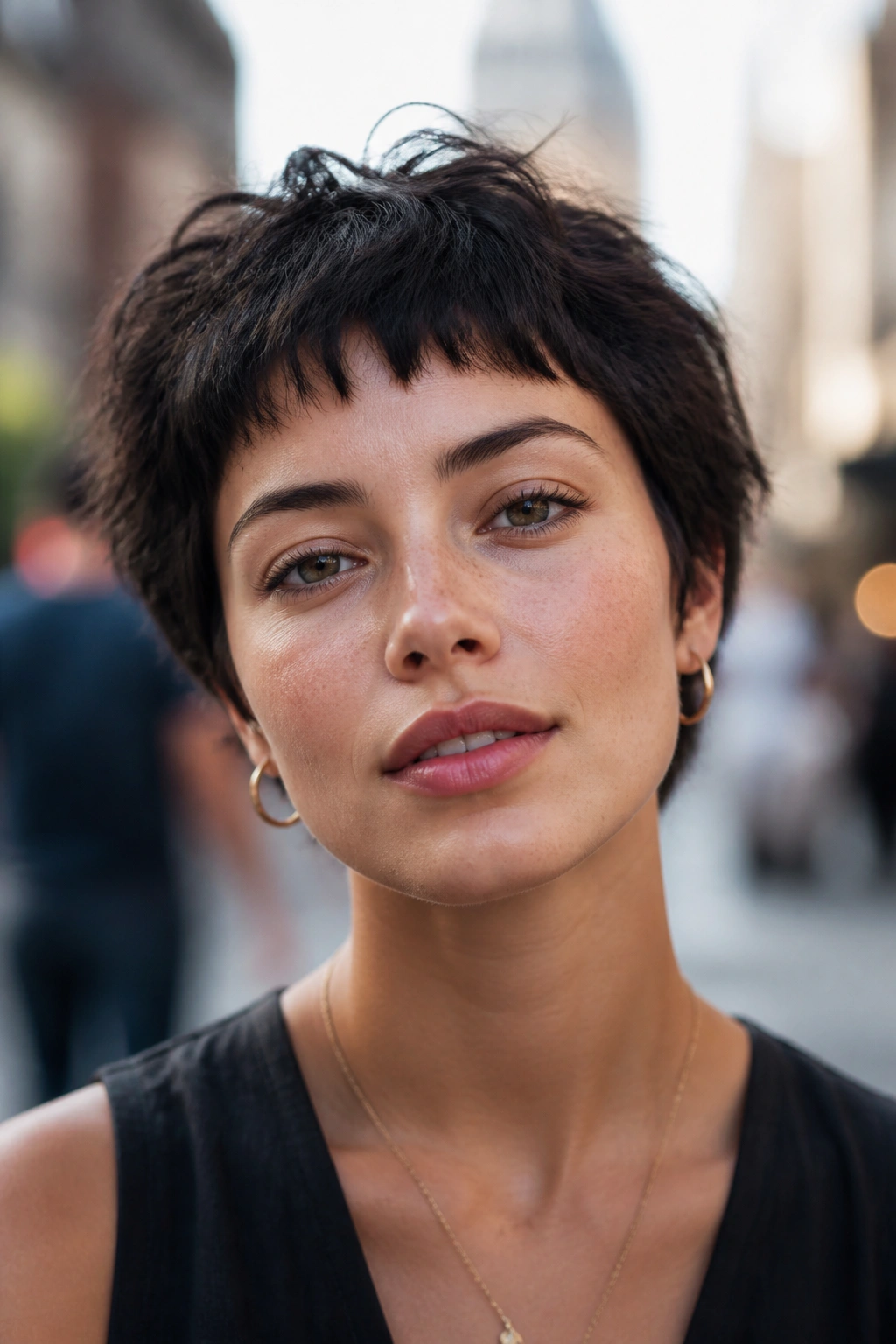
Micro bangs are not for everyone. Let’s say that plainly. But on thick hair, paired with a tousled crop, they can look sharp and deliberate instead of precious. The crop keeps the sides tight enough to stop bulk from spreading, while the bangs give the cut a strong front edge.
The trick is texture. If the crop is too neat, the micro bangs can feel severe. If the rest of the hair has a bit of movement, the whole thing looks lived-in and current without trying too hard. Thick hair helps because the hair has enough substance to support the short fringe.
What to watch for
- Micro bangs need regular trims.
- Cowlicks at the front can fight the shape.
- A light paste or texture spray keeps the crop from looking flat.
- This cut suits strong features and a clean brow line.
It’s a bold look, but not a fragile one. That’s why it works.
17. Razored Wavy Bob

A razored wavy bob is a good fit for hair that has natural bend and a little frizz control. The razor softens the ends, takes out bulk, and keeps thick waves from turning into a blunt shelf. The result feels airy, which is useful when your hair has enough density to stand up on its own.
The important part is the hand behind the razor. Done well, it creates movement. Done badly, it chews up the ends and makes the hair feel fuzzy. So this is one of those cuts where the stylist matters more than the name of the cut.
If your waves are loose, this bob can be a dream to wear with a salt spray or a touch of cream. If your hair is dry or damaged, be careful. Razor cutting can make fragile ends look tired fast. A scissor cut may be the safer choice.
18. Short Wolf Cut
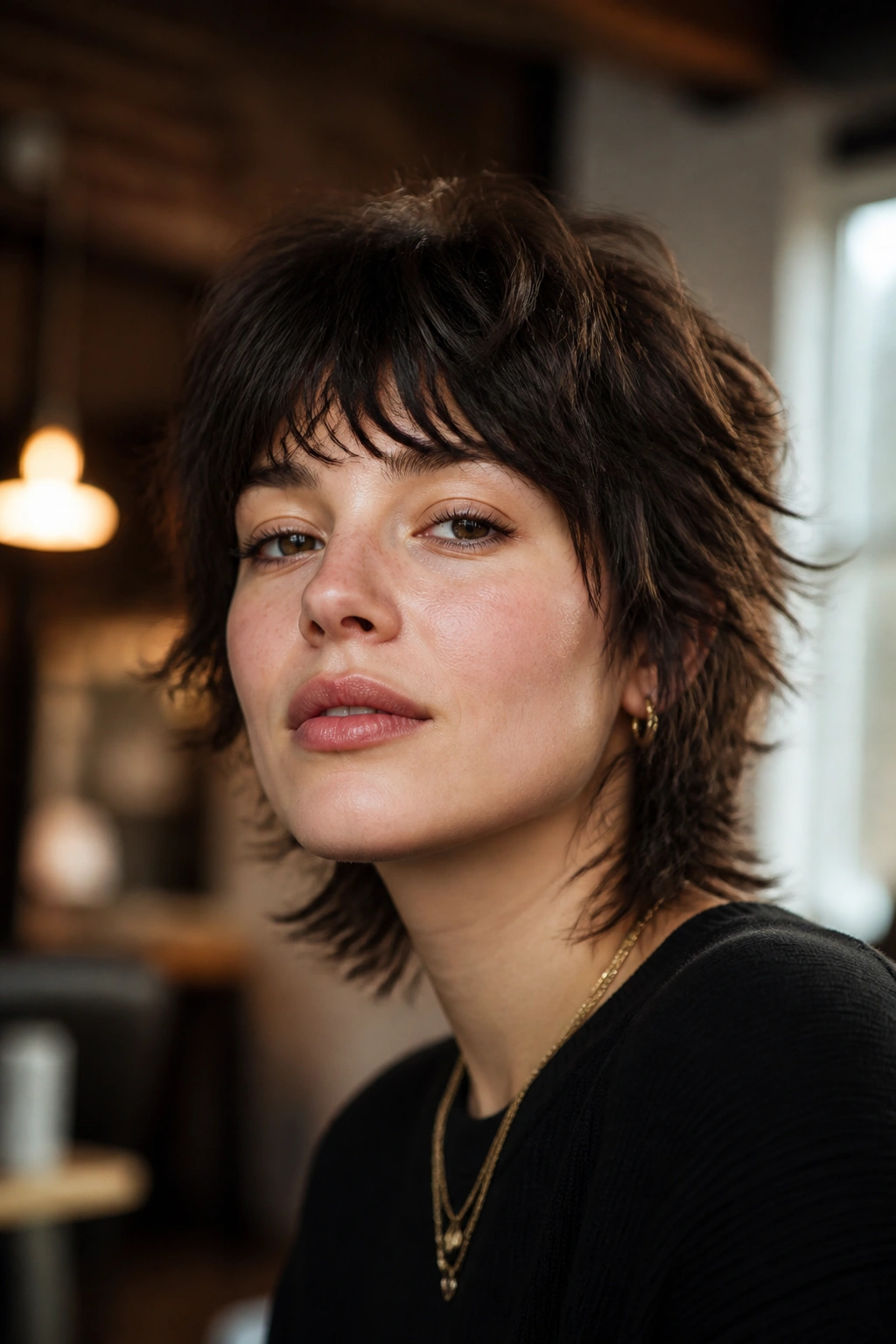
The wolf cut is basically layered attitude. On thick hair, it can be a lot of fun because the layers create movement at the crown and around the face while the shorter lengths keep the bulk from turning into a blob. It’s messy in a planned way.
This is not the cut for someone who wants a neat, symmetrical finish every day. It’s better for people who like texture, a bit of edge, and a hairstyle that looks more interesting when it’s a little undone. Thick hair gives the wolf cut enough substance to hold the shaggy shape without disappearing.
How to keep it from getting fluffy
Use a lightweight cream or spray, not a heavy oil. Dry it with your fingers or let it air-dry until it’s mostly set, then scrunch the ends a bit. If the layers are too short or too even, the cut can mushroom. That’s the part to avoid. The right wolf cut should look wild, not accidental.
19. Soft Mushroom Bob

A mushroom bob has a rounded shape that can sound old-fashioned until you see a modern version. The updated version keeps the edges softer and the crown less severe, which makes it work nicely on thick hair. The silhouette sits a little like a cap, but with movement at the sides so it doesn’t feel costume-y.
The roundness can be useful if your hair grows outward instead of down. Thick hair often does that. A soft mushroom bob keeps the shape compact while still looking full, and the shorter back helps stop the neckline from swelling up. There’s a bit of vintage in it, but not in a way that feels stuck in the past.
This cut suits straight or slightly wavy hair best. If your texture is very curly, the shape can get unpredictable fast unless the cut is tailored carefully.
20. Asymmetrical Bob with a Long Side

An asymmetrical bob is one of the easiest ways to make thick hair look intentional. One side sits a little longer than the other, and that uneven line breaks up the mass of the hair in a way that feels clean and modern. It also gives the face a little diagonal motion, which is flattering when thick hair wants to sit wide.
This cut works especially well if you like a little drama but don’t want a full-on edgy crop. The longer side can skim the jaw or chin, while the shorter side keeps the neck exposed and the whole shape lighter. It’s a nice middle ground between a standard bob and something sharper.
If you’re torn between two short cuts, this one can be the smartest compromise. You get movement, shape, and enough length to tuck one side back when you want to change it up. And if your hair is very thick, that asymmetry can make the whole cut feel less bulky right away.
