



Royal hairstyles for elegant events have a useful habit: they make the whole look feel finished before anyone notices the dress, the shoes, or the jewelry. That’s the magic trick. A good formal hairstyle does not shout over the outfit; it frames the face, keeps the neckline clean, and stays calm when you’re talking, laughing, posing for photos, and leaning over a table full of glassware.
The styles that read most regal usually share the same quiet discipline. The part is clean. The crown has a little lift. The ends are tucked, wrapped, braided, or pinned with enough control that nothing slips into chaos halfway through the evening. And yes, the back matters just as much as the front—maybe more, because that is where a lot of “promising in the mirror” styles fall apart under real light.
A hairstyle can look rich without being stiff. It can be soft without looking unfinished. That balance is what makes royal-inspired hair such a smart choice for weddings, galas, formal dinners, and any event where you want polish without looking like you tried too hard.
The best part is that there is no single formula. A sleek chignon, a braided crown, a side-swept wave, or a sculpted bun can all feel equally elevated when the shape, shine, and pin placement are right. The useful part is figuring out which one belongs with your neckline, your hair density, and how long you need the style to last.
1. Royal Hairstyles for Elegant Events: The Sleek Low Chignon

A sleek low chignon is the kind of style that makes even a simple silk dress look intentional. It sits at the nape, keeps the neckline open, and gives earrings room to do their job instead of fighting for attention. If the surface is smooth and softly shiny, it reads refined; if it is pulled too tight, it can start to feel severe fast.
Why It Reads as Regal
The shape does a lot of the work. A low bun draws the eye toward the face and collarbone, which is why it works so well with bateau necklines, off-the-shoulder gowns, and dresses with strong straps. A slight side part softens it. A center part makes it sharper.
A small hair net can help if your hair is thick or slippery. So can a few hidden pins crossed in an X. Little details matter here. A chignon lives or dies on the finish, not the size.
- Best on medium to long hair with enough length to tuck under
- Works well with smoothing cream, a fine-tooth comb, and 8 to 12 bobby pins
- Looks cleanest when the bun sits just below the occipital bone, not high on the head
- Pairs well with drop earrings, a jeweled comb, or a short veil
Tip: Leave a whisper of lift at the crown. Flat roots make even expensive-looking hair feel tired.
2. The Old Hollywood Wave With a Deep Side Sweep
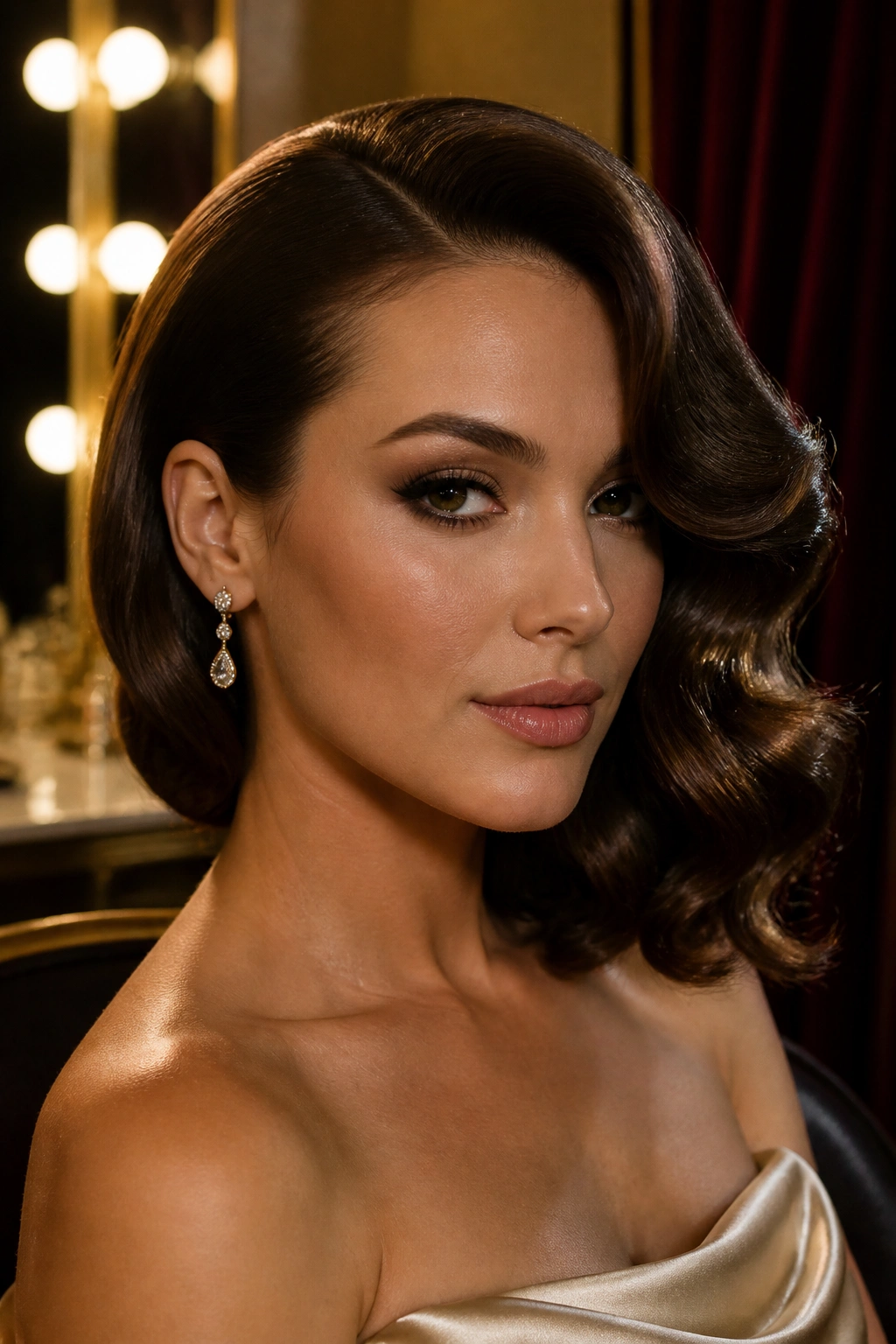
Old Hollywood waves are formal hair’s easiest flex. They look lavish without needing a complicated shape, and they have a way of making bare shoulders and satin fabric feel even more deliberate. The trick is not the curl itself. It’s the way the wave is brushed out, pinned into direction, and allowed to fall in one broad sweep.
A 1.25-inch or 1.5-inch curling iron usually gives the right bend for shoulder-length or longer hair. Curl each section in the same direction, pin the curls while they cool, then brush them out gently with a boar-bristle brush or a soft paddle brush. That softens the line without killing the shape.
One side should usually carry more hair than the other. The heavier side gives the style its old-film mood, while the tucked side keeps it from looking fussy. It’s a classic for a reason. It flatters the cheekbones, shows off gloss, and survives a room full of cameras better than most loose styles.
If your hair is layered, pin the shorter bits underneath the sweep so they do not stick out like little flags. A light shine spray helps. Heavy oil does not.
3. Braided Crown Updo

Why does a braided crown feel expensive even when the rest of the look is quiet? Because it wraps the head in shape. The braid creates a frame, and that frame makes the face look composed before you’ve even added earrings or lipstick.
A braided crown updo works especially well when the braid continues into a tucked bun or a low twist at the back. The result is controlled, but not hard. If you want it to read formal instead of festival, keep the braid neat, keep the ends hidden, and smooth the hair at the temples with a little styling cream or wax stick.
How to Wear It
Start the braid just behind one ear, keep tension even, and follow the curve of the head rather than pulling straight back. That shape is what gives it the crown effect. If the braid is too tight, it starts to look like a sports style with better lighting.
- Best for medium to long hair
- Looks fuller on thick hair, but fine hair can work with a little texturizing spray
- Pins should match your hair color, not your dress
- A few tiny flyaways are fine; a rough hairline is not
This style is lovely with a square neckline or a high collar. It keeps the front of the outfit clear and lets the braid do the decorative work.
4. The French Twist With Soft Face-Framing Pieces

You can sit through a ceremony, dinner, speeches, and dancing, and a good French twist will still look like it never moved. That’s why stylists keep coming back to it for formal events. It feels architectural, but the soft pieces in front keep it from turning strict.
The backbone of the style is a vertical roll pinned at the back of the head. That line lengthens the neck and gives the profile a clean edge. The front pieces matter just as much. A few loose tendrils at the temples can soften the face, especially if the rest of the look is tailored or minimal.
The mistake people make is leaving the twist too bulky or too wide. A French twist should look compact from the side. If it bulges out, it loses that crisp, polished feel. Use strong pins, not decorative ones first. The ornaments come later.
This style loves statement earrings and structured necklines. It also works nicely if your dress has a lot of beadwork, because the hair stays quietly in place while the fabric gets the attention.
- Use a teasing comb only at the base, not all through the top
- Secure with long bobby pins inserted vertically and then crossed
- Finish with a medium-hold hairspray, not a shellacked one
5. The Half-Up Twisted Cascade
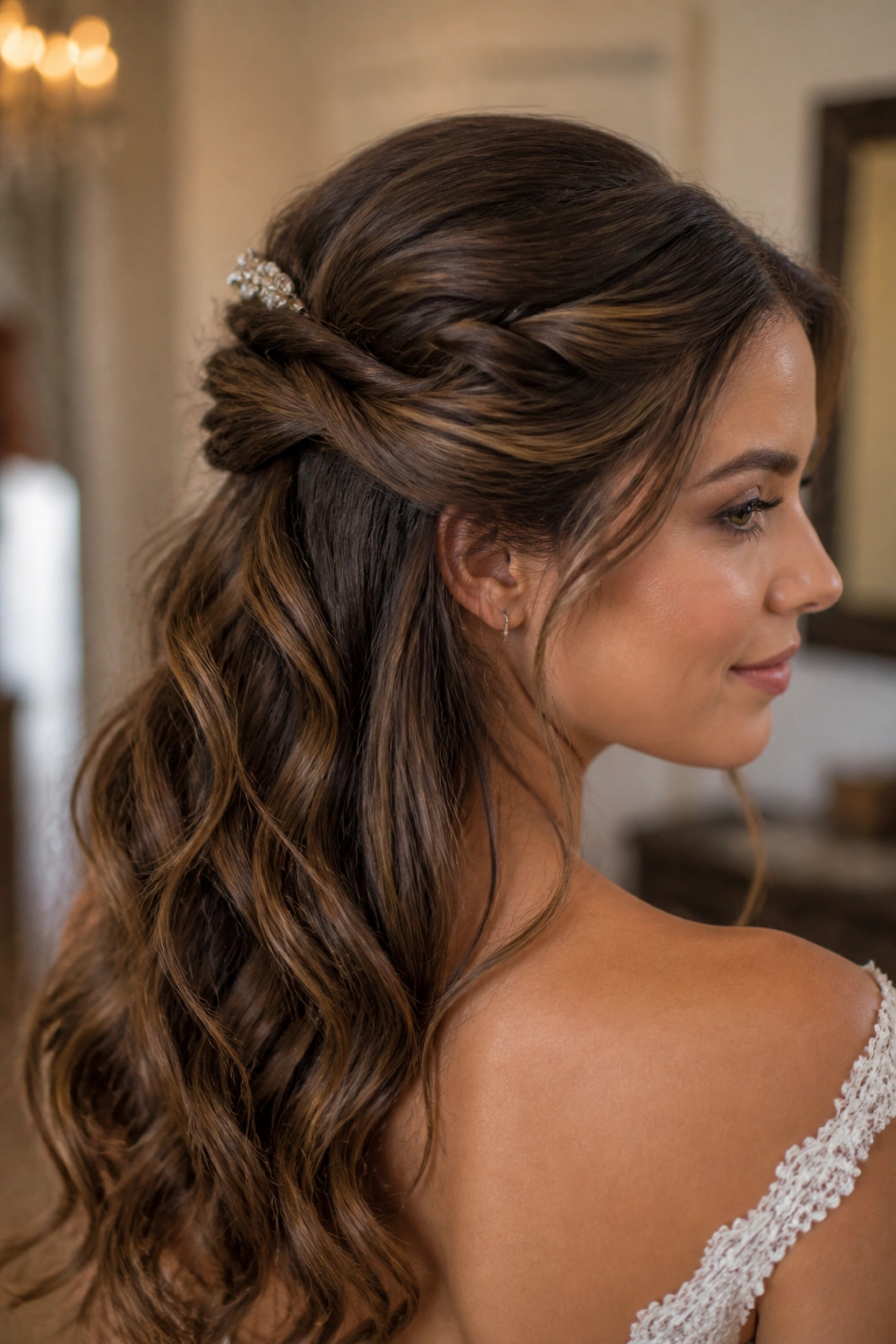
Half-up styles can look lazy or lush, and the difference usually comes down to the top section. A twisted cascade feels formal because it keeps the crown controlled while letting the length move. That contrast is the whole point.
Loose hair at the bottom gives softness. The pinned top section gives structure. If you have long layers, this style is a gift, because the movement in the ends looks intentional rather than accidental. Curl the lower half with a 1-inch or 1.25-inch iron, then let the curls cool before brushing them into loose waves.
The twist itself should come from the temples or just above the ears. Pull the sides back, twist them once or twice, and secure them under a small barrette, a pair of crossed pins, or a narrow comb. Keep the twist modest. If the top becomes too big, the style loses its elegance and starts looking like it is trying too hard.
No helmet hair. That’s the line to remember.
This is a strong choice for soft gowns, romantic makeup, or anyone who wants hair down without having it hang in the face all evening. It’s forgiving, but not sloppy.
6. The Polished Ballet Bun
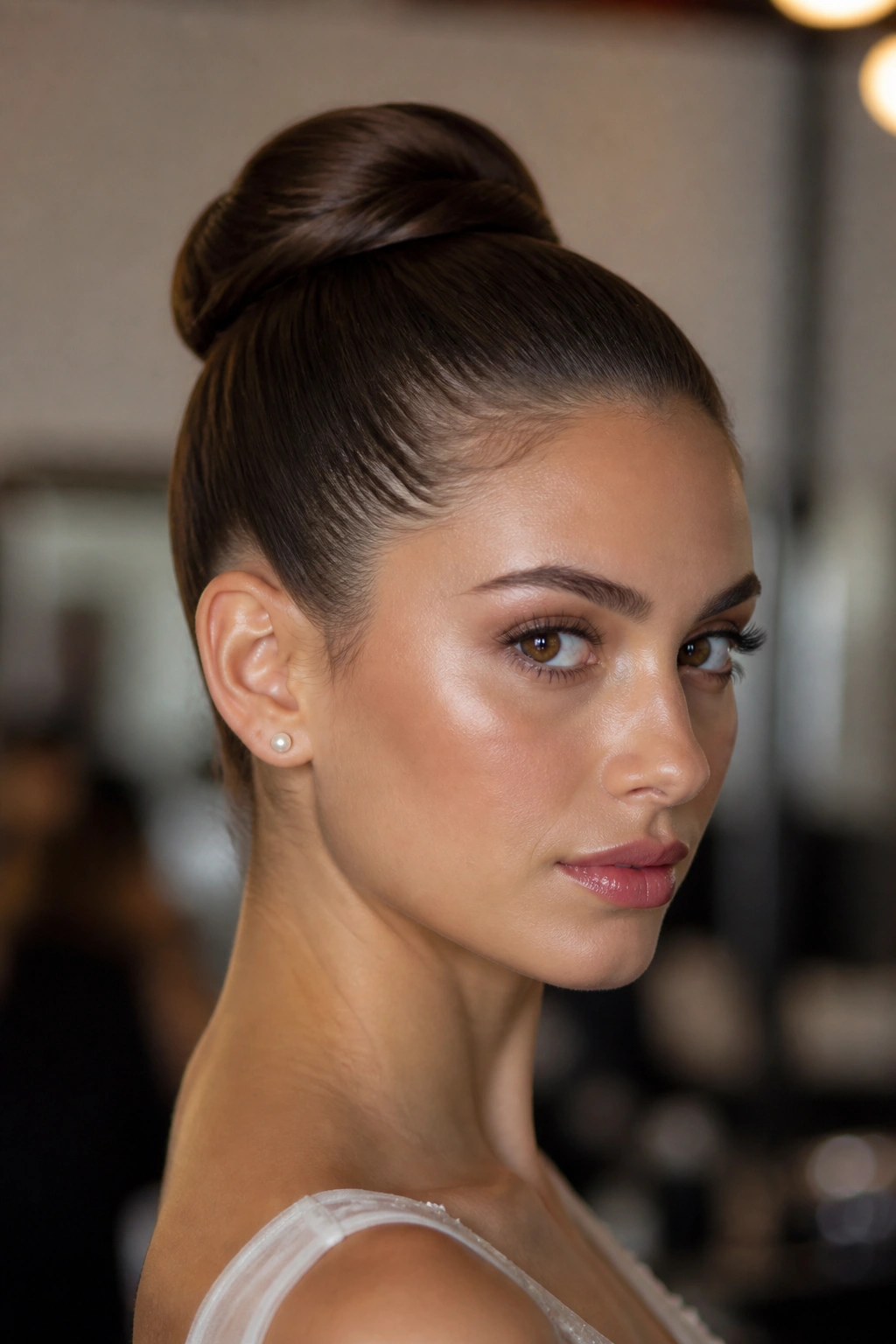
A ballet bun is not just a chignon with a different name. It sits a little higher, reads a little cleaner, and has a more sculpted mood. Where a chignon often feels soft and tucked, the ballet bun is tighter, rounder, and a touch more formal.
That makes it useful with dramatic dresses. A high-neck gown, a cap-sleeve silhouette, or anything with strong shoulders can take this shape without feeling crowded. It also opens up the face in a way that suits bold brows, long necklaces, or chandelier earrings.
If your hair is fine, a bun form can help give the shape more body. If your hair is thick, you may not need one at all. A polished wrap around the base is enough. Keep the surface smooth, but do not press every last strand flat. A little texture near the temples keeps it human.
The best ballet bun sits centered, not drifting to one side. That centered placement gives it its clean, formal feel. It looks simple, but the real work is in the pins.
7. The Low Knot With a Center Part
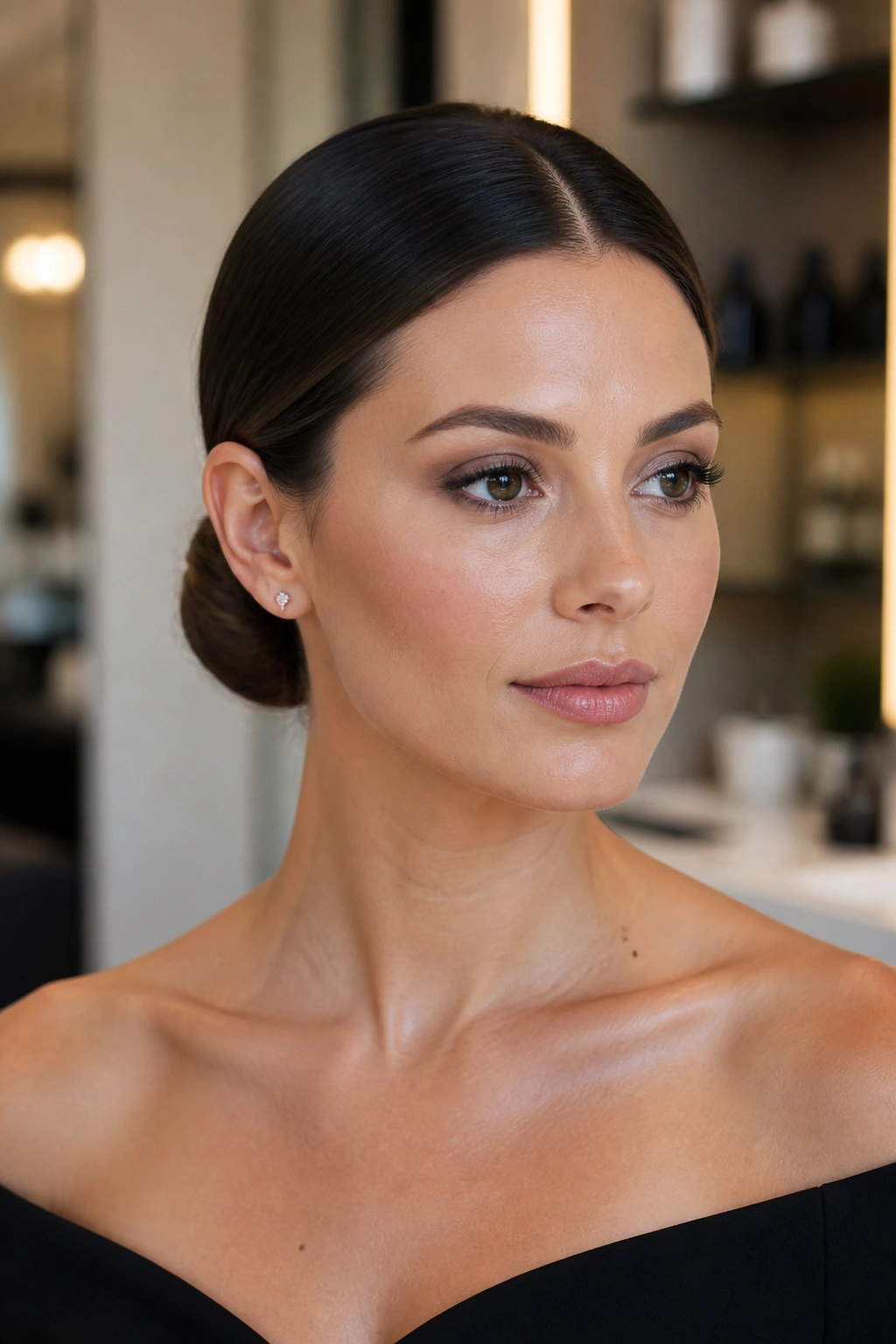
A low knot with a center part has a calmer feel than a lot of formal styles. It is neat, symmetrical, and a little modern, which makes it a nice choice if you want elegance without looking overly styled. The center part is the anchor. It creates balance before the knot even appears.
Why the Center Part Helps
A clean center part can sharpen the face and make the hairline look deliberate. On oval and heart-shaped faces, it often gives a nice sense of order. On rounder faces, it can add length. The knot itself should stay compact and low, almost like a folded ribbon at the nape.
Use a smoothing cream or gel through the top section first. Then comb the hair straight back, keeping both sides even. If one side starts to puff out, the whole look loses its polish. A few pins hidden under the knot will usually keep everything secure for hours.
- Best with medium to long hair
- Works with straight hair, softly waved hair, or hair blown smooth
- Looks cleanest when the knot is no larger than a small fist
- Pairs well with symmetrical jewelry and simple makeup
This one is quieter than a French twist, and that is part of its appeal.
8. Soft Barrel Curls With a Half-Up Pin
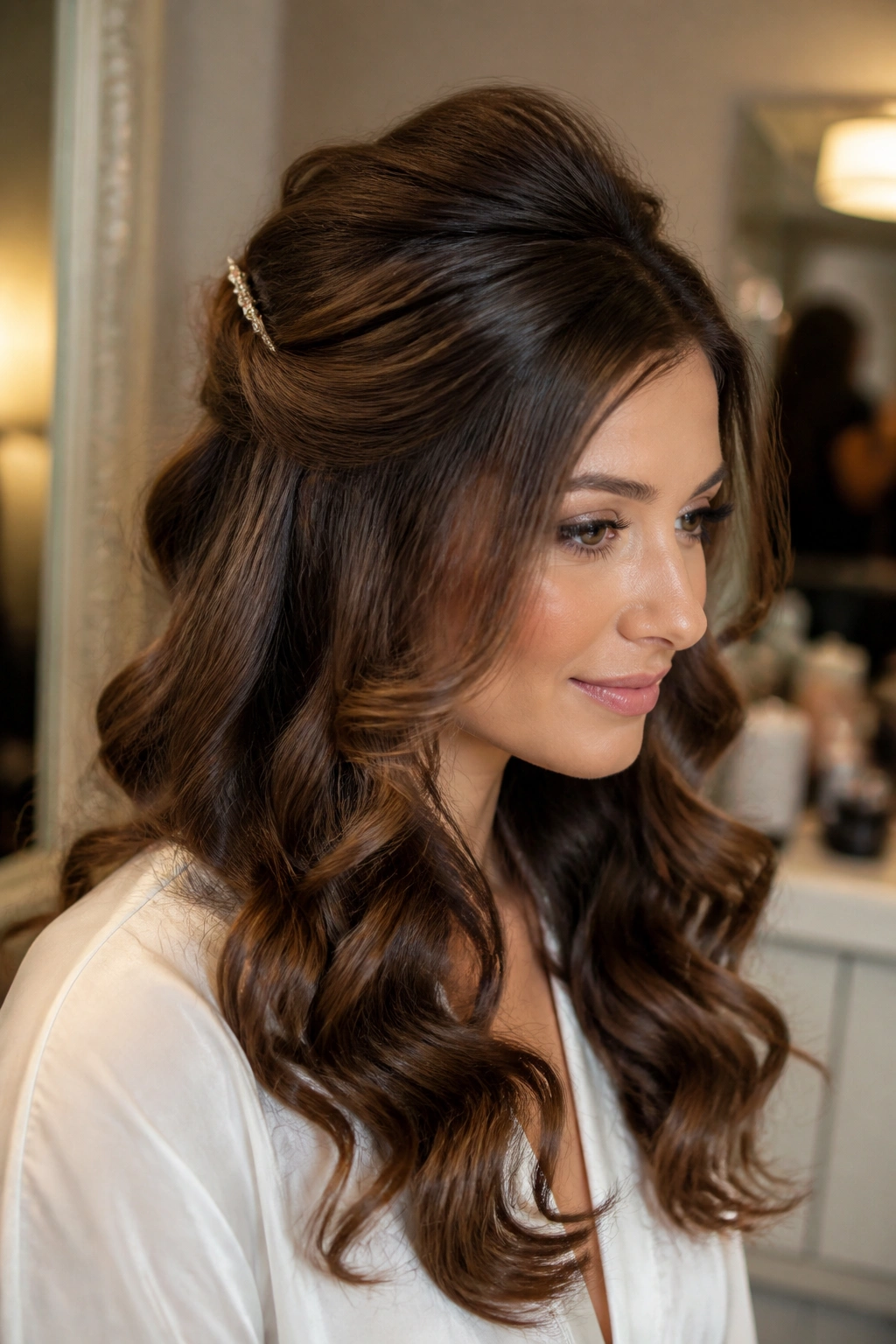
Some formal styles need structure. Others just need restraint. Soft barrel curls with a half-up pin fall into the second group, and they can be a lifesaver when you want your hair to look styled without feeling stiff or overbuilt.
The trick is to use a larger barrel—1.5 inches is a good place to start—so the curls stay soft and broad. After they cool, brush them out just enough to remove the ringlet look. Then take the top section, twist or gather it loosely at the back, and pin it with a small clip or a narrow barrette.
This style works especially well with dresses that already have texture, beading, or a detailed neckline. You do not need the hair to compete. You want it to support the outfit, not wrestle with it. That is where loose barrel curls shine. They bring shape, but they do not harden the whole look.
A little root lift at the crown helps a lot here. Use a volume spray at the base before drying, or lift the section with a round brush while it cools. Flat roots make the whole thing feel sleepy. Lift keeps it alive.
9. Royal Hairstyles for Elegant Events: Side-Part Glamour Waves

Does a deep side part really change the whole mood? It does. Move the part a few inches over, and the hair suddenly feels more deliberate, more dramatic, and a little more expensive-looking than a center-part wave.
The side part gives the crown lift on one side and a soft drop on the other. That asymmetry is what makes the style feel formal. It also works brilliantly if your hair tends to fall flat at the roots, because the part itself creates volume where you need it most. For a really polished finish, tuck the smaller side behind the ear and secure it with a pin or a slim jeweled clip.
How to Wear It
This style is a smart rescue move for second-day curls, especially if the ends still have shape but the crown needs help. A soft mist of dry shampoo at the roots can add grip, and a light brush-through on the lower half keeps the wave broad instead of piecey.
- Best with shoulder-length to long hair
- Looks strong with one-shoulder dresses or asymmetric necklines
- Needs shine at the ends, not heavy product at the roots
- Works well with a single statement earring on the open side
There is something about a side part that makes people sit up a little straighter. Hair can do that.
10. The Wrapped Ponytail With a Lifted Crown

A ponytail can absolutely belong at a formal event. Not a gym ponytail. Not a rushed office ponytail. A wrapped ponytail with volume at the crown feels crisp, modern, and far more elegant than most people expect.
The shape matters here. You want lift at the top, smoothness around the sides, and a base that is hidden by a strand of hair wrapped around the elastic. That one wrapped piece changes the whole read of the style. It takes the elastic from obvious to invisible, which is exactly what formal hair needs.
A teasing comb at the crown can help, but do not overdo it. The goal is a soft mound, not a helmet. If your hair is very straight, a bit of mousse before blow-drying gives it more hold. If it is thick, a smoothing cream on the surface helps the shape sit flat where it should.
This one is especially good for gowns with open backs. The ponytail keeps the lines clean, and the lifted crown gives the face some shape. It is practical, but not plain. That’s a rare combination.
- Use a hair tie that matches your color
- Wrap a 1-inch strand around the elastic and pin the tail underneath
- Keep the ponytail low and full, not high and sporty
11. The Braided Halo Bun
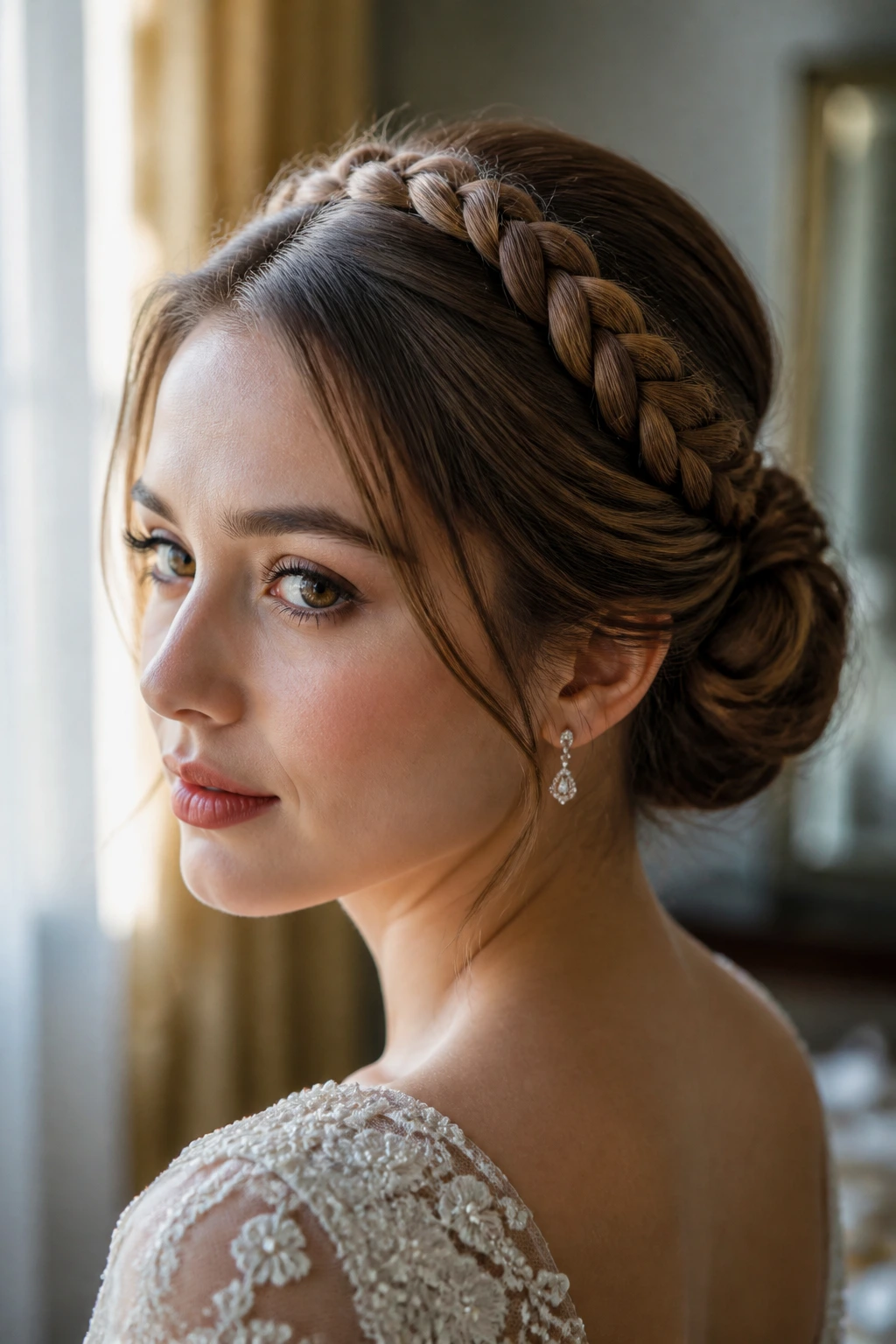
The braided halo bun is one of those styles that looks delicate from a distance and surprisingly secure up close. The braid moves around the head like a frame, then disappears into a bun or tucked roll at the back. It has a soft, almost regal feel without turning into something fragile.
A halo braid sits slightly above the hairline and follows the curve of the head. That placement matters. If it rides too high, it starts to feel costume-like. If it sits too low, the halo effect disappears. The bun at the back should stay low and neat, with the braid doing the decorative work instead of piling on more accessories.
This style is especially useful if the event involves a long evening or a lot of movement. Hair stays away from the face. Flyaways are easier to control. The whole shape has a quiet confidence to it. There is no need to fuss with it every twenty minutes.
Use a bit of smoothing cream through the top before braiding. A halo braid can get fuzzy fast if the surface is dry. And if your hair is layered, a few extra pins around the braid’s edge will keep the shorter pieces from escaping and poking out by dinner.
12. Cascading Fishtail Over One Shoulder

Unlike a classic three-strand braid, a fishtail braid looks detailed even when it is loose. The texture is smaller, tighter, and a little more ornamental, which is why it works so well for elegant events where you want some interest but not a full updo.
Worn over one shoulder, it also plays nicely with open backs and strapless dresses. The braid becomes part of the outfit line, almost like a sash. Pull the sections out gently if you want a fuller look, but stop before the edges get fuzzy. A fishtail likes a little softening, not a full collapse.
This style usually needs long hair or extensions to look rich all the way down. If the hair is too short, the tail can feel thin by the end. A clear elastic at the base and a small ribbon or velvet tie near the bottom can make a plain braid look dressed up without much effort.
It is best for someone who wants hair that stays contained but not severe. The one-shoulder placement gives it the right bit of drama. It feels a touch romantic, a touch formal, and not at all boring.
13. The Gibson Tuck
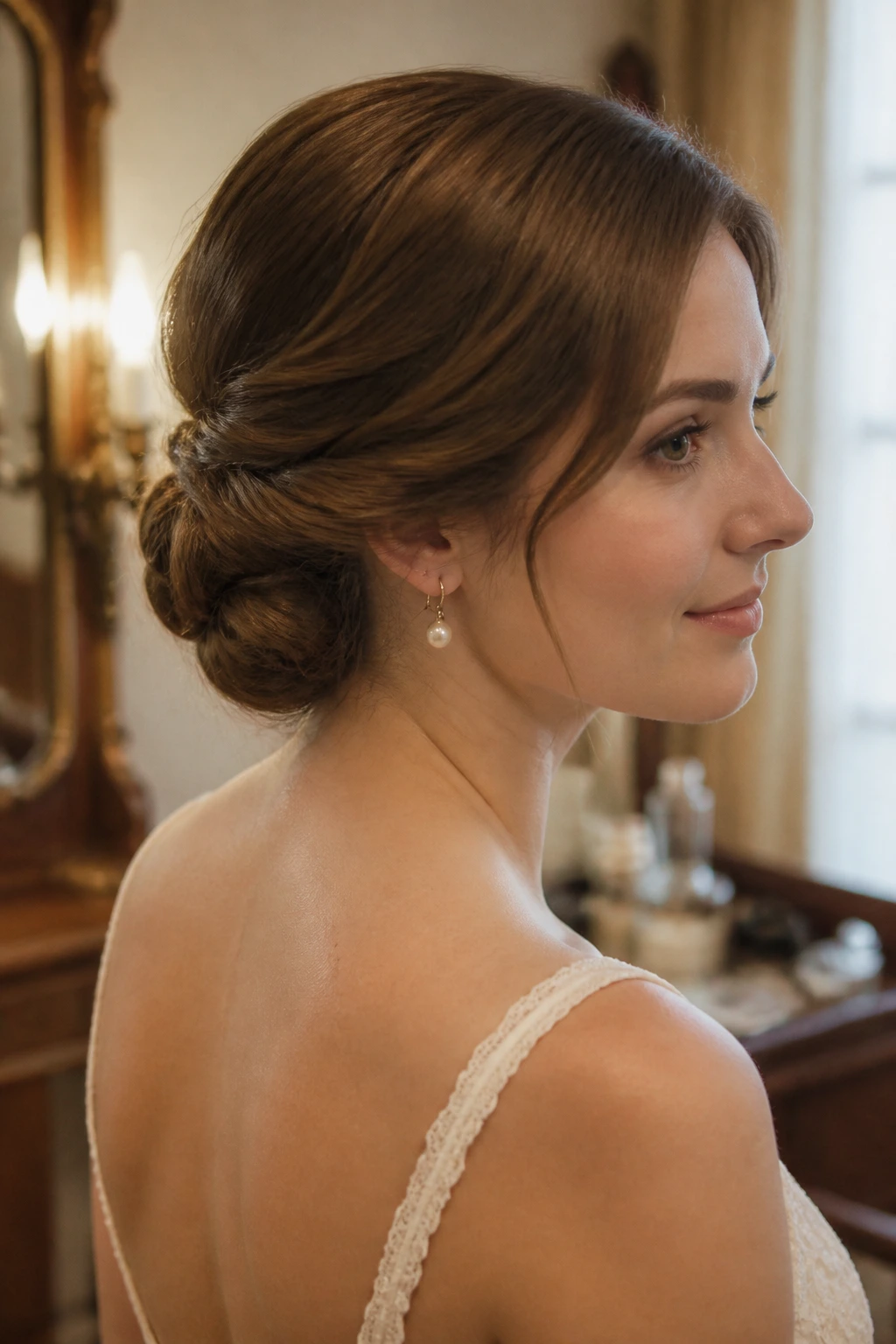
What if you want formal hair without any obvious bun at all? The Gibson tuck is the answer. It folds the hair upward into a low roll, which gives you a polished finish without the visual weight of a full chignon.
The shape is especially kind to medium-length hair. If your hair reaches the nape, you can usually make it work with a little pinning and maybe a slim hair pad for support. The finished look sits softly against the head and leaves the neckline open, which makes it lovely with vintage-inspired dresses or softly tailored gowns.
How to Make It Hold
Start with hair that has a bit of grip. Day-old hair, a light mist of dry shampoo, or a small amount of texture spray can help the tuck stay put. Smooth the front sections back, then roll the lower length upward and tuck the ends inside the fold. Secure the roll with long pins, not tiny decorative ones first.
- Best for shoulder-length to mid-back hair
- Works with a center part or a soft side part
- Feels secure when the roll is pinned at the base and the sides are anchored separately
- Looks especially good with pearl earrings or a thin headband
The Gibson tuck has a quiet sort of elegance. It does not scream for attention, which is why it ages well in photos.
14. Twisted Low Bun With Jeweled Pins
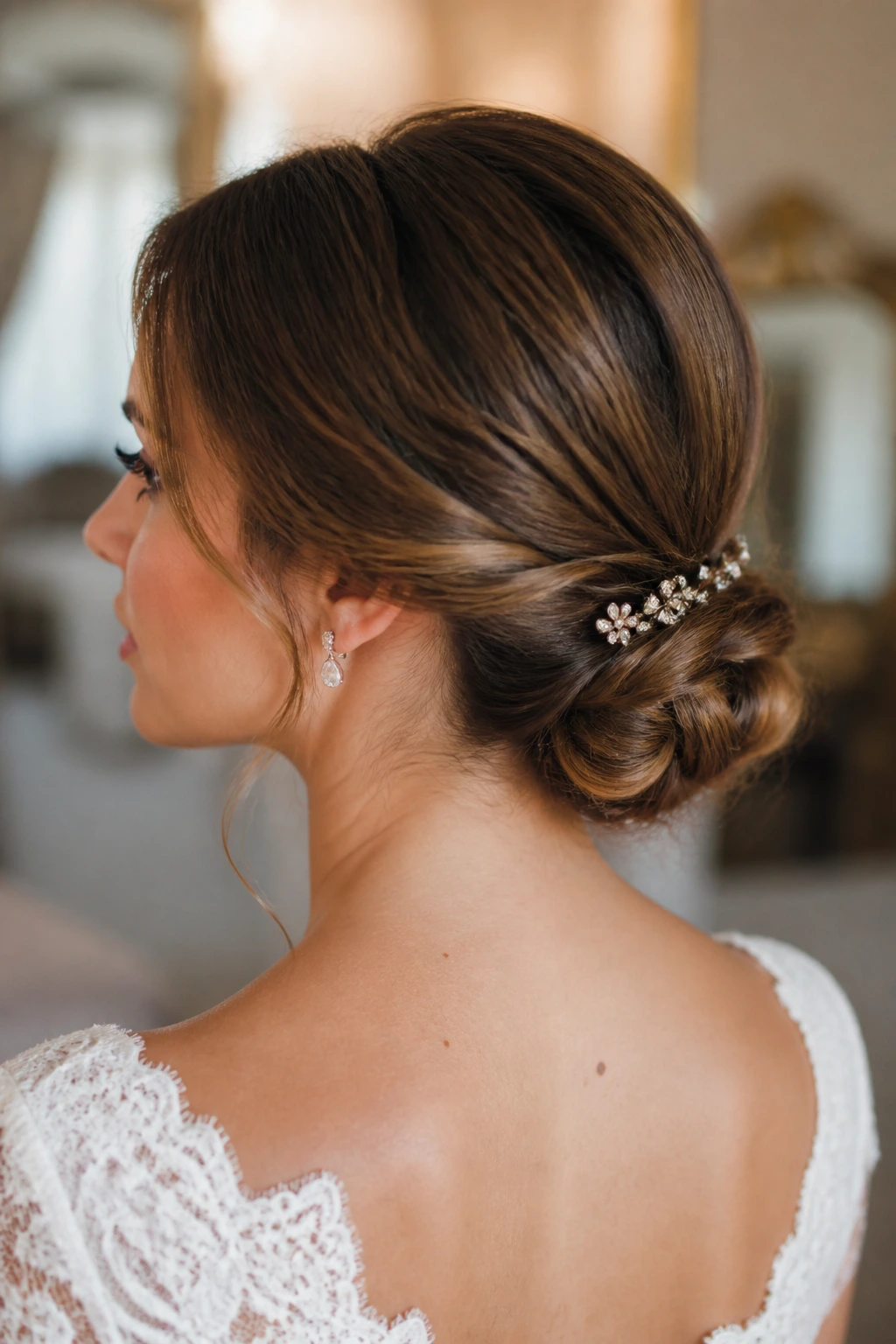
One good pin can do more than ten scattered accessories. A twisted low bun with jeweled pins proves that point every time. The style itself is restrained, but the placement of the ornament gives it that dressy, deliberate finish.
The twist gives the bun movement. It keeps the shape from looking like a plain wrapped coil. Then the pins—usually a small cluster on one side or along the seam of the twist—add the sparkle. The key is restraint. If the pins are spread all over the head, the style starts looking busy. A small cluster reads expensive. Too many pieces read confused.
This is a strong choice for bridesmaids, wedding guests, or anyone attending a formal dinner where the dress already has a lot going on. The bun stays low, so the jewelry can sit higher. If the gown has beading, match the pin tone to one accent in the fabric rather than trying to mirror every color in the room.
A twisted bun works best when the hair is smooth at the surface and a little fuller in the twist itself. That contrast gives it shape. A dull twist with shiny pins is all right. A flat twist with more pins is not.
15. The Voluminous Blowout With Tucked Ends
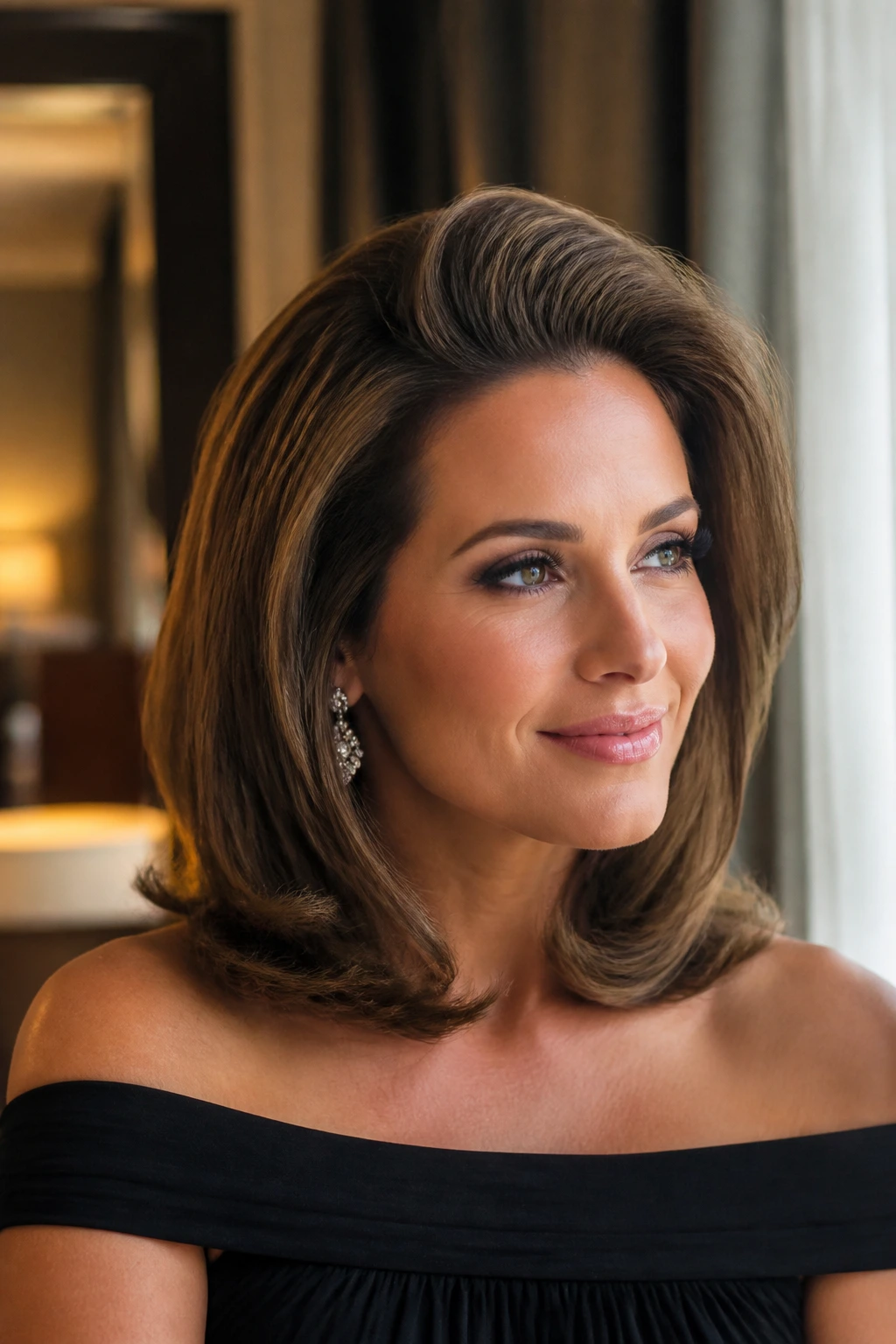
Can loose hair still feel formal? Yes, if the shape is controlled. A voluminous blowout with tucked ends keeps the length soft while adding enough polish to hold its own at an elegant event.
The crown is the whole story here. You want lift at the roots, smoothness through the mid-lengths, and ends that are turned inward or gently tucked under so they do not wander off in different directions. A round brush and a large blow-dryer nozzle help a lot. So do velcro rollers or clips at the crown while the hair cools.
How to Get the Crown Lift
Use medium sections and lift each one away from the head as you dry. Let the roots cool before you move on. That small pause helps the shape stay in place. If the ends need more control, turn them under with the brush and pin them loosely at the nape for a soft tucked finish.
- Best for medium to long hair
- Looks strongest on layered cuts with some natural body
- Works well with off-the-shoulder dresses and simple jewelry
- Needs a light spray, not a stiff hold
This style has a bit of room to breathe, which is nice when the outfit is already formal and structured. It keeps the whole look from feeling too pinned down.
16. The Milkmaid Braid With Soft Tendrils

The milkmaid braid has a softer mood than the braided crown, and that difference matters. Instead of wrapping tightly around the whole head, the braids sit higher and more open, which gives the style a gentle, romantic shape without making it feel childish.
A milkmaid braid works best when the sections are slightly full and the front is left with a few tendrils. Those little pieces around the temples matter. They break up the outline and keep the style from looking too set. The braids themselves should be secure, but not pulled so tight that the scalp shows too much. You want control, not tension.
This look can be lovely for formal events with a softer dress code, especially if the neckline is simple and the earrings are small. It also tends to hold well on hair with a little natural texture. Clean, pin-straight hair can work too, but it usually benefits from a bit of grip first.
A narrow braid along the hairline can make the whole style look more finished. A wider braid feels more relaxed. Pick the one that matches the dress, because the braid should sound the same as the fabric.
17. The Rolled Pompadour Updo

A rolled pompadour updo has presence. The front lift gives it drama, and the tucked back keeps it formal. Done well, it feels sleek rather than retro-costume, which is where a lot of versions go wrong.
The lift at the front should be intentional, not gigantic. A gentle roll from the hairline back toward the crown adds shape without taking over the face. Then the rest of the hair gets folded or pinned into a low back section. The contrast between the lifted front and the smooth back is what gives it that sculpted look.
This style loves strong brows, statement earrings, and dresses with clean lines. It also works well if your face looks best with a little height near the forehead. If the hairline is fine or sparse, a touch of volumizing powder can help the front stay up without obvious teasing. If the hair is thick, pin the roll in layers so it does not sag after an hour.
Do not make the ends too stiff. A pompadour should feel controlled, not crunchy. That line is easy to miss, and it changes the whole read of the style.
18. Royal Hairstyles for Elegant Events: The Pearl Chignon

A pearl chignon feels different from a plain sleek bun because the ornament is part of the shape, not something dropped on top at the last second. The result is gentler than a jeweled updo and more dressed than a bare knot. It lands right in that sweet spot formal hair is always chasing.
The pearl detail can be as simple as three pins placed along the wrap of the bun or as polished as a small comb tucked just above it. I prefer when the pearls follow the curve of the chignon rather than sitting in a straight line. That small shift makes the style look thought through. It also keeps the eye moving across the back of the head instead of stopping at one bright spot.
This style suits brides, wedding guests, and anyone wearing a dress with clean lines or soft sheen. It works especially well with satin, matte crepe, or lace that does not need a loud hairstyle to compete with it. The bun itself should stay compact and smooth, with enough shine to reflect light but not so much that it looks wet.
If your hair is slippery, prep matters more here than on almost any other style. A little mousse before drying, a light mist of texture spray at the roots, and a strong set of pins will save you from an afternoon of readjusting. That is the unglamorous part, but it is also the part that makes the hairstyle hold up in real life.
A royal look is never only about the ornament. It is about the shape underneath it. Get that right, and the pearls stop feeling decorative and start feeling inevitable.
