



Chunky blonde highlights on dark hair are not shy, and that is exactly the appeal. On a deep brunette base, even a few bright ribbons can change the whole mood of a cut. Done well, they look bold and expensive. Done badly, they look like somebody drew on your head with a dry marker.
The difference usually comes down to placement, tone, and width. A highlight that is too thin disappears into the base color. One that is too wide, too pale, or packed too closely together can flatten the hair and make it look striped in the wrong way. The sweet spot sits somewhere between those two extremes, where the blonde reads clearly but still has shape and movement.
The best chunky blonde highlights on dark hair borrow from old-school foil work, then clean up the details. A soft beige toner, a little space between lighter pieces, and a smart choice of where to put the brightest panels can change everything. Dark brown hair can carry honey, ash, pearl, or platinum blonde, but each one says something different.
That is where the fun starts. Face-framing pieces, hidden underlayers, bold streaks through curls, frosted ends, and thick panels on a bob all create a different finish. The same color idea can feel soft, edgy, polished, or messy depending on where the blonde lands. And if you pick the right version, grow-out stops being a problem and starts looking intentional.
1. Chunky Blonde Money Piece on Dark Hair
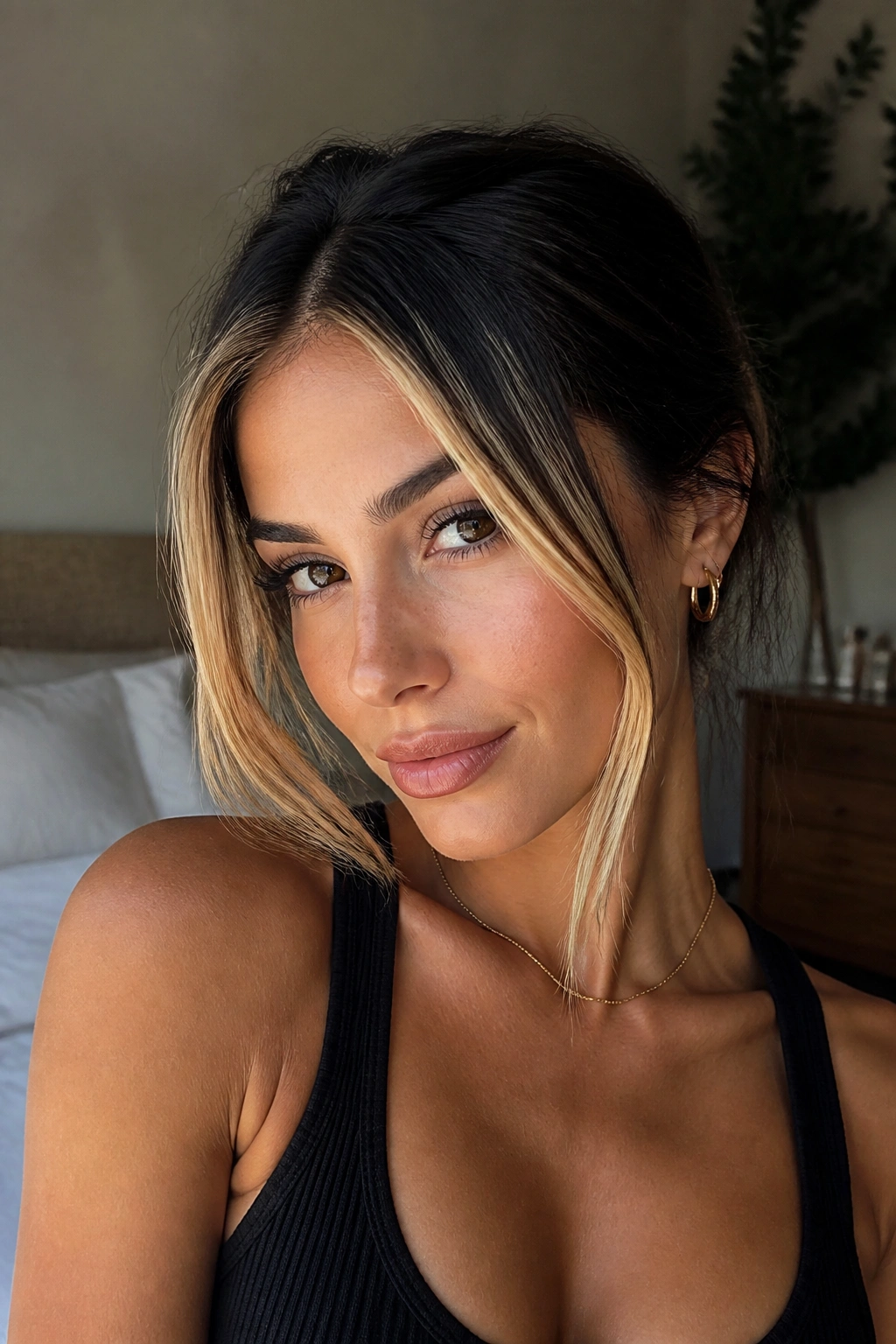
If you want the fastest payoff, put the blonde right around the face. A chunky money piece on dark hair does more visual work than most full-head highlight jobs because it pulls attention straight to the cheekbones, eyes, and part line. One bright panel on each side can wake up the whole head.
The trick is keeping the pieces wide enough to read as chunky, but not so wide that they look pasted on. I like the look when the front sections are about 1 to 1.5 inches wide and a little brighter than the rest of the hair, with softer pieces tucked just behind them. That gives the front a bold frame while the rest of the color stays grounded.
This idea works especially well if you wear your hair in a middle part, a soft side part, or a loose wave. A ponytail makes the money piece even more obvious, which is handy if you want one style that does a lot of heavy lifting. It is also one of the easier looks to explain to a colorist: bright around the face, darker everywhere else, and no tiny babylights hiding in the mix.
One small warning. If your natural base is very dark, the front panels can turn warm fast. Ask for a toner that keeps the blonde creamy or beige instead of orange. That one choice saves the whole look.
2. Old-School Foil Stripes With a Soft Beige Toner
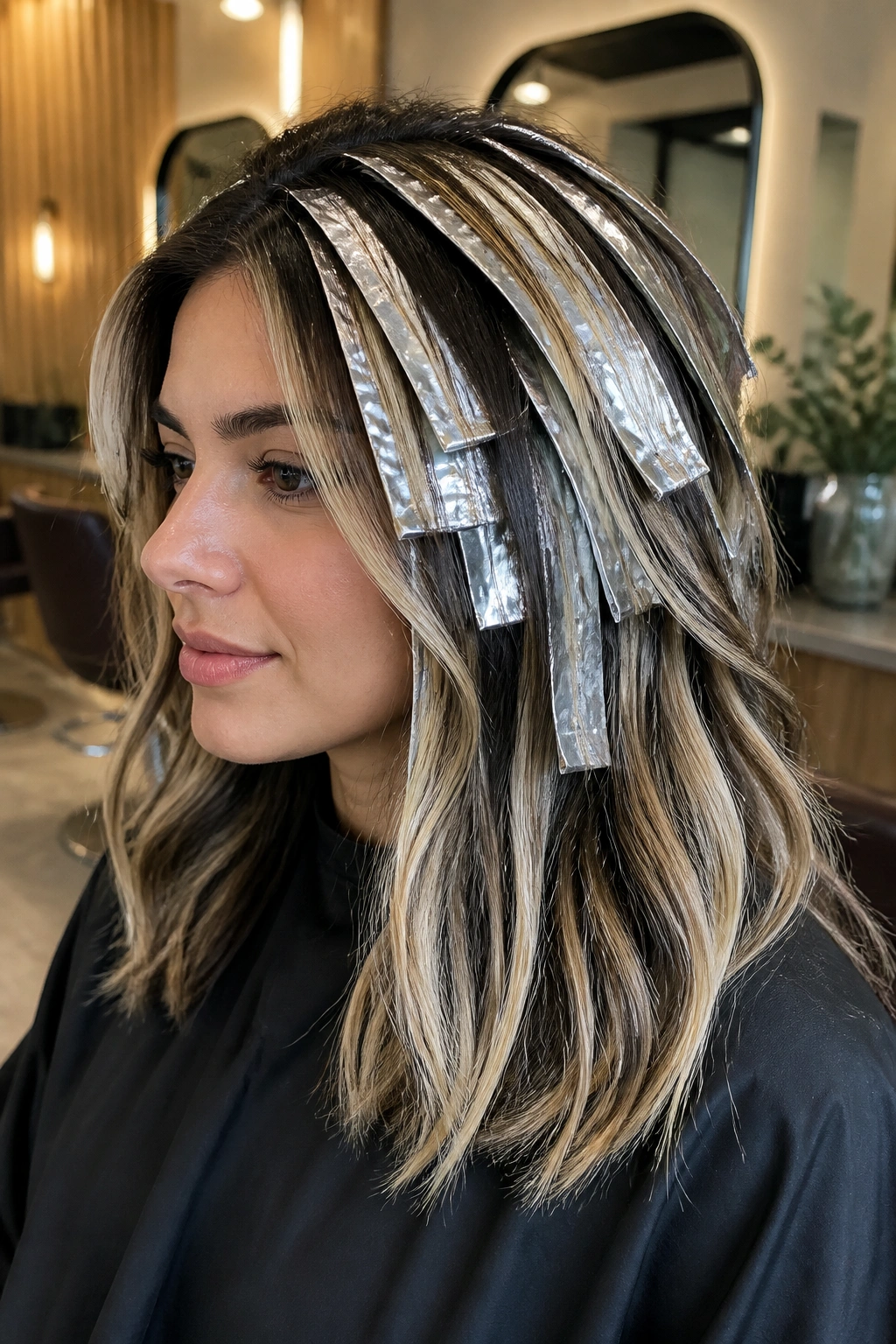
Some people want subtle. Others want streaks you can spot from across the room. If you fall into the second camp, this is your lane. Thick foil stripes on dark hair bring back that strong, face-on contrast, but a beige toner keeps the result from feeling harsh.
What keeps it modern
The placement matters more than the number of foils. A few wide panels with space between them look intentional; a dozen skinny ones can start to feel busy and dated. Ask for foils that sit cleanly on top layers and a deeper base left visible in between. That gap is what gives the blonde room to breathe.
- Best on shoulder-length hair and longer, where the stripes have room to fall.
- Ask for panels about 1/2 to 3/4 inch wide if you want that chunky, graphic look.
- Choose beige or pearl toner if your base is dark brown and you do not want brassy warmth.
- Style with soft bends or a smooth blowout, because crispy curls can make the stripes look less clean.
A flat iron or round brush brings out the shape of the foils better than rough air-drying. That is the part most people miss. The stripes are the point.
3. Chunky Blonde Highlights on Loose Curls
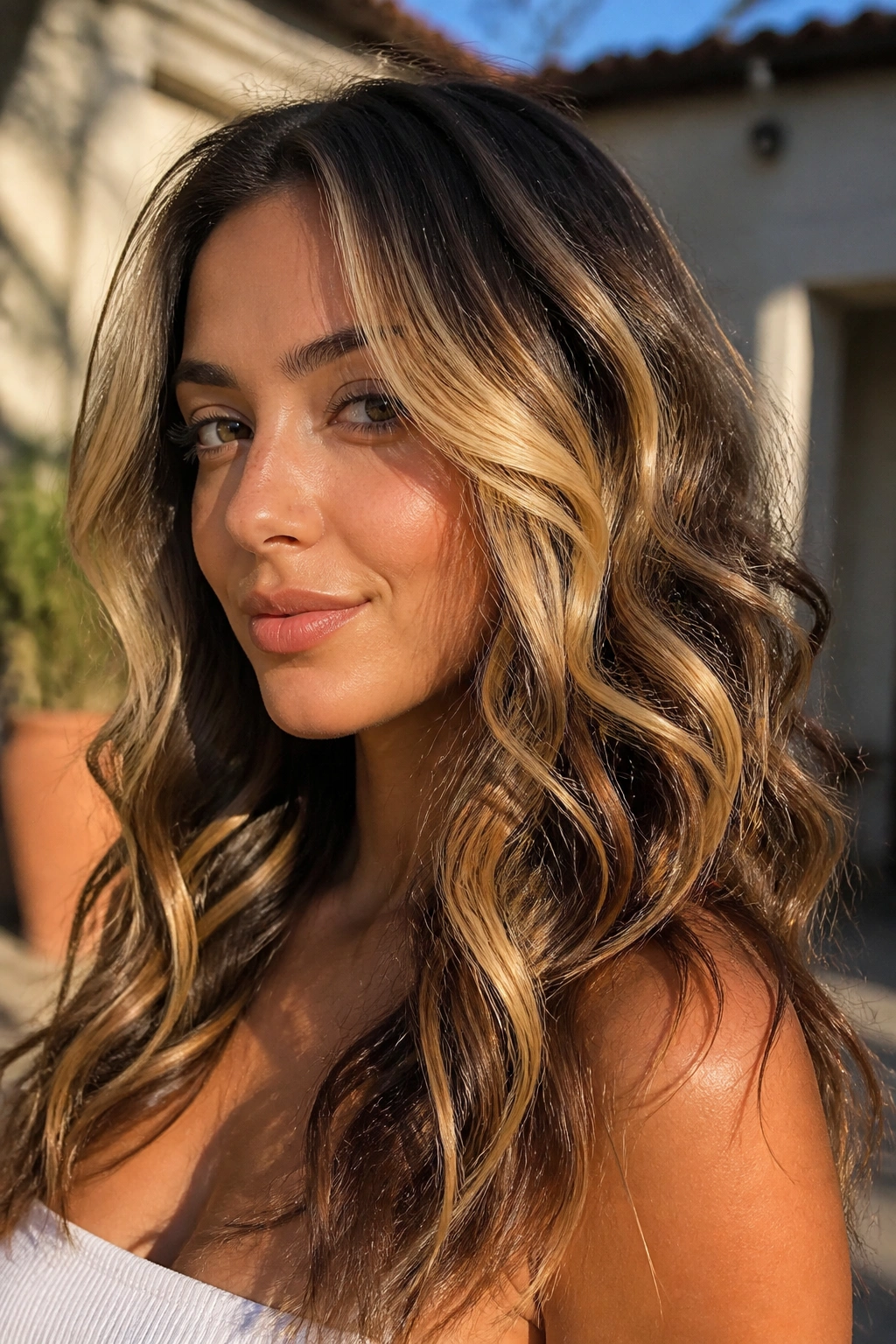
Why do chunky blonde highlights look so good in curls? Because curls break up the color in a way straight hair never can. A thick blonde ribbon bends and twists through the pattern, so the contrast feels lively instead of flat.
On dark hair, this matters a lot. A chunky curl highlight can show one shade at the root, another on the bend, and another where the light hits the outer edge of the coil. That movement softens the stripe effect and makes the blonde feel more dimensional, even when the pieces are broad.
How to ask for it
Tell your colorist you want wide ribbons through the top layers and around the face, not a fine weave all over. That keeps the curls from getting muddy. If your curl pattern is tight, the blonde should be lifted evenly enough to stay bright once the hair shrinks up.
A curl cream or light gel helps the highlight pattern show better, too. If the curls are frizzy and separated, the color can look louder than it should. Clumping is your friend here.
This look is especially strong on layered hair that hits the shoulders or collarbone. The layers help the blonde pieces stack and move. Without them, the curls can swallow the contrast.
4. Ash-Blonde Panels on a Dark Brown Lob
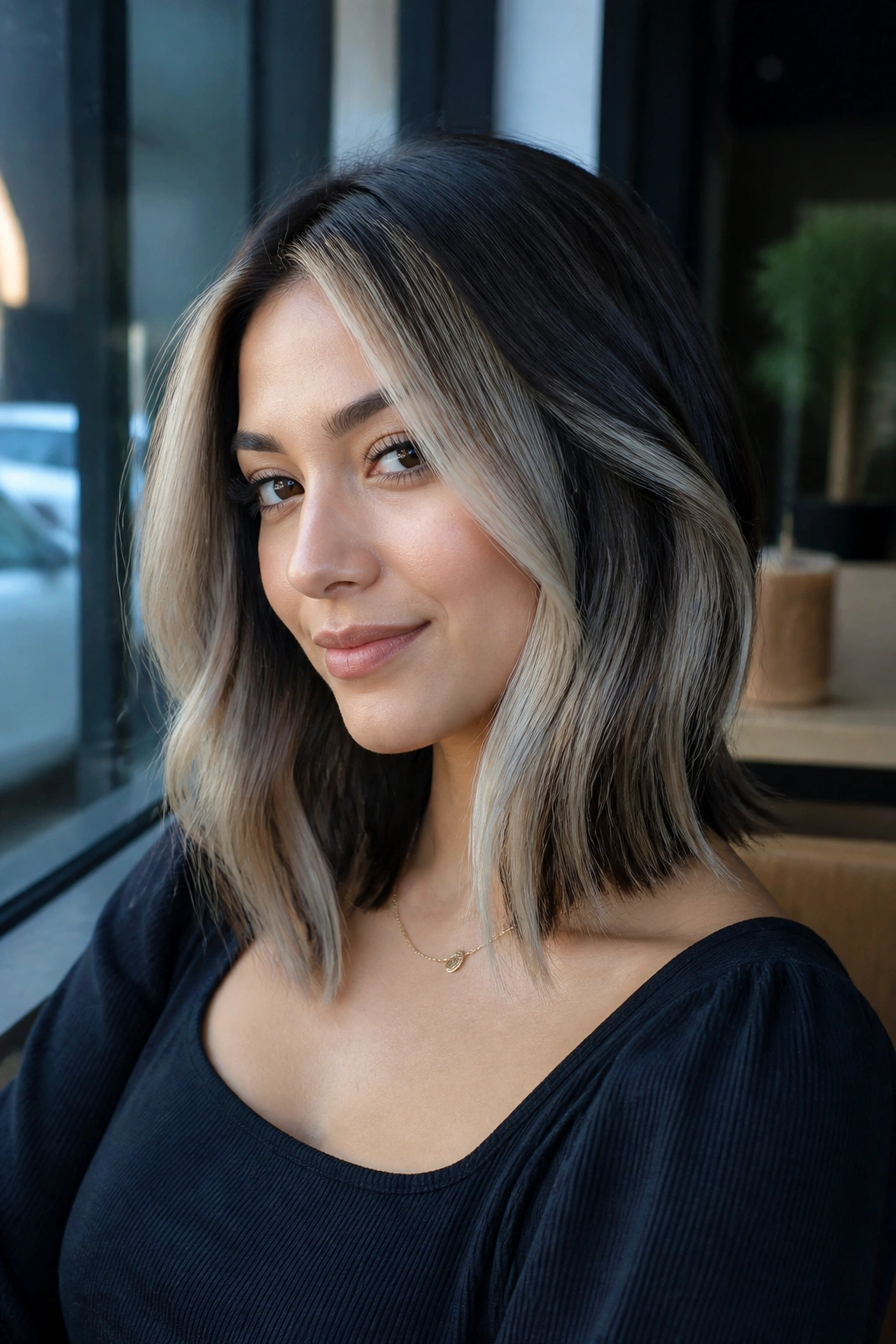
Ash blonde on dark brown hair is a cleaner, cooler story. It has less gold, less honey, and a sharper edge, which makes it a smart choice if your base leans deep chocolate or espresso. On a lob, those cool panels look deliberate in a way that shorter cuts sometimes do not.
Warmth is the enemy here. Not all warmth, obviously, but too much of it. If the blonde drifts too yellow, the contrast against dark brown can get muddy instead of sleek. Ask for an ash-beige or smoky blonde toner, especially if your own hair pulls red when lightened.
A lob gives this look a nice canvas because the ends are long enough to show the streaks without needing tons of layers. Worn straight, the highlights read as bold vertical lines. With a soft bend at the ends, they turn into wider ribbons and feel a little more relaxed.
This is one of the better choices if you like polished hair and do not want anything playful or beachy. It leans crisp. It also photographs well in indoor light, which is where a lot of blondes lose their shape and turn flat.
5. Warm Honey Streaks Through Espresso Hair
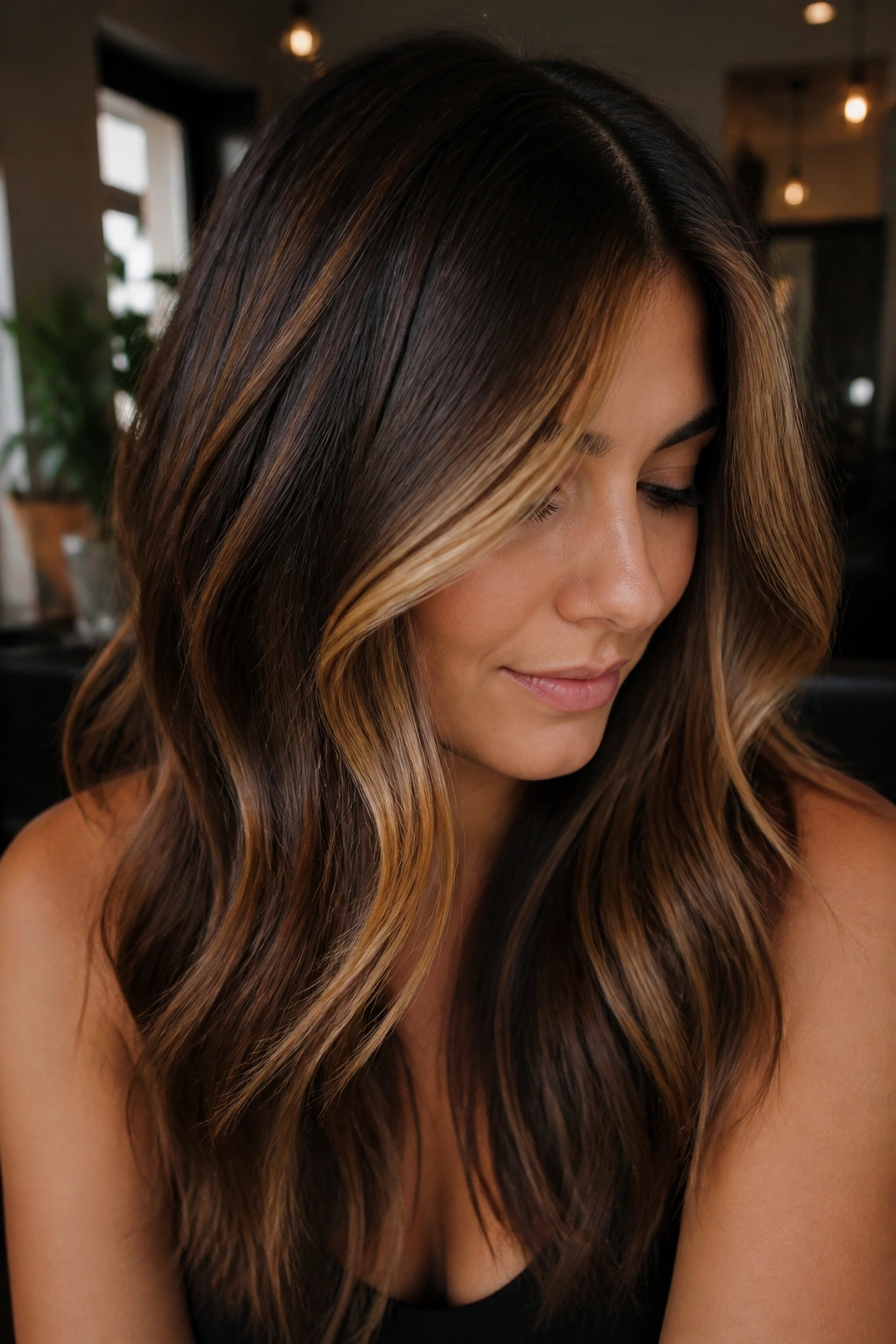
Honey blonde and espresso hair are old friends for a reason. The warmth in the blonde sits nicely against the depth of the base, so the contrast feels rich instead of icy. If platinum seems too hard and beige seems too safe, honey is the middle ground that usually lands.
Why the warmth helps
Dark hair often holds onto red and gold undertones during lightening, so trying to force it too cool can be a fight. Honey lets some of that warmth live, which means the blonde looks healthier and the grow-out blends better. It also tends to flatter medium and warm skin tones without looking too yellow.
- Ask for a golden-beige toner, not a pure gold one.
- Place the thickest pieces around the front and top layers so the warmth catches where you move.
- Keep the root area a little darker if you want the streaks to stand out more.
- Use color-safe shampoo and skip over-washing, because warm blondes fade faster when they are scrubbed too often.
This is a low-drama version of chunky highlights. It still has presence, but it does not shout. That makes it a good fit if you want contrast you can wear to work without feeling like you walked straight out of a retro photo shoot.
6. Hidden Peekaboo Blonde Under Dark Layers
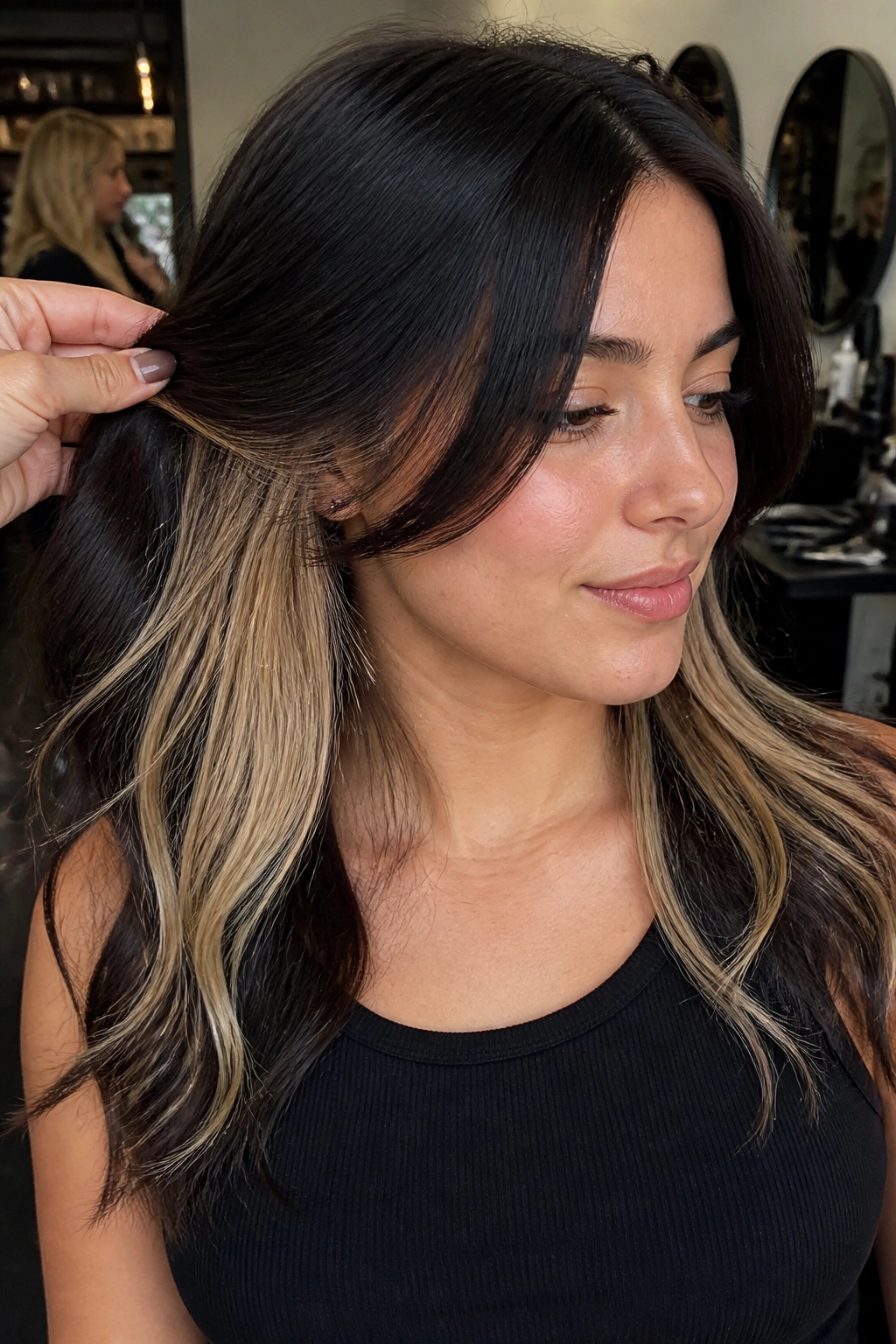
Peekaboo blonde is for the person who wants surprise, not constant display. The lighter pieces live underneath the top layer of dark hair, so you catch them when the hair swings, lifts, or gets tied up. It is a sneaky look, and I mean that as a compliment.
Unlike face-framing highlights, peekaboo color keeps the front of the hair mostly dark. That means your grow-out line stays tucked away longer, and the blonde only shows when you want it to. If you wear your hair down at work but flip it into a clip or bun later, this one earns its keep.
The best version uses chunky sections underneath rather than tiny little slices. That gives you enough blonde to notice movement without making the hair look striped from every angle. It also keeps the top surface darker, which helps the contrast feel richer.
This idea suits people who are nervous about going fully blonde. It is a good first step, and it is easier to live with if you change your mind. The blonde can be brighter, cooler, or warmer underneath, because the top layer buffers everything.
7. Platinum Face-Framing Strips on a Sharp Bob
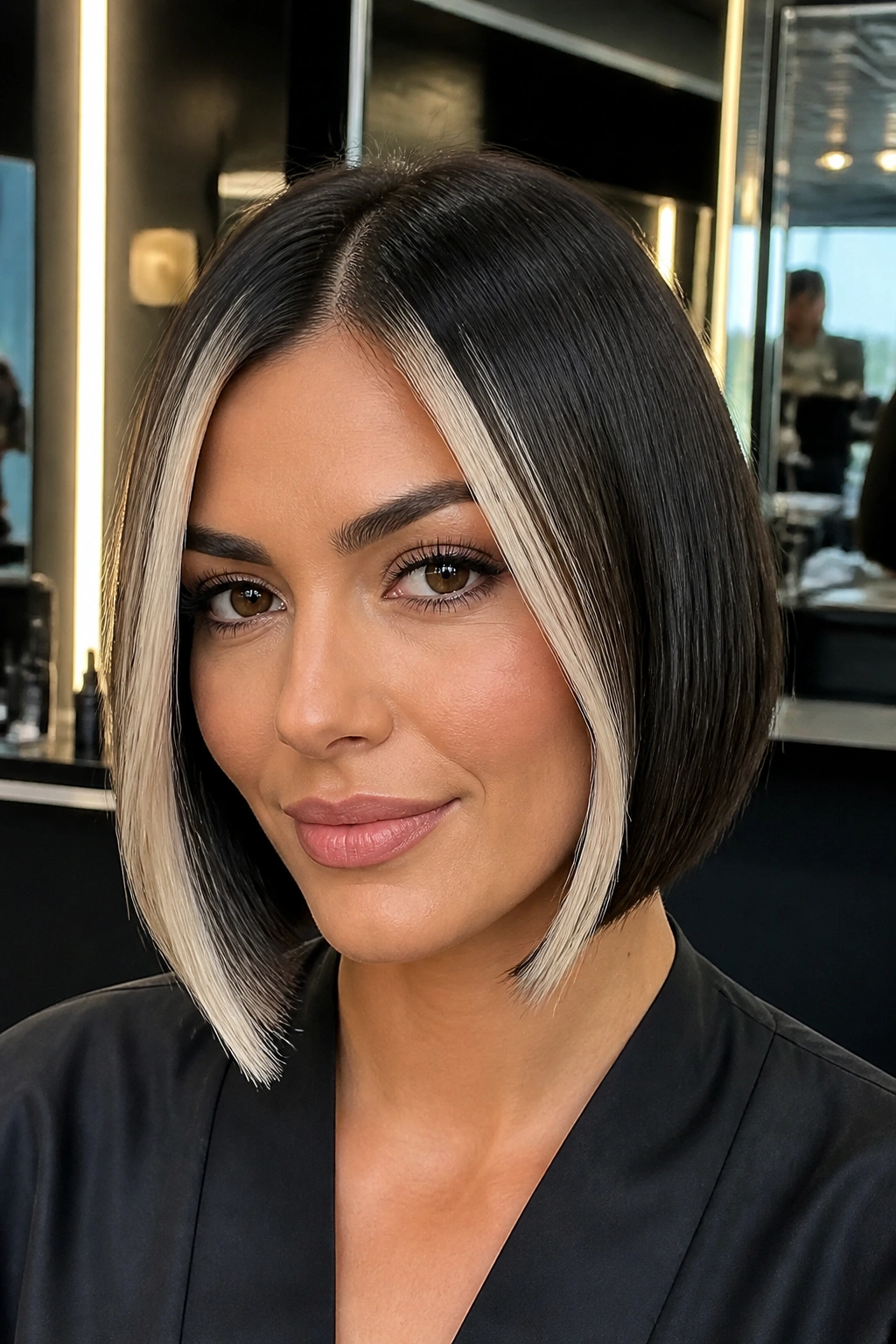
A sharp bob can carry platinum in a way long hair sometimes cannot. The blunt edge gives the blonde a frame, and the front strips sharpen the whole cut. If you want the color to feel bold rather than beachy, this is a strong pairing.
The reason it works is simple: a bob has clean lines already. Add two bright platinum pieces near the face, and the haircut suddenly looks more graphic. If those strips start at the temple and sit just in front of the ear, they can make a jaw-length cut look more deliberate and less like a grow-out phase.
Short hair is less forgiving, though. Dry ends show fast, and platinum asks a lot from the hair. A sleek finish makes this look much better than a fuzzy one, so plan on regular trims and a good smoothing product. The color should look glossy, not chalky.
One nice detail: this style is easier to wear than a full platinum bob. You still get the hit of brightness, but the darker base keeps the maintenance from becoming absurd. A little restraint here goes a long way.
8. Curtain Bang Highlights That Blend Into Long Waves
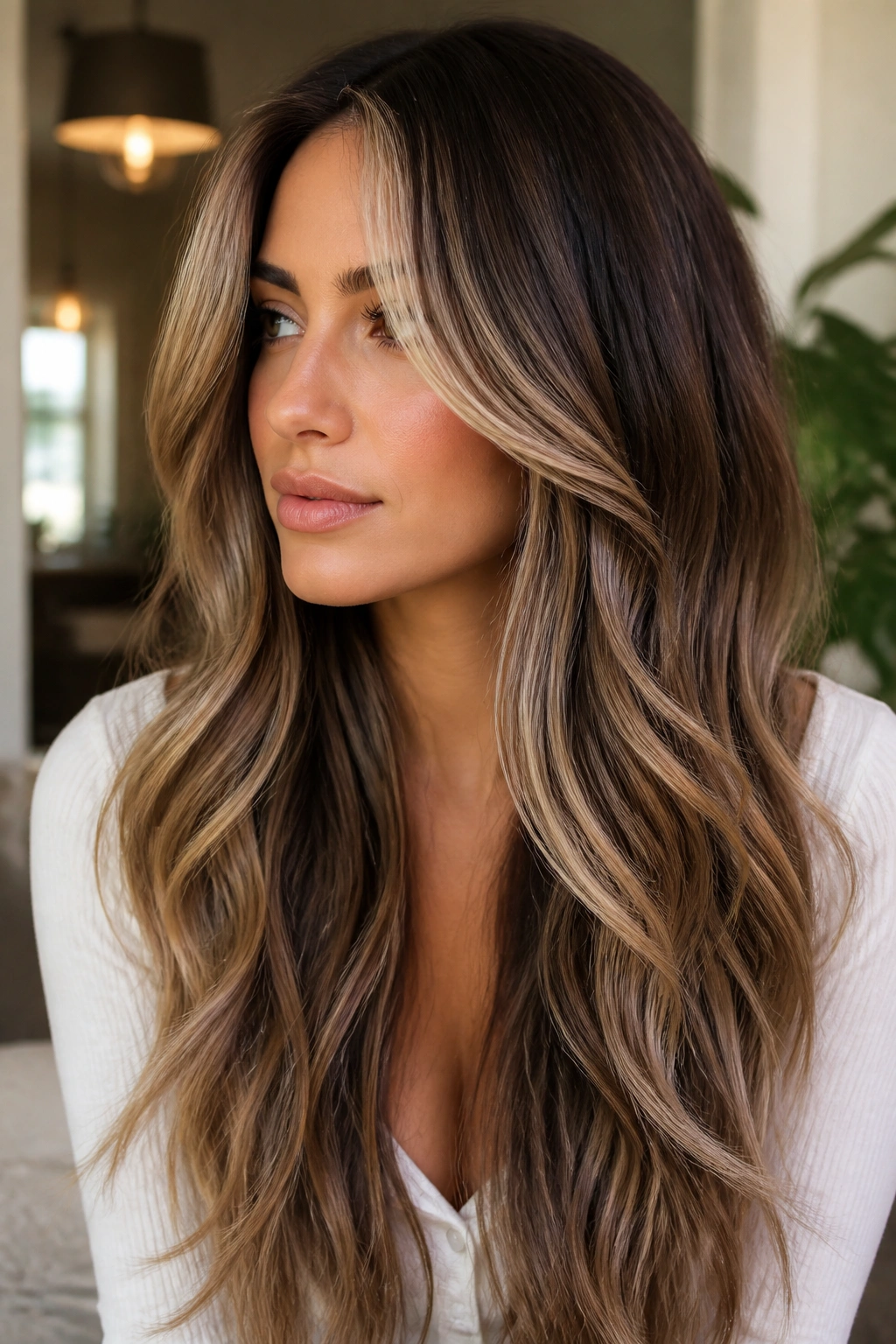
Curtain bangs change how chunky blonde highlights read, because they put movement right at the front of the face. Lighten the bang zone and the first layer underneath it, and the whole cut starts to look softer even if the blonde itself is bold. The color does not sit there like a block; it folds into the wave pattern.
How to get the most from it
Ask for the highlights to begin a little higher in the bangs and then soften through the side pieces. That way, when the bangs split in the middle, the blonde shows as a pair of bright lines that sweep into the rest of the hair. It should feel connected, not chopped off.
- Keep the blonde slightly wider at the roots of the bangs so it does not disappear when the hair falls forward.
- Blend the highlight into the first face-framing layers, or the bang area can look detached.
- Use a round brush or large curling iron to shape the front pieces away from the face.
- Avoid making every wave identical, because the highlight pattern looks more natural when the bends vary a little.
This is a good match for longer hair with soft volume. If you wear your bangs flat and lifeless, the effect loses some of its energy. The color wants movement.
9. Chunky Blonde Highlights at the Crown for Lift
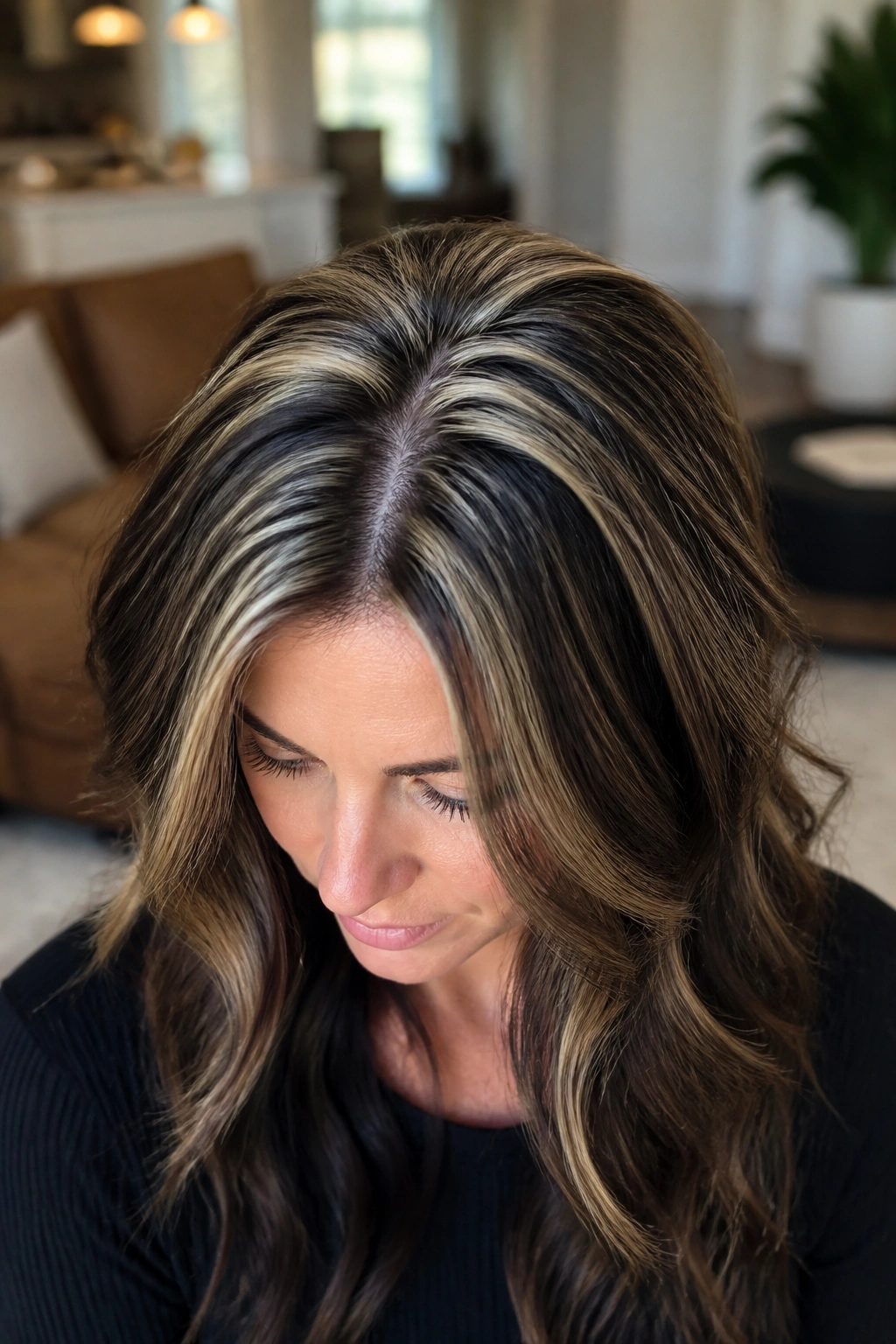
Can highlights make hair look fuller? Yes, when they sit in the right place. Light pieces at the crown pull the eye upward and break up a dark top section that can otherwise look heavy. On dark hair, that little bit of brightness can fake lift in a very convincing way.
The crown is the spot most people forget. They put all the blonde around the face and the ends, then wonder why the hair still feels flat from above. A few chunky foils at the part line and just behind it create the illusion that more hair is sitting on top of the head than there really is. Sneaky. Useful, too.
Where to place them
Think in terms of part line, top layer, and the first inch behind the part. Those are the pieces that move the most and show the most light. If your hair is fine, keep the sections broad but not too bright, because very pale streaks can reveal scalp more easily.
This look works best when you style with a little root volume. A quick blow-dry at the crown or a velcro roller can make the highlights pop harder. If the hair is pressed flat, the effect is still nice, but it loses some of that lifted shape.
10. Beige Blonde Ribbons on a Midlength Cut
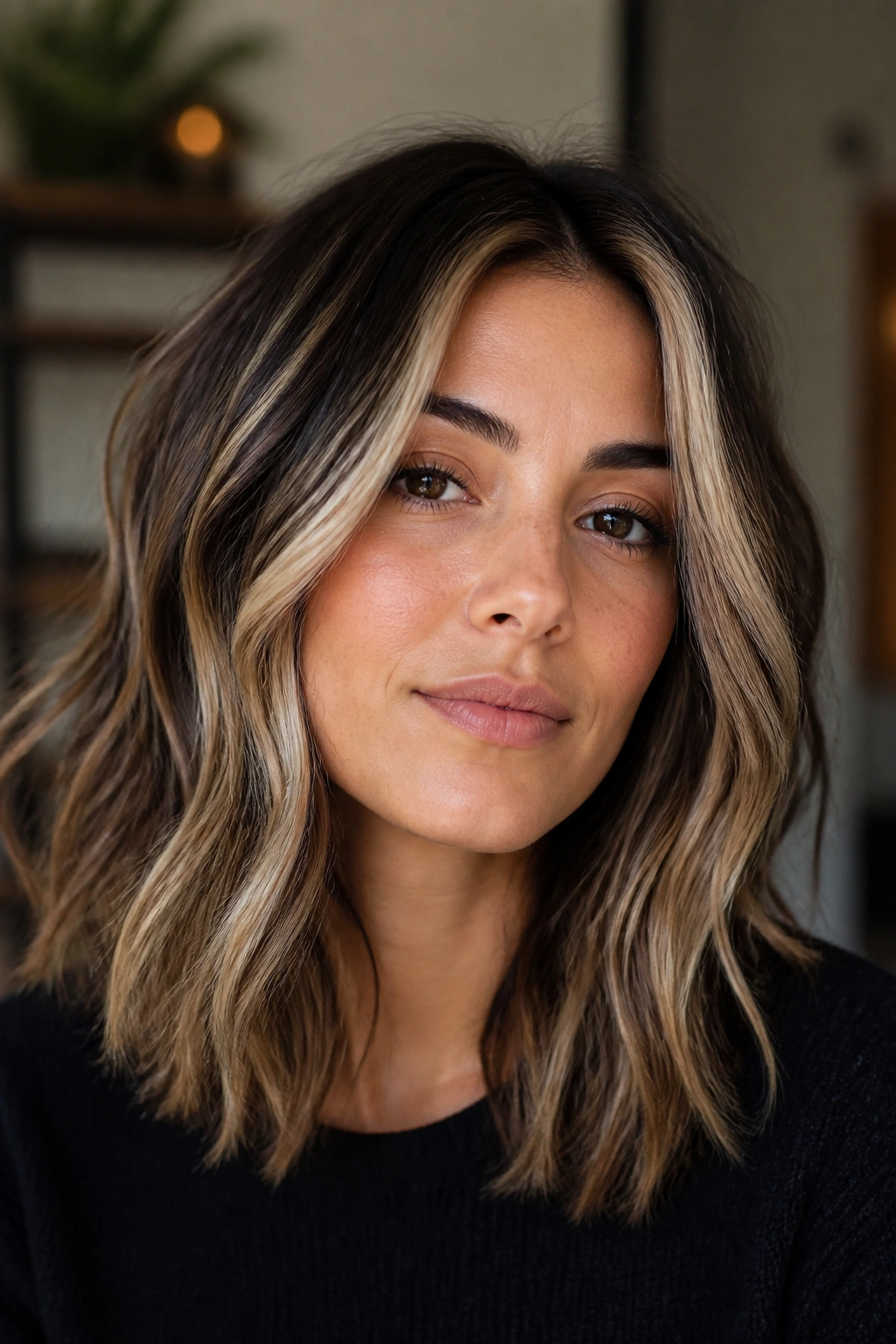
Beige blonde is the peacekeeper of the blonde family. It sits between ash and gold, which makes it easier to wear on dark hair than either extreme. On a midlength cut, those beige ribbons feel soft enough for everyday wear but still bright enough to count as chunky highlights.
The cut matters here. Midlength hair has enough weight to show the ribbons in a clean way, but it is not so long that the highlights disappear into the ends. That balance gives beige blonde a nice job to do: soften the dark base without washing it out.
I like this color family on people who want contrast but do not want to worry about brass every time they wash. Beige tends to age well between salon visits because it can fade a little without turning neon yellow. It is also easier to pair with neutral makeup and dark brows, which can matter more than people think.
Ask for the blonde to stay creamy, not white. White blonde can look harsh against a deep brunette base unless the cut and styling are very polished. Beige gives you a little more room to breathe.
11. Bold Underlayer Highlights for Hair Flip Movement
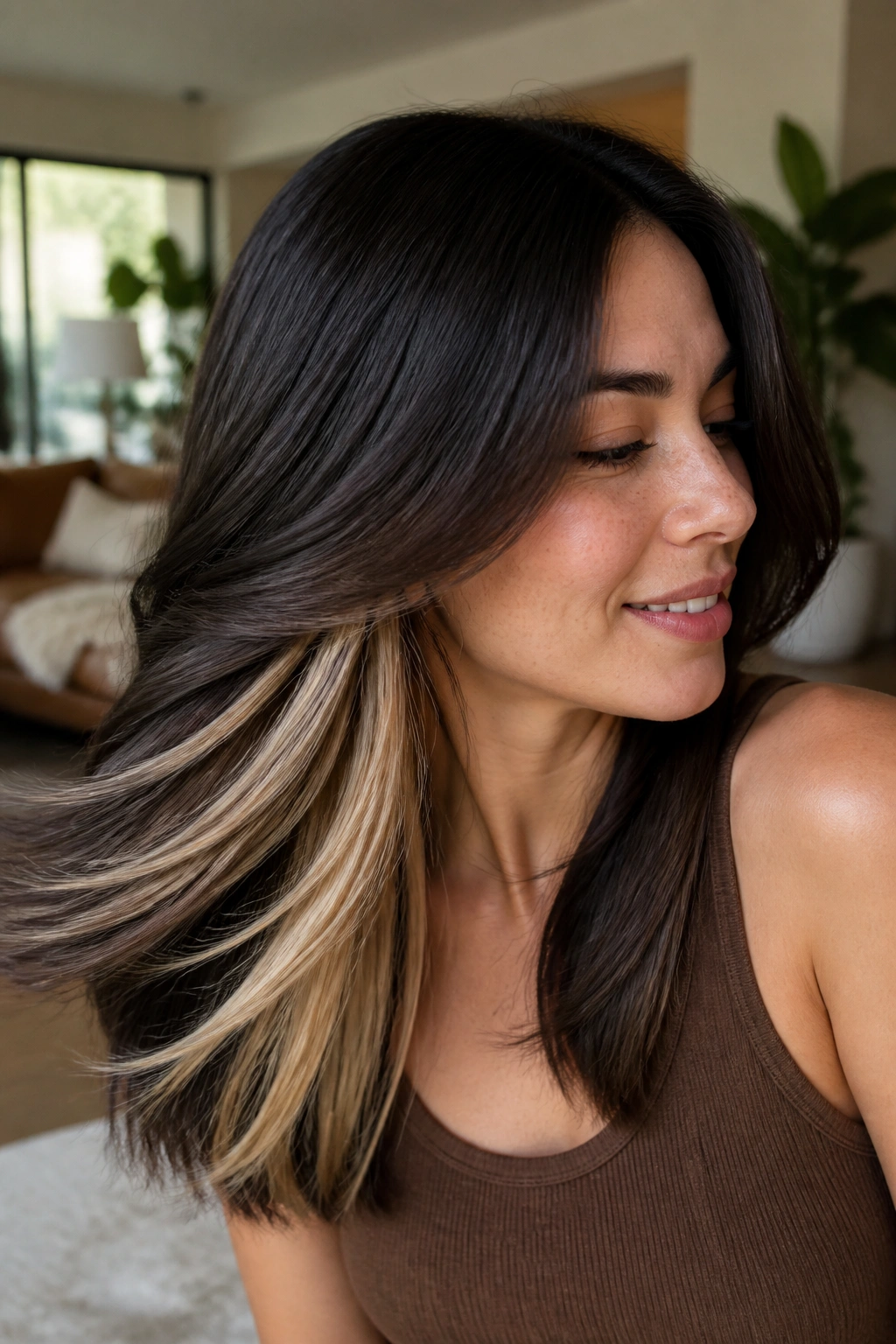
Underlayer highlights are for motion. They are the blonde pieces that flash when the hair flips over a shoulder, when you tuck one side behind an ear, or when a breeze catches the ends. If you like a little drama but do not want the top layer screaming for attention, this is a smart move.
What makes them different
A peekaboo look hides the blonde almost completely. An underlayer look lets it show on purpose when the hair moves. That makes it better for layered cuts, long bobs, and wavy hair that shifts during the day. The color acts like a second beat under the dark base.
- Choose chunky panels through the lower half of the hair, not tiny highlights.
- Keep the top layer dark enough to frame the blonde when it shows.
- Use a soft wave or a bend at the ends so the layers separate a little.
- Great for half-up styles, because the lighter underneath pieces become part of the shape.
This is one of my favorite looks for dark hair because it feels a little unexpected. You get brightness without giving up depth. That is a better balance than many people realize.
12. High-Contrast Blonde Streaks on Straight Dark Hair
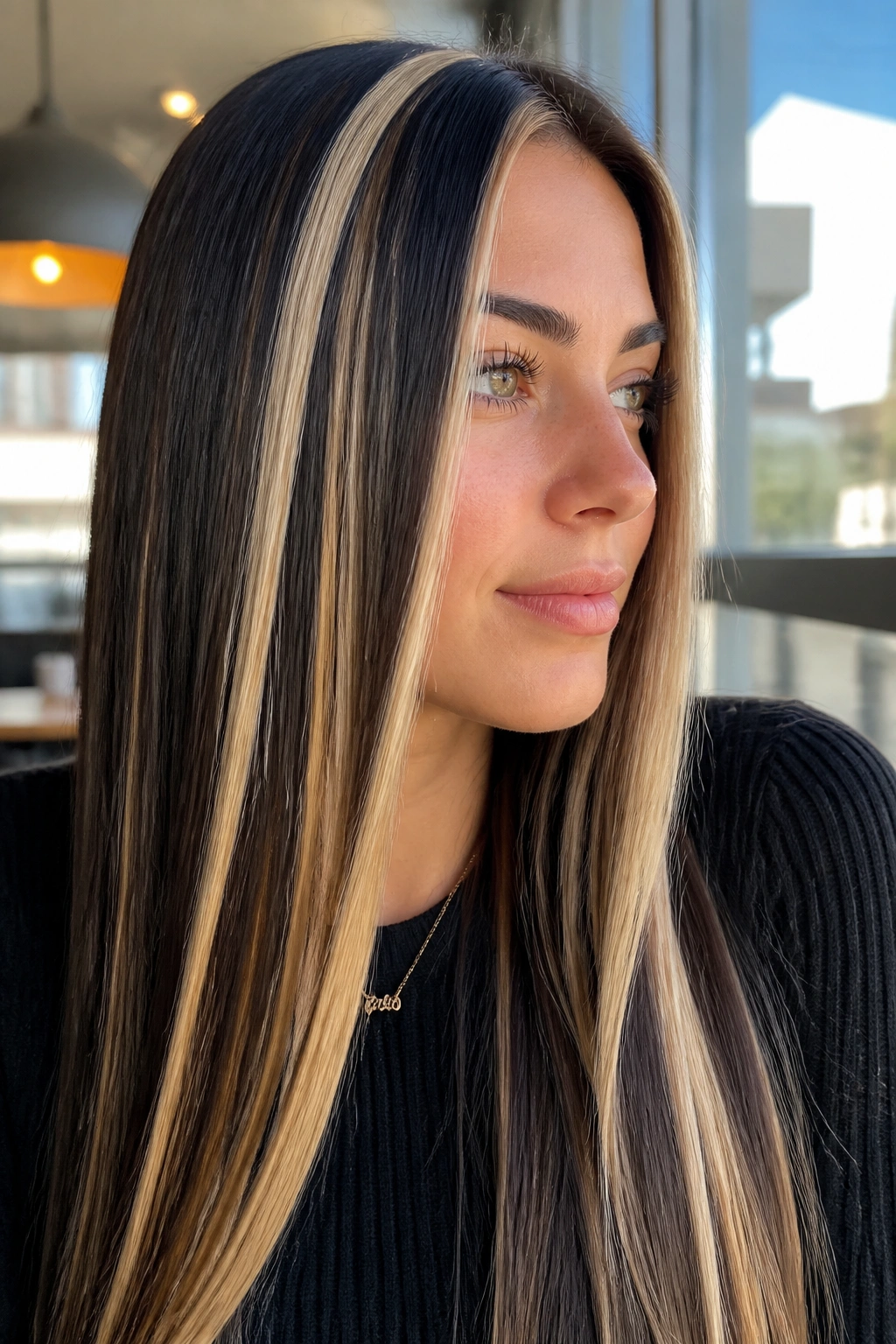
Straight hair does not hide anything. That is the beauty of it. If your hair is naturally smooth or you wear it iron-straight most of the time, chunky blonde streaks will look sharper, cleaner, and more graphic than they would in waves or curls.
That means the placement has to be disciplined. Straight hair shows the edges of every foil line, so the stripes need to be even and deliberate. Uneven spacing or patchy lift stands out fast. If you want the high-contrast look, ask for a clean slice technique rather than a very blended weave.
This is the right place for bolder blonde choices, including pearl, pale beige, or even near-platinum pieces. On straight hair, those tones do not get swallowed by texture. They sit on top of the base like strong lines, and that visual clarity is the whole point.
I would not call this a low-maintenance option, because it reveals regrowth and color shifts quickly. Still, if you like a crisp finish and wear dark clothes, the contrast can look excellent. Simple. Unmistakable.
13. Chunky Caramel-Blonde Blend for Soft Contrast
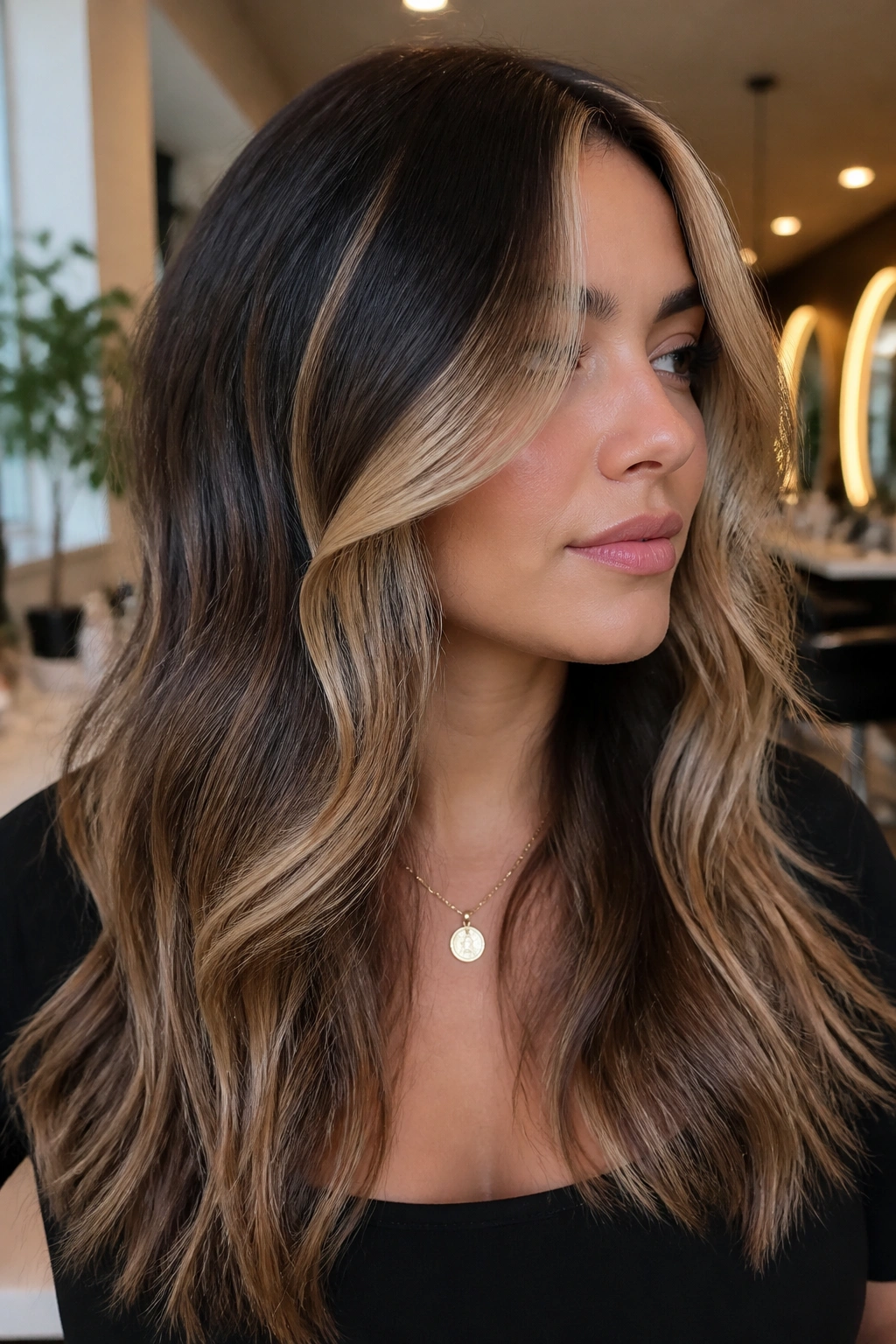
Not every chunky highlight has to be bright in the same way. Caramel-blonde pieces on dark hair give you contrast without the hard jump from brunette to pale blonde. The result is softer, warmer, and easier to wear if you are not ready for a stark stripe.
This look is especially good when the hair already has some warmth in it. Instead of fighting your natural undertone, you work with it. The caramel pieces sit between the base color and the lighter blonde, which creates a smoother shift through the hair. It feels richer than a pure ash look and less loud than platinum.
The blend matters. I would ask for a few caramel panels closer to the roots or mid-lengths, then brighter blonde toward the ends or face frame. That creates a layered color story instead of one flat tone. If the caramel and blonde are separated too neatly, the look can turn stripey in the wrong way.
This is a strong choice for people who wear warm-toned makeup, gold jewelry, or textured sweaters and jackets. It plays nicely with all of that. No drama required.
14. Frosted Ends on Long Dark Hair
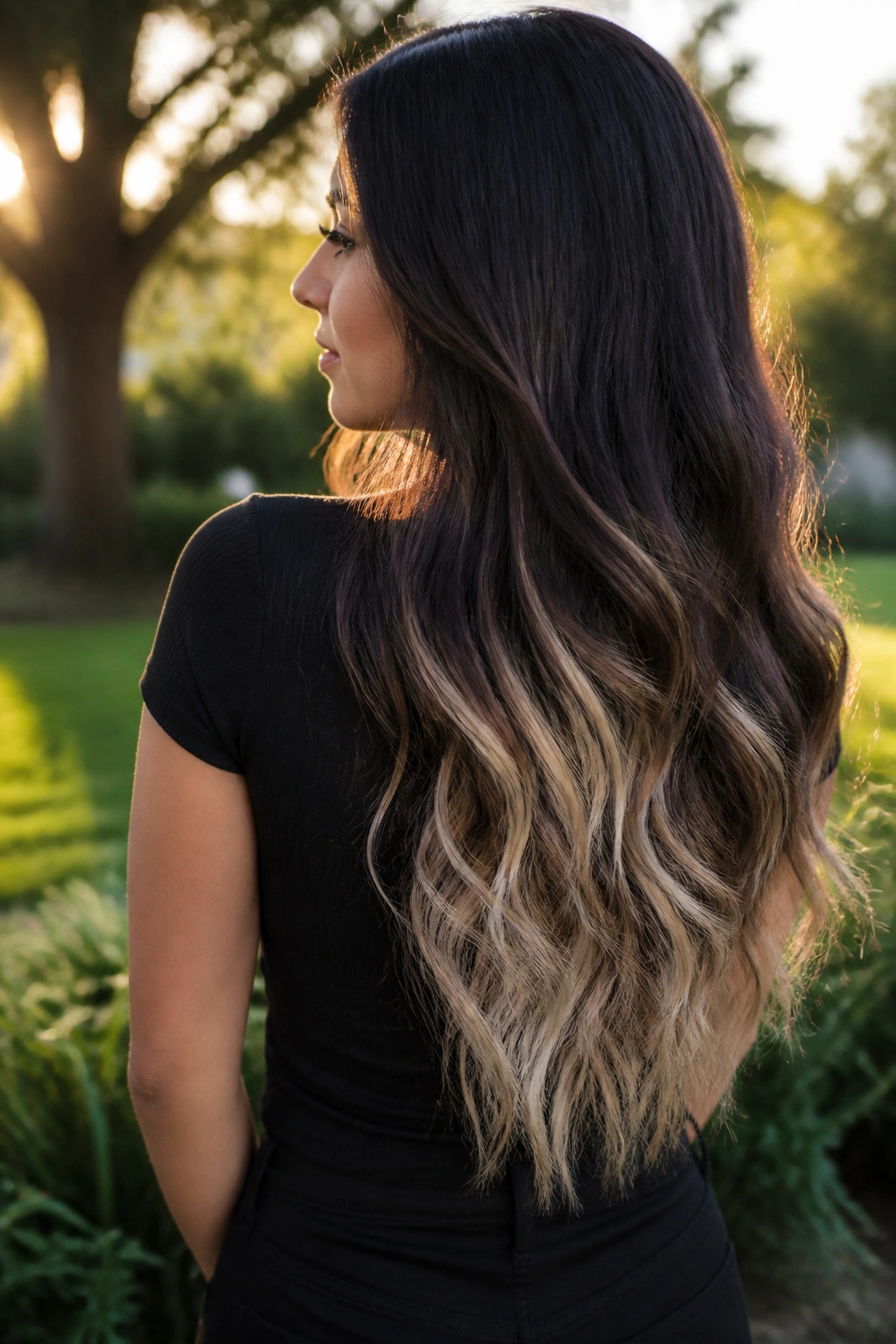
Long dark hair with frosted ends has a nice, slightly rebellious feel. The roots and mid-lengths stay deep, while the lower half turns lighter and cooler. That keeps the length from looking heavy and gives the hair a cleaner finish from the back.
The best part is how little of the head needs to be lightened to get the effect. When the ends carry the blonde, the eyes read the length as lighter and more lifted. On very long hair, that can make a big difference. The style is also easier to grow out because the brighter area sits away from the scalp.
Small details that matter
- Ask for a soft fade rather than a hard line where the blonde starts.
- Keep the lightest pieces on the last 4 to 6 inches if you want the frost effect to feel intentional.
- Use a bond-building mask if the ends are already dry from heat or color.
- A smooth blowout shows the gradient better than a rough dry finish.
This look can go icy or beige, depending on your skin tone and base color. Both work. The main thing is keeping the transition from dark to light readable without turning it into a block.
15. Chunky Blonde Highlights With a Shadow Root
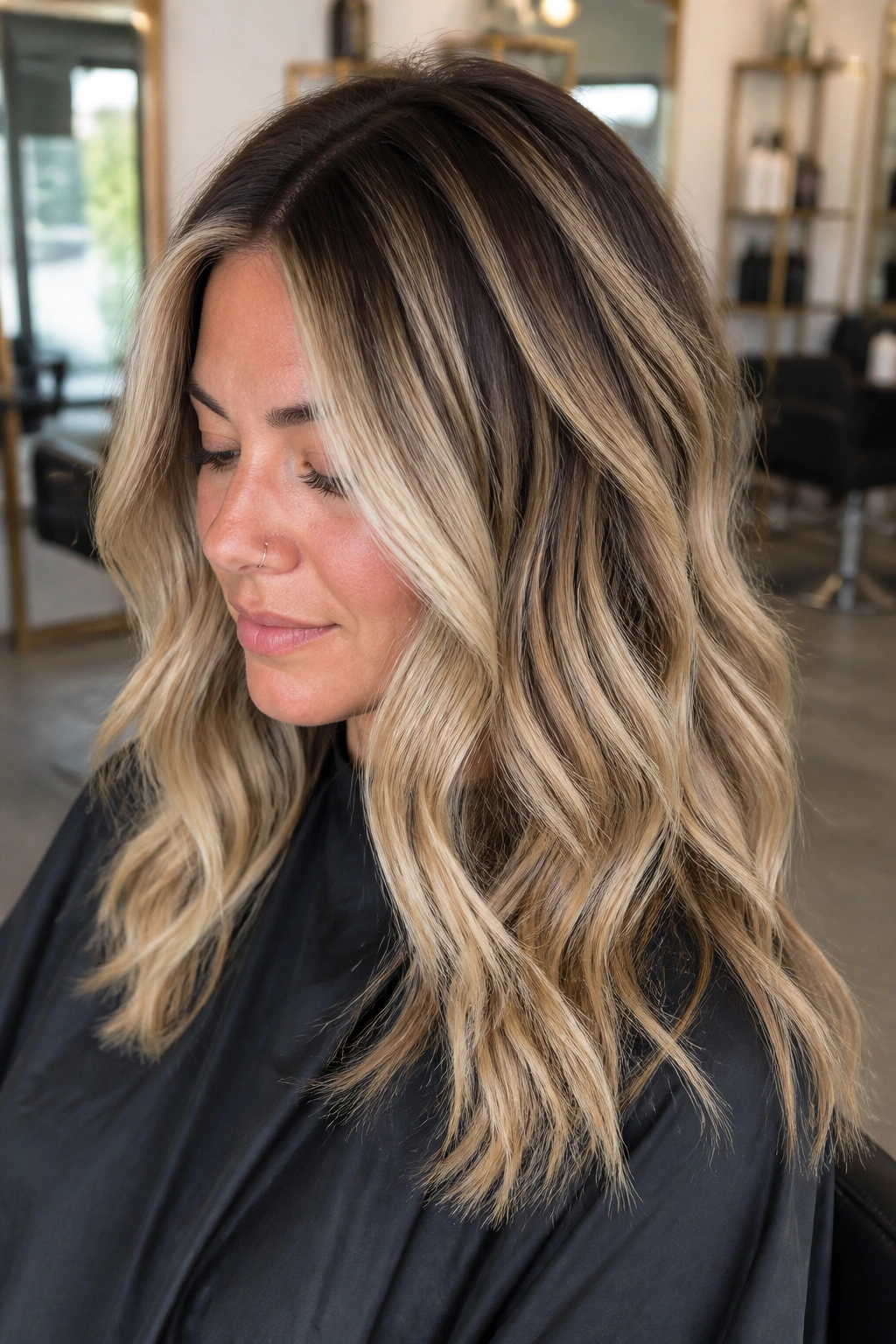
A shadow root is the easiest way to keep chunky blonde highlights on dark hair from looking too stark at the scalp. Instead of lifting everything from root to tip, you keep a deeper band at the top and let the blonde begin lower down. That dark root buys you time between appointments and makes the bright pieces feel grounded.
This is the move for people who like contrast but do not want weekly maintenance. It also helps the blonde look a little richer, because the eye sees both depth and brightness in the same head of hair. On dark hair, that balance is often nicer than trying to turn the entire top section pale.
The root area can stay soft and blurred for about 1 to 2 inches, depending on your base color and how much grow-out you want to tolerate. A beige or ash toner on the lighter pieces keeps the end result from reading too yellow. If your dark base is very cool, a shadow root keeps the whole thing from going flat.
This is the most forgiving version of chunky highlights on the list. The contrast is still there. It just looks smarter about it.
Final Thoughts
Chunky blonde highlights on dark hair work best when the blonde has a job to do. Maybe that job is framing the face, maybe it is brightening the crown, or maybe it is hiding under the top layer until the hair moves. The placement matters more than trying to make every piece equally bright.
Tone matters too. Honey, beige, ash, platinum, and caramel all change the mood fast, and dark hair will expose a weak toner faster than almost any other base. If you bring photos, bring ones with hair texture close to your own. That little detail saves a lot of confusion at the chair.
And if you are torn between two looks, pick the one that fits how you actually wear your hair most days. Straight, wavy, tied back, clipped up, or left loose — the best blonde streaks are the ones that still make sense when real life gets involved.
