



For decades, the standard approach to highlights was simple: find a shade of blonde or caramel that softened your brown base and added a bit of warmth. But the rules have shifted, and the stigma once attached to going grey has been completely replaced by a fascination with silver, slate, and charcoal tones. Adding grey highlights to brown hair isn’t just about covering up roots or blending in natural grays; it is a deliberate style choice that adds metallic depth, edge, and a sophisticated, cool-toned contrast that warmer highlights simply cannot achieve.
The challenge, of course, is that brown hair is naturally rich in red and orange undertones. When you attempt to lift brown hair to the level of lightness required for a true, cool-toned grey, you are fighting against nature’s own pigment. It requires patience, multiple rounds of lifting, and a heavy reliance on high-quality toners. When done correctly, the result is a multidimensional look that feels both modern and undeniably cool. Whether you want a subtle sprinkle of silver or a bold, high-contrast stripe, the options are as varied as the shades of brown themselves.
1. Smoky Silver Balayage
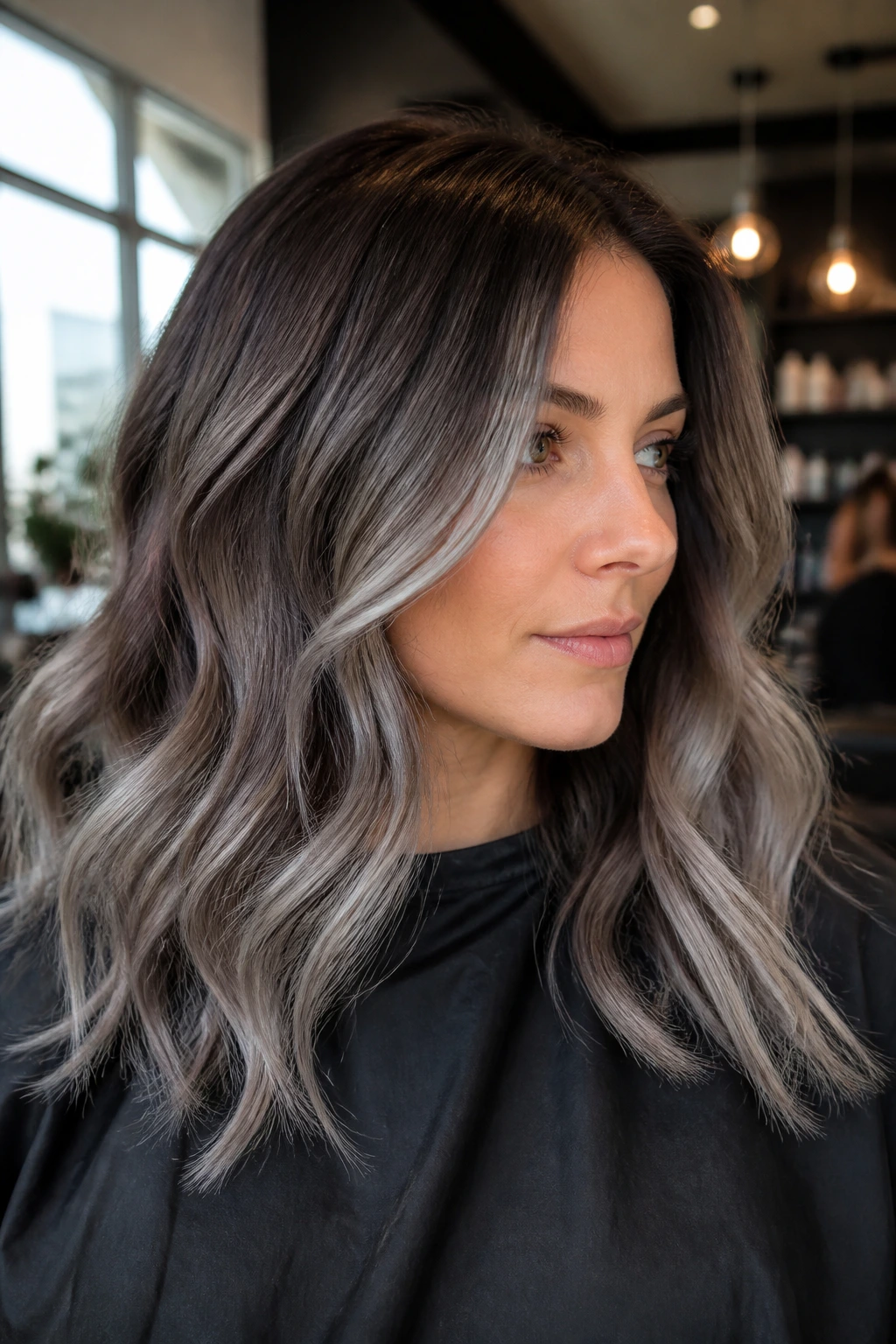
This is the entry point for most people who want to experiment with grey without committing to a full-blown transformation. The balayage technique allows your stylist to paint the grey color onto the mid-lengths and ends of your hair, creating a soft, diffused look that mimics the way light naturally hits your strands. Because the roots remain your natural dark brown, the grow-out process is significantly more forgiving.
Why This Works for Brown Hair
The beauty of a smoky silver balayage lies in the transition. By keeping the root area dark and gradually introducing lighter, cooler tones toward the ends, you avoid the harsh line of demarcation that comes with traditional foils. It feels organic. It looks like your hair has been kissed by the sun—or perhaps a bit of moonlight.
The Application Process
- The hair is usually lifted in sections using a clay-based lightener to ensure precision without bleeding.
- A smoky silver toner is applied over the pre-lightened hair to neutralize the yellow and orange pigments that inevitably emerge during the lifting process.
- The result is a misty, ethereal blend that softens the features of your face while maintaining the richness of your base color.
Pro tip: Ask your stylist to focus the silver density on the pieces surrounding your face; this adds brightness where it matters most, making your complexion pop.
2. Cool-Toned Slate Ribbons
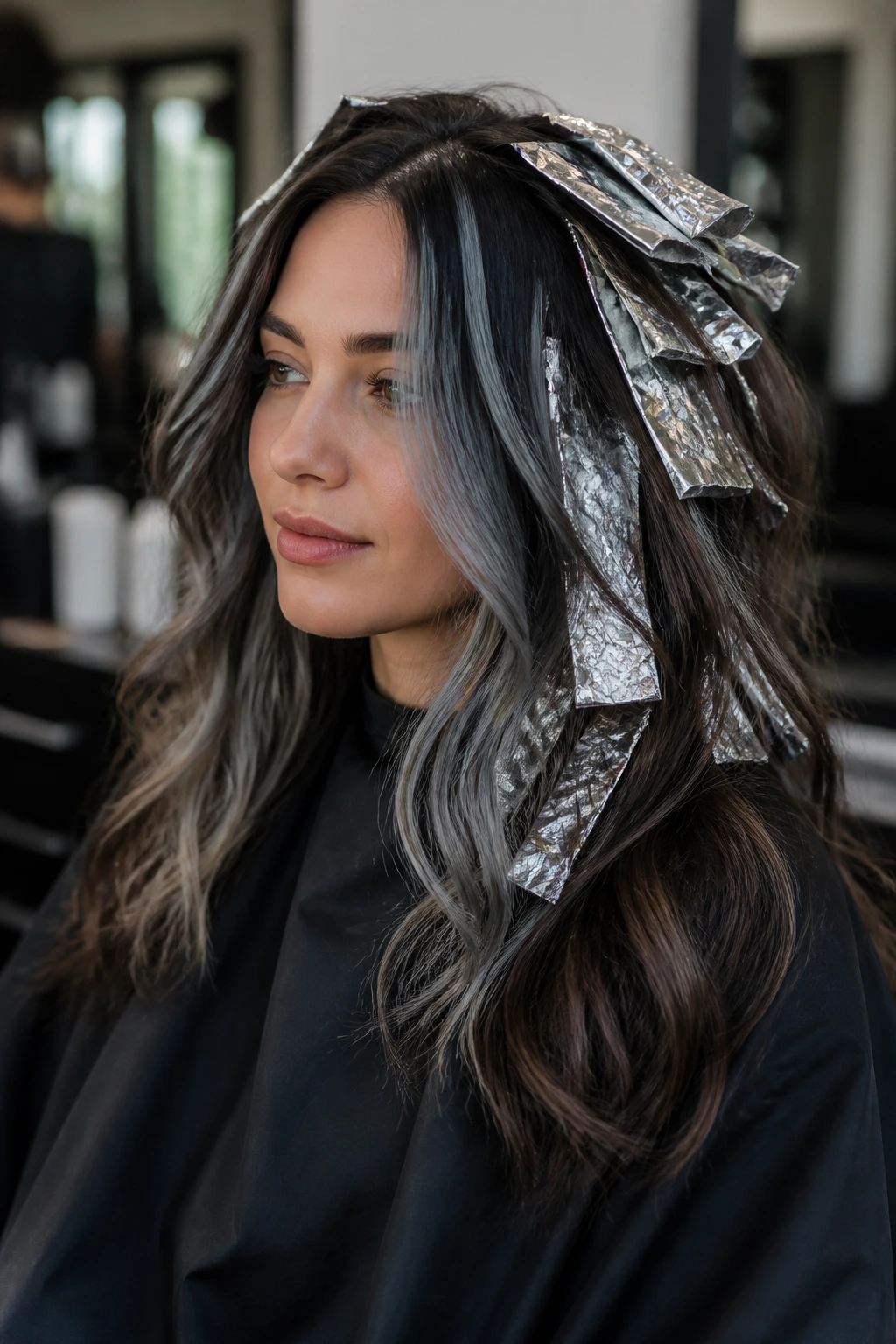
If you prefer a look that is a bit more structured than the diffused nature of balayage, slate ribbons might be your answer. Unlike balayage, which is often free-handed, ribbon highlights are woven in using foils to ensure that specific sections of hair are saturated completely with color. This creates distinct “ribbons” of a deep, metallic grey that weave through your dark brown hair, creating a stark, high-contrast effect.
This style is not for the faint of heart. The contrast between deep brown and slate grey is sharp. It demands attention. Because the grey is darker and more pigmented than a light silver, it tends to hold up a bit better against the inevitable fading that happens with fashion colors. You get a moody, sophisticated aesthetic that feels less like “sun-kissed” and more like “polished metal.”
3. Soft Charcoal Lowlights

Often, when people think of grey highlights, they only consider lightening the hair. But adding darkness can be just as effective. Charcoal lowlights involve weaving darker, cool-toned grey strands into your hair. This is particularly effective for those who already have some natural grey popping through and want to embrace a “salt and pepper” look that feels intentional and styled.
The Benefit of Depth
By weaving in charcoal, you are adding texture and the illusion of volume. It breaks up the monotony of a flat brown color. If your hair is currently a single-process color, adding lowlights creates the dimension that usually comes from natural variations in tone. It is a subtle change, yet one that makes your hair look noticeably thicker and more vibrant.
Who Should Try This
If you are worried about the damaging effects of bleaching your hair to a platinum silver, this is your safest path. Charcoal lowlights require little to no lifting of your natural color, which means you keep your hair’s integrity while still achieving a striking, cool-toned aesthetic.
4. Icy Platinum Face-Framing Pieces
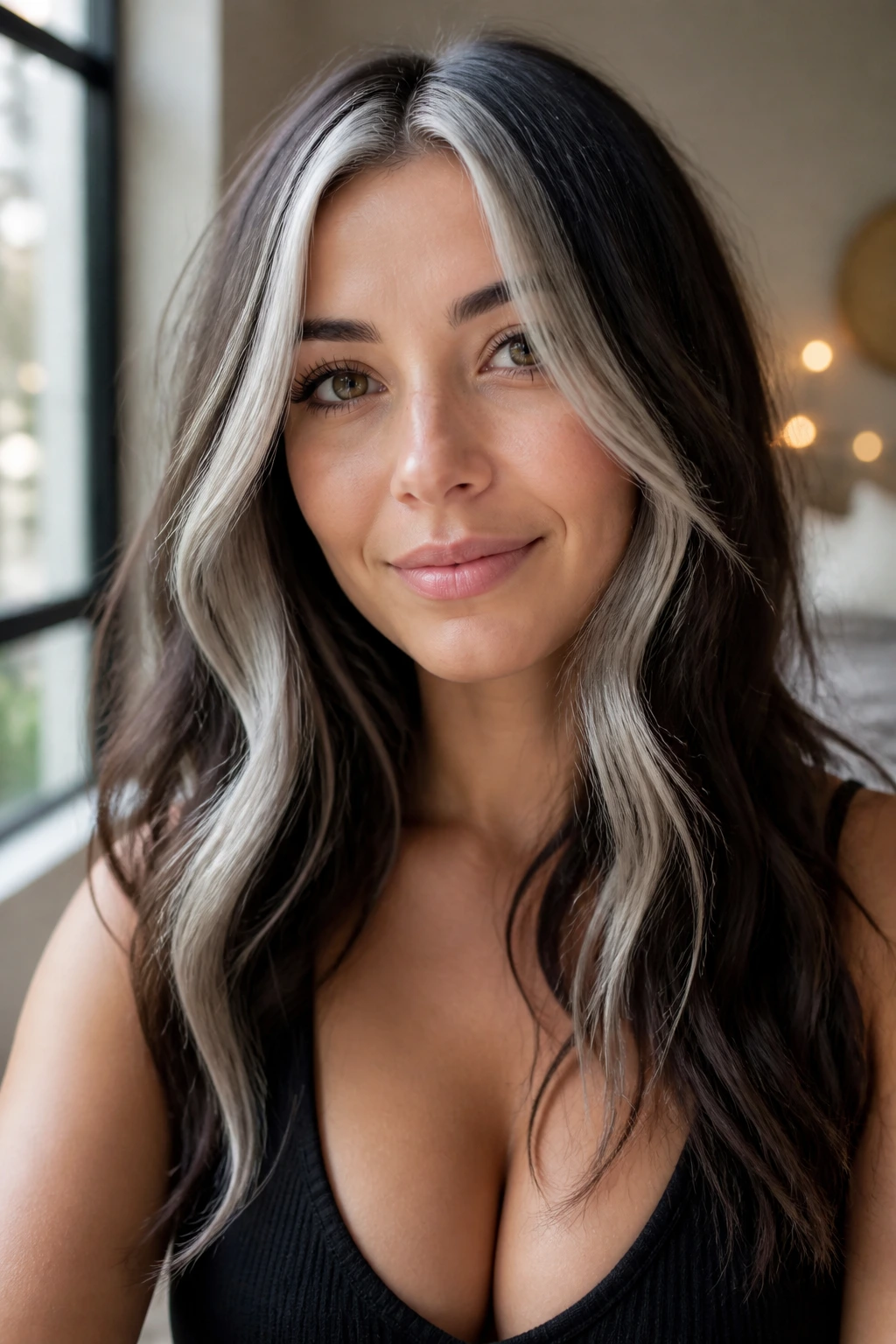
The “money piece” trend is sticking around for a reason: it works. By isolating the two thick strands of hair right at your hairline, you can pack them with an icy platinum grey that frames your face. The rest of your hair can remain a rich, dark brown or be subtly sprinkled with a few scattered grey highlights to tie the whole look together.
This look is surprisingly versatile. It provides a massive hit of brightness right where you see it the most—in the mirror every morning—without requiring a full-head bleach session. Because you are only treating a small section of hair, you can afford to push the lift to the extreme, achieving a true, icy white-grey that would be significantly more difficult to maintain on your entire head.
5. Ash Grey Babylights
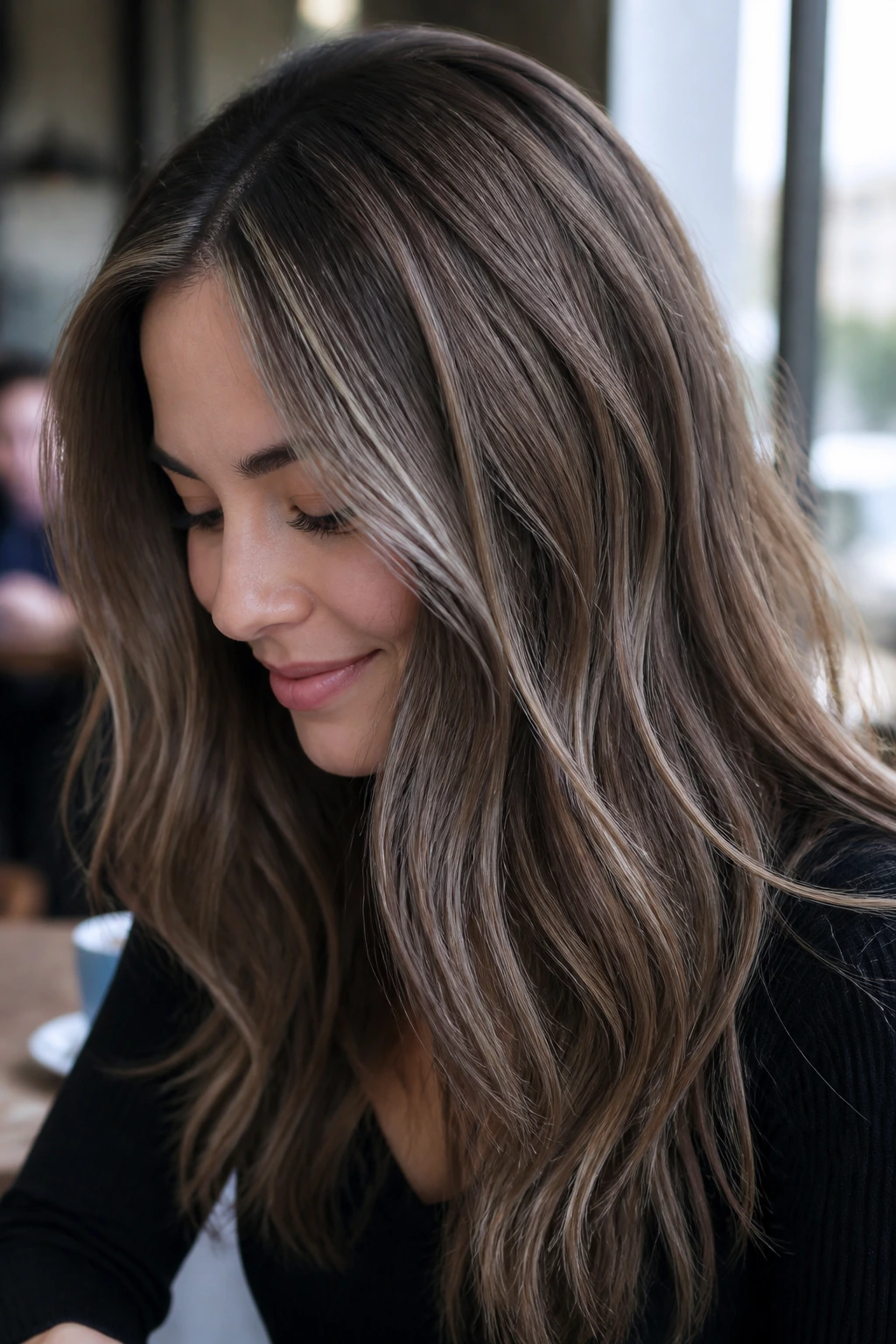
Babylights are all about extreme fineness. Your stylist will weave in hundreds of micro-thin highlights throughout your hair. When done with an ash-grey shade, the result isn’t a bold streak of color, but rather a shimmer that catches the light whenever you move. It is the sophisticated cousin of the traditional highlight.
Ash grey is the perfect partner for brown hair because it contains enough blue and green pigment to actively counteract the brassiness that usually appears when you bleach brown hair. When these micro-highlights are placed throughout the canopy of your hair, the total effect is a multidimensional, shimmering surface. It is incredibly natural-looking and grows out with almost zero maintenance.
6. Steel Grey Ombre Transition

The ombre trend may have evolved, but the desire for a seamless fade from dark to light remains strong. A steel-grey ombre involves transitioning from your deep brown roots to a solid, intense steel grey at the tips. This is a dramatic look, often best suited for those who are willing to commit to the maintenance of keeping the ends toned and vibrant.
To pull this off, the bottom half of your hair needs to be lifted to a very pale level—a pale yellow, like the inside of a banana peel. Anything less, and the steel grey will turn into a murky, muddy green rather than a crisp metallic. If your hair is healthy enough to handle the lift, the payoff is a striking, edgy style that feels very intentional and high-fashion.
7. Gunmetal Grey Chunky Highlights
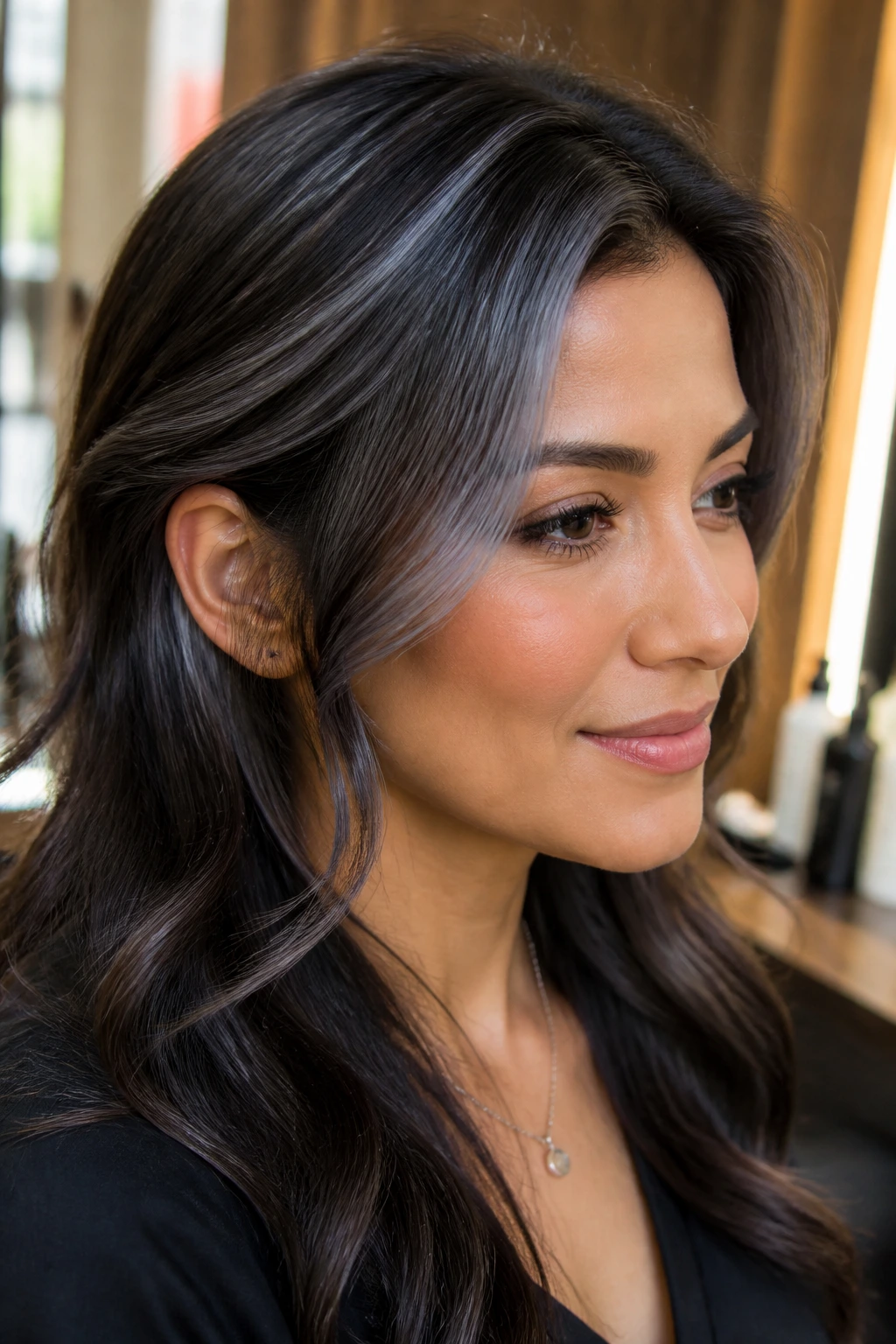
If you are nostalgic for the bold, thick highlights that defined the 1990s, the gunmetal grey look is your modern-day update. We are moving away from the blended, soft-focus look and into a space that favors distinct, thick, deliberate sections of hair. This style is about personality.
These highlights should be placed strategically—perhaps around the crown of the head or in a single large section behind the ear. A deep gunmetal grey is the chosen tone because it holds its own against the strength of the brown hair. A light silver would look out of place as a “chunky” highlight on dark brown hair, but a deep, moody gunmetal grey feels edgy and artistic. It is a bold move, but it is one that pays off with incredible style points.
8. Frosted Tips with Grey Ash
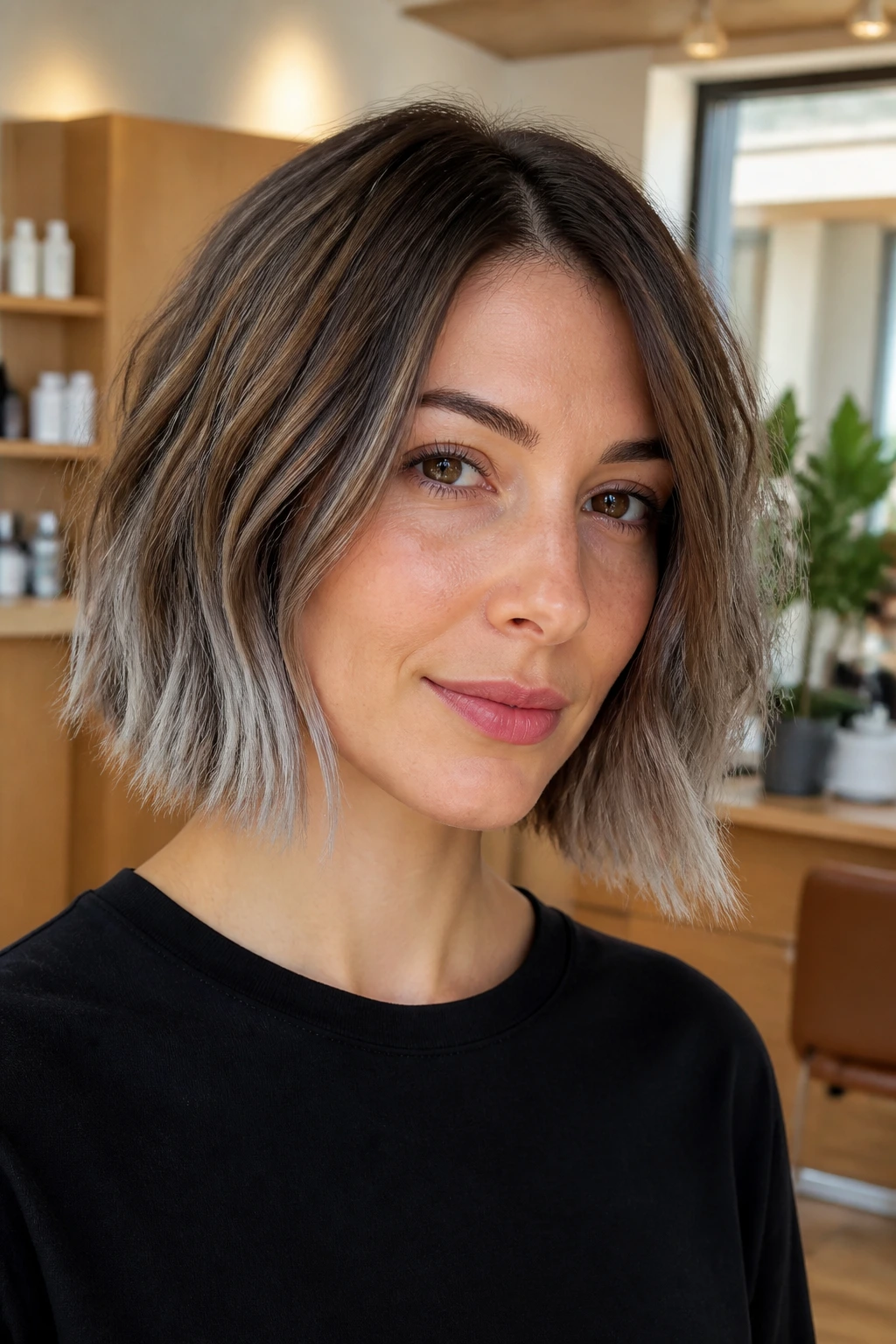
Before you recoil at the term “frosted tips,” consider the modern evolution of the technique. We are not talking about the harsh, distinct yellow tips of the early 2000s. We are talking about soft, textured ends that are dipped in an ash-grey toner. This works incredibly well on shorter, layered haircuts like bobs, lobs, or textured pixie cuts.
Why Texture Matters
This style relies entirely on the cut of your hair. Because you are focusing the grey on the tips, you need a haircut that has some movement and layer to it. If your hair is one length, this technique can look a bit blunt. But on a choppy, layered cut? It highlights every single strand and gives the hair an airy, light-catching quality.
Styling Tip
Use a texturizing spray or a light pomade after you style. Since the ends are a different color than the base, you want to accentuate that distinction by pulling the ends out and giving them some separation.
9. Silver Streak Peek-a-Boos

Peek-a-boo highlights, also known as hidden color, are the perfect choice for the professional who wants to experiment with edge without compromising the “corporate-friendly” look of their top layers. By placing sections of silver or light grey in the hair underneath your top layers, you reveal the color only when you move, ponytail your hair, or use a curling iron.
The contrast is delightful. One moment, you have dark, flowing brown hair; the next, with a flick of your ponytail, you have a flash of metallic silver. It is a fun, secret element that lets you play with color without having to manage the damage or maintenance of having grey hair on the very top of your head, where it is most exposed to the sun and heat styling.
10. Champagne-Grey Hybrid Highlights

Not everyone wants a stark, cool-toned grey. If you find that true silver makes your skin tone look washed out, consider a hybrid approach: champagne-grey. This color sits somewhere between a warm, sandy blonde and a cool, muted silver. It is softer than pure grey, which makes it much more wearable for those with warmer undertones in their skin.
This blend is particularly forgiving because the warmth in the champagne prevents the color from ever looking “dirty” or “muddy” as it starts to fade. You get the benefits of the grey highlight—the brightness, the dimension, the modern aesthetic—without the harshness that can sometimes accompany pure, icy-toned hair.
11. Metallic Silver Teasylights

Teasylights are a technique where the stylist backcombs or “teases” the hair before applying the lightener. This creates a soft, diffused transition near the root, much like a balayage, but it allows for a more controlled, uniform color throughout the rest of the hair. When you do this with a metallic silver shade, you get the best of both worlds: a soft grow-out and a very concentrated, high-impact silver color on the lengths.
This is arguably the most sophisticated method for achieving a “lived-in” grey look. It mimics the way hair naturally turns grey over time, albeit with a much more intense, metallic finish. It’s perfect for someone who wants a high-fashion look but doesn’t want to spend their life in the salon chair getting their roots touched up every four weeks.
12. Titanium Grey Dimension
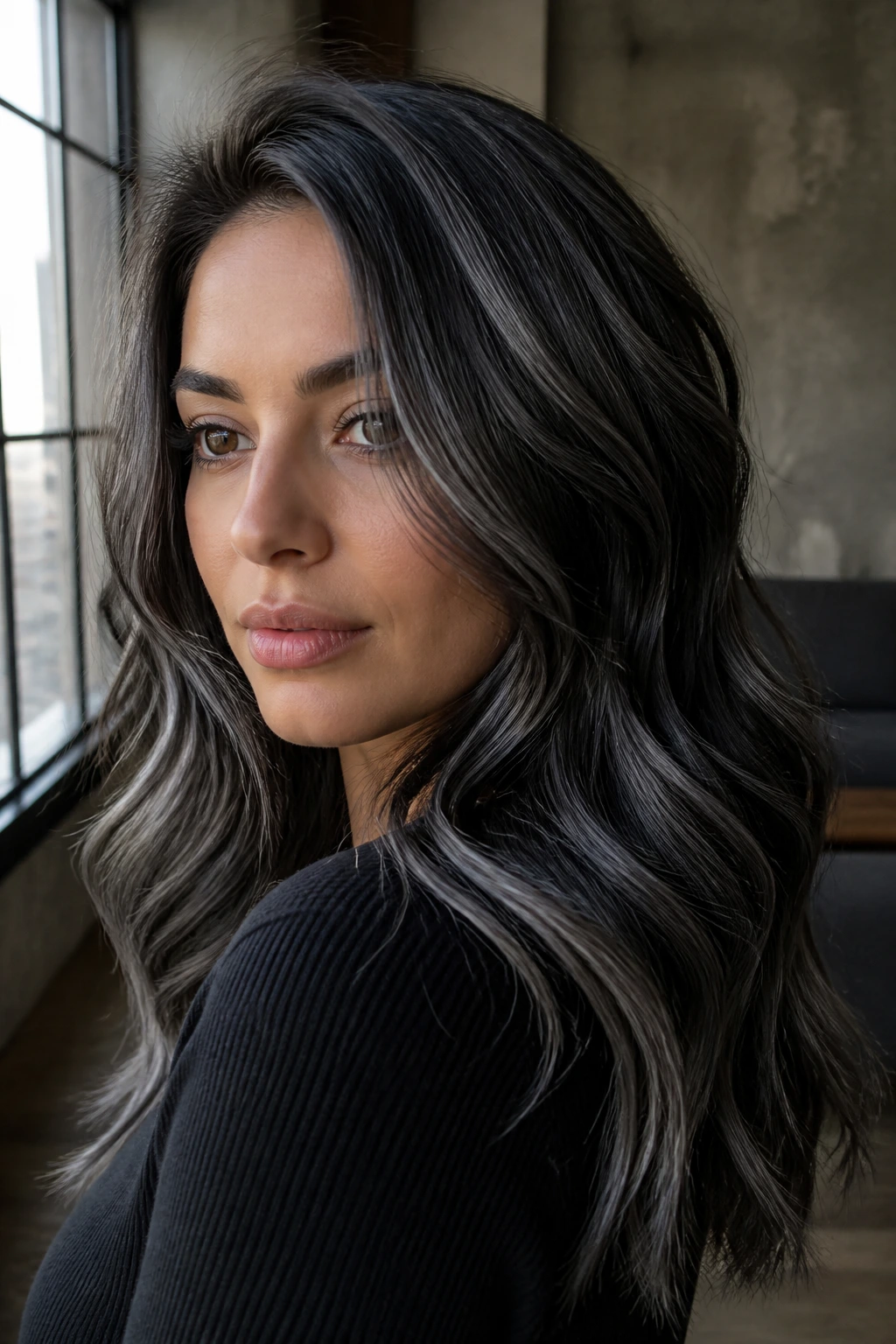
Titanium is a specific shade of grey—it has a slightly darker, more intense profile than standard silver. Using titanium highlights on brown hair creates a look of serious depth. It doesn’t look like you’ve just bleached your hair; it looks like you’ve carefully infused your hair with steel and iron.
This works best when applied to dark brunette hair. The darkness of the titanium grey bridges the gap between your natural color and the highlights, ensuring that the transition feels natural rather than abrupt. It is a heavy, dramatic look that feels very cool and is undeniably striking in lower-light settings where the metallic tones really start to reflect.
13. Ash-Violet Grey Infusions
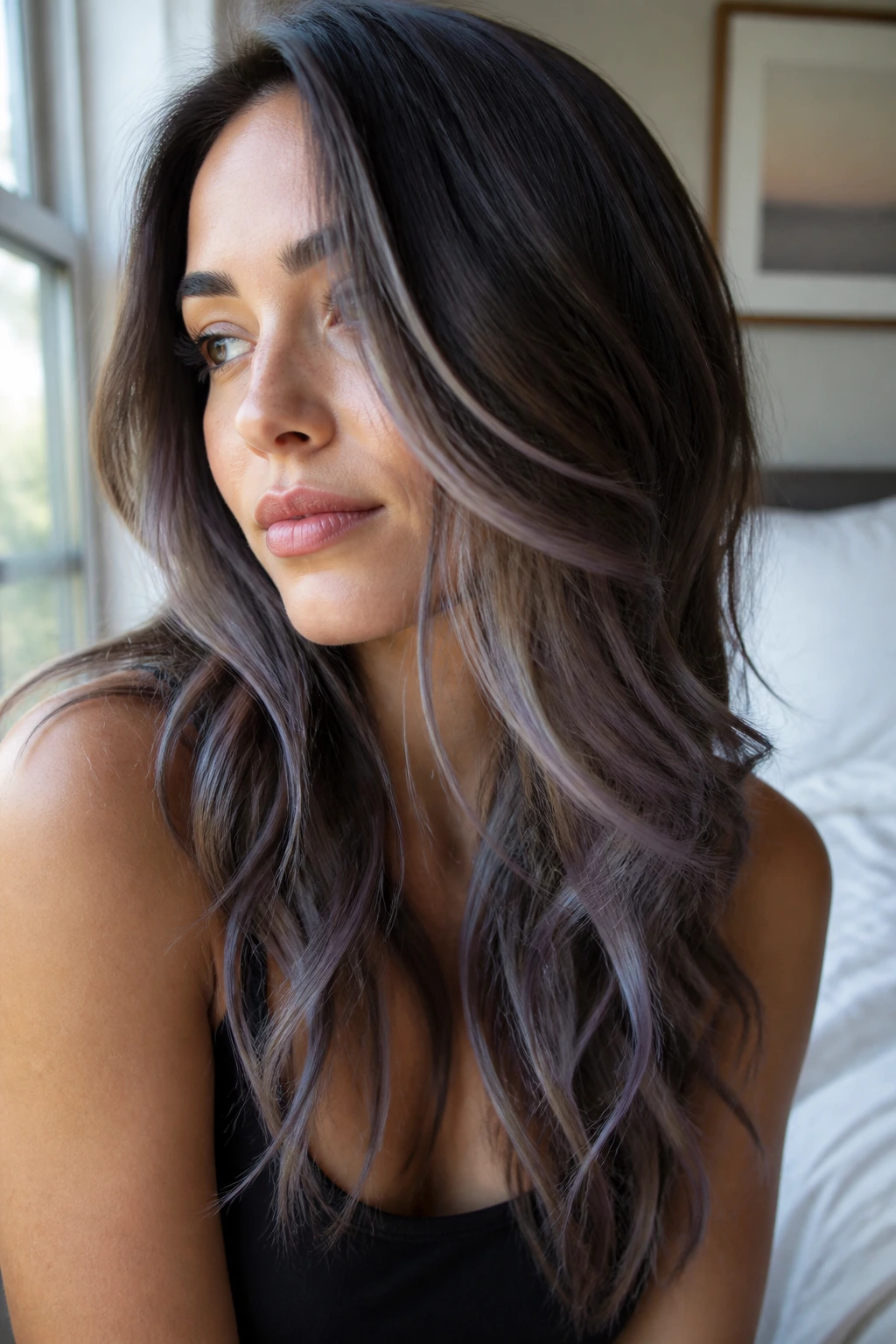
If you are struggling with stubborn yellow tones in your bleached hair, sometimes the best solution isn’t just to cover it with grey—it’s to embrace a violet undertone. An ash-violet grey highlight on brown hair is a secret weapon. The violet base acts as a powerful neutralizer for any lingering gold or yellow, resulting in a clean, crisp, cool-toned grey that looks intentionally styled.
The slight purple hue is often so subtle that it’s barely noticeable, but it makes a massive difference in how the color photographs and how it looks in natural light. It looks like a high-end, salon-grade toner job. It is a brilliant way to ensure that your “grey” doesn’t turn into “golden-yellow” after three washes.
14. Grey-Brown Money Pieces

Sometimes, you don’t need a bright, white-silver money piece. A muted, grey-brown money piece can be just as effective and much more subtle. By lifting those front sections to a light ash-brown or a dark charcoal-grey, you brighten the face without introducing a shock of high-contrast white.
This is the “low-key” version of the face-framing highlight. It is sophisticated, understated, and incredibly easy to maintain. It is also a great way to transition into lighter colors if you are coming from a very dark, virgin brown. It’s a testing ground for how your hair and your complexion will react to cool tones.
15. Smoky Grey Foilyage
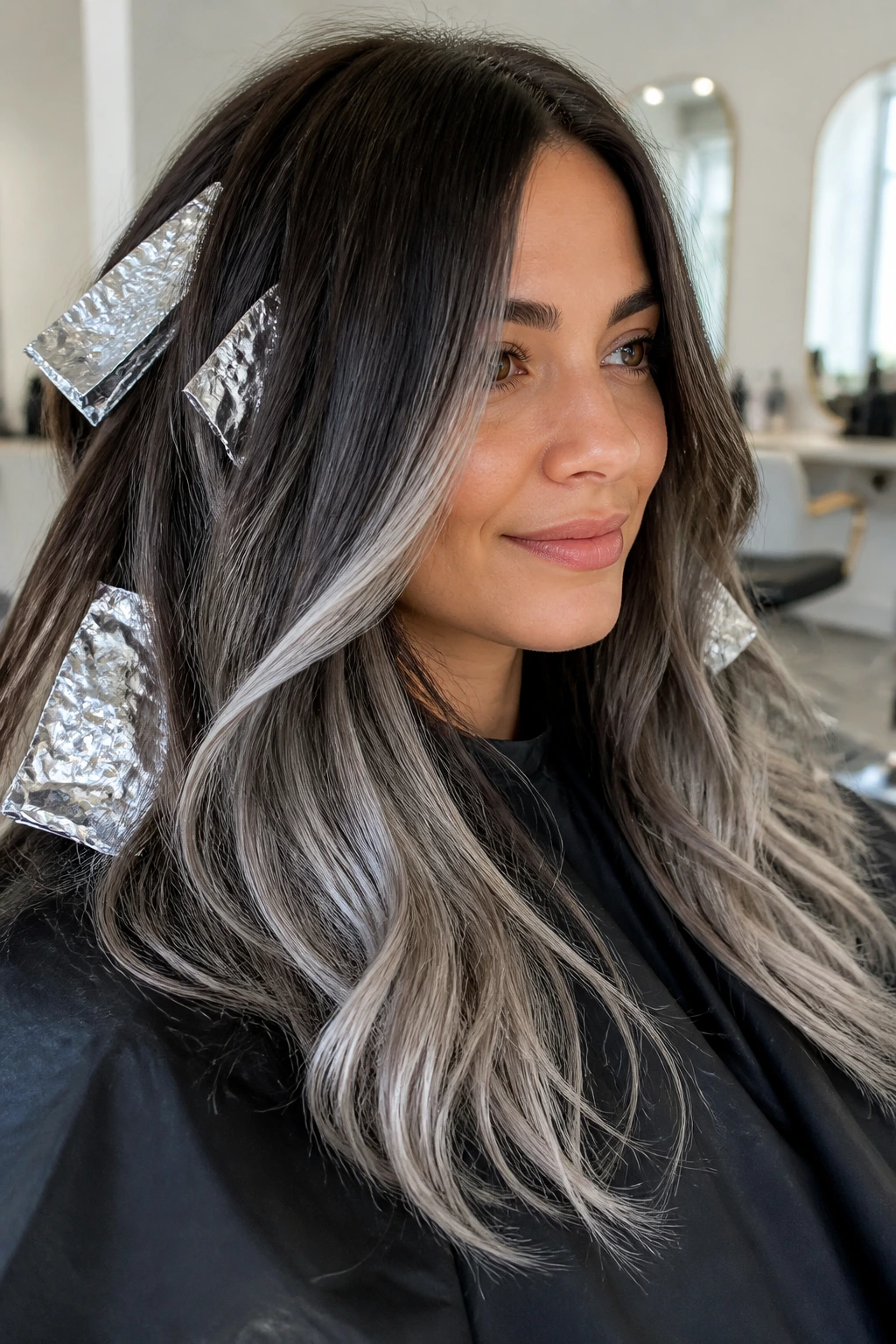
Foilyage is the hybrid lovechild of foils and balayage. It uses the free-handed painting technique of balayage, but then wraps the painted sections in foil. This extra step traps the heat, allowing the lightener to penetrate deeper and achieve a significantly higher level of lift than open-air balayage.
For those with dark brown hair, foilyage is often the only way to get to that “smoky grey” shade without compromising the health of the hair too much. You get the precision of the foils for maximum lift, but the placement is still artistic and natural, focusing on the mid-lengths and ends rather than creating uniform stripes from the root.
16. Silver-Grey Babylight “Halo”
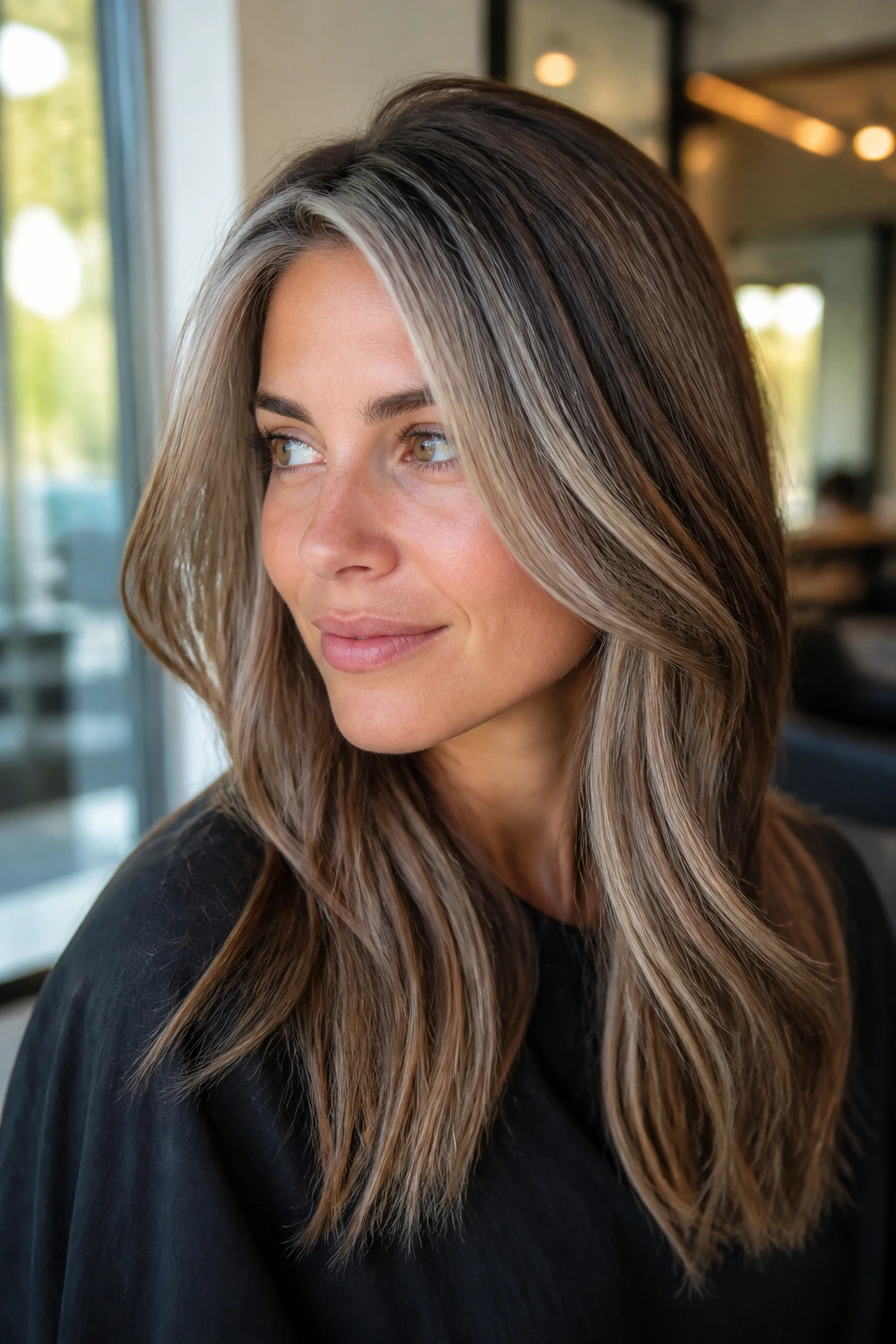
Think of the “halo” placement as a variation of the money piece, but extended around the crown of your head. Instead of just two bright strands at the front, you carry that brightness through the hairline all the way around the head. When you wear your hair up, or even just tucked behind your ears, that ring of silver-grey creates a beautiful, glowing effect.
This style relies on precision placement. You want the silver to be right at the perimeter of your hairline. It’s a great way to frame your face and draw attention to your eyes, and it gives you a bit of “brightness” that can make your skin look more radiant, even when your overall hair color is quite dark.
17. Charcoal and Silver Striping
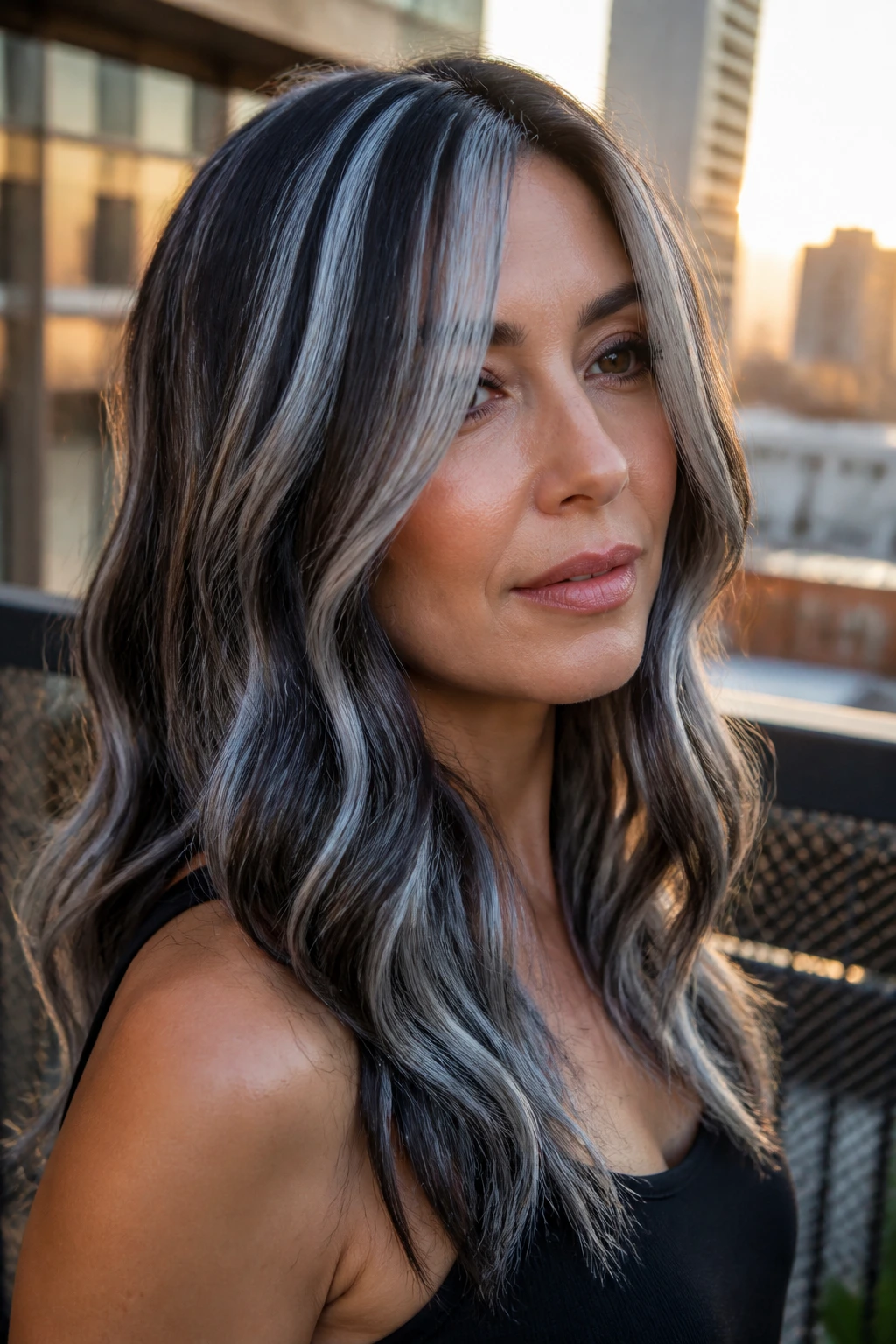
For those who want to commit to a more bold, multi-tonal look, combining charcoal and silver is the way to go. Instead of using one shade of grey, you use two. This creates a level of complexity that is impossible to achieve with a single color. It mimics the natural variation of grey hair, which is never just one flat shade.
The Contrast Effect
When you mix deep charcoal with bright silver, you are effectively creating a chiaroscuro effect on your head. The dark charcoal gives the hair density and body, while the silver adds the “pop” and the shine. It is a high-contrast style that looks fantastic with modern, blunt haircuts.
Stylist Note
This requires a very skilled hand. You are effectively alternating two different toners throughout the hair. If they bleed into each other too much, you lose the contrast. If they are separated too much, it can look “striped” in an unnatural way. Be sure to find a colorist who has experience with multi-tonal dimensional color.
18. Muted Dove Grey Ribboning

If the word “silver” conjures images of harsh, artificial metallic tones that you want to avoid, look toward “dove grey.” This is a soft, muted, matte version of grey. It is not shiny or metallic; it is flat and velvety. It looks incredibly elegant, especially on long, wavy hair.
Dove grey is less about shock value and more about refinement. It adds a sophisticated layer to dark brown hair that makes it look like it was styled with intention and care. It’s the color equivalent of a soft cashmere sweater. It’s understated, luxurious, and timeless, and it handles the transition from warm brown to cool grey with absolute grace.
19. Ash-Grey Root Smudge with Silver Ends

This is perhaps the ultimate “low-maintenance” grey look. You start with a dark brown base, but then you apply an ash-grey “root smudge” or “root melt”—a technique where a slightly lighter, ashier color is dragged down from the root to soften the line where the bleach begins. Then, the ends are taken to a crisp, bright silver.
The root smudge does two things: it makes the transition from your natural dark brown to the silver ends seamless, and it buys you an extra six to eight weeks before you need to come back to the salon for a root touch-up. Because the root color is soft and ash-toned, the new growth blends right in.
20. Graphite Grey Highlights
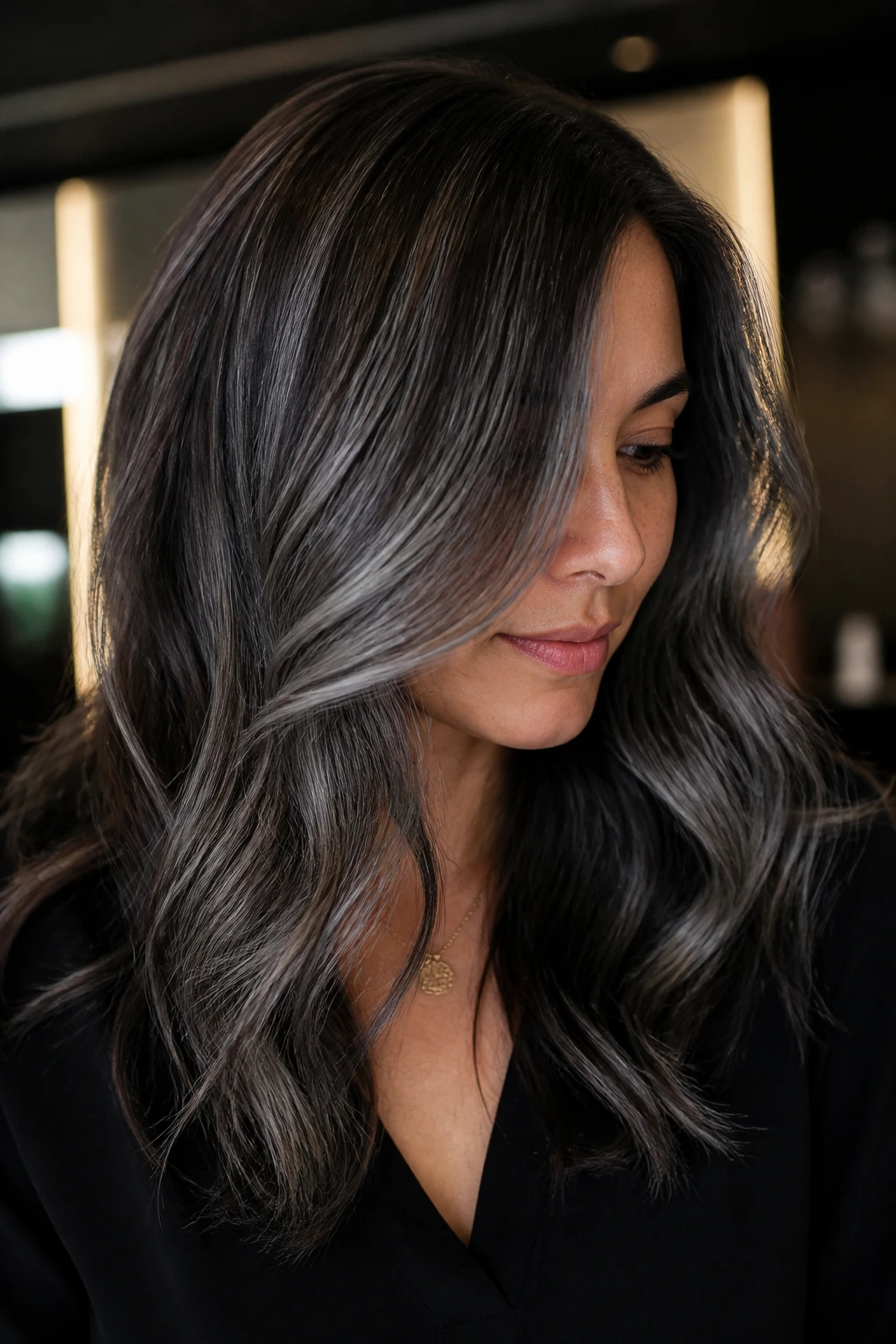
Graphite is a deep, saturated shade of grey that leans toward black. It is the color of lead or a rain-drenched sidewalk. When applied as highlights to brown hair, it creates a subtle, shifting effect. In dim light, it looks almost invisible; in the sun, it catches the light with a moody, slate-colored sheen.
This is the ideal highlight for someone who wants to embrace the “cool” side of the color wheel but isn’t ready to go bright or blonde. It is a grown-up, serious, and incredibly chic option. It doesn’t fight against your dark hair; it complements it. It works with your base color, not against it, to create a look that is sophisticated, moody, and undeniably cool.
Caring for Your Grey Highlights

Once you have made the leap to grey highlights on brown hair, the conversation changes from “how do I get it” to “how do I keep it.” Grey pigment is notoriously fleeting. Because the molecules in grey toners are physically larger than other color molecules, they tend to wash out of the hair shaft more quickly than, say, a red or a brown dye. Furthermore, brown hair has a very strong natural desire to revert to its brassy, warm state.
You need to lean heavily on purple and blue shampoos. These are not just suggestions; they are the bread and butter of your maintenance routine. Purple shampoo neutralizes yellow, while blue shampoo neutralizes orange. Depending on whether your grey highlights are leaning more toward an icy silver (use purple) or a deeper, smoky charcoal (use blue), you should rotate these into your wash routine at least once a week.
Avoid washing your hair with hot water. Heat opens the hair cuticle, allowing the pigment to escape. Switch to lukewarm or even cool water for your rinses. It’s a minor adjustment that will significantly extend the life of your toner. Additionally, invest in a color-safe, sulfate-free shampoo. Sulfates are essentially detergents—they strip your hair of oils and, crucially, your color.
Finally, manage your expectations regarding heat styling. You have likely bleached your hair to get it light enough for the grey to show up. Bleached hair is porous, and porous hair sucks up the heat from your flat iron or curling wand, which can turn that perfect silver into a dull, brassy straw in seconds. Always use a high-quality thermal protectant, and keep your styling tools at a lower temperature setting. You don’t need 400°F to style your hair. A lower setting will give you the same hold with significantly less risk of discoloration.
