



A mixie cut on curly hair can look sharp, playful, and expensive in the best possible way—or it can look like the back of the head got left out of the plan. The difference comes down to shape, weight, and where the curls are allowed to sit.
I keep coming back to mixie cuts for curly hair because they solve a real problem: curls want movement, but they also need structure. A good mixie gives you the short, lifted feel of a pixie with the softer length of a mullet, which means the haircut can breathe instead of puffing out into a triangle.
That said, curly hair changes the rules. Shrinkage is not a small detail. A cut that looks neat when wet can spring up two inches higher once it dries, and a stylist who treats curly texture like straight hair usually gets the silhouette wrong.
So the real question is not whether the mixie works on curls. It does. The question is which version works with your curl pattern, your density, and the amount of styling you’re willing to do on a regular morning.
1. The Soft Rounded Mixie
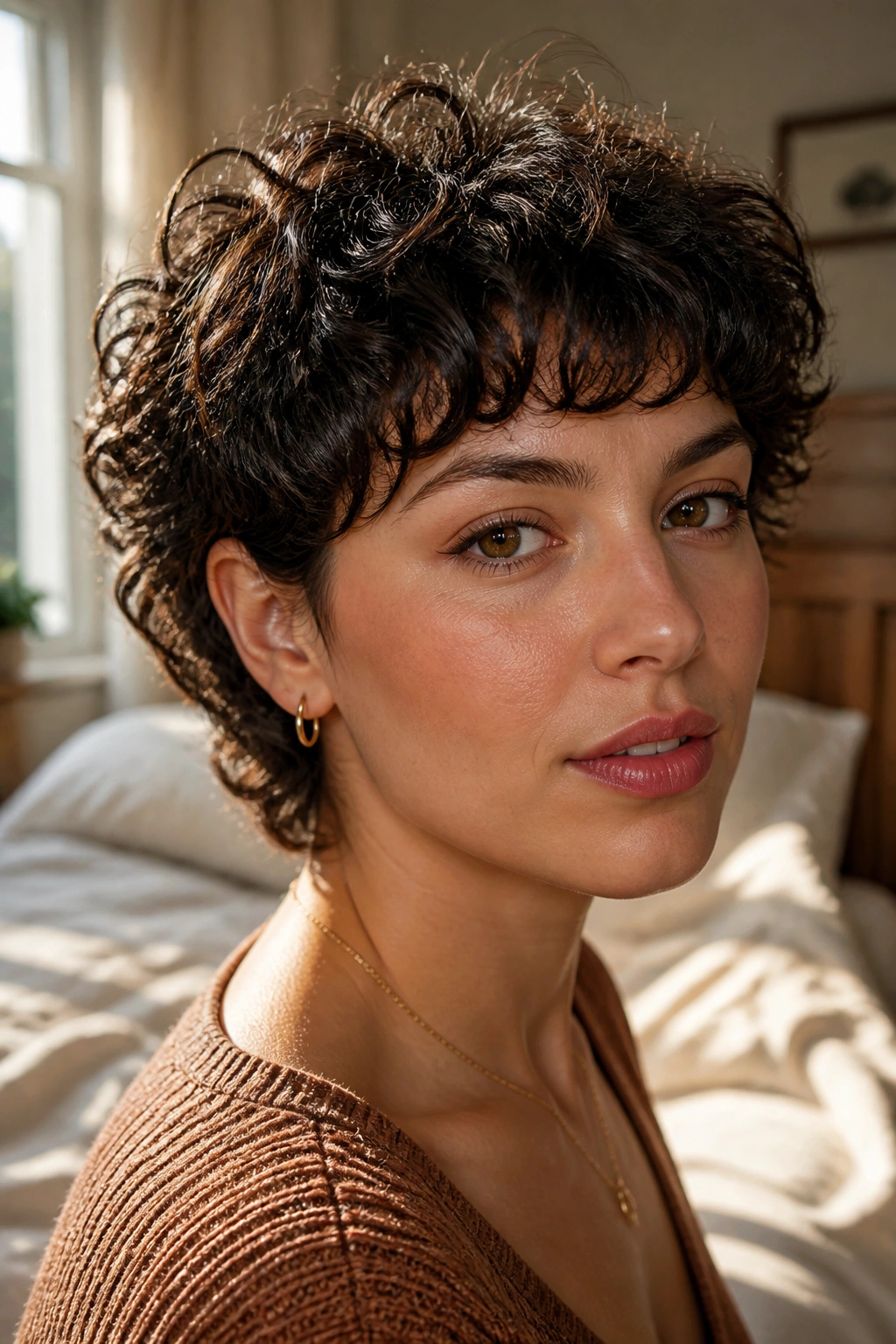
This is the mixie I recommend first to people who want shape without looking too edgy. The outline stays rounded through the crown, the sides are gently tucked in, and the back keeps just enough length to stop the cut from feeling cropped too high.
Why It Works on Loose Curls
Loose curls and soft waves can lose their shape fast if the haircut is too choppy. A rounded mixie keeps the top layers light, but it does not shred them into tiny pieces, which helps the curl clumps stay clean.
I like this shape for hair that sits somewhere between 2C and 3A. It gives you lift at the crown and a little swing at the nape, but it still looks calm when you skip a styling session. That matters more than people think. A haircut that only looks good with perfect styling is annoying by week three.
What to Ask For
- Keep the crown layers soft and blended, not razored to death.
- Leave about 1.5 to 2.5 inches of length through the top, depending on shrinkage.
- Let the back skim the nape so the shape doesn’t balloon out.
- Ask for face-framing pieces that hit around the cheekbone, not the jaw, if you want a lighter look.
Best for: people who want the mixie shape without a hard edge.
Avoid if: your curls are extremely dense and you need stronger weight removal in the interior.
My take: this is the version I’d choose if I wanted the haircut to look polished on day one and still make sense three weeks later.
2. The Curly Pixie Mullet
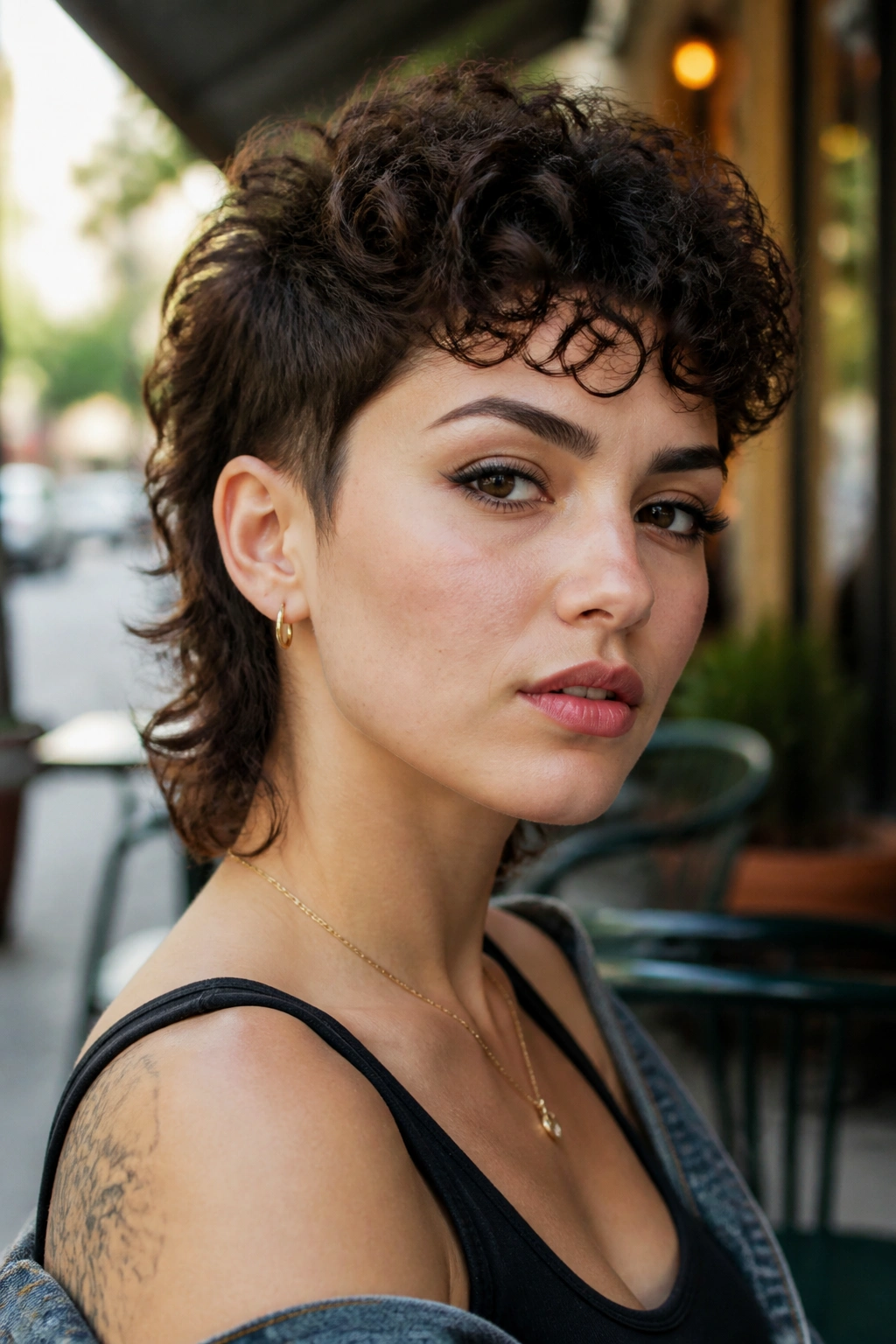
Why does this one work so well on curls? Because it stops pretending curls want the same architecture as straight hair. The top stays cropped and airy, while the back keeps a little tail of length, and that contrast gives the haircut its whole personality.
The curly pixie mullet is the braver, punchier mixie. On a 3B curl, it can look lively and almost elastic, like the hair is moving before you even turn your head. On looser textures, it feels a little rock-and-roll without tipping into costume territory.
The key is balance. If the top is too short, you lose the mixie effect and it starts reading like a standard pixie. If the back is too long, the cut loses its tension and turns into a half-grown mullet. You want that narrow middle ground where the top has lift and the back has just enough length to keep the silhouette interesting.
I’d keep styling simple here. A palmful of curl cream, a small amount of gel at the ends, and a diffuser on low heat are usually enough. Too much product makes the crown collapse, and that ruins the whole point.
3. The Shaggy Mixie with Feathered Layers
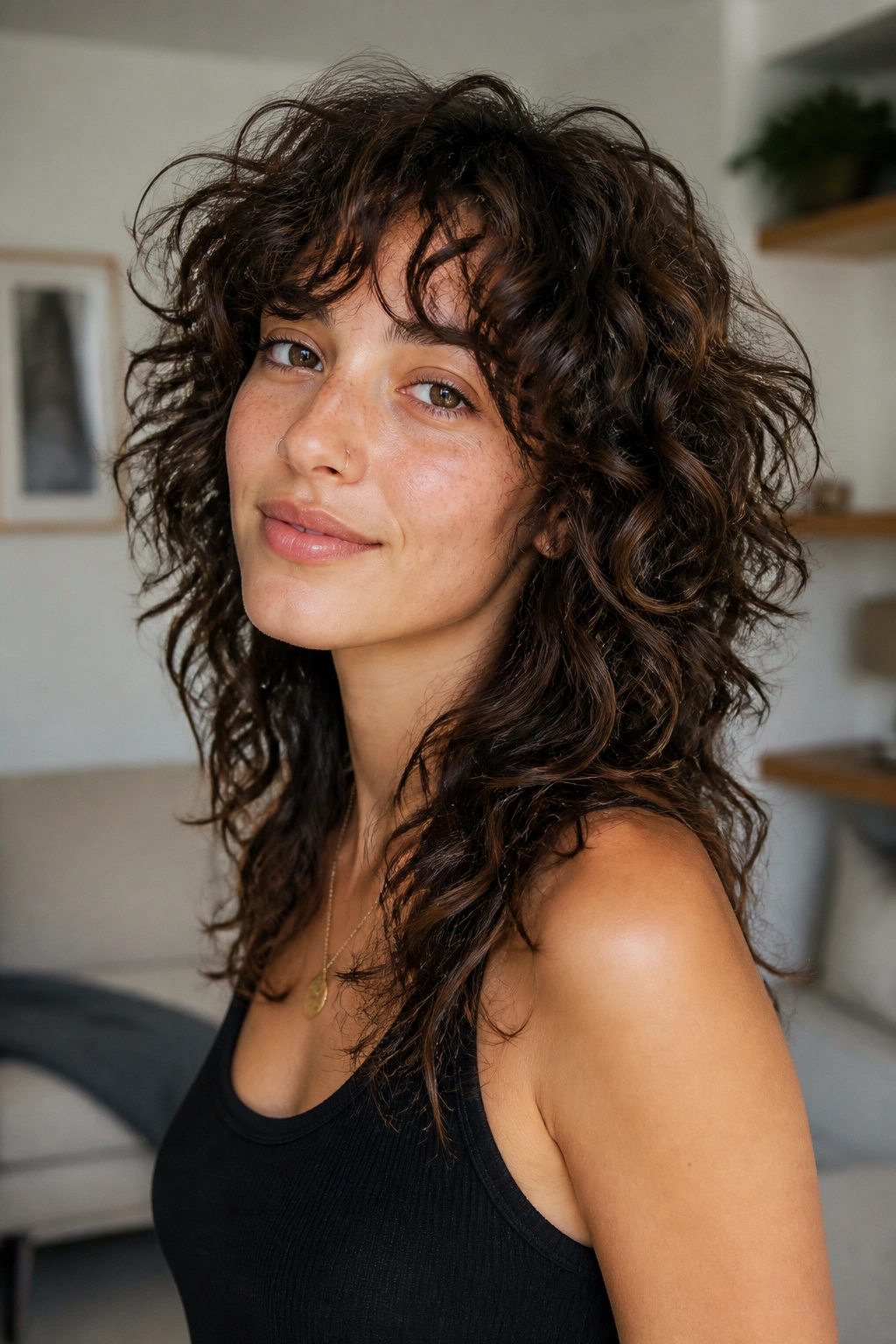
If your curls look best when they have a little mess in them, this is your lane. A shaggy mixie uses feathered layers to break up bulk, which gives the haircut movement from root to tip instead of just a shorter back and sides.
The Layer Map
The smart part of this cut is where the layers sit. You want the shortest bits around the crown and temples, then slightly longer pieces through the parietal ridge, and finally a softer drop in the back. That keeps the head shape from going flat on top or boxy on the sides.
It’s especially good for thick curls that love to expand. You know the feeling: the hair dries, the shape gets wider than you wanted, and suddenly you’re dealing with a helmet. Feathered layers take some of that weight out without making the cut look thin.
A stylist who understands curls will usually cut this shape dry or mostly dry. That sounds minor, but it isn’t. Wet curls lie. They stretch, they clump differently, and they fool people into cutting too much off the wrong spots.
Styling Notes
- Use a light mousse at the roots if you need lift.
- Scrunch in a medium-hold gel while the hair is damp.
- Diffuse until the outer layer feels set, then let the rest air-dry.
- Skip heavy oils near the crown; they flatten the airy top.
The shaggy mixie is not neat. That’s the charm. It looks like hair that knows where it wants to go.
4. The Tapered Mixie for Tight Coils
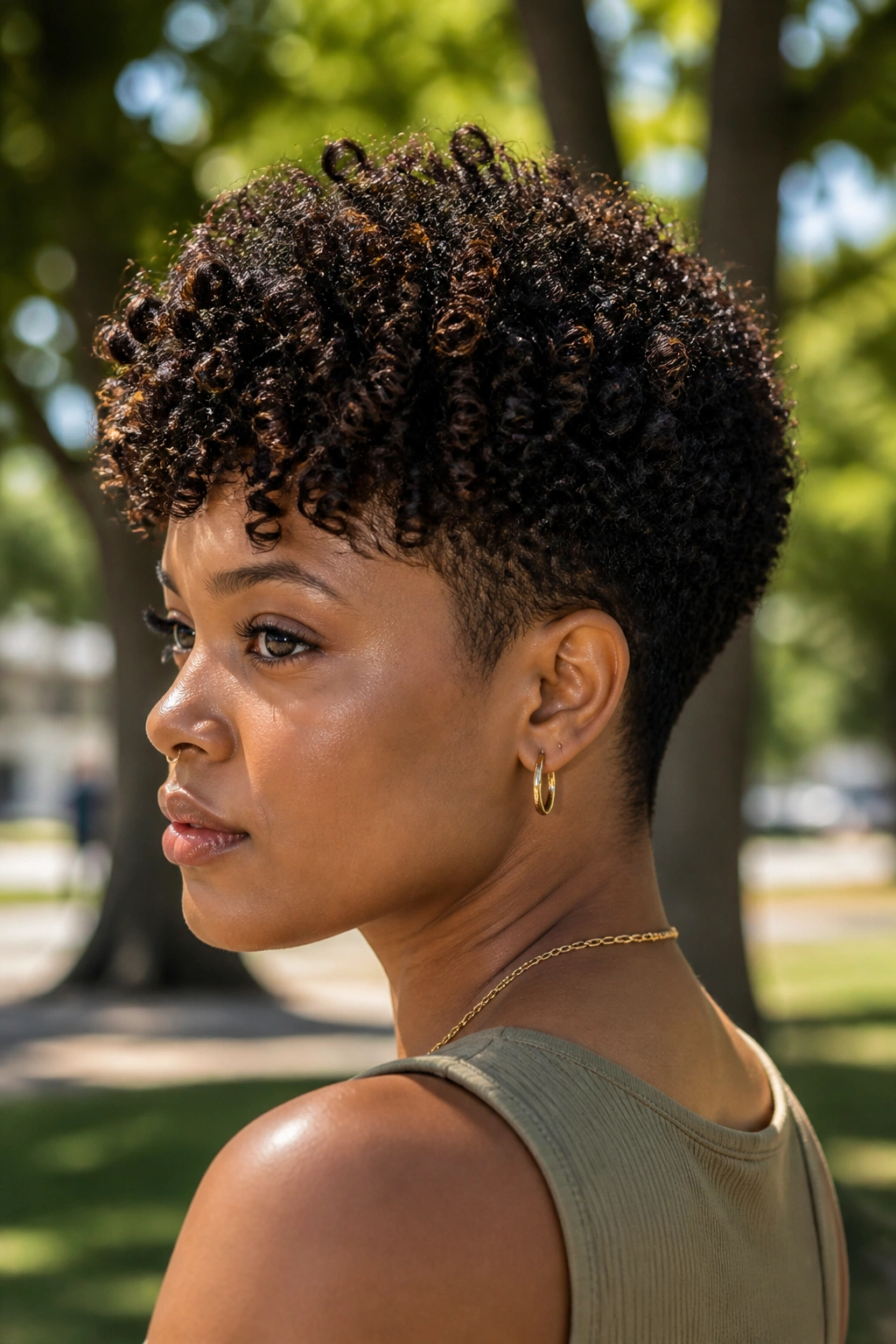
Short sides are not the enemy on coily hair. In fact, a tapered mixie can be one of the cleanest ways to wear a short cut when your curls or coils have a lot of density and a strong spring factor.
The trick is in the taper. You’re not shaving the head down to nothing and hoping for the best. You’re tapering the nape and sides so the top keeps visual weight, while the outline stays neat and intentional. On tighter coils, that creates a beautiful contrast between softness and shape.
This version also handles shrinkage well. A coil pattern can compress a surprising amount, so leaving a little extra length through the crown and top prevents the haircut from disappearing the second it dries. I’d rather see a mixie land slightly long than come up too short. That’s easier to live with.
The one thing I would not do is overthin the interior with aggressive thinning shears. Coily hair already has its own architecture. If you remove too much support, the cut can separate awkwardly and lose that rounded, plush look.
A tapered mixie works best when the hairline is clean, the nape is tidy, and the top still has enough length to form a real shape.
5. The Jaw-Skimming Mixie Bob

A jaw-skimming mixie bob is the cut for someone who wants short hair but does not want to give up the feeling of hair around the face. The front lands near the jaw, the back stays shorter and lighter, and the result sits between a bob and a mixie without feeling confused.
Where the Length Should Land
The most flattering version usually leaves the front pieces just below or right at the jawline, with the back sitting an inch or two shorter. That small difference matters. Too little contrast and it becomes a plain short bob. Too much and the cut starts looking disconnected.
This shape is especially kind to curls that need a bit of length to show their pattern. If the hair is cut too close to the face, some curl types lose their spring and read as fluffy instead of defined. Keeping that jaw-skimming length gives the curl room to form a curve.
It also helps if you like tucking hair behind one ear. The shape stays visible, and the asymmetry gives the cut a little life. I’ve always thought this was one of the more wearable versions of the mixie because it feels tidy without feeling stiff.
Ask for softly stacked layers in the back, not a blunt shelf. That keeps the nape from looking heavy and helps the haircut move when you turn your head.
6. The Side-Swept Bang Mixie
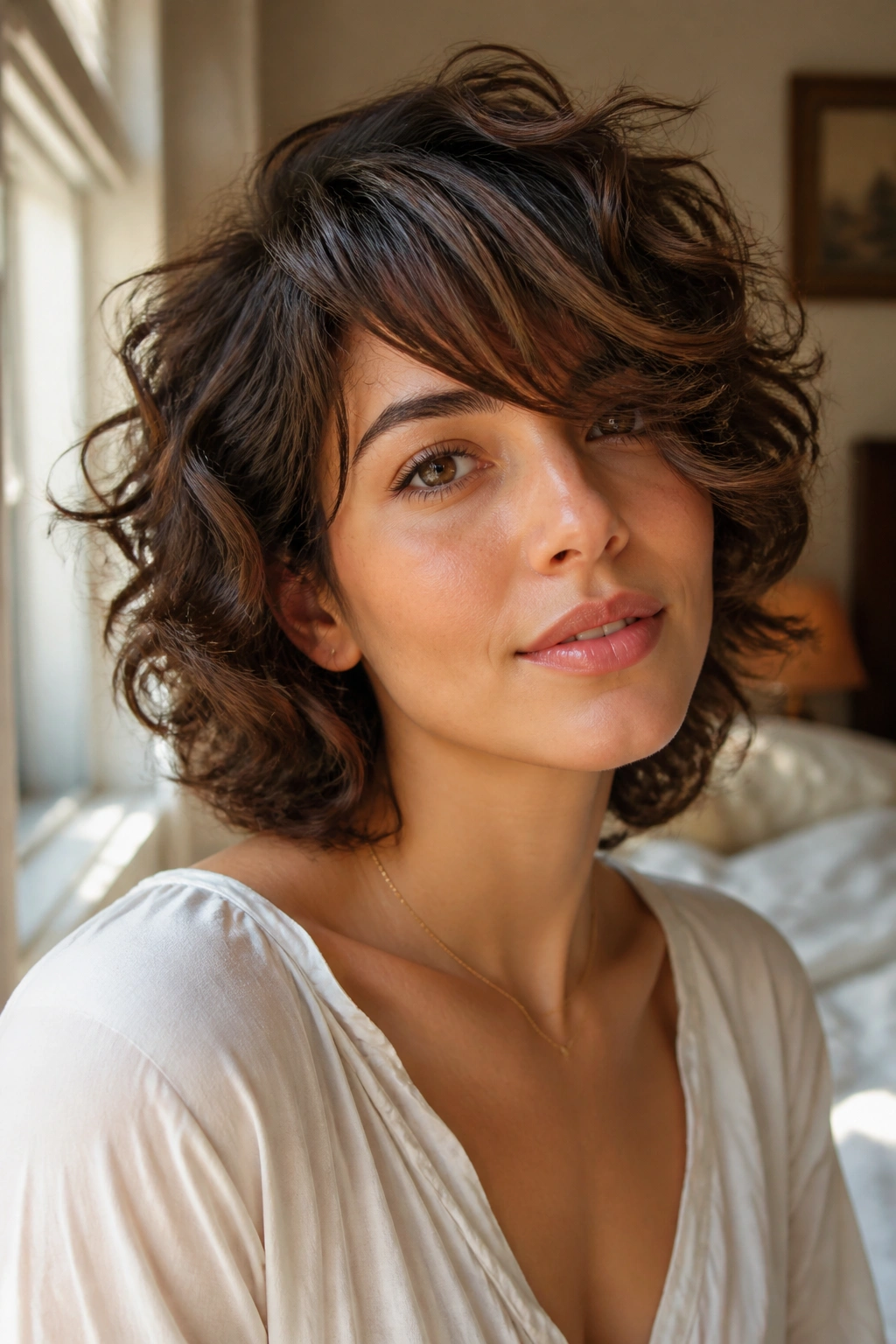
A side-swept bang changes the whole mood of a curly mixie. It softens the forehead, pulls attention toward the eyes, and gives the haircut a little sweep that straight-across fringe cannot match on curly texture.
Unlike a blunt bang, a side-swept version has room to bend and fall where it wants. That matters because curls are not obedient little ribbons. They shift, they bounce, they change direction depending on humidity and how long you spent diffusing them. A long sweep works with that behavior instead of fighting it.
I like this cut for people who want their mixie to feel a little more romantic and a little less sharp. The side bang can start around the arch of the eyebrow and curve toward the cheekbone, which gives you softness without turning the whole style into a shag.
The maintenance is easy enough, but there is one catch: the bang area needs regular shaping. If the front is left alone too long, it can split awkwardly and fall into your eyes at all the wrong moments. A tiny trim every few weeks keeps the line clean.
If you like a haircut that can be worn tucked, pinned, or fluffed forward, this is one of the easiest mixie directions to live with.
7. The Undercut Mixie for Dense Hair
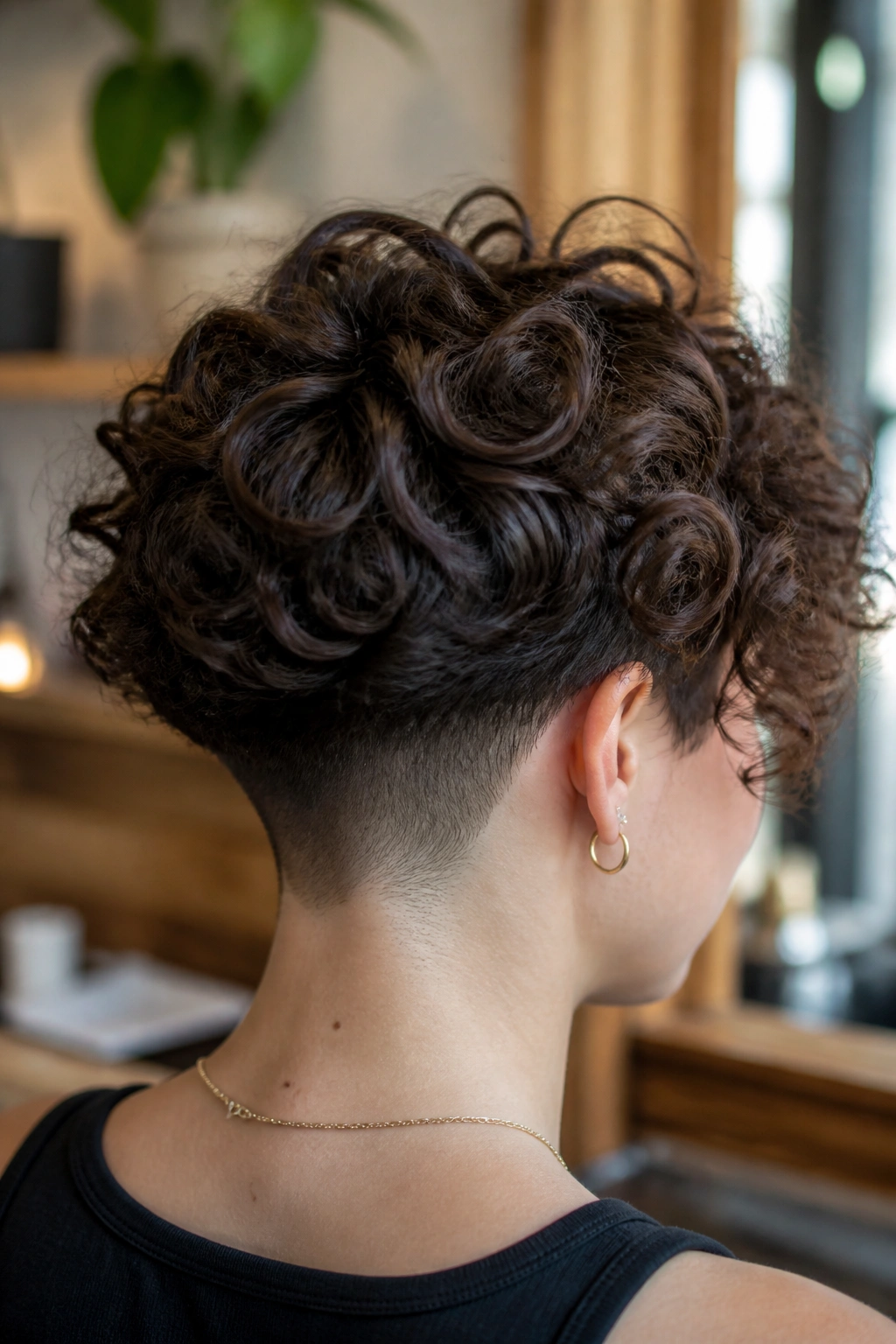
If your hair takes forever to dry, a hidden undercut can feel like a mercy. Not a dramatic, shaved-everywhere look. Just enough removal underneath to take the bulk out of the lower half of the head so the top curls can move.
This is the version I think more thick-haired people should try than they actually do. Dense curls can look gorgeous in a mixie, but only if the interior is relieved in the right places. When the underside is too heavy, the haircut stacks up at the nape and makes the neck feel crowded.
What to Request
- Ask for a low undercut at the nape, not a high one that shows too much skin.
- Keep the top long enough to cover the undercut when worn down.
- Leave extra length near the temples if you like softness around the face.
- Tell the stylist you want bulk removed, not a disconnected strip of short hair.
The undercut also helps the style dry faster, which is a practical win nobody talks about enough. Thick curly hair can hold water forever. Take out some of that hidden mass and the whole routine gets easier.
I would not use this cut if you like to sweep all your hair into mini updos every day. The undercut can be great, but it does narrow your styling options a bit. That tradeoff is worth it for a lot of people, though.
8. The Halo Mixie with Crown Volume
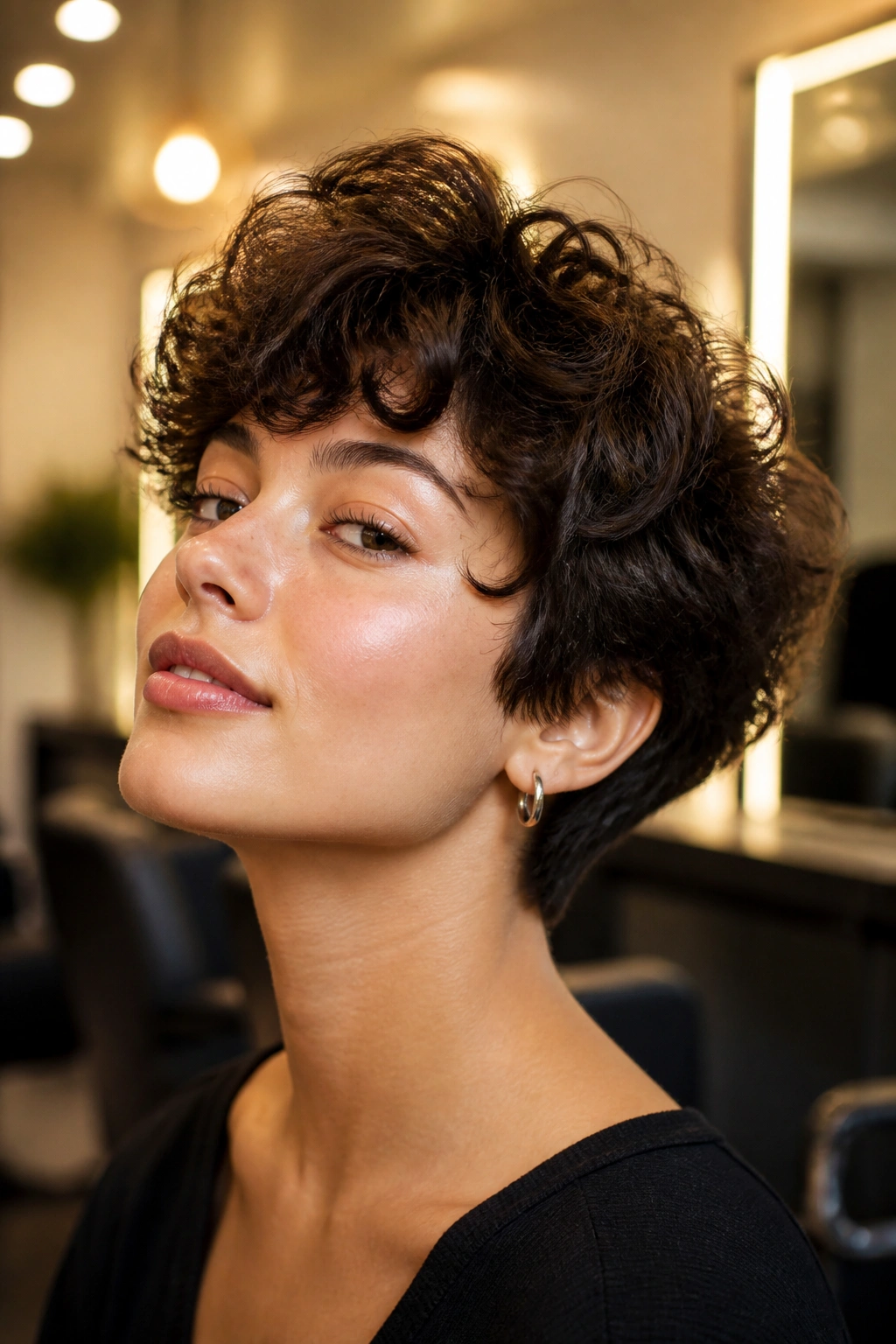
A good halo mixie makes the crown feel lifted, almost like the hair is sitting on a soft frame above the head. It sounds simple. It isn’t. You need the top to stay high enough to show shape, but not so high that the cut turns into a mushroom.
Three inches of lift at the crown can change everything. Seriously. On curly hair, that little bit of height makes the face look more open and the haircut look less compressed on the sides.
The halo version works especially well when the layers are cut to follow the curve of the head. That means the top sits a touch longer than the sides, and the back is tapered just enough to keep the silhouette round instead of boxy. It’s a very flattering cut if you like volume near the crown and a soft edge around the ears.
I also like this style for people who want a little retro energy without committing to a full throwback haircut. It has shape. It has lift. It doesn’t need a lot of fuss.
The styling trick is to dry with the head angled forward for the roots, then flip back and shape the curls by hand once they’re about 80 percent dry. That keeps the top from collapsing under its own weight.
9. The Asymmetrical Mixie
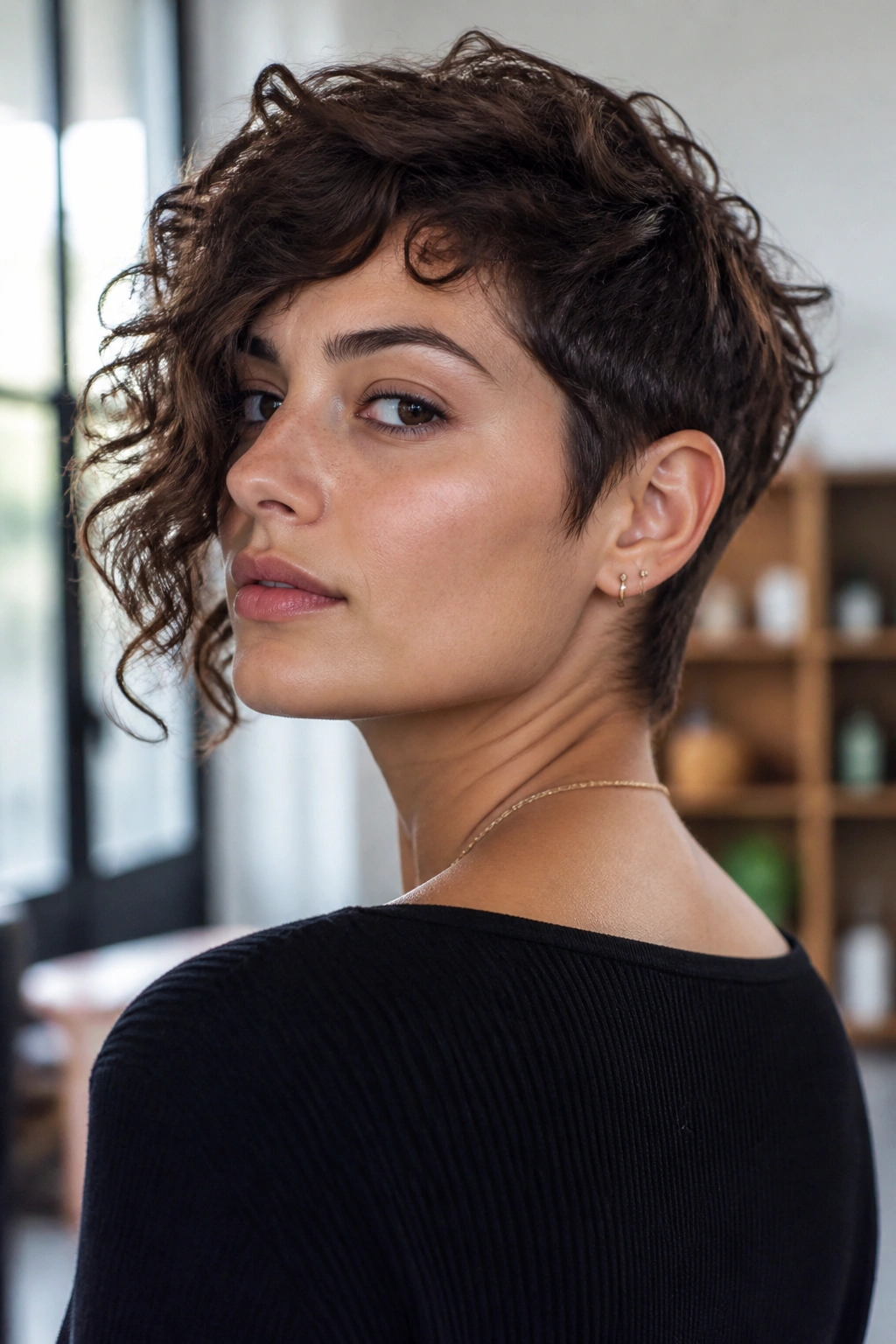
Some people want short curls, but they do not want sweet. An asymmetrical mixie answers that pretty directly. One side is kept a little longer, the other side a touch shorter, and the imbalance gives the haircut its edge.
I’ve always liked this one on curls that have strong personality to begin with. The asymmetry does not need to be dramatic to work. Even a half-inch to inch difference in length can create enough visual tension to make the cut feel deliberate.
The beauty of this shape is that it moves differently from every angle. Front view, it can look sleek and a little mysterious. Side view, the longer panel gives you a line that curves into the back. And when curls bounce apart, the contrast shows up even more.
Who Should Wear It
- People who like a haircut with a little attitude.
- Anyone whose curls tend to fall flat on both sides and need visual interest.
- Wearers who are fine with one side needing a bit more styling attention.
- People who already tuck hair behind one ear without thinking about it.
The one thing to watch is balance around the face. If one side is too short and the curls are tight, the difference can get lost after drying. A good stylist will check the dry shape and adjust until the asymmetry still reads when the hair lifts.
10. The Razor-Textured Mixie for Fine Waves
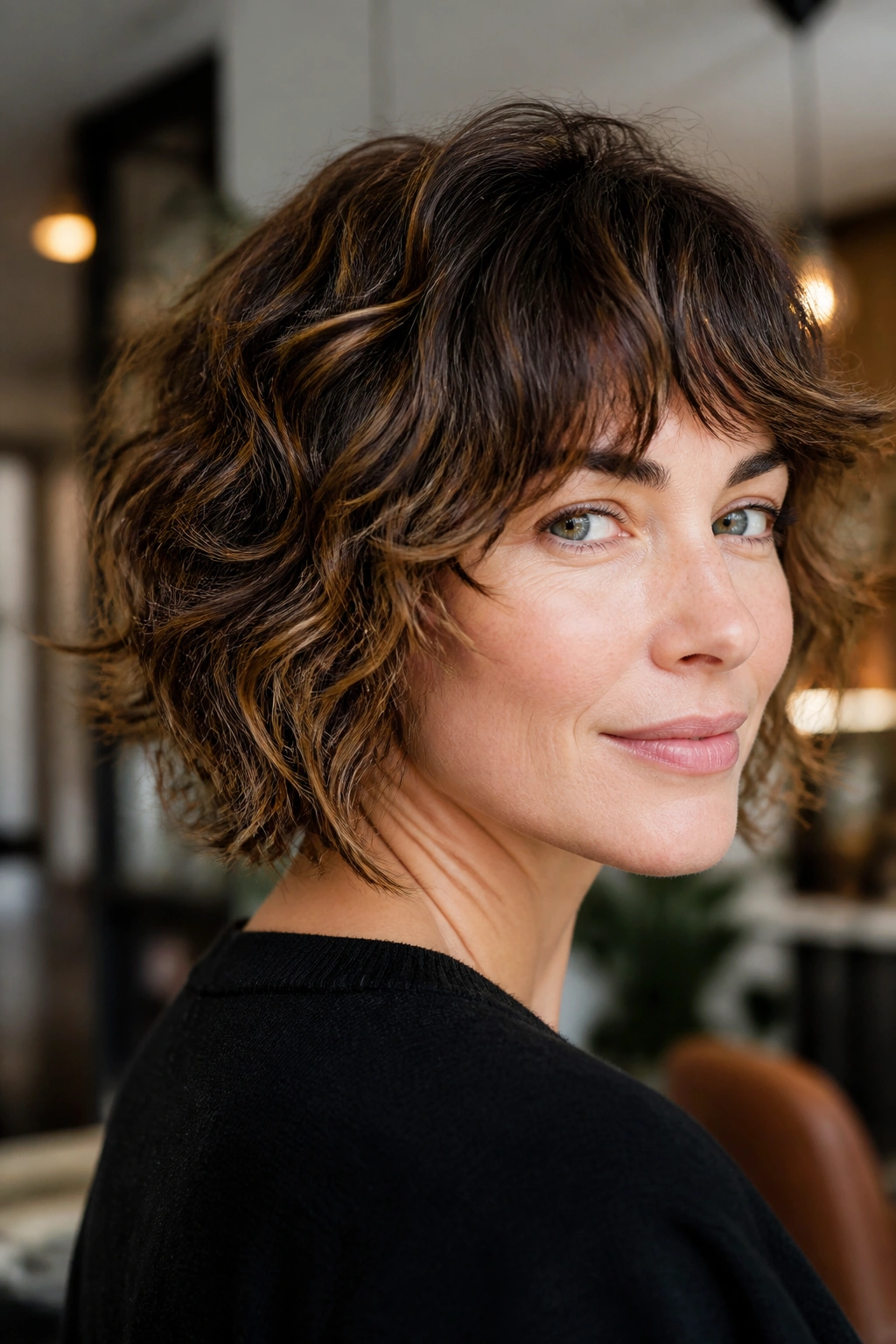
Fine waves can get swallowed by heavy layers, which is why a razor-textured mixie can be a smart move. Not a shredded mess. A controlled texture that lightens the ends just enough to keep the cut from collapsing.
Unlike a blunt cut, this version doesn’t rely on weight to create shape. It relies on movement. That makes it a good option for hair that looks flat the moment it gets too long, especially if the roots are soft and the ends are prone to hanging limp.
The razor work should be gentle. Too much slicing and the ends can turn wispy in a cheap way, which is not what you want. The goal is airiness around the perimeter, not fraying. On finer waves, I’d rather see a carefully textured nape and a slightly piecey top than a lot of overworked layers.
This cut also plays well with a matte styling paste or a lightweight foam. You want a little grit, not shine-heavy cream that drags the hair down. A dime-sized amount near the roots can make a big difference, especially if you blow-dry with a diffuser nozzle for a few minutes before letting the rest dry naturally.
If your hair tends to disappear in humid weather, this is one of the more useful mixie directions.
11. The Longer-Nape Mixie
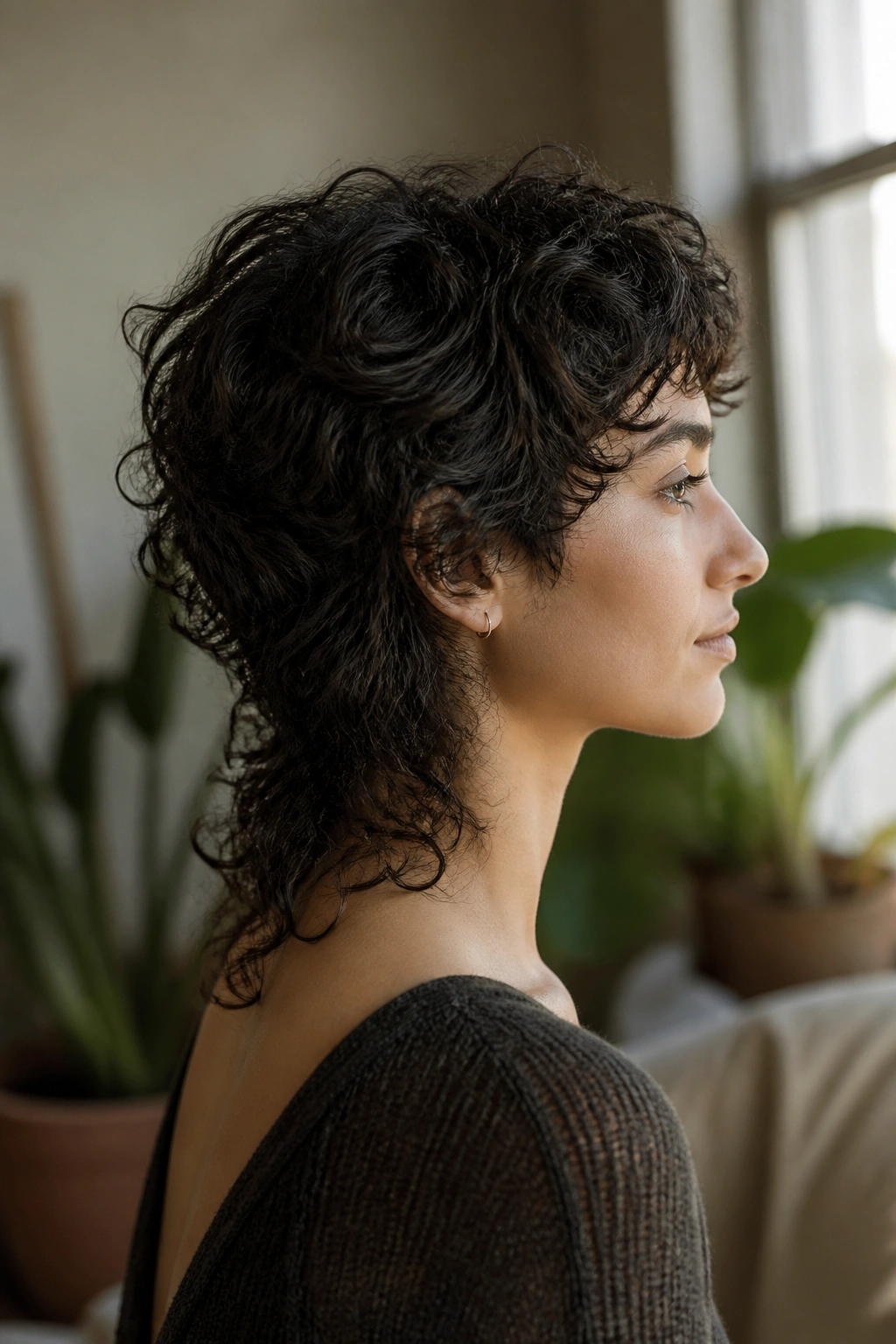
You do not need to go ultrashort to get the mixie effect. A longer-nape version keeps more length in the back, which makes the cut easier to wear for anyone who feels nervous about losing too much hair at once.
The longer nape gives the haircut a softer finish. Instead of a sharp break between short top and longer back, the shape flows more gradually. That can be a relief if you want the mullet influence without the full contrast.
This version is also friendly to people whose curls expand more in the back than on the sides. Leaving extra length at the nape helps the shape stay balanced once the hair dries and the curls spring up. If you cut the back too short in that situation, the outline can bunch up and sit strangely at the collar.
I’d ask for a nape that grazes the upper neck rather than clearing it completely. That small difference keeps the cut feminine, soft, or just generally less abrupt—whatever word fits your style.
The only drawback is that it can lose some edge if the top is too long. Keep the crown shorter and lighter than the back, or the haircut stops reading as a mixie and starts looking like a layered crop.
12. The Micro-Fringe Mixie

Can curly hair pull off micro bangs? Yes, but only if the fringe is cut with shrinkage in mind. Curly micro bangs sit higher once dry, and that little fact changes everything.
The best version of this cut keeps the fringe short but not skimpy. The bangs should be dense enough to stay visible, yet soft enough to break apart a little when the curls settle. If the fringe is cut too fine, it can vanish into the rest of the hair and look accidental instead of intentional.
The Shrinkage Rule
A curl that looks eyebrow-length when wet may spring halfway up the forehead when dry. That is why a stylist who knows curly hair will usually leave the micro fringe slightly longer than it seems necessary. The goal is to land at a useful dry length, not win a battle with the mirror while the hair is still damp.
This mixie works best when the rest of the cut stays restrained. If the top is too fluffy, the fringe loses its point. A shorter crown with a controlled nape makes the micro bang feel like a design choice, not a surprise.
I like this cut on people who are comfortable with a bit of character near the face. It is not subtle. That is the point. It can be charming, edgy, or a little arty, depending on how softly the sides are finished.
13. The Face-Framing Mixie

Some curls need structure around the face more than they need drama at the back. A face-framing mixie leans into that, leaving the front pieces longer so the cheekbones, jaw, and chin get a soft curtain of curl.
This is one of the easiest ways to make a short curly cut feel flattering. The front pieces keep the eye moving vertically, which is helpful if your curls create width at the sides. A few longer front layers can break that width up without erasing the mixie shape.
The line I like here is a little longer than people expect. Think cheekbone to chin, depending on how much shrinkage you have. If the front pieces are cut too short, the framing disappears when the curls bounce up, and then the whole point is lost.
The back can stay compact and lifted, which keeps the haircut from looking heavy. That contrast—soft front, lighter back—is what makes the style feel finished.
If you wear glasses, this cut can be especially good. The curls sit near the frames without crowding them, and the front pieces can be shaped to avoid that awkward side puff that happens when bangs and glasses argue with each other. Annoying. Easy to fix, though.
14. The Low-Maintenance Grow-Out Mixie
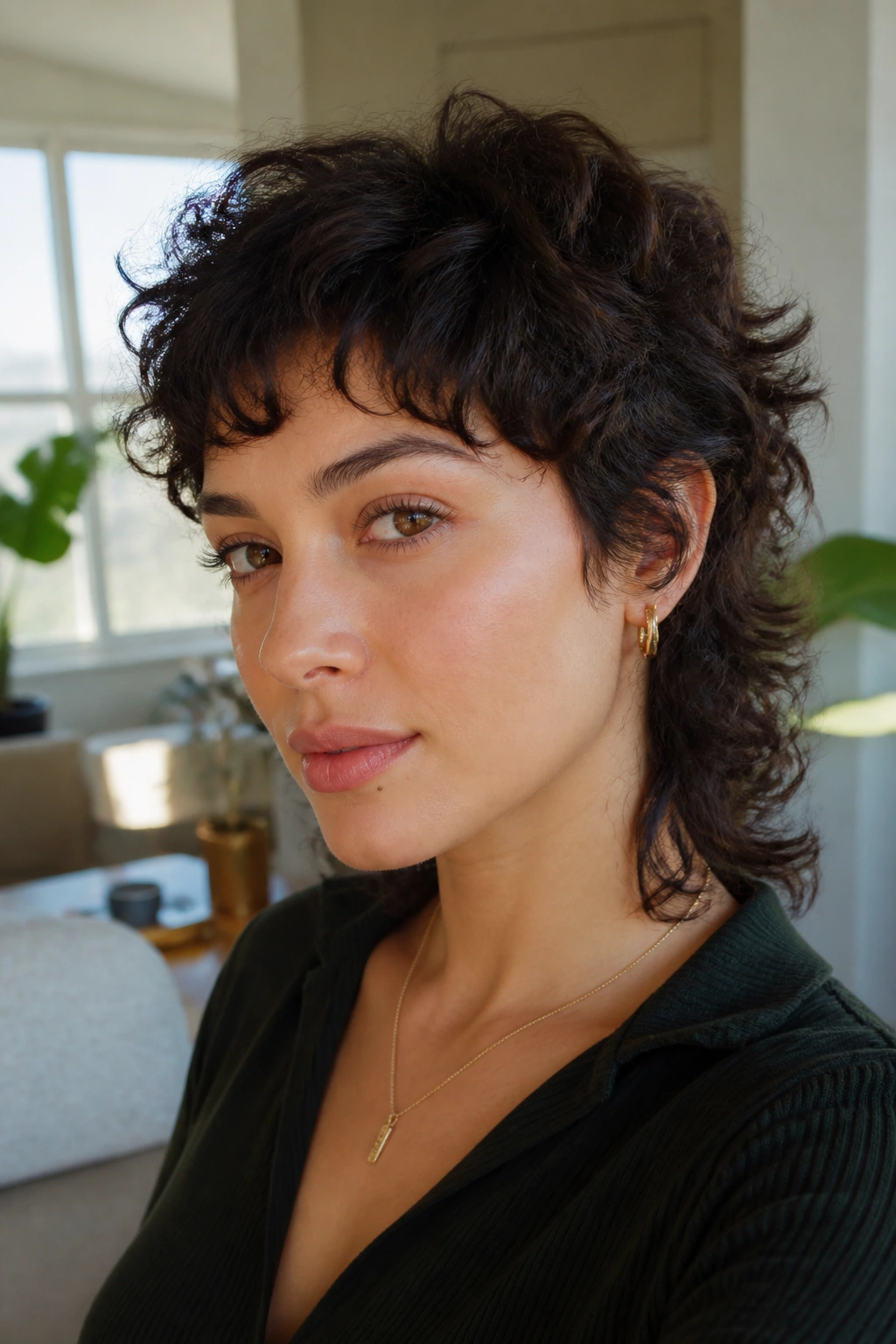
The best mixie for a lot of people is the one that still looks intentional six weeks later. That’s the low-maintenance grow-out version, and it’s more thoughtful than it sounds.
The trick is softer transitions. Instead of an abrupt disconnect between the short crown and the longer back, the layers blend gradually so the haircut can stretch a little without losing shape. That matters if you hate constant trims or if your curls grow in unevenly.
I’d ask for a shape that keeps the shortest point around the temples and crown, then lets the back stay a bit longer than usual. Not shaggy, just relaxed. The difference between “grown out” and “grown into” is often only a quarter inch here and there.
This cut is also kinder to busy routines. Air-dry it with a curl cream, scrunch once, and leave it alone. If a few pieces flip out at odd angles, they tend to blend into the style instead of making the whole cut look unfinished.
What to Tell Your Stylist
- You want a shape that can grow for 6 to 8 weeks without losing the outline.
- Keep the sides soft, not heavily tapered.
- Leave enough length in the back for the curls to settle.
- Avoid a hard line around the nape unless you love frequent trims.
This is the mixie I’d point people toward when they want a haircut with personality but not a high-maintenance calendar.
15. The High-Contrast Mixie for Maximum Shape
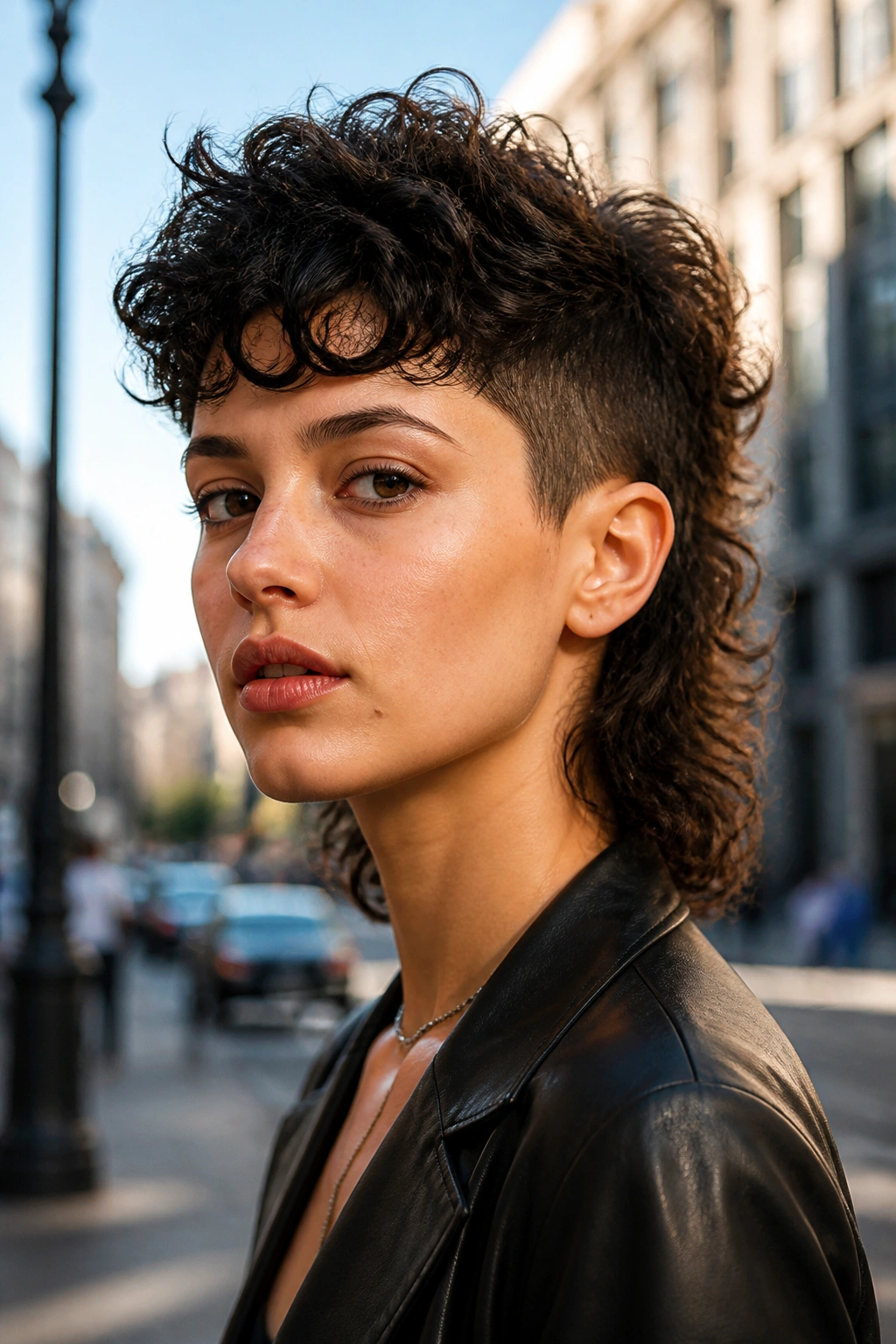
A high-contrast mixie is the most sculpted version in the bunch. Shorter sides, a lifted top, and a longer back create a clear silhouette that reads from across the room, which is exactly why some people love it and others should probably pass.
The hair at the crown is kept airy, usually with layers that encourage height, while the sides are trimmed close enough to remove bulk. The back stays longer so the haircut keeps its mullet edge. On curly hair, that contrast looks even stronger because the curls separate and expand, giving the shape more drama without needing much product.
I like this cut on people who want the haircut itself to be the statement. Not the color. Not the styling. The shape. If you have dense curls or waves and you want something that feels deliberate, this is a good place to land.
One thing to be blunt about: this cut needs confidence, but it also needs restraint. If the top gets overworked with cream or heavy oil, the lift disappears. If the back is cut too short, the whole thing loses its line. And if the sides are left too full, the contrast stops reading at all.
Ask for a clearly short side profile, a controlled crown, and a back that stays long enough to show movement when you turn your head. That combination is the difference between a mixie and a haircut that only thinks it’s a mixie.
If you’re choosing among all fifteen versions, I’d start with your curl density and how much shape you want to see in profile. Loose curls usually do well with softer blends, while thicker or tighter textures often look strongest with a cleaner taper or more contrast. The haircut should feel like it was built for your hair’s habits, not forced into someone else’s photo.
And that’s the part people miss. A curly mixie does not need to look wild to feel interesting. Sometimes the smartest version is the one that still makes sense after the curls dry, the wind hits them, and you’ve had a long day with no mirror in sight.
