



Bad bangs are expensive.
One snip too high, and you spend weeks pinning hair back while it grows out. One snip too blunt, and the whole haircut can feel heavy, flat, or fussy in the mirror.
The bangs ideas that frame your face well do one job fast: they change where the eye lands. A little length at the temples can soften a strong jaw. A shorter center can open the forehead. A soft diagonal can make the whole haircut feel lighter without stealing length from the rest of the cut.
What matters most is not whether bangs are “in” or “out.” It’s whether the fringe matches your hair density, your natural part, and how much work you’re willing to do with a dryer in the morning. A fringe that looks airy on a salon chair can puff up if your hair grows in a stubborn cowlick. A blunt line can look sleek on straight hair and absolutely unforgiving on a texture that bends every which way.
The cuts below cover the whole range, from barely-there to bold. Some are forgiving. Some are a commitment. All of them can frame the face in a way that feels deliberate, not accidental.
1. Curtain Bangs That Split at the Cheekbones
Curtain bangs are the safest place to begin, and I mean that in the best way. The center opens like a curtain, the sides taper longer, and the shape falls away from the middle of the face instead of boxing it in.
They work because they give you movement without a hard edge. Keep the shortest point around eyebrow level, then let the outer pieces graze the top of the cheekbone or even the jaw if you want more softness. That little graduation is what makes them flattering on so many face shapes.
Why They Work
- The center creates lift without hiding your forehead.
- The longer sides soften the cheek area and the jaw.
- They grow out better than a straight-across fringe, which is a lifesaver if you hate strict upkeep.
Pro tip: Ask for the front pieces to be cut dry or nearly dry if your hair has any wave. Wet hair stretches, and curtain bangs are one of those cuts that can end up two inches shorter than you expected.
A 1.25-inch or 1.5-inch round brush is usually enough to style them. Roll the hair away from the face, let it cool for a few seconds, then separate the pieces with your fingers. Keep the finish loose. If they look too polished, they stop reading as curtain bangs and start looking like a helmet flip.
2. Bottleneck Bangs With a Narrow Center
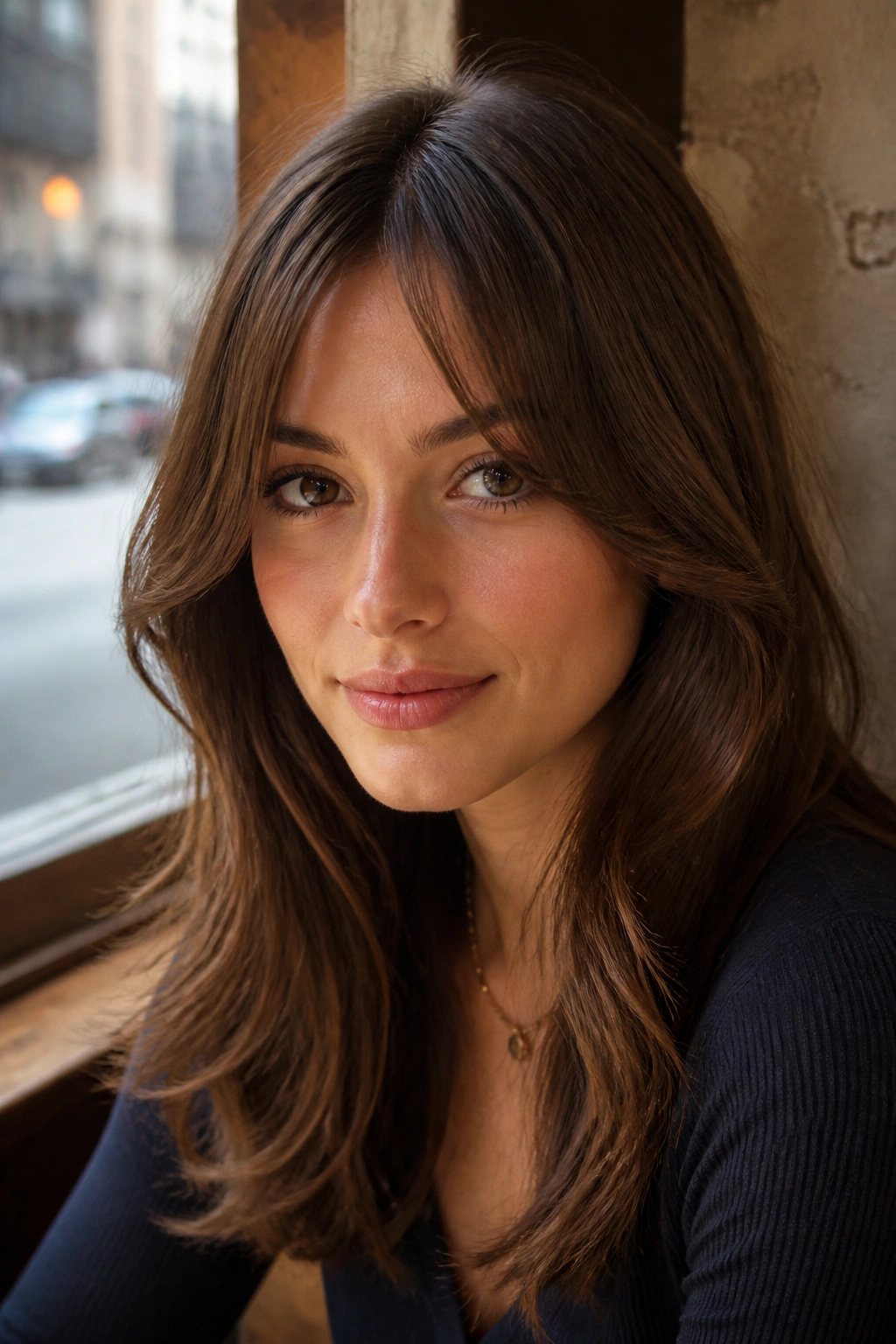
Why do bottleneck bangs look so good on so many people? Because they start narrow in the center and flare out around the eyes, which gives the forehead a little room before the shape widens.
That middle section usually sits a touch shorter than curtain bangs, then the sides expand into a soft frame that meets the cheek area. It’s a smart cut for anyone who wants fringe but not a heavy wall of hair. The shape feels neat near the brows and softer as it moves outward.
The trick is in the balance. Too much weight in the center and the style loses its lifted look. Too much thinning on the ends and it gets stringy fast. A good stylist will use point cutting, then leave enough density to make the shape read from across the room.
This is one of the best bangs ideas that frame your face if you like structure but not severity. It flatters straight, wavy, and even slightly thick hair, as long as the front is styled with a bend instead of a crease. A small round brush and a quick pass of cool air at the end keep the shape from collapsing.
3. Side-Swept Bangs With a Clean Diagonal
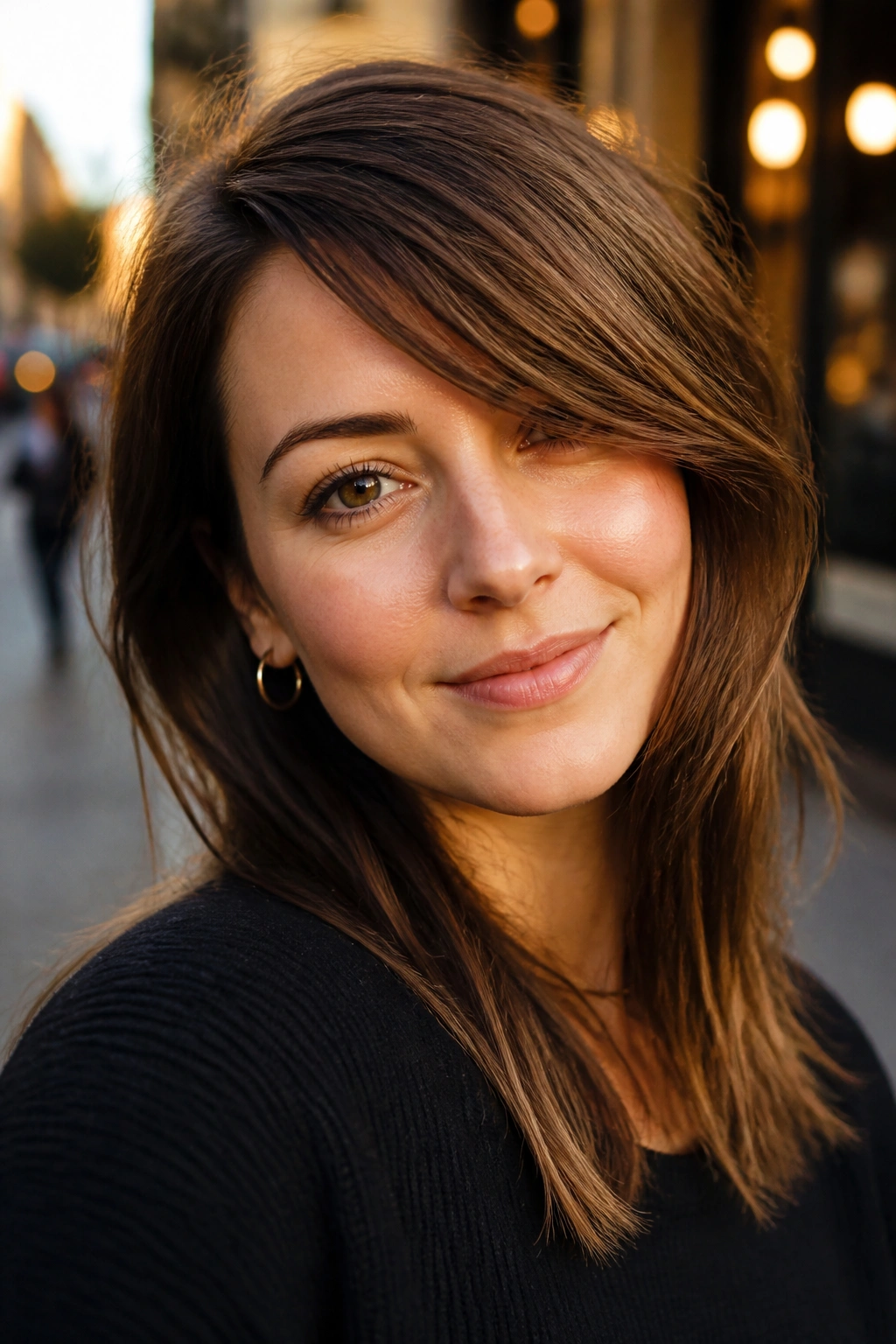
If you ever grew out a fringe and realized the side sweep looked better than the original cut, you already understand the appeal here.
Side-swept bangs create a diagonal line from the part toward the cheekbone, which gives the face a little motion and makes the forehead feel less square. They also work with a deep side part, so they’re a good fit if your hair naturally falls in that direction anyway. Fighting your part is a waste of time.
The cleanest version starts near the outer corner of one brow and ends somewhere around the top of the cheek or the temple. That range matters. Shorter than that and the sweep can look choppy. Longer than that and it starts blending into layers instead of reading as bangs.
It’s a good cut for people with a stubborn cowlick, because the diagonal gives the front hair a job. Set it with a touch of mousse at the roots, blow-dry it across the forehead, then clip it in place for a minute while it cools. That tiny cooling step makes more difference than people think.
4. Wispy Bangs That Barely Cover the Forehead

Wispy bangs are the easiest way to test the waters without making a dramatic commitment. They leave little gaps, so your forehead still shows through, and that keeps the cut from feeling heavy.
They’re especially good on fine hair because they don’t ask for much density. You want the stylist to use light point cutting, not a blunt snip across the whole fringe. If the ends are too thick, the softness disappears and the whole thing starts looking sparse in a bad way.
These bangs can sit just above the brows or brush the tops of them. Either way, the trick is restraint. A pea-sized bit of styling cream is usually enough; more than that and the strands clump into tiny ropes that look greasy by lunchtime.
I like wispy bangs on someone who wants a little face framing but still wants to tuck them aside on busy mornings. They’re not dramatic. That’s the charm. They make the haircut feel finished without demanding a full styling routine.
5. Blunt Bangs With a Sharp Straight Edge
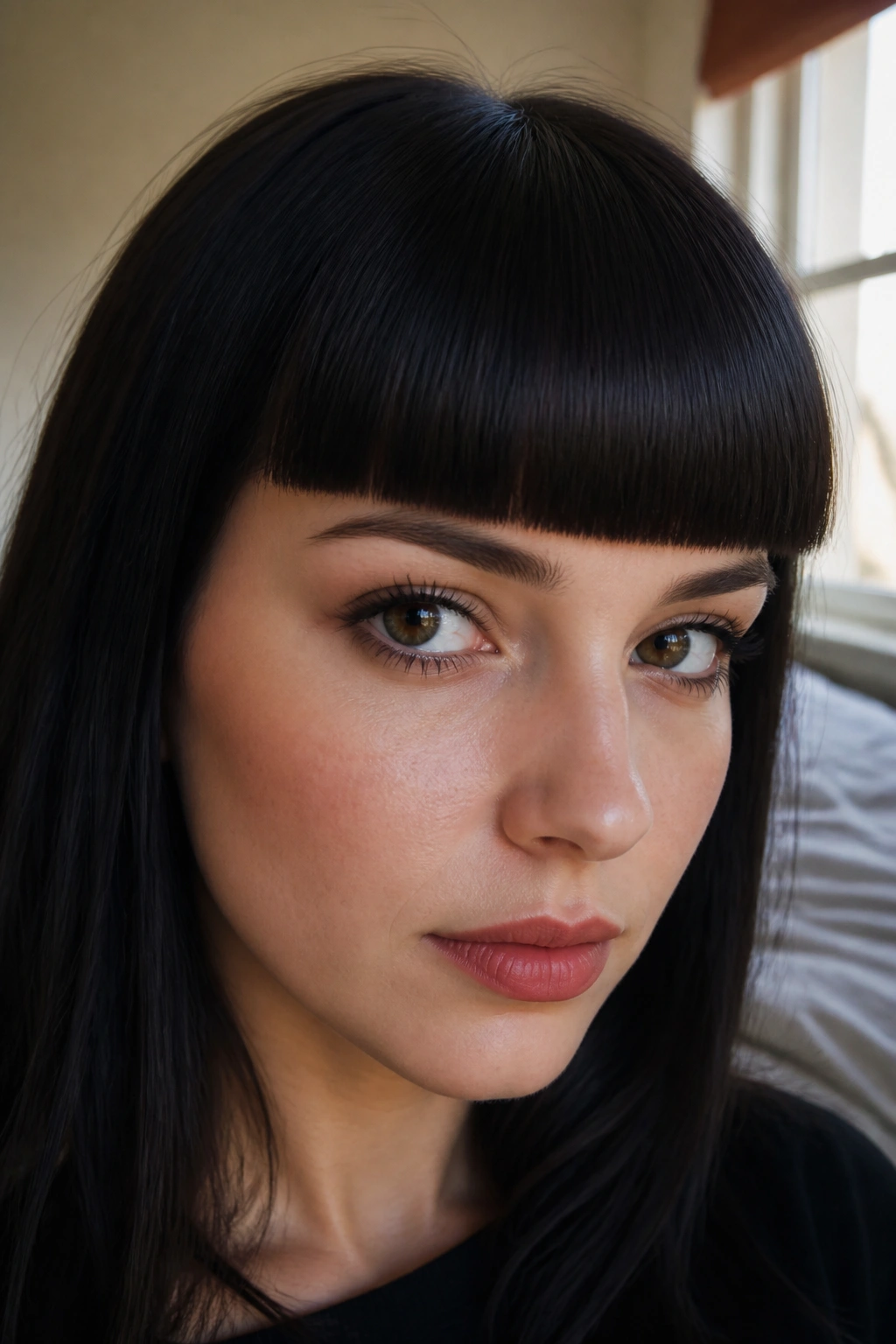
Blunt bangs do not whisper.
They make a clean line across the forehead, and that line can sharpen the whole haircut in a way softer fringe never will. If your hair is straight, dense, and fairly cooperative, blunt bangs can look sleek and expensive without much fuss.
The key is precision. The bottom edge should land right at the brow or just grazing the lashes, depending on how much of the eye you want to show. Any shorter and the look turns severe fast. Any longer and the shape loses its punch.
This cut is best when the rest of the hair supports it. A blunt fringe with a blunt bob feels crisp. A blunt fringe with long layers can still work, but the contrast is stronger and the styling has to be cleaner. If the ends fray out or flip in odd directions, the whole thing reads messy instead of intentional.
Maintenance matters here. Plan on trims more often than you’d like. If you hate regular salon visits, this is not your easiest option. But if you love a neat line and a little attitude, blunt bangs have real presence.
6. Micro Bangs Above the Brow Line

Micro bangs are not trying to be subtle.
They sit high on the forehead, usually about half an inch to an inch above the brow line, and that shorter length does a very specific thing: it puts the eyes and brows front and center. The face feels more open, not less, because the fringe stops before it crowds the features.
This cut works best when the hairline is fairly tidy and the texture is straight to slightly wavy. Cowlicks can turn micro bangs into a small daily argument. So can a very round growth pattern at the front. If your hair pushes up hard at the center, you’ll spend too much time fixing it.
Micro bangs also need a good reason to exist. They look strongest with a cropped cut, a strong brow, or a face shape that can handle a more graphic line. They’re a little punk, a little vintage, and a little unforgiving if you do not actually like them.
A lot of people want this look because it feels bold. Fine. But be honest with yourself before the scissors come out. There’s no hiding a micro fringe under a barrette.
7. Rounded Bangs That Follow the Brow Curve
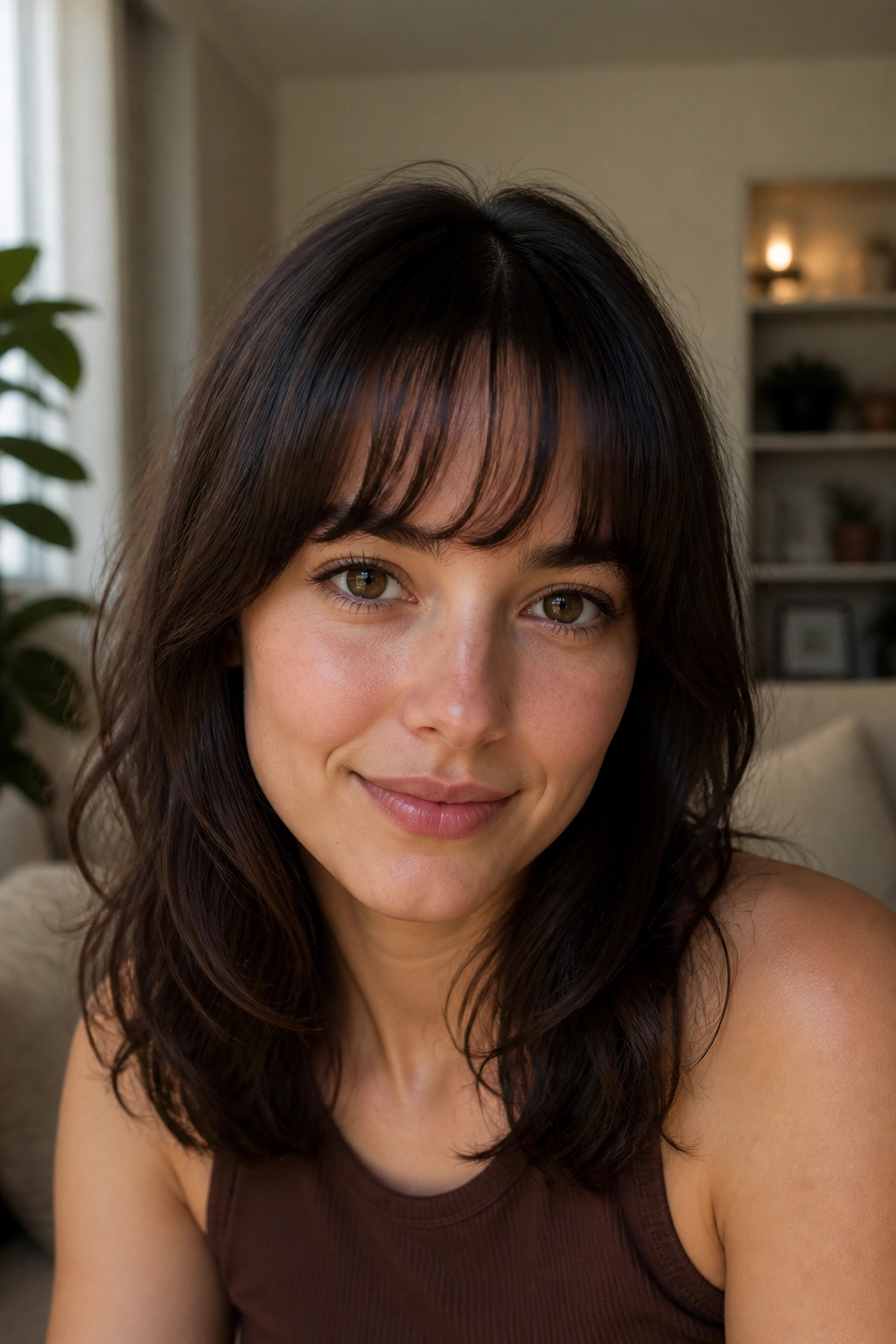
Rounded bangs soften the forehead the way a curved frame softens a hard wall. The shape starts a touch shorter in the center and arcs down gently toward the temples, almost like a quiet smile across the face.
That curve matters more than people realize. Straight bangs draw a hard line; rounded bangs bend the eye around the face instead. They’re especially nice if your features are angular or your forehead feels wider than you want it to.
The best version has enough weight to show the curve, but not so much that it turns square at the edges. A medium round brush works well for styling. Blow-dry the center first, then roll the sides under just enough to keep the arc soft. Let the hair cool on the brush for a few seconds before letting go.
This cut can go wrong if the center gets cut too short. Then the arc becomes abrupt and you lose the softness that made the style appealing in the first place. Keep the curve gentle, and the whole thing reads polished without feeling stiff.
8. Feathered Bangs With Soft, Broken Ends

Feathered bangs are built by removing weight at the ends, not by stripping the fringe thin until it vanishes. That difference matters. You want movement, not scraps.
Where the Softness Comes From
A stylist usually creates this look with slide cutting or careful point cutting, which breaks up the edge and lets the strands sit more lightly against the forehead. The result is a fringe that moves when you turn your head instead of sitting in one flat sheet.
How to Wear Them
- Best on medium to thick hair that can support a little shape.
- Lovely with layered cuts, shoulder-length waves, or a soft shag.
- Easy to style with a round brush or a quick bend from a flat iron.
Feathered bangs are one of those cuts that look especially good when the hair has a little body. If your hair is pin-straight and fine, they can disappear. If your hair is dense, they can be a relief because the edge doesn’t feel heavy.
A tiny bit of texture cream on the ends helps keep the feathered finish visible. Use too much and the pieces clump. Use too little and the shape can puff. That middle ground is the whole game.
9. Choppy Bangs With Broken Texture

Choppy bangs are for people who like a fringe with some grit in it. The ends are uneven on purpose, so the line feels less precious and more lived-in.
This works especially well with a textured bob, a lob, or anything shag-adjacent. The broken edge keeps the bangs from looking like they were cut with a ruler. If your hair has a natural bend or a slight wave, even better. The texture becomes part of the style instead of something you need to tame.
The cut itself should be built with point cutting into the fringe, not one blunt pass across the forehead. That gives the pieces different lengths and stops them from sitting in a single heavy block. It also makes the bangs easier to grow out, which I always appreciate.
One pea-sized dab of matte paste can define the ends without making them sticky. Rub it between your fingers first, then pinch 2 or 3 pieces into place. Do not smear it everywhere. That’s how choppy bangs turn into greasy bangs, and that is a miserable trade.
10. Shag Bangs That Melt Into the Layers
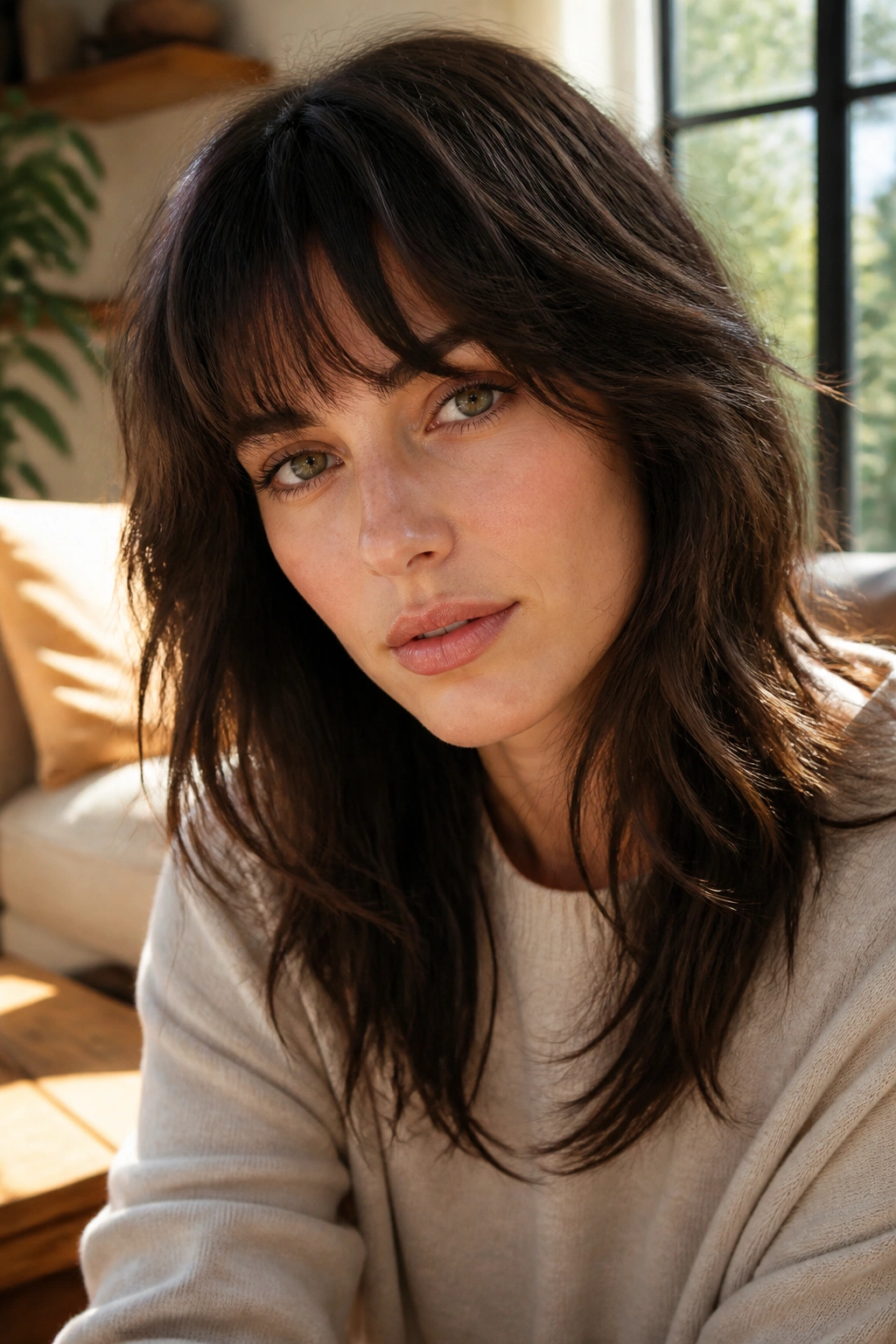
Shag bangs are not really separate from the haircut. That’s the point.
Unlike a stand-alone fringe, shag bangs blend into the layers at the temples and cheekbones, so the front of the haircut feels one piece instead of a haircut plus an add-on. The whole shape moves. It has a little mess, but the good kind.
This is one of the best bangs ideas that frame your face if you already love texture. Wavy hair, dense hair, and hair that air-dries with a natural bend all play nicely here. The cut gives the front layers room to fall around the face without insisting on a perfect finish.
A shag fringe usually needs less styling than a precise bang, which is why people keep coming back to it. A little mousse at the roots, a quick scrunch, and a diffuser on low heat can be enough. If you want every strand smooth and identical, this is the wrong cut. If you want movement that looks easy, it’s a very good one.
11. Curly Bangs Cut to Follow the Pattern
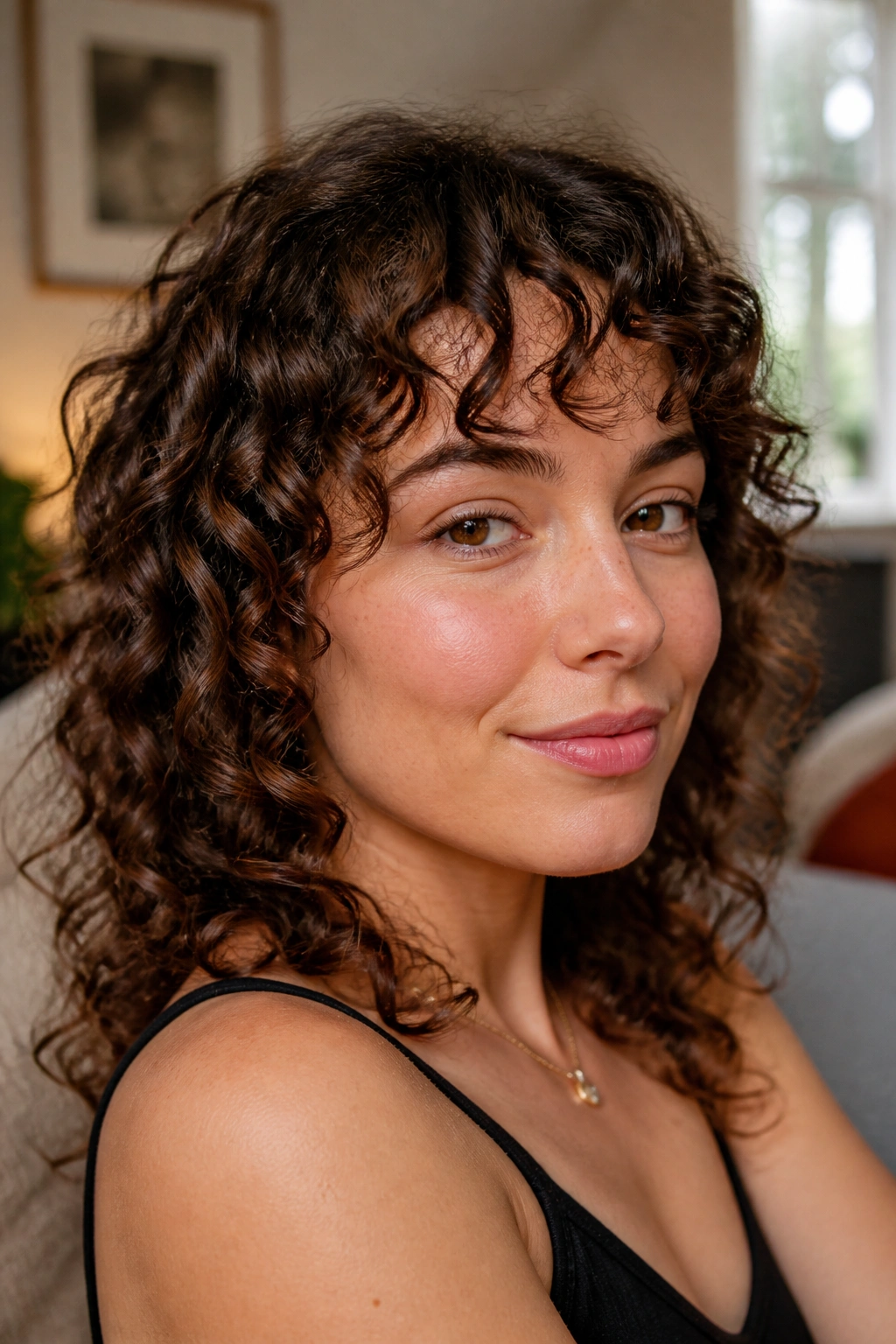
Can curly hair wear bangs without turning into a puff? Yes, if the cut respects the curl pattern instead of fighting it.
Cut Them Dry
Curly bangs should be trimmed dry, or almost dry, while the curl sits in its real shape. Stretching curls out with water and cutting them as if they were straight is how people end up with bangs that shrink up above the brows. That mistake is common, and it’s annoying to grow out.
Let the Curl Decide the Length
- Leave more length than you think you need; curls shrink.
- Keep the center a touch longer so the front doesn’t spring too high.
- Let the side curls blend into the rest of the haircut instead of forcing a hard line.
Curly bangs look best when they’re allowed to be a little different from one day to the next. One curl may sit at brow level, another may bounce a bit higher. That’s normal. Trying to make them mirror each other often makes the whole front look stiff.
Use a light curl cream, not a heavy butter, and diffuse on low heat until about 70 percent dry. Then stop touching them. Too much handling separates the pattern in a bad way and makes the fringe frizz at the hairline.
12. See-Through Bangs With Airy Density

If a full fringe feels like too much hair on your forehead, see-through bangs are the softer move. They’re airy, lightly separated, and built so a bit of forehead still shows through the strands.
This style usually works best on fine to medium hair because the lower density is part of the point. You do not need a thick wall of fringe to frame the face. A little spacing between strands can make the eyes stand out more than a dense cut ever will.
The shape usually sits near the brows, sometimes a touch above, with the ends broken up enough that the light can pass through. A small round brush and a quick lift at the roots keep them from lying flat. If they start looking stringy, the cut is probably too sparse or too long.
I like this option for someone who wants bangs but hates feeling covered up. It gives a soft front frame without taking over the whole face. That restraint is what makes it useful.
13. Long Face-Framing Bangs That Fall Past the Cheekbones

Long face-framing bangs are the quiet workhorse of this list. They start lower on the forehead, often around the cheekbone or even the jaw, and they give shape without making a big statement about it.
This style works beautifully when you want movement near the face but don’t want to commit to a true fringe. The pieces can be worn in the middle, pushed to either side, or tucked behind the ears when you want them out of the way. That flexibility matters more than people admit.
The best version usually has the shortest point around the lip or upper cheek, then lengthens into the rest of the haircut. It plays well with long hair, a lob, or even a blunt bob if you want contrast. Because the pieces are long, they’re easy to blend as they grow. That is the hidden advantage.
If you’re nervous about bangs in general, this is a smart place to land. It frames the face, softens the edges, and buys you time to decide whether you want to go shorter later.
14. Arched Bangs That Open the Eyes

Want the eyes to look more open without chopping the fringe too short? Arched bangs do that by following the brow shape instead of fighting it.
The center sits a bit shorter, then the line arcs gently upward toward the outer corners. The effect is subtle, but it changes the whole balance of the face. A soft arch can make the cheekbones look a little higher and the forehead feel a little less broad.
This shape works especially well when the brows are one of the stronger features. It frames them instead of hiding them. If your brows are sparse, the arch can still work, but the cut needs to be softer so the attention doesn’t sit on one blunt line.
The danger is overdoing the arch. Too high in the center and it turns theatrical. Too flat at the sides and it loses the lift. Keep the curve shallow, and the result feels easy to wear. A round brush and a light twist under the ends are enough; no need to sculpt it into submission.
15. Split Fringe With a Center Gap

I keep coming back to split fringe because it solves a real annoyance: hair on the forehead without the weight of a full bang.
The center gap lets the face breathe, while the front pieces slide away from the middle and sit beside the cheeks. It’s almost a cousin of curtain bangs, but a little more open in the center and a little less styled in the middle. That makes it handy for people who like the idea of bangs but not the feeling of hair sitting on their skin all day.
The shape looks best when the part is crisp. If the center wanders around, the whole thing loses its clean frame. You can wear the pieces tucked behind one ear, clipped back on one side, or left loose with a soft bend at the ends. It’s more adaptable than it gets credit for.
This is a smart option if you live in a ponytail or half-up style. The split fringe still gives the face some shape when the rest of the hair is pulled away, which is useful on busy days.
16. Brow-Grazing Bangs That Skim the Lashes
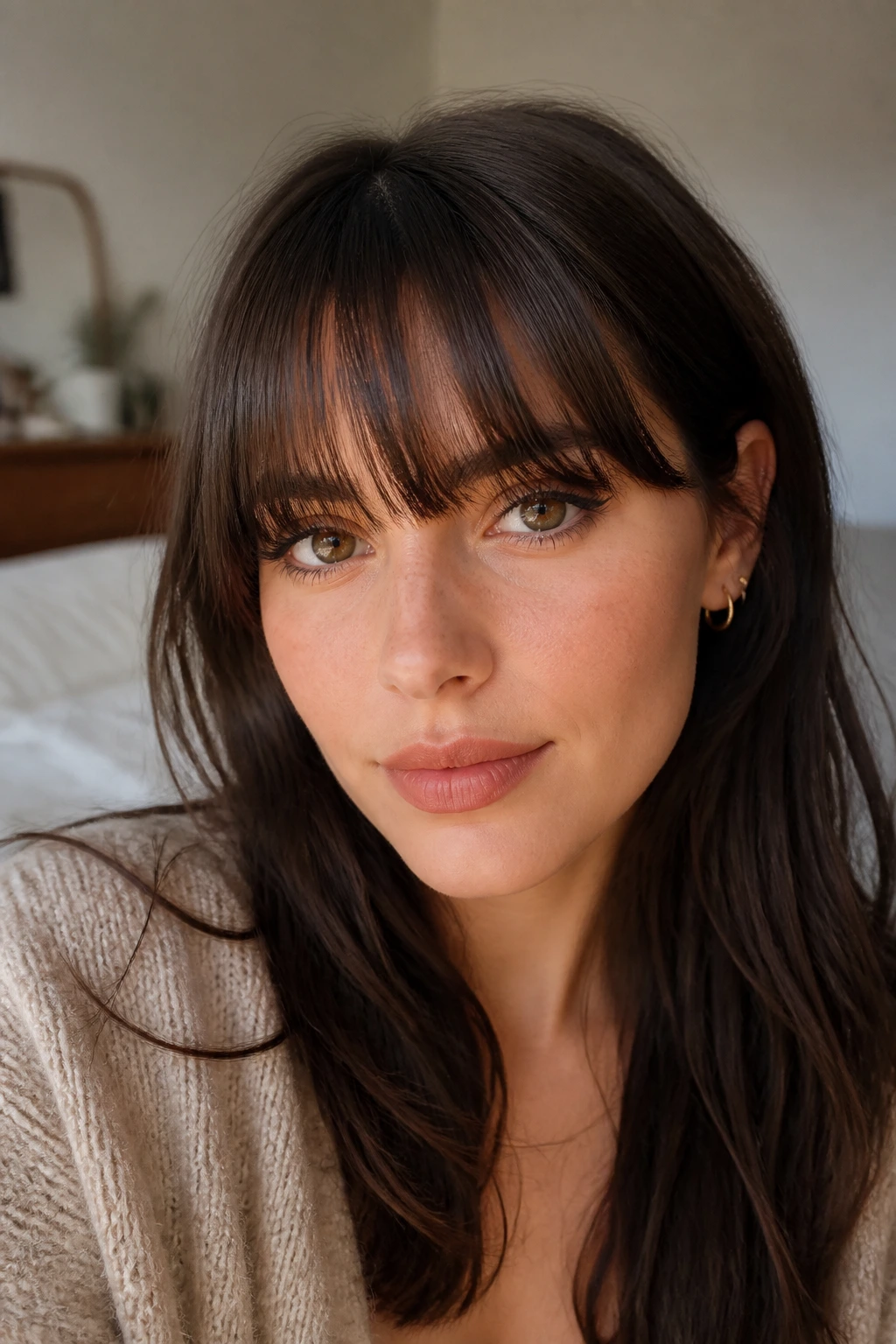
Brow-grazing bangs are the sweet spot between committed and easy. They sit right at the brows or just along the lashes, so you get a clear fringe line without losing the option to sweep them around.
That length is why they flatter so many different face shapes. They frame the upper half of the face, they still show the brows, and they can be tucked into a side part if you want a softer look. A good cut here should land with precision. Even a quarter inch can change the whole feeling.
They work best on straight to slightly wavy hair because the line stays visible. If your hair bends hard at the front, the fringe can kick up and sit too short on one side. Cutting them dry helps a lot, since wet hair tells lies.
This is also the length people tend to return to after trying bolder shapes. It feels neat without being severe. That’s rare enough to matter.
17. Baby Bangs With a Tapered Edge

Baby bangs put the forehead on display, and they know it.
The cut is short, usually well above the brow line, and that shortness gives the face a graphic edge. It can look sharp, playful, or a little vintage, depending on the rest of the haircut. Pair it with a bob and you get a cleaner feel. Pair it with long hair and the contrast gets much louder.
This is not the cut to choose if you want invisible maintenance. It needs tidy trimming, and it asks for a hairline that does not fight back too much. Strong brows help. So does a face shape that can handle a more open upper half without feeling too exposed.
One useful detail: ask for the sides to taper a bit longer than the center. That keeps the bang from looking like a flat little shelf. A soft taper gives it shape.
Baby bangs are for someone who wants the fringe to make a statement. If you want quiet, skip them.
18. Swept Bangs That Flatter Round Faces
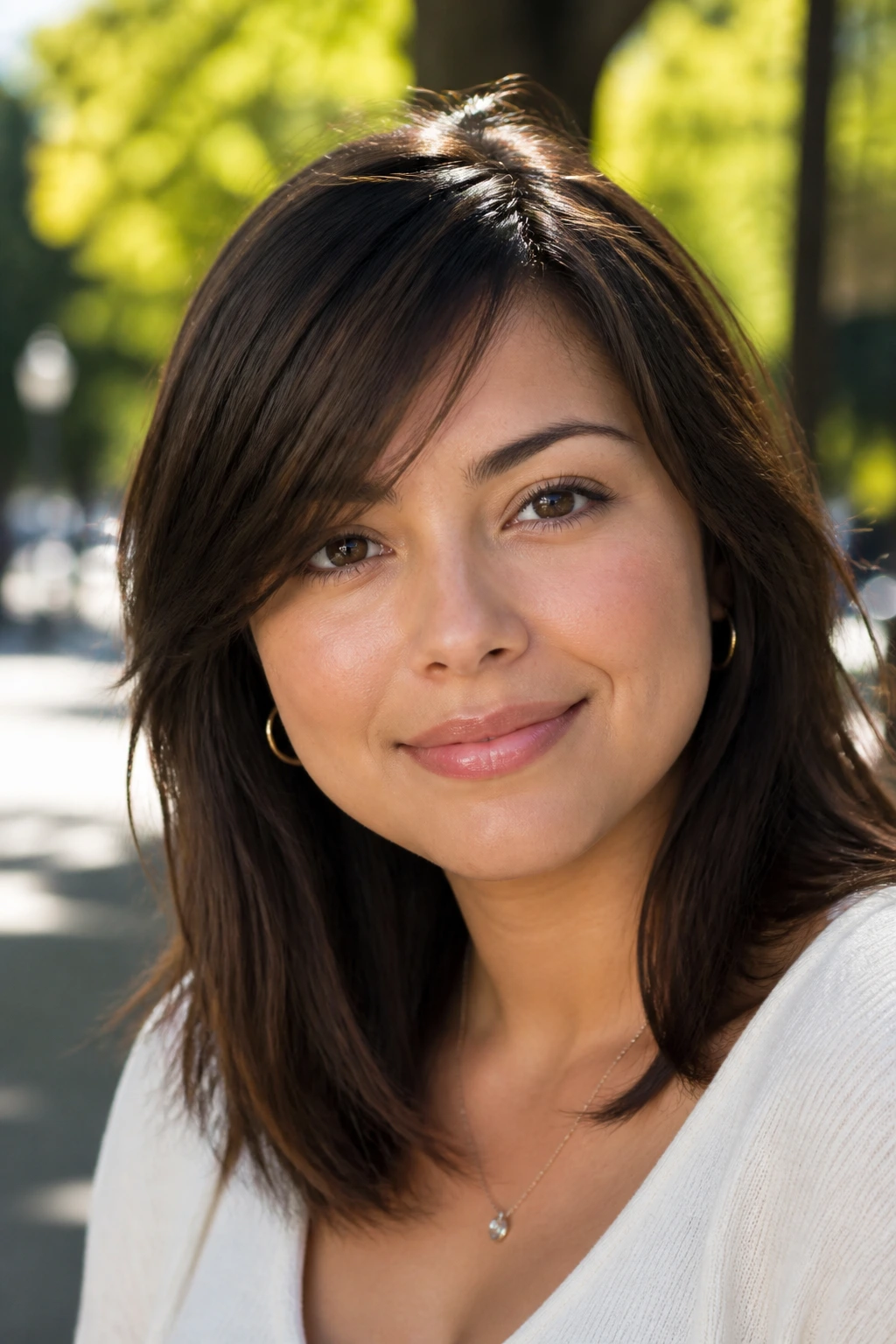
Swept bangs work especially well on round faces because the diagonal gives the eye a line to follow instead of a circle to stay inside.
How to Style the Diagonal
Start with a side part that sits about 1 to 2 inches off center. Blow-dry the front in the opposite direction first to create lift at the root, then guide it across the forehead with a round brush so the ends land below the cheekbone. That longer finish is what keeps the look from widening the face.
The crown matters here too. A little height at the top adds length, while volume right at the cheeks can make the front feel fuller than you want. So keep the lift up high and the sweep loose through the side.
These bangs are useful if you want fringe but need some vertical line in the cut. They can sit with a lob, shoulder-length layers, or a bob with a bit of body. The angle does the flattering work. You do not need to overthink the rest.
A quick mist of flexible hold spray helps the sweep stay in place without feeling stiff. Heavy spray can make the front lock in and lose that soft diagonal. That’s the whole point, so keep it light.
19. Grown-Out Bangs That Look Intentional
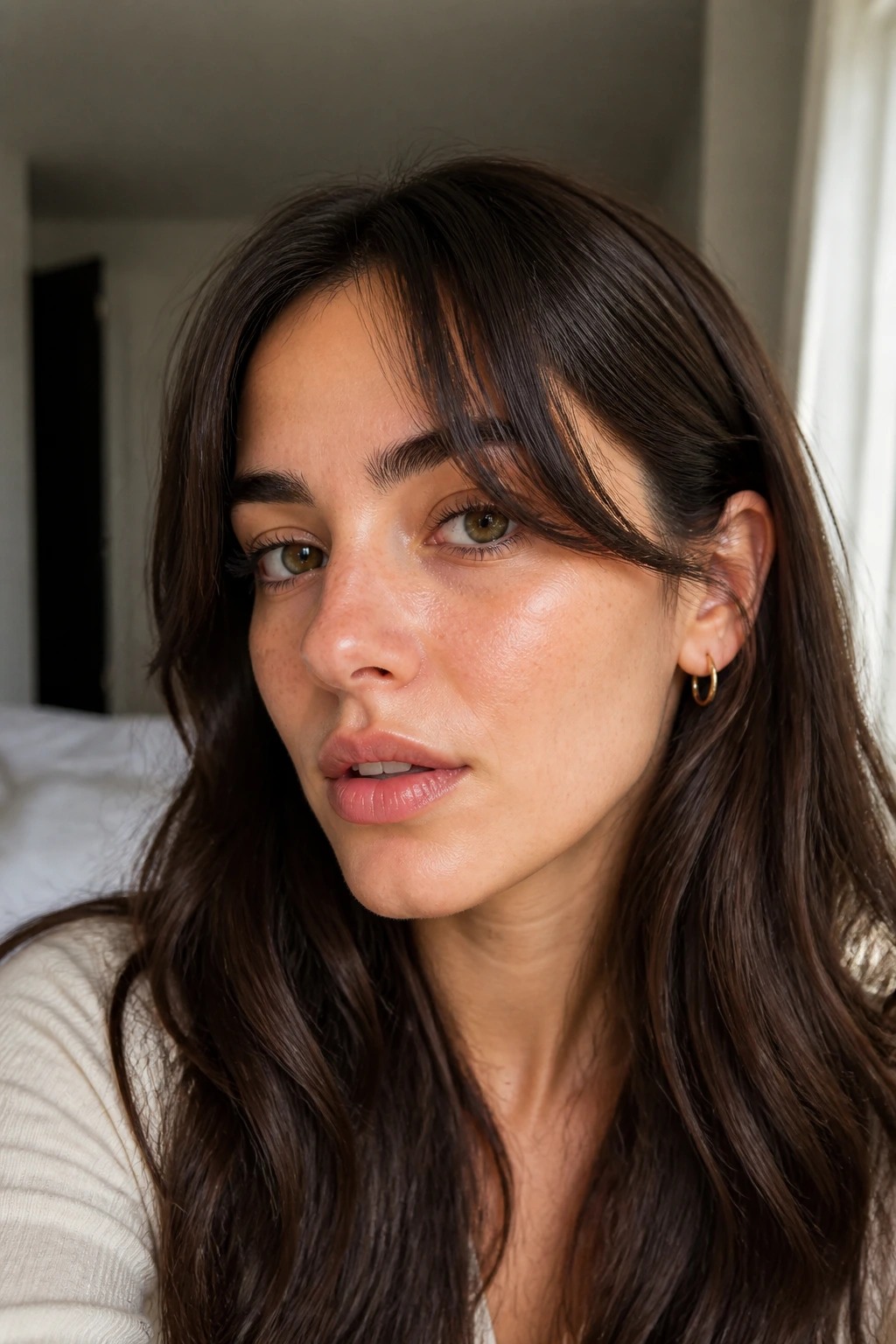
Some of the best bangs are the ones that are halfway out of the grow-out phase.
If your fringe has already reached the cheekbone or chin area, you do not have to fight it. You can steer it. Split it in the center, tuck one side behind the ear, or let it fall in a soft curve that blends into the rest of the cut. That in-between length can look deliberate if the ends are shaped a little.
I like this style for people who are tired of touching up their bangs every morning. A flat iron bend on the last inch or two is usually enough. If the front pieces are too boxy, a tiny trim at the corners can clean the line without restarting the whole process.
This is also where a lot of people discover they actually prefer a softer face frame to a strict fringe. Fine. Hair tells the truth eventually. If the grown-out version feels better than the original cut, that’s useful information, not a failure.
20. Piecey Bangs With Separated Strands

Piecey bangs are the opposite of a heavy, uniform fringe. The strands separate on purpose, so the eye sees texture instead of one solid block.
That makes them useful when you want movement but not softness. They can sit at brow level or a little longer, and they work well with straight hair that needs a bit of grit. The trick is to keep the pieces distinct without making them stringy. There’s a difference, and it is not a small one.
A small amount of matte paste or styling wax is enough. Warm it between your fingertips, then pinch a few strands apart and let the rest fall naturally. If you try to coat every hair, the bangs will clump and go limp. If you use too little, they’ll look like they forgot to choose a shape.
Piecey bangs are especially good when you want the cut to feel casual but still styled. They do not need to be perfect. That is the charm and, frankly, the relief.
21. French-Girl Fringe With Soft Weight

French-girl fringe has a softer mood than a blunt bang, but it still carries real shape. The front sits near the brows, usually with a little bend and a bit of natural separation, so the line feels relaxed instead of engineered.
This style looks best when the haircut underneath can support it. A bob with movement, a shoulder-length cut, or longer layers all work. The fringe itself is usually a little heavier than wispy bangs and a little less polished than blunt bangs. It lives in the middle, which is why people keep choosing it.
A quick round-brush pass at the front is enough for most days. Then leave the rest alone. If you keep chasing every strand with heat, you’ll erase the softness that makes the style worth wearing. A small amount of styling cream on damp hair can help the ends settle without going flat.
This is a good choice if you like bangs that feel lived-in rather than strict. It’s one of those cuts that looks better with a bit of movement in it.
22. Thick-Hair Bangs With Internal Layering

If your hair is dense, do not let anyone thin the bangs into a sad little fringe and call it a day.
Thick hair needs internal layering, not a shredded edge. The goal is to remove bulk from inside the shape so the front lies flat enough to sit against the forehead without sticking out like a shelf. A stylist can point cut, carve out hidden weight, and leave enough surface density to keep the fringe full.
The strongest version usually keeps the center a little longer and the corners a touch softer. That gives the hair room to settle. If the cut is too blunt all the way across, thick hair can balloon at the brow. If it’s thinned too much, it goes wispy in the wrong places and loses control.
Here’s the part people miss: thick bangs need tension when they’re dried. Use a nozzle, a flat brush or a medium round brush, and direct the hair downward as it cools. That simple step keeps the front from puffing up half an hour later. It’s not glamorous. It works.
Final Thoughts
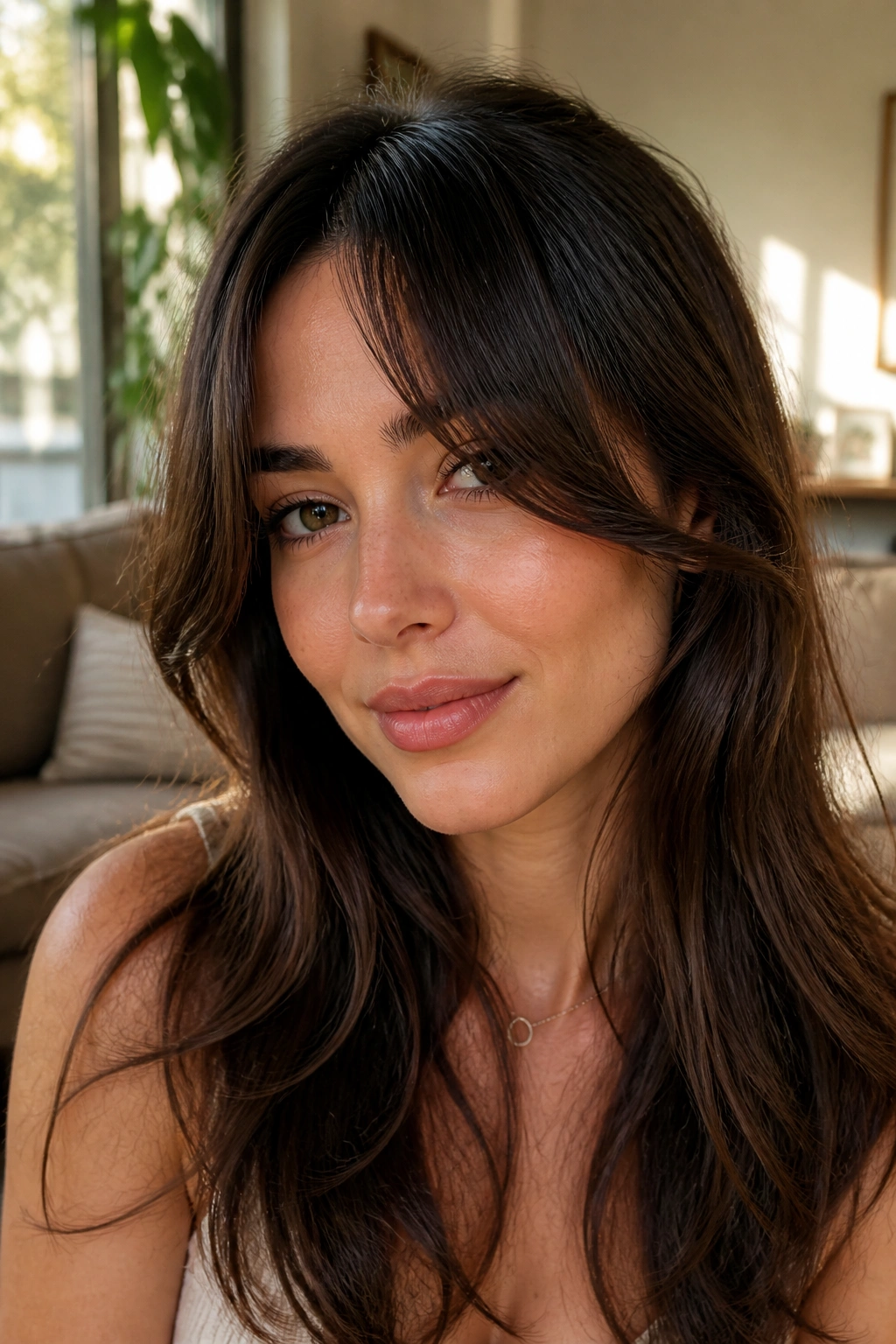
The best bangs are the ones that fit your hair, not the ones that look best in a photo saved three weeks ago. That sounds obvious, but it saves a lot of regret. A shape that works with your cowlick, your density, and your morning routine will beat a prettier cut that needs constant fixing.
If you want the easiest road, start with curtain bangs, bottleneck bangs, or long face-framing pieces. If you want more attitude, blunt, micro, or baby bangs will give you that, but they ask for sharper styling and more frequent trims. The middle ground is where a lot of people end up staying.
Bring a stylist a front-view photo and a side-view photo, and show them where your hair splits when it’s dirty. That tiny detail matters more than the inspiration shot. Hair always reveals the truth in motion, and bangs are the first place it shows.
